
A thing I didn’t have on my bingo card for 2026: that City-run grocery stores would suddenly become an all-encompassing symbol of municipal progressivism.
Last week, Toronto council became the latest political entity (see also: the new NDP leader Avi Lewis) to latch onto New York City mayor Zohran Mamdani’s campaign pledge to open municipal supermarkets as part of his broader affordability platform.
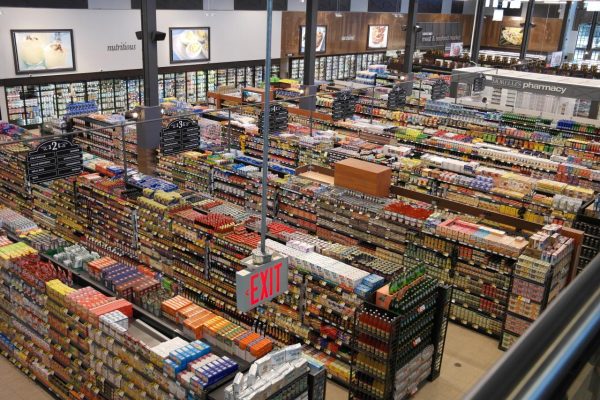
On a notice of motion by two of council’s more notable young progressives, Anthony Perruza and Mike Colle, the city will embark on a plan to open four city-run non-profit grocery stores, ideally in low-income areas, at some point in the middle distance. Their motion, as happens at City Hall, accumulated some policy baggage during the debate on Thursday, with add-ons such as figuring out how to pool all of the City’s food procurement to drive down costs, seeking advice from industry experts and looking at how to bolster Toronto’s vanishingly small co-op grocery sector.
“Toronto is getting city-run grocery stores,” Mayor Olivia Chow declared victoriously on Instagram after the vote, adding that this measure will, somehow, help “stop price gouging [and] could go a long way to making life more affordable with more competition to drive down costs, helping households save more and eat better.”
However, we’ll have to wait patiently for this liberation day to arrive, as Chow throttled Perruzza’s motion by asking for City staff to report back only by the second quarter of 2027, not next month, as the North York councillor originally specified.
But whatever. Mission, um, performed. After all, election season is upon us.
Quite apart from the absurdity of the ambition — that a handful of new grocery stores will put even a dent in the armour of the supermarket behemoth — and the odd prospect of the civil service figuring out how to replicate a logistically complex business, this particular move is so steeped in irony that I’m astonished it passed muster with council’s more self-aware progressives.
Mamdani’s city-run grocery pledge, for the record, draws its inspiration from a long-standing quirk in New York City’s zoning rules, which have militated against large-format supermarkets for decades. (Likewise, land values.) New Yorkers consequently are over-reliant on bodegas, small grocers, and up-market emporia, which means they tend to pay more.
But this proposal was also meant to communicate — and indeed did communicate — Mamdani’s willingness to reach for innovative and possibly pie-in-the-sky ideas that could be folded into the broader cause of affordability (rent caps, free buses, etc.). What’s more — and this really is the critical detail — his promise, and the others that have followed, showcase both Mamdani’s political imagination and his remarkable capacity to communicate his goals to New Yorkers.
He is not, suffice it to say, mimicking what the mayors of, say, Boston or Indianapolis or Austin are doing. Rather, Mamdani is clearing new ground and taking real political risks, as Paris’ Anne Hidaglo or Montreal’s Valerie Plante did during their respective terms in office.
With apologies to Perruzza, Colle, and Chow, the very act of trying to fashion a Toronto version of Mamdani’s pledge reveals precisely the opposite: that what passes for progressivism here is derivative, with council ready to appropriate someone else’s apparently saleable idea as a means of diverting public attention from its own lack of political creativity.
Now, I don’t want to suggest that Toronto’s come up empty in the mayoral sweepstakes. Chow — who hasn’t formally announced that she’s running again but is clearly signalling that she will — has been a mostly competent mayor who delivered some policy wins in domains such as municipal finances, housing, and gridlock. Her rival, Brad Bradford, is undeniably knowledgeable about local government and, in particular, planning, his former profession.
But Chow has been in politics, with two breaks, since 1985 and is no one’s idea of a leader with fresh ideas and inspiring communication skills. Likewise, Bradford, just eight years into his political career, comes across less as a new voice than as an angry one. In every appearance on TV or social media, he is either fuming or pacing or both. Enough already.
Mamdani’s great skill, and this simply cannot be copied, is his capacity for positive connection with whomever crosses his path, from an overnight shift worker to Donald Trump. Moreover, he’s something of an alchemist, a leader who can transform this moment’s tidal wave of toxic anger and ambient anxiety into a politics of optimism. Sure, lots of people can’t stand Mamdani, and it remains to be seen whether his highly ambitious promises will be realized. Yet his energy is infectious, and will go some distance towards carrying his program forward.
If we now pan back to the 416, it’s not like we’re short of things to be anxious and angry about: Ford, tariffs, an endlessly twitchy housing market, a perennially broken transit system…
Did I mention Ford?
Yet Chow and Bradford are who they are. I’m not expecting them, at this advanced stage of their respective careers, to suddenly discover new ways of sublimating Torontonians’ concerns into some form of stirring civic vision. Indeed, the fact that a large majority of council — Bradford and the handful of conservative naysayers excepted — reckoned they could whip up some good feels by parroting New York’s first millennial and first Muslim mayor speaks for itself.
If I could offer them one modest piece of advice, it would be this: if you feel inclined to go shopping for a new and captivating approach, maybe it would be best to begin by buying local.