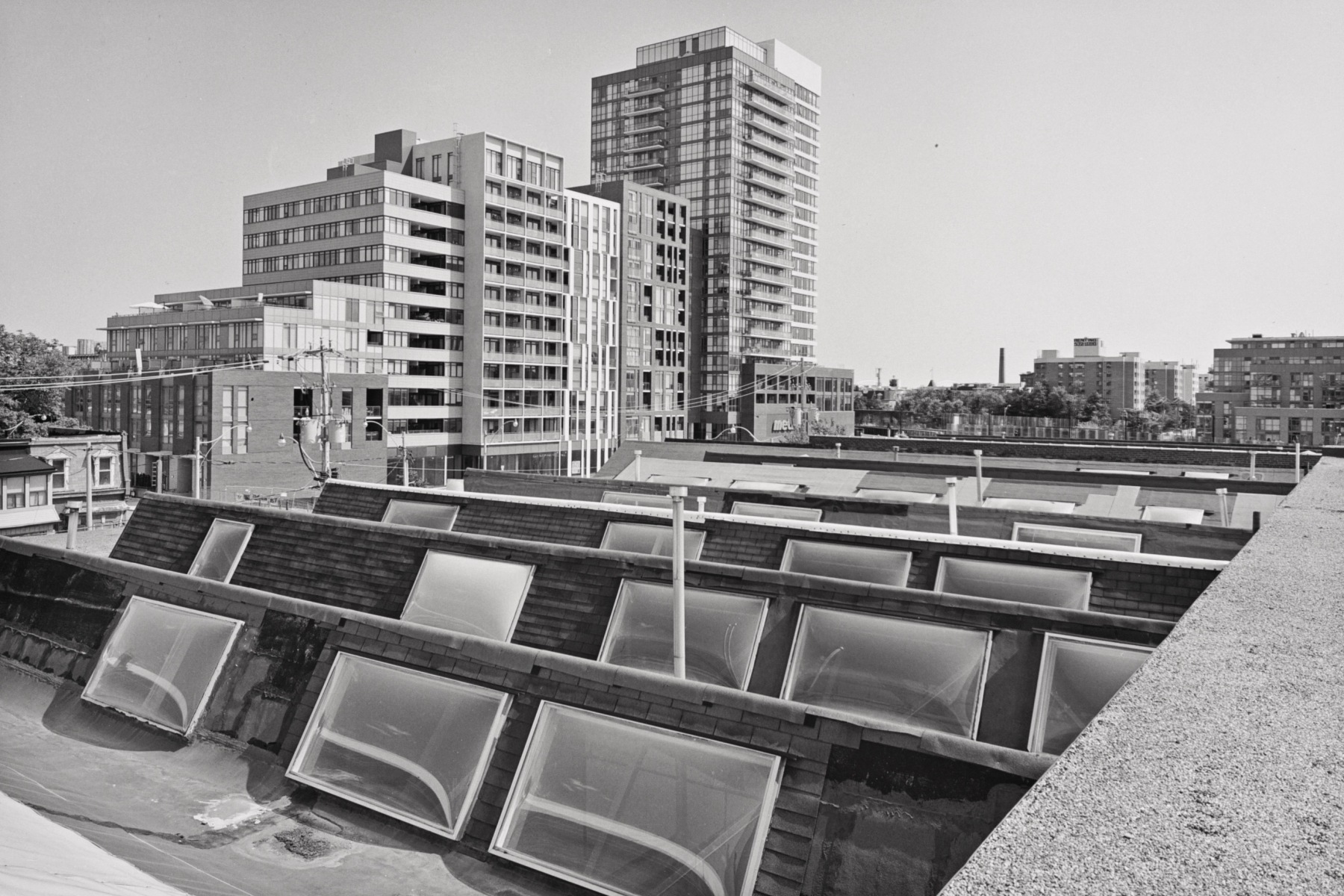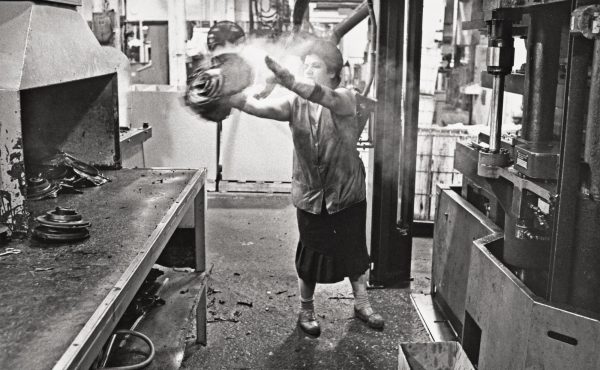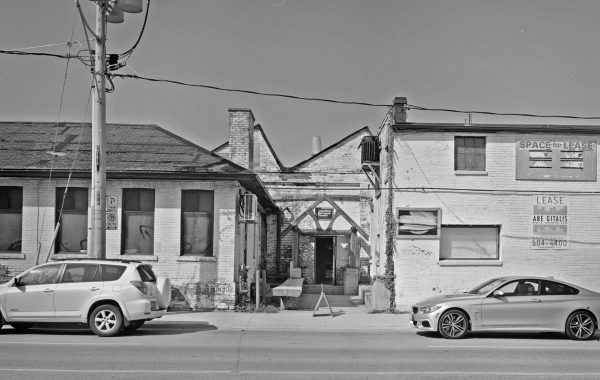
Give or take a few months, the productive life of the former industrial complex at 390-440 Dufferin Street spanned 115 years. What had been a single factory occupying its half dozen buildings was ultimately divided into 43 studios housing artists and small businesses.
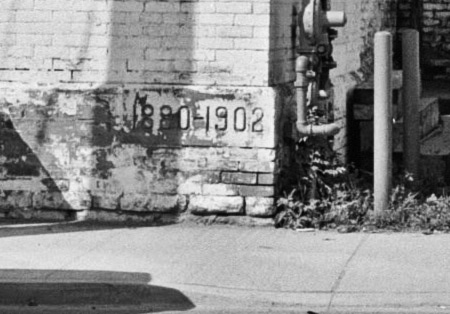
A worn cornerstone bearing the hyphenated dates 1880-1902 was visible at the entrance to the single-storey front office building at 440 Dufferin. Both dates relate to the early history of the Toronto Hardware Manufacturing Company, which was founded in 1880 and opened a modern factory on this site in 1902. The company had been formed as a partnership between two prominent Toronto businessmen, Harry Patterson and George Gouinlock. Its advertised products included plumbers’ supplies, galvanized range boilers (water heaters) and soil pipe (iron sewer pipe).
Like the majority of industrial plants built during the early 1900s, this one was sited to take advantage of a rail corridor, which crossed the city’s street grid on the diagonal. The plant’s own sidings and freight shed were part of a rail terminal established directly behind the property. Aerial survey photos show that this rail connection remained in use until the early 1960s.
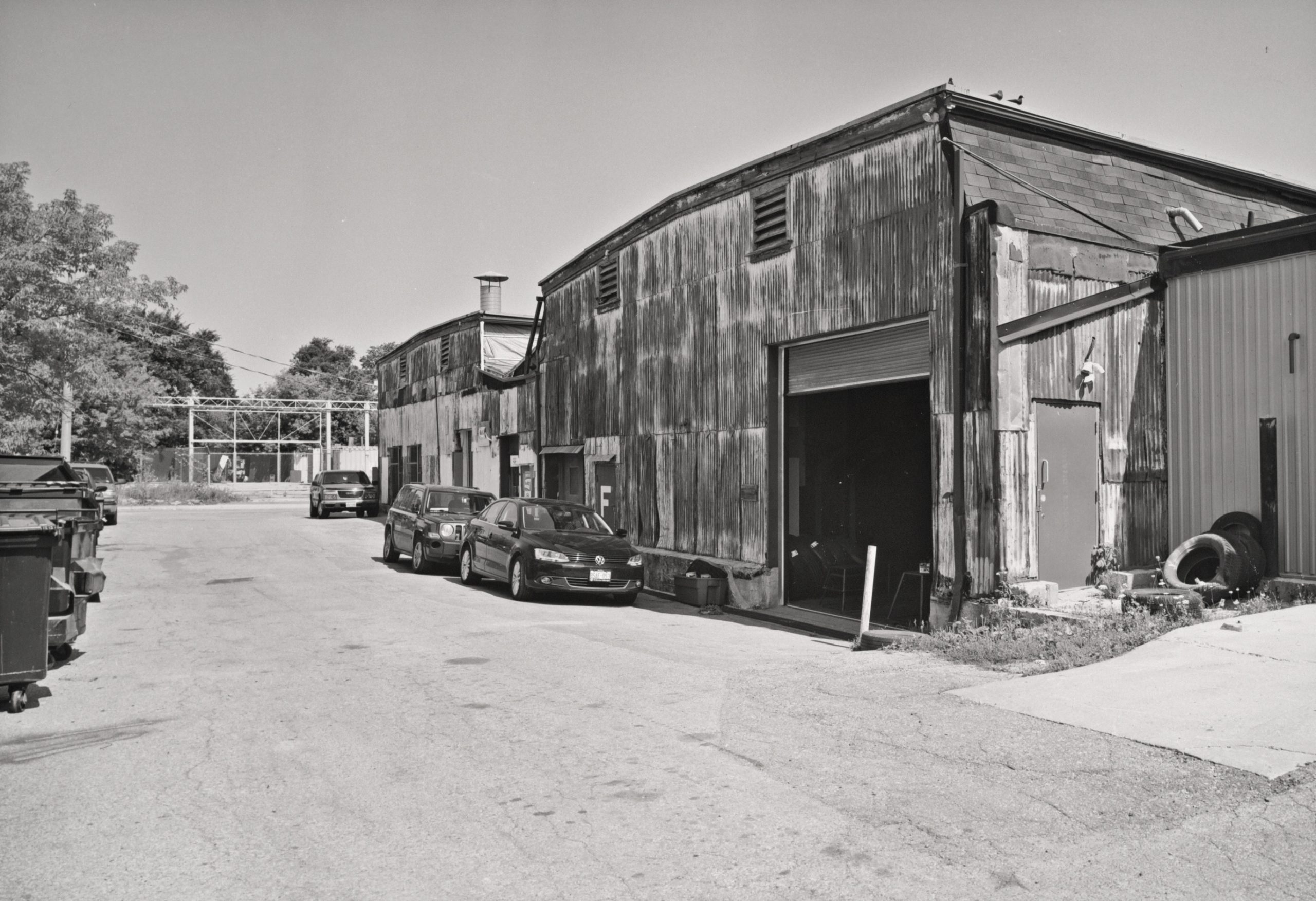
The street grid in the area was another matter. Until 2010, when an underpass was completed, upper Dufferin Street ended at the rail embankment, a few yards south of the Toronto Hardware Manufacturing Co. plant, and lower Dufferin began at Queen Street. Between them traffic was routed through the “Dufferin Jog,” which involved Peel, Gladstone and Queen.
On February 3, 1953 the New York Times reported that the Toronto Hardware Manufacturing Company had been purchased by Affiliated Gas Equipment Ltd. of Cleveland, and its name soon disappeared from the city directory. For a couple of decades the factory buildings remained only partially occupied. The complex became known as the Massey Ferguson building, having, it seems, served as a warehouse for the nearby Massey Ferguson Toronto Plant.
In 1980, Bill Nyman moved his furniture factory, Ascot Chair, from the former Ideal Bread factory building at 183 Dovercourt Road (now known as The Argyle Lofts) to 440 Dufferin. Nyman had studied design at Central Tech. He and a partner founded Ascot Chair in 1958 in response to the growing demand for their custom designs.
The company’s upholstered chairs were sold through Sears Canada, but in 1993 a decline in demand for his furniture convinced Nyman to close the factory. He then began to divide its 117,000 square feet of floor space into rental studios, in bespoke sizes suited to the needs of local artists and craftspeople.
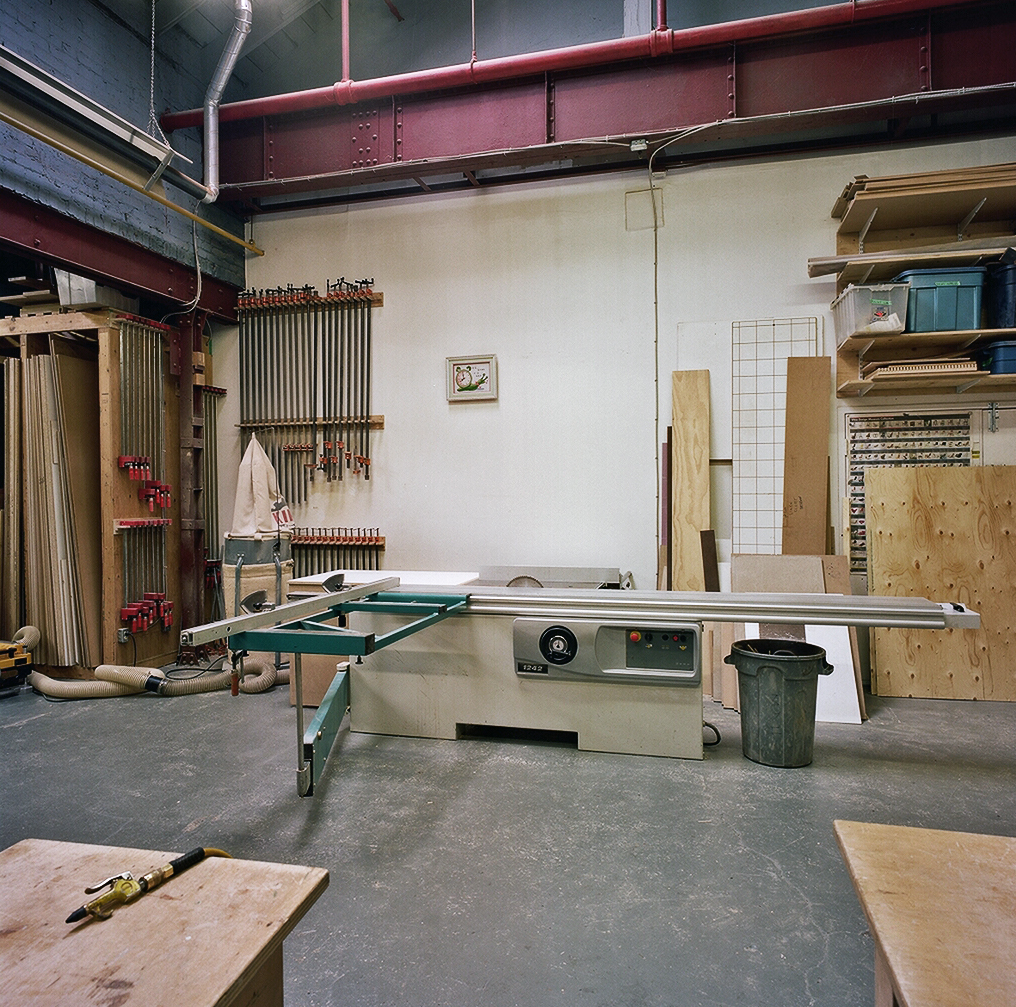
Among the early tenants were two artists’ cooperatives, The Wood Studio Collective and the Geisterblitz Glass Group. Later, in 2009, Akin Studios leased 2,000 square feet, creating shared space for 25 artists. Nyman’s daughter Judy Nyman remembers a time when there were 80 tenants.
It seems likely that the opening of the underpass connecting Dufferin to Queen Street in 2010 alerted developers to the site’s potential for rezoning from “industrial” to “residential.” Nyman sold the site to Siteline Property Management in 2011. Later, the condominium development that replaced the industrial buildings was promoted as belonging to the “trendy” West Queen West community.
In August, 2017, I began photographing the complex at the urging of the glass artist Alfred Engerer, who had been the superintendent there since 2010. The industriousness of the place and its obvious precariousness had personal significance for me. At the time, I was debating whether I could afford to keep my own studio in the Junction, where I had a well equipped darkroom.
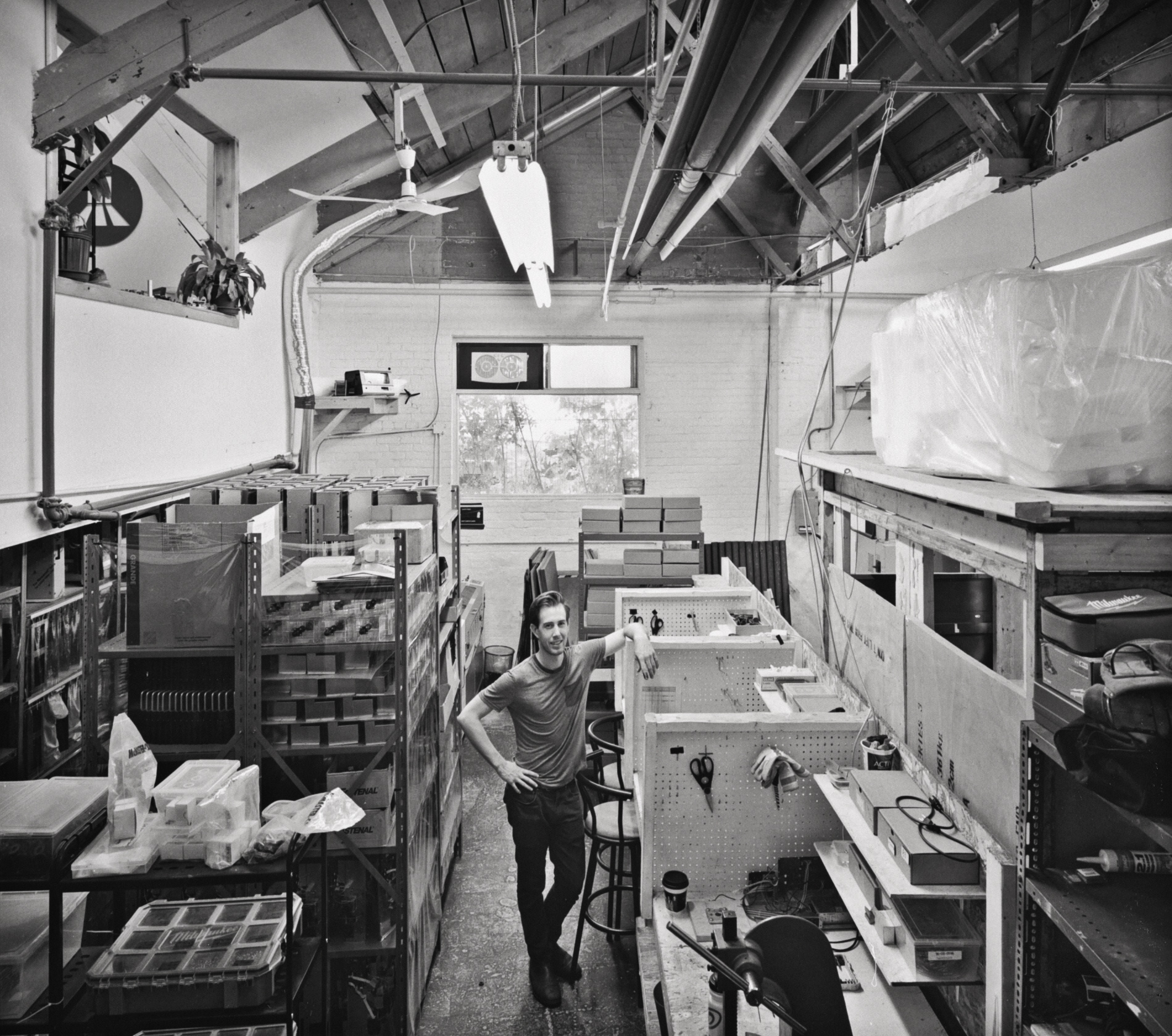
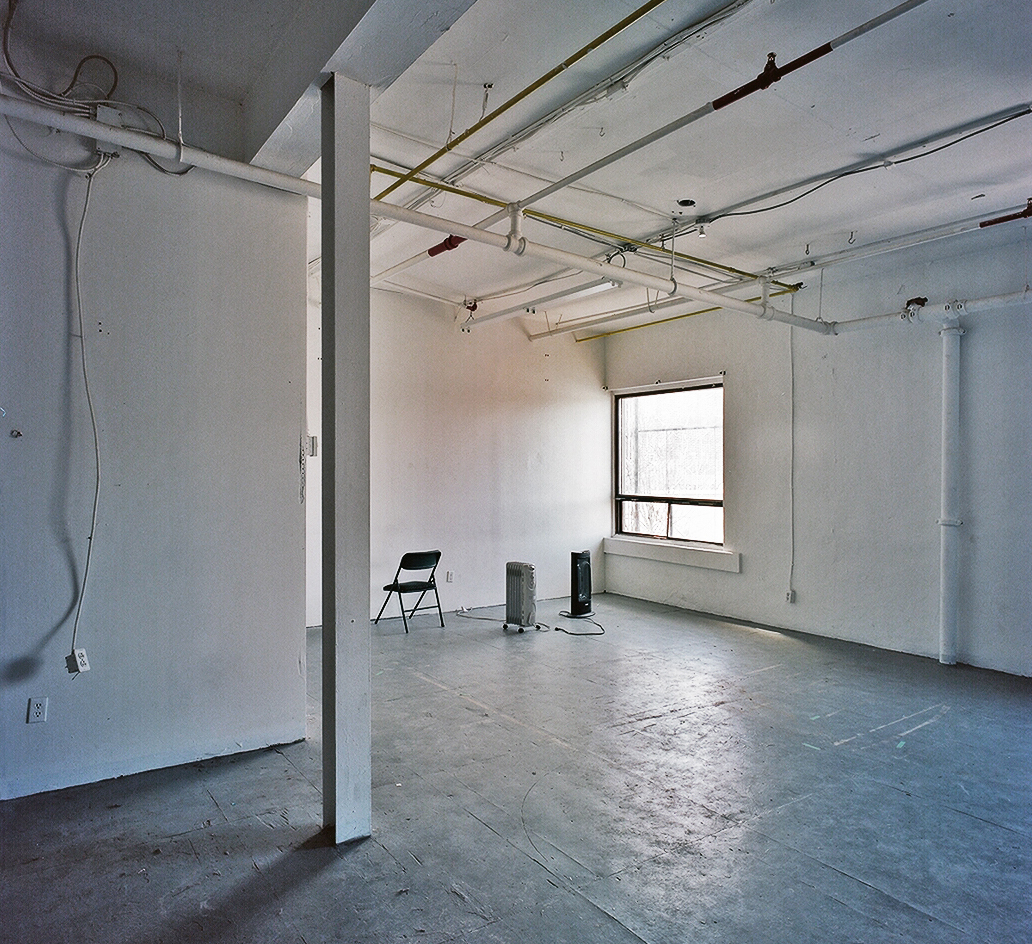
The abrupt shifts between black and white and colour in the sequence below requires an explanation. I had intended to devote a year to the project, and was hoping to complete two parallel series, the main one in black and white and a less extensive one in colour. However, by August 2017 Siteline had sold the complex to 390 Dufferin GP Ltd., which then gave tenants notice to vacate their spaces early in 2018. In the last months, tenants were engaged in a frantic search for new space.
The subsequent history of the Dufferin Street studio site illustrates how Toronto City Council can rationalize replacing 117,000 square feet of productive studio space with nothing at all. Things started well, with a development agreement approved by the OMB that required the developer to provide 59,740 square feet of subsidised “employment floor space” for a small business incubation centre in one of three new condominium towers.
Small business incubation is a worthy goal, but Toronto City Council allowed the developer to escape from its obligation to provide the space in return for a cash payment of $2,416,451. While the money went into the City’s coffers and the developer gained control of the space, the former tenants of the Dufferin Street studios received no benefit.
All photos © P. MacCallum (petermaccallum.com)
The author wishes to thank Alfred Engerer and Barbara Nyman for their help with his research for this article.
View the full gallery of 35 images by scrolling through the photogallery below.