
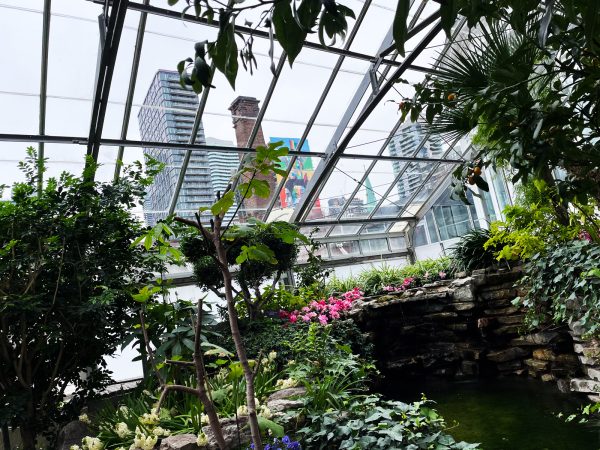
In the free conservatory at Allan Gardens park in downtown Toronto, the glass houses hold warm air, vibrant plant life, moving water, and a quiet that feels unusual in the downtown core.
After I spent some time in the conservatory on a brisk March afternoon, it took me a second to adjust when I stepped back outside. The city felt overwhelmingly bright, almost like leaving a movie theatre in the middle of the day. Inside, everything had settled into a different rhythm. The air was warm and humid. Water moved through small streams under wooden bridges. Fish and turtles drifted through their enclosures. A stone path carried visitors forward at a slower pace. Even with people moving through it, the conservatory felt calm.
That feeling stayed with me after I left and it inspired a simple question. What can a place like this do for the people who spend time there?
Allan Gardens sits in a part of downtown where daily strain is easy to see, from housing pressure and personal struggles to the broader weight of trying to get through city life in an expensive core. The conservatory gives that stretch of the city something valuable. It is a free to enter, warm indoor space that is open year-round. It offers a place where a person can slow down for a while and be among living things, even in the middle of the winter. Michael McClelland, who has been involved in the push to expand Allan Gardens, told me that “there’s all kinds of stories about people finding the greenhouses as a place for respite.”
That word feels right. Respite does not promise too much. It describes a smaller kind of public value. Someone can walk in from the cold, hear water moving, smell damp air, and feel their attention settle. In a city where so much of public life is hurried and expensive, that has real meaning.
It’s a feeling that resonated with my fellow visitors. Patty Ewaschuk felt that shift on her first visit. “As soon as I walked in, the smell was, like, the best thing,” she told me. A moment later, she said, the conservatory brought back a vivid memory of summer. Heather Bell, who has been coming to Allan Gardens for years, described it as “a nice break from the winter season” and “a nice meeting place.” When I asked what a place like this might do for mental health, she said it can be “helpful” and “grounding,” especially for people adjusting to Toronto winters or trying to feel more at home in the city.
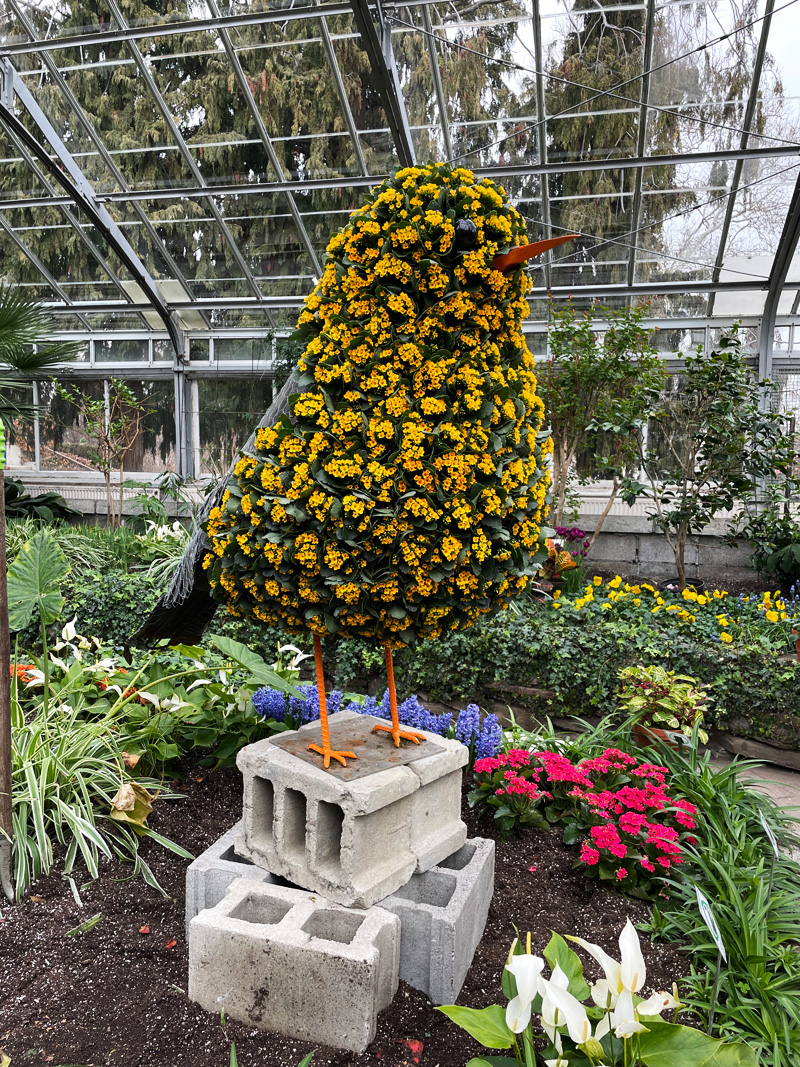
Those reactions make sense once you spend time inside. Allan Gardens works through atmosphere. The humidity changes how the air feels on your skin. The quiet changes how you hear. The greenery changes where your attention goes. McClelland put part of that into words when he said that “it’s not only the smell of the plants, it’s not only the look of the plants, it’s also the silence that exists in those greenhouses.” He described the conservatory as “a profoundly different kind of environment” that feels calming and relaxing.
That idea has a wider intellectual history behind it, even if most visitors would never think about it in those terms. In Steps to an Ecology of Mind, anthropologist Gregory Bateson wrote about one’s state of mind in relation to the wider environments and patterns that surround it. His work suggests that the mind, and by extension mental health, is shaped by the patterns and settings that it moves through. A change in environment can therefore change how a person feels and what their attention settles on.
Living environments can be especially powerful in that regard as they surround people with softly changing sights and sounds that give the mind something to notice, without making any heavy demands on it. This effect is a major emphasis in environmental psychologist Stephen Kaplan’s work on the restorative benefits of nature.
Allan Gardens makes that emphasis feel immediate. You do not need theory to notice the effect. You only need a few minutes inside to feel your own internal pace change.
The park is important here too. On my walk over, Allan Gardens stood out right away for how much more alive it felt than the blocks around it. There was open grass and mature trees scattered everywhere. More wildlife was visible here than in the rest of my walk put together. The conservatory only deepened that feeling. It gave the larger park a centre and drew people into a space that felt gentler than the city outside.
That matters in Toronto as density continues to rise. Janet Rosenberg, a landscape architect involved in planning work connected to Allan Gardens, said that “these parks are vital social infrastructure – our collective backyard.” Many Torontonians live in smaller homes and have limited access to places where they can sit quietly among trees or plants without paying for it. Allan Gardens already serves that purpose for the city.
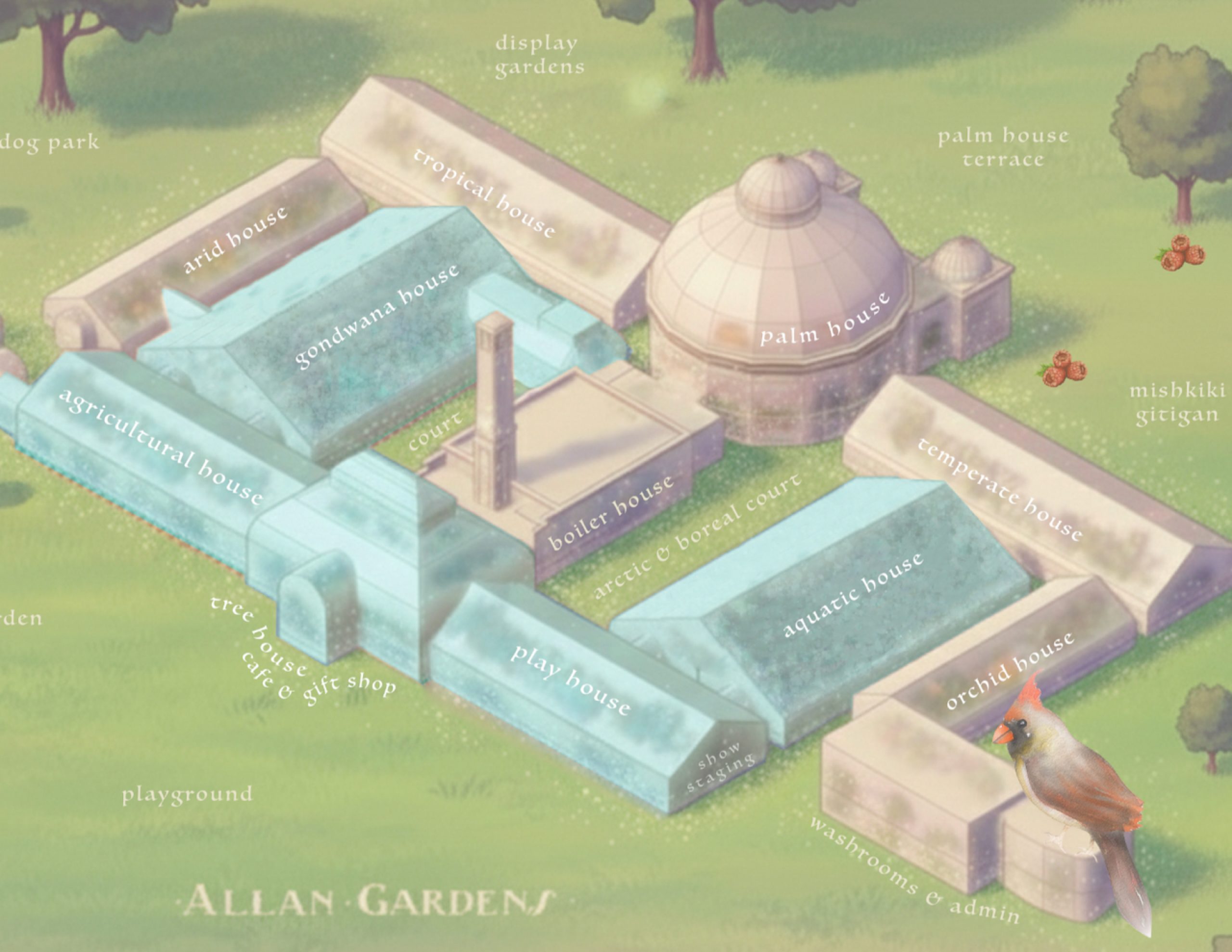
That larger role also helps explain why a proposal to expand Allan Gardens was announced in February. Led by Friends of Allan Gardens with Zeidler Architects, Janet Rosenberg & Studio, and ERA Architects, the project would enlarge the conservatory and give it more room for year-round programming, horticultural learning, public use, and community events.
At the centre of the proposal are greenhouse additions meant to better connect the conservatory’s existing wings. The expansion would give them more space without disturbing the park around it, creating more space for the work Allan Gardens already does, while keeping the feeling of the place intact.
The case for expanding the Allan Gardens conservatory begins with what the place already does. It already offers relief and gives people a place to gather themselves. It shows that a public space can support the city in a quiet, yet impactful manner. A larger conservatory could give more people access to the kind of sensory relief and mental reset the conservatory already offers.
That point feels especially important in this part of downtown. Allan Gardens serves many different people, all from different walks of life. Some come for a walk. Some come with children. Some come because they need a free place to sit and relax for a while. In an area where many people have been enduring difficult circumstances, a place like this should not be dismissed as ornamental. It is a crucial part of how the city cares for the people who move through it.
When I stepped back outside, the effect was immediate. The bright light felt harsher than it had a few minutes earlier, and the street seemed to speed back up around me. That brief moment of re-entry clarified what the conservatory had done. It had changed the conditions of being in the city, if only for a little while.
That may be the clearest reason for the project to expand the Allan Gardens conservatory. The conservatory already offers a form of everyday restoration that is rare in Toronto, especially in a dense and pressured part of downtown. The value of growing it begins with the quiet work it already does for the people who pass through.
Photos by Alex Kharabian


One comment
Nice piece. In addition to being a beautiful and flora-filled respite for Torontonians, Allan Gardens has a rich volunteer program that works to grow fresh food for local food banks. It’s a working “urban farm” that can also be expanded with this new plan.