This op-ed has been written on behalf of the Toronto Public Space Committee (TPSC).
Over the course of this World Cup, Toronto is welcoming 300,000 fans across the six matches we’re hosting. Fans and teams may enjoy what our City is proud of: diverse restaurants, sports stadiums, and playful fan activations. However, all the while they will also be experiencing the less glamorous side of day-to-day life: unreliable public transit, a lack of public washrooms, overflowing litter bins, and hostile benches (which are also few and far between). This summer, our public spaces and infrastructure are being tested as they accommodate many more people than usual. While our amenities may be burdened, Torontonians should use this as an opportunity to imagine what an accessible, well-designed, and well-maintained street furniture program could look like.
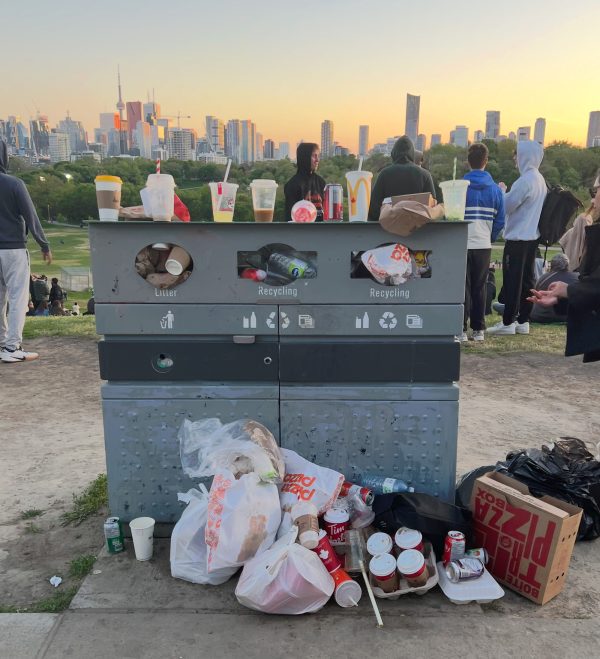
Currently, Toronto’s street furniture is delivered via the Coordinated Street Furniture Program, a 20 year (2007-2027) public-private partnership with Astral Media. It’s responsible for transit shelters, benches, litter and recycling receptacles, wayfinding pillars, bicycle parking, and more, encompassing an inventory of over 24,000 pieces. While expansive, the program is also plagued by controversies and problems beyond aesthetic concerns (though the corporate gray plastic is certainly not doing Toronto any favours). Overflowing and easily damaged litter bins are a common sight in Toronto, just as bus shelters without adequate informational displays, but rather adorned with advertising schemes, are the norm. The use of defensive architectural design features is also concerningly common, for example, armrests placed to prevent users from lying down or seats that do not accommodate users of mobility devices. As the contract with Astral comes to a close in the next year, it’s clear Toronto needs to reconsider not only how these elements are designed but the principles they are designed upon.
Accessibility
At its core, street furniture should serve everyone, including people with disabilities. Accessibility needs to be one of the key principles Toronto bases its new street furniture contract upon. Well‑designed benches provide a safe place to rest for all. Designs must comply with AODA standards and most importantly be developed in consultation with disabled users and advocates. Instead of hostile features, street furniture should make streets feel safe and welcoming.
Seasonality
Although it’s summer now, Toronto is a winter city, so our public amenities must be designed with seasonality and durability in mind. With increasingly extreme weather, new designs should address both heat (e.g. additional shade structures) and cold. Other Canadian cities have already adopted the use of heated bus shelters to keep users warm, a feature that Toronto should follow suit on. Multi‑functional street furniture can serve different purposes across seasons, and thoughtful investment in design will help reduce future maintenance and replacement costs.
Creative and Artistic Design
Finally, having usable and well-designed street furniture has real economic value for the city. Numerous cities across the world have demonstrated how creativity can breathe life and foot traffic into previously neglected spaces, inspiring people to spend more money and time. Cities like Montreal, New York, and Barcelona have all invested in street furniture programs in specific neighbourhoods using fun, colourful designs alongside utilitarian features like WiFi hubs and shaded awnings to help boost tourism and promote local spending. Collaborating with local artists can also help ensure pieces reflect the places where they’re installed. In a city of diverse, unique neighbourhoods, there can be no one‑size‑fits‑all solution or aesthetic to our public spaces.
As Torontonians enjoy the excitement of this summer, we will also be reminded of the cracks in our system when the fun ends: the overcrowded stop as we wait for the bus to come, the lack of benches after a long day of cheering, overflowing garbage bins full of game‑day snacks, and insufficient wayfinding as we try to get home. As the current street furniture contract comes to a close, let’s remember the lessons of this summer and the past, and get ready to demand what we deserve from our elected officials. Toronto deserves a world‑class street furniture program designed to suit a city as diverse and multifaceted as its people.