
In the book I recently co-edited, Messy Cities: Why We Can’t Plan Everything, we didn’t get any contributions about public transit. The book explores the role of improvisation, randomness, and variety in creating a vibrant city. On the face of it, public transit is a highly structured system, so messiness seems inappropriate and unwelcome. We want ordered schedules and routes – the most frequent complaints about public transit come when arrivals are irregular or when there are constant detours. Another frequent source of complaints is a lack of cleanliness that makes transit stations and vehicles disagreeable – and garbage on the tracks can cause subway delays.
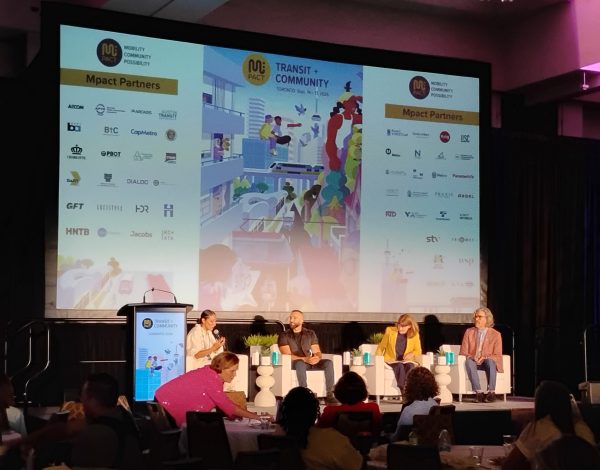
So I was interested to discover that my Messy Cities co-editor Zahra Ebrahim was hosting a final plenary panel discussion at the recent Mpact “Transit and Communities” conference in Toronto (Spacing was a media sponsor). I was curious about what the panelists would see as positive messiness in relation to transit.
Sarah Ross, Vice President, Planning & Policy, at the Vancouver regional transit provider TransLink, came up with some interesting insights. One message she had was: have fun with your riders. Translink has an art and culture program that aims to “surprise and delight transit customers using the transit system every day.” The program includes both permanent public art and temporary art installations, as well as a busker program. It’s a reminder that transit agencies occupy significant amounts of public space, and can use that space to create variety and interest for urban residents. Buskers, public art, poetry on the way, and other similar programs contribute to a positive messiness that reflects the city’s creativity.
At a larger level, this can apply to creating individual designs for subway stations. While standardized design is considered more efficient, taking the trouble to create individual designs for these significant public structures can make the streetscape and the transit experience more visually engaging (think Dupont Station).
At a deeper level, Ross noted that transit is a place where we mix with the full variety of our fellow urban residents, including people we wouldn’t normally come across. It’s where we “see our city.” In our other interactions, we may see the people in our neighbourhood, in our workplace, and those who share our entertainment interests. But in a crowded bus, streetcar, or subway, we see people from all parts of the city, who we might otherwise not encounter. Experiencing the full range of who we share the city with is valuable for building our civic consciousness, for helping us fully understand the city we all belong to. (It’s a characteristic, transit expert Jarrett Walker has noted, that was present from the very beginning of mass transit.)
What Ross did not mention is that it can also be challenging, when we share an enclosed space with people who are disturbing in some way – shouting, high, unwashed. Yet they are a reminder of the work we need to do, as a city and a society, to address the problems of which they are a symptom.
Ross and James Perttula (Director, Transportation Planning, City Planning Division, City of Toronto) both made the point that transit provides the skeleton on which positive messy urbanism can be built. It enables communities to grow and increase in density, and for a wider variety of people to live in and get around the city conveniently. But Perttula noted the challenge of having better transit infrastructure create displacement, as it makes living near rapid transit more valuable and thus expensive. He saw the idea of positive messy urbanism as a useful lens through which to find ways to address that concern and ensure that new rapid transit infrastructure does not trigger displacement.
At a more abstract level, Ross pointed out that the governance of transit is inevitably messy. Vancouver’s Translink incorporates 23 different governments. In Toronto, transit is overseen by two different agencies (TTC and Metrolinx), each with its own complex governance, and is in constant negotiation with both provincial and federal governments for funding, which inevitably comes with additional direction. There is, as she said, “a lot of convening.”
While I was at the conference, I also attended a session called “Beyond Average: Designing Transit for All,” which itself addressed the messiness of the range of people transit needs to serve. The aim was to get beyond the concept of an “average” user, since users bring many different needs and bodies to public transit. Even individuals, architect Philip Claghorn noted, will change in their needs over the course of their lifetime, from children to adults to seniors, often with specific episodes along the way that affect their mobility. Zahra Tavakoli in fact focused on children, pointing out that their needs and desires are often interpreted through adults (parents, teachers, etc.). In a delightful example of the appeal of urban messiness, while adults assume children’s primary destinations are school, parks, and libraries, the destinations that children (aged 8-12) give when asked are abandoned yards where they can play freely, the street in front of their home where they can play, and friends’ homes.
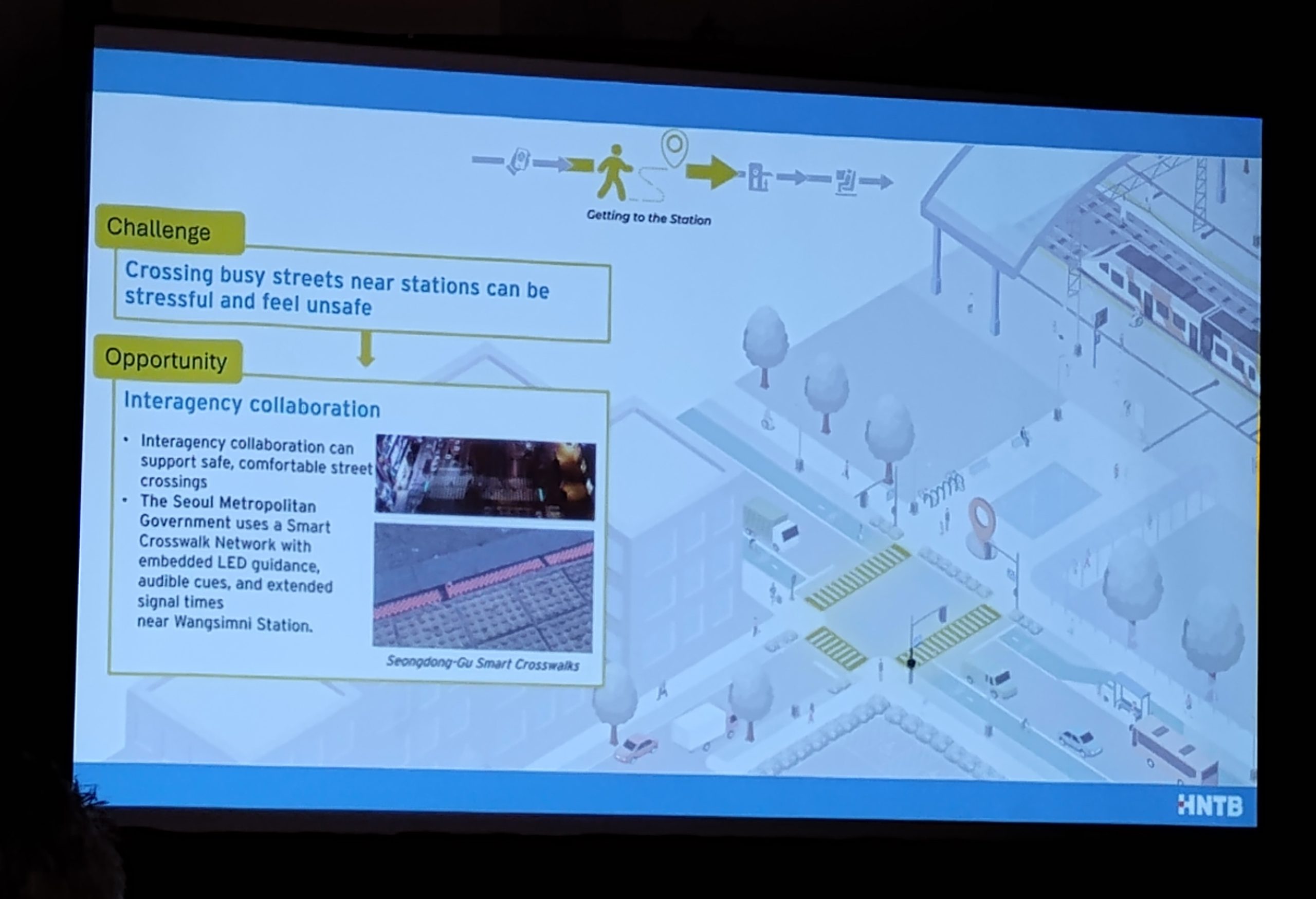
All three speakers put a lot of focus on designing for access. Cleghorn talked about designing for the riders who had the biggest challenges for access, which will inevitably help access for all riders. Lisa Josephson from Vancouver’s Translink shared how the agency partners with cities to fund improvements to walking infrastructure (PDF) that connects to transit. It’s a remarkable contrast with the TTC and Metrolinx, which tend to ignore any issues with access to transit stations and stops. On the other hand, Translink has independent sources of funding beyond fares, which the TTC lacks. But the TTC could still make an effort to partner with the City on access to transit, even if it cannot provide funding.
At heart, the message from both panels was that public transit has to find ways to serve and support the widest variety of people.