

Each week we will be focusing on blogs from around the world dealing specifically with urban environments. We’ll be on the lookout for websites outside the country that approach themes related to urban experiences and issues.
– – – – – – – – – – – – – – – – – – – – – –
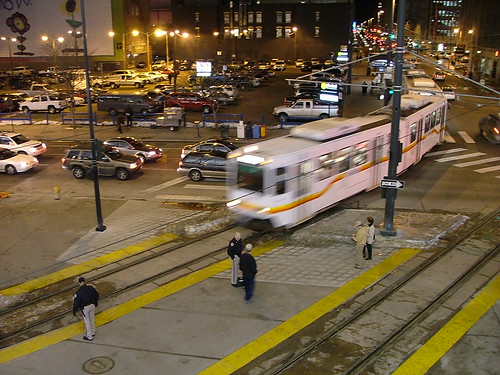
• In 2004, the City of Denver committed $4.7 billion to an ambitious transit project called FasTracks, to be completed by 2017. Supported by thirty-two regional mayors, FasTracks included provisions for six new light and commuter railway lines along with 29km of bus lanes across the metropolitan area. But 6 years later almost nothing has been constructed. This week The Economist looks at what went wrong in Denver and why the city is back at the drawing board.
• Los Angeles residents are getting a respite from the city’s ubiquitous corporate mega-ads, as 21 billboards around the city are displaying the work of local artists. The project, entitled “How Many Billboards? Art In Stead” is a large-scale urban art-installation organized by Los Angeles’ MAK Center for Art & Architecture.
• On the topic of billboards, the New York Times recently looked at the risks that emerge when the medium goes digital. According to critics, digital billboards–constantly changing and visible from a great distance–work to distract drivers and can be more dangerous than cell phones.
• The CityFix Mumbai Blog reports on the launch of the city’s first bike sharing programs–Cycle Chalao and FreMo–and the budding cycling culture in India’s largest city.
• Recent images from Haiti and Chile are jarring reminders of the kind of havoc earthquakes can wreak on precarious urban environments. An article in the New York Times finds that millions of people in the developing world are at risk of a similar fate as burgeoning makeshift communities continue to be constructed along earthquake fault lines.
photo of Denver RTD’s light rail by Jeffrey Beall
3 comments
Re: Denver,
Lets look at what Denver did right. Without any significant expansion in transit, Denver has almost doubled it’s PT ridership since 2004.
Unlike Toronto’s build it and they will come philosophy, Denver’s approach was far more encompassing. Yes peoples preferences matter. Yes economic development matters. Yes functionality matters.
http://www.denverlivingstreets.org/overview.htm
Glen,
Denver has had a very significant transit expansion in recent years.
In November 2006, the highly-visible Southeast Light Rail project added 19 miles of LRT to the network:
http://www.rockymountainnews.com/drmn/local/article/0,1299,DRMN_15_5151700,00.html
Glen isn’t bothered to give any more information about Denver’s “doubling public transit ridership”, and I can’t be bothered to investigate this not-too-fascinating factoid myself.
From what I’ve seen of a lot of US city transit, “doubling ridership” can be done by increasing the number of people on the bus from two to four. When you’re running empty buses on a totally underutilized system, doubling ridership requires insignificant further outlay on transit infrastructure.
Any suggestion that Toronto could follow Denver’s example and double the ridership of the TTC without massive expansion of the system (in physical plant, vehicles, and staff) is of course ludicrous.