
As far as pet owners are concerned, the big news that broke in 2025 is that there are now four times more pets in Canada than children under the age of 18—approximately 28 million pets to 7.3 million children. In total, 77% of all households in Canada have a pet, with 39% of those being dogs, 37% being cats, and 13% with both cats and dogs. (The remaining 10% are everything from hamsters to boa constrictors.) While the number of households with children is shrinking, the number of households with pets is growing.
Urban planning has not kept up with the demographics of pet ownership, and rarely celebrates the community connections that animals help to foster. When it comes to dogs, especially, the focus seldom seems to be on the positive.
True to form, the city of Vancouver (my hometown) kicked off 2026 with data about dog poo complaints, focusing on a downside of dogs to start the year. According to the city, between 2018 and 2025, there were over 600 complaints about dog poo, with the high being 118 complaints in 2021 (also possibly the high point of pandemic new dog ownership), and the low of 52 complaints in 2025.
From a data analyst’s perspective, the reporting was weak, more inflammatory than anything. Fifty-two complaints in 2025, or one complaint for every 14,500 people, does not seem to be newsworthy.
Kim Rosenmayer, the city’s spokesperson for animal services, stated that most likely the abandoned dog poo was related to dogs being off-leash, which may be true. However, there was no consideration as to whether there are adequate off-leash areas throughout Vancouver.
While the Downtown and West End neighbourhoods had the highest number of complaints, six and five in 2025, they are also among the neighbourhoods with the least amount of off-leash dog areas. The West End has approximately 2 sq ft (0.18m2) of off-leash area per dog household, and the Downtown slightly more at 7 sq ft (0.61m2). Compare that to a high of 238 sq ft (21 m2) in Killarney and 154 sq ft (14 m2) in West Point Grey. But rather than address the inequities, the city focused on blaming dog owners.
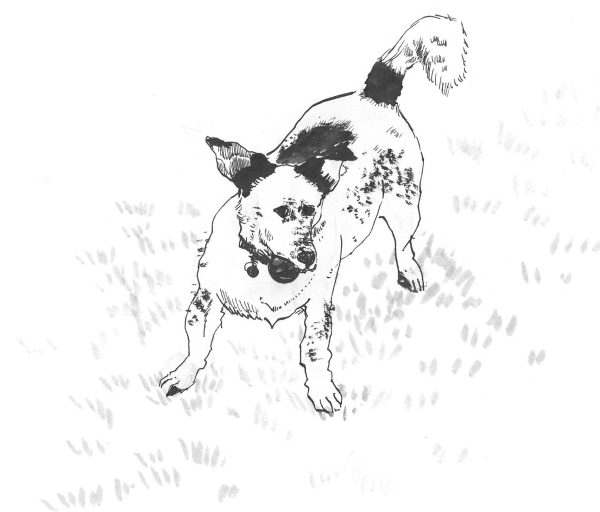
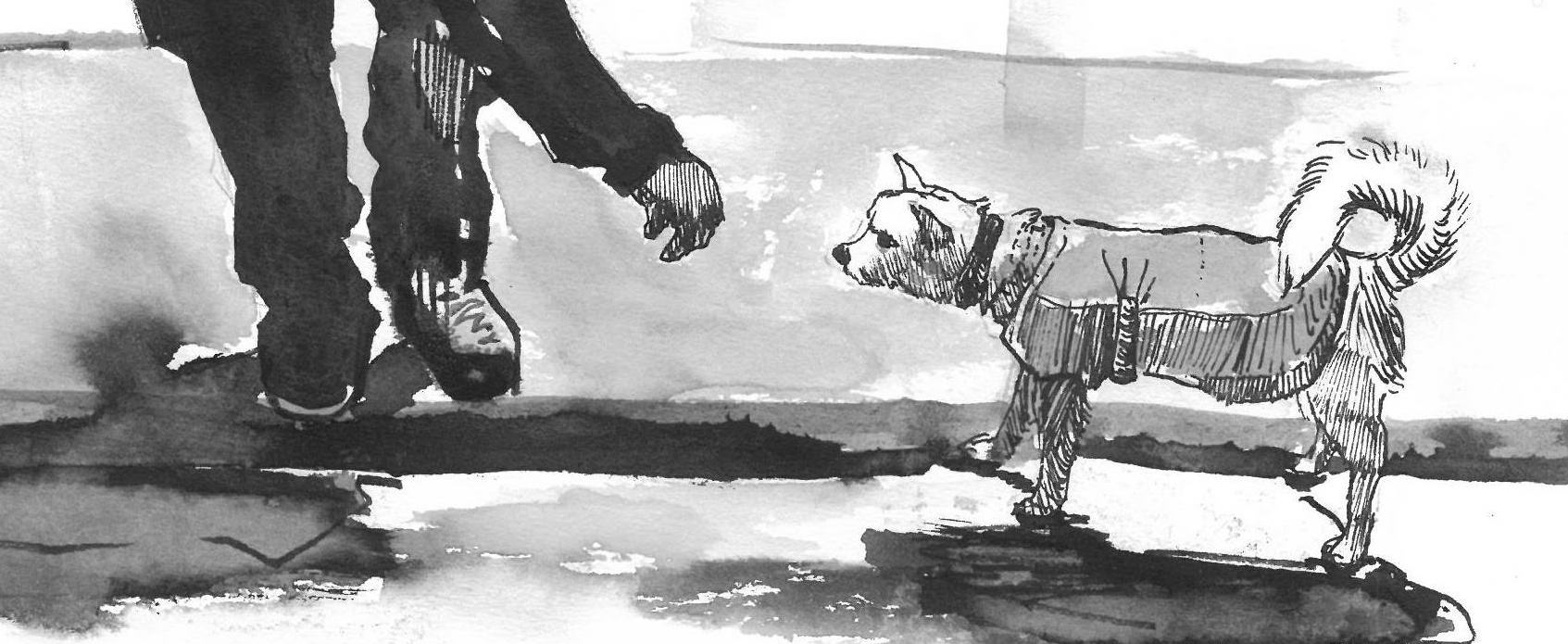
To look at the positives instead, I have found that having a dog has given me a community I wouldn’t have otherwise. One rainy day I met Lola and Ryan. I could see a yellow lump of a raincoat on the ground ahead of me and a young man standing next to it. As we got closer, the lump stood up and revealed a medium-sized dog.
“Can my dog say hi?” I called to the man. My dog is friendly, but a long-legged girl who can intimidate others.
Ryan, who was in his early 30s, looked down and said, “Yes, that’s what she’s been waiting for.”
The dogs did their ritual—butt sniffing and a bit of nose to nose—until my dog wandered off in search of squirrels.
His dog was beautiful, gentle and affectionate. Ryan told me his dog Lola saved his life.
“She was only five weeks old when I got her. She was free—her owners had to move and couldn’t take her. Me and my girlfriend had just broken up, and I was trying to get sober,” he told me. “I’ve been off drugs ever since I got Lola. I got work. She saved my life.”
Stories like Ryan’s aren’t built into government policy which focuses on regulating and controlling rather than the benefits of dog ownership.
Generally, in North America, animals are recognized as property. Like a couch or a car, they are yours to maintain. This differs in other places, including Quebec, Chile, New Zealand, Australia, and all of the EU, where animals are recognized as sentient beings. Animal sentience refers to an animal’s ability to perceive and experience emotions like joy, pleasure, pain, and fear.
While the Province of British Columbia doesn’t recognize animals as sentient, the BC Family Law Act does recognize pets as companions. In divorce cases in BC, pets are considered family members rather than possessions. This shift in law could be even more significant for pet owners than recognizing animal sentience.
Can cities plan for pets as family members?
In most communities, there is a playground for children under the age of five in almost every park; should there be a dog area as well? I write that facetiously, knowing the magnitude of pushback that would come from expecting dog parks to be as plentiful as children’s playgrounds. But I think the shifting demographics of family may require rethinking what constitutes community and who we are planning for.
There are, no doubt, challenges to dog ownership. Dogs and dog owners are not all the same. Dogs can be unpredictable, and not all owners have the resources they need to care for their pets. And then there are dog fighters as well as some breeders who treat dogs as a commodity, and do a lot of damage to the animals in the process. However, in my experience, being a dog owner offers an endless array of benefits. Most importantly, dogs create the coveted “third space,” a place where people come together and connect.
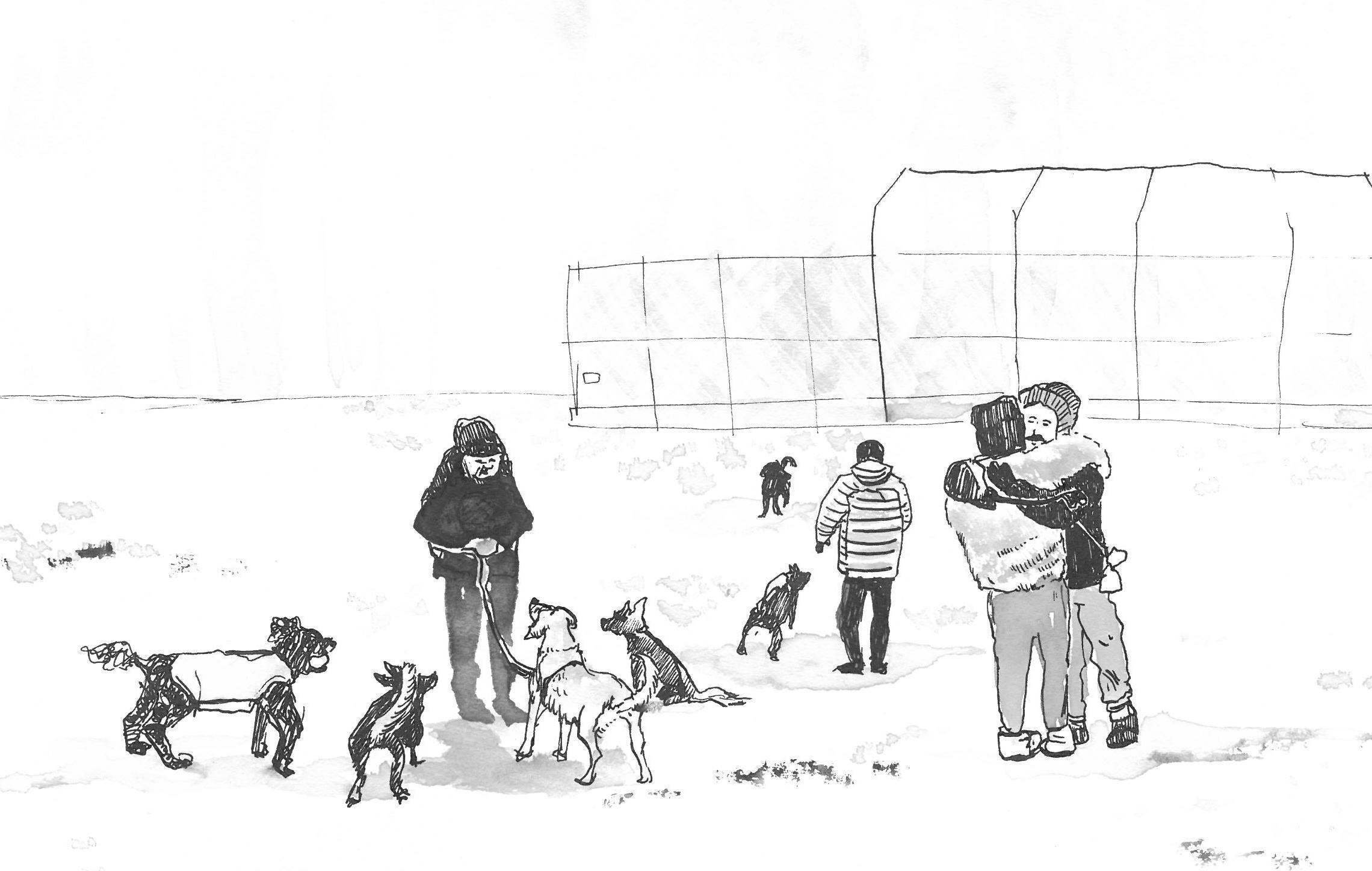
In 1980. William H. Whyte published The Social Life of Small Urban Spaces. The book summarizes the work that Whyte and his team completed in the 1970s in New York City. At the time, New York was permitting developers to increase the density of their buildings in exchange for public plazas at the ground level. However, the city wasn’t entirely sure the project was a success, and wanted to better understand whether the spaces they were trading for density were supporting the community in the ways they hoped for.
The first thing that Whyte noted was that underuse was more of a problem than overuse. He and his team identified that too few people were using the plazas. He attributed the success or failure of a public plaza to factors that included exposure to weather and sun, amenities like benches or water fountains, and the features that created “triangulation,” as Whyte called it, those things that brought people together and got them talking. These features included viewpoints, street performers, public art, and, I would add, dogs.
Dogs give people a point outside themselves to focus on and a way to initiate conversation. In 2015, a study from the Harvard School of Medicine identified that pets can “help create human-to-human friendships and social support, both of which are good for long-term health.” The study surveyed 2700 people in three American cities and one Australian city about how they connected to their neighbours. Pet owners were 60% more likely than non-pet owners to get to know people in their neighbourhoods. Around 40% of pet owners also reported receiving one or more types of social support (i.e., emotional, informational, instrumental) via people they met through their pet.
A follow-up report from Harvard in 2023 was subtitled, “Want to improve your mental and physical health? Get a dog.” The article documented the health benefits of dog ownership, from exercise to stress relief. The researchers found that “dog owners were 31% less likely to die from a heart attack or stroke than non-owners,” potentially saving the health care system millions. The researchers also found that dogs helped their owners expand their social circle. As the chief researcher noted, “People are drawn to dogs and want to interact with them and pet them, and in the process engage with you.”
While it may be well-documented that dog ownership supports physical and mental health, shifting the dialogue on dogs in urban planning is tricky. People who don’t like dogs really don’t like them and tend to be quite vocal. Even dog owners don’t necessarily like other dogs or their owners.
What is missing in government planning is data that supports the positive aspects of dog ownership. While the number of complaints is tracked, the day-to-day benefits are often overlooked.
There are ways that the benefits of having a dog could be collected. The number of social interactions experienced by dog owners compared to non-dog owners could be a starting point. I know that daily I have at least five interactions with people that I wouldn’t have without a dog—from the little girl who pet my dog at the food truck to the passers-by who commented on my dog’s fixation of my grilled cheese sandwich.
These moments have value for both people in the interaction. A study in 2023 found that “having more frequent conversations with both weak ties [casual acquaintances] and strangers was related to greater levels of well-being.” In essence, small talk is good for us, and dogs help facilitate a lot of small talk.
Data could also look at how public spaces are used, along the same lines that Whyte did more than 50 years ago. Like the plazas that Whyte investigated, parks are expensive and valuable assets. As Whyte noted, underuse is more often the problem than overuse. Counting the number of dog walkers in a park in mid-winter could be a way to increase the value of these places as sites for creating community, alleviating loneliness and encouraging exercise.
With data in hand, planners could work with rather than against dog owners. Dog owners who consistently gather in the same places could be invited to act as stewards and oversee the care of spaces. Dog owners could also help identify where there are gaps in amenities, and suggest improvements, from lighting to garbage cans to trees.
Working with dog owners would require a fairly fundamental shift in urban planning, from one where dog are patrolled and punished to one where they are supported and celebrated. But, given the increasing amount of social isolation and mental health issues in our communities, planners should be doing everything we can to provide positive outcomes for people. And, given the growing number of dogs in our communities, supporting dog ownership through a safe and balanced approach could be one way to do this.
Such a change in urban planning hints at something bigger—moving from risk aversion to, borrowing from writer Ross Gay, “inciting joy.” Changing our approach to dogs could shift the language of urban planning from individualism, isolation, and separation to one where joy, kindness, and community are keys to building places.
***
Maria Stanborough is the principal for C+S Planning Group and a writer based in Vancouver’s Eastside, the unceded territories of the xʷməθkʷəy̓əm (Musqueam), Sḵwx̱wú7mesh (Squamish), and səlilwətaɬ (Tsleil-Waututh) Nations. The off-leash dog areas per neighbourhood numbers was based on City of Vancouver data and analysed by Maria.
Amy Liebenberg is an urban planner and artist who divides her time above and below the surface of the ocean.