
On a weekday afternoon, a community centre in Vancouver hums in a way that rarely makes it into policy announcements. A seniors’ exercise class wraps up in one room while, down the hall, a group of parents waits to pick up their children from an after-school program. A newcomer sits with a staff member at a small desk, asking questions about a form they don’t fully understand. In the gym, a youth drop-in program is just beginning. None of this feels extraordinary…yet, this is what it means for a building to be the “heart of a neighbourhood.”
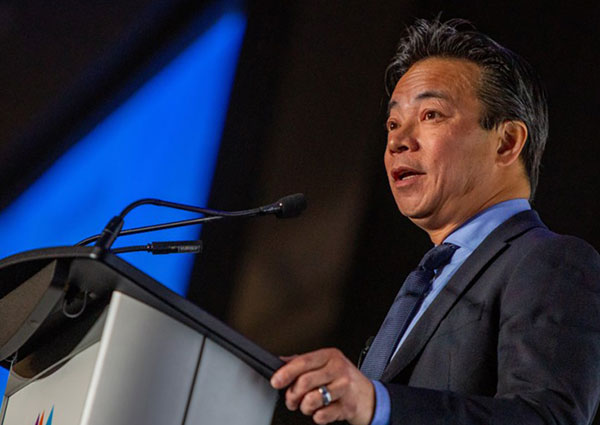
Last week, Mayor Ken Sim announced a $400 million commitment to rebuild and renew five community centres across the city. The promise was paired with another: a second consecutive year of a 0% increase in the property tax. The message was clear and compelling—Vancouver can invest in its communities without asking more from taxpayers.
It is a reassuring narrative. It is also incomplete.
Community centres are not just buildings. They are the places where many of the city’s most essential, and often least visible, forms of care are delivered. They host childcare programs, seniors’ services, youth outreach, recreation programs with subsidized access, and a wide range of informal supports that sit somewhere between public service and community life. Their value is not in their walls, but in what happens within them.
And this is where the tension begins to emerge.
The City’s 2026 budget, which also delivers on the 0% tax increase, does so by identifying roughly $120 million in savings and new revenue. Some of this comes through efficiencies. Some through increased fees. And some through a quiet but significant recalibration of services. Arts, culture, and community services see notable reductions. Planning and sustainability are scaled back. User fees rise. Service levels are under review.
These reductions are not abstract shifts. They land, quite literally, inside the very community centres the City is promising to build.
A new facility does not, on its own, provide a childcare space, run a seniors’ program, or support a struggling family navigating an unfamiliar system. These require staff, programming budgets, partnerships, and, often, subsidies to ensure access. They require operating dollars—the kind that do not lend themselves to ribbon cuttings or headline announcements.
What emerges, then, is a subtle but important contradiction. Vancouver is investing in the visible infrastructure of community while placing increasing pressure on the less visible work that gives that infrastructure meaning. We are building the shells of community, even as the life inside them is being asked to do more with less.
This is not unique to Vancouver. It reflects a broader challenge facing municipalities across Canada. Cities are responsible for delivering an expanding range of services, but remain heavily reliant on property taxes and user fees to fund them. The result is a system where capital projects—new buildings, new amenities—are often easier to advance politically than the ongoing operating investments required to sustain them.
But the implications are real. The scale of today’s investment reflects not only current needs, but years of deferred maintenance—decisions that were often invisible at the time, but that accumulate into visible and costly interventions later.
Over time, when operating budgets are constrained, community centres can begin to shift. Programs move toward cost recovery. Fees increase. Access becomes more limited for those who rely on subsidized services. Spaces that were once broadly public begin, gradually, to feel more conditional.
None of this is announced. It is experienced.
A parent notices that a program is no longer offered. A senior finds that a class has become too expensive. A youth drop-in quietly disappears from the schedule. These are small changes, individually. Collectively, they reshape fundamentally what a community centre is.
And this is where the story of the $400 million investment becomes more complex.
Much of the public conversation around this announcement has focused on its scale—the number of centres, the size of the investment, and the promise to hold the line on taxes. These are important details. But they also shape how the story is understood. When investment and restraint are presented side by side, the underlying trade-offs can fade from view, leaving the impression that both can be delivered without consequence.
With a municipal election approaching, the form of the announcement is not incidental. Capital projects—large, visible, and countable—align neatly with the rhythms of electoral politics. The less visible work of sustaining these spaces over time does not.
The question is not whether community centres matter. They do. The question is what kind of community centres we are building—and who they are truly serving.
A tax freeze can feel like relief, particularly in a moment of economic uncertainty. But it is not neutral. When revenues are held flat in the face of rising costs, the difference must be made up elsewhere: through fees, through service reductions, or through internal reallocations that are not always visible to the public.
As explored in a Spacing Vancouver piece leading up to the 2026 Budget, these are the costs we don’t see. They do not appear as line items in a headline. They show up in the quiet reshaping of services, in the gradual narrowing of access, and in the shifting burden of paying for the city we share.
There is, of course, another way to read this moment—not as a contradiction, but as a choice.
We can choose to build new community centres. We can choose to keep taxes flat. But we cannot pretend these choices exist independently of one another. They are connected through a set of trade-offs that deserve to be made visible, not smoothed over.
If community centres are truly the heart of our neighbourhoods, then the conversation cannot end at their construction. It must extend to the people, programs, and supports that bring them to life. Otherwise, we risk creating spaces that look like community from the outside, but feel increasingly out of reach within…and that is a cost worth seeing clearly.
***
- The Costs We Don’t See
- Ken Sim’s Swagger and the Language of Inequality
- Trifecta of Control: Stealth. Speed. Compexity
**
Erick Villagomez is the Editor-in-Chief at Spacing Vancouver and teaches at UBC’s School of Community and Regional Planning. He is also the author of The Laws of Settlements: 54 Laws Underlying Settlements Across Scale and Culture.