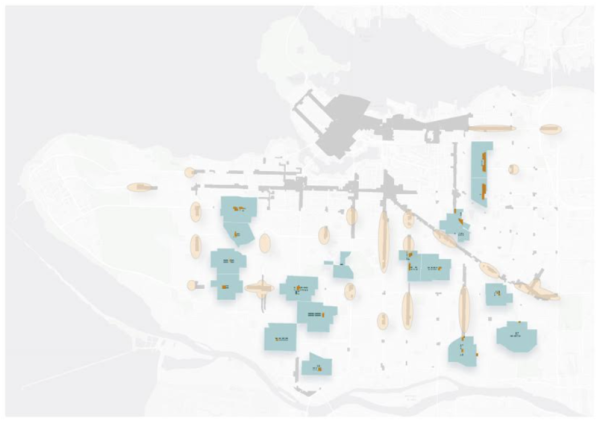

The headline image is a composite image showing the former Neighbourhood Centres (gold), which received broad community support as part of implementing the CityPlan directions (1995), overlaid with the proposed “Villages” (aqua) that will come before Vancouver City Council on July 14. Council endorsed the Neighbourhood Centre locations in 2005 after 18 months of in-person community discussions through the CityPlan Vision process. These locations were not arbitrary—they reflected a citywide conversation about where neighbourhood hearts should grow and thrive.
At first glance, the two maps appear to tell the same story. In fact, they do not. Rather than building on Vancouver’s long-established neighbourhood centres, the proposed Villages map largely bypasses them, despite decades of public planning, community support, and public investment.
My first thought was that the aqua polygons were simply a graphic error—that someone had accidentally shifted the proposed village boundaries away from the established, and cherished, neighbourhood centres that continue to need support if local retail is to thrive.
These gold areas are already well distributed to support walkability and strategic public investment as arterial high streets with decent transit service. Vancouver’s 22 Business Improvement Areas (BIAs), established beginning in 1989, also align closely with these centres under previous Council policies.
Below is a snapshot of the Business Improvement Areas (BIA), launched in 2018. The Vancouver BIA Partnership describes itself as being “united by purpose and passion for retail neighbourhoods, and all that they can be!” It is worth remembering that Vancouver’s BIAs represent more than 25,000 businesses and commercial property owners and account for approximately $53 billion in assessed property value (Vancouver BIA Partnership, 2026). Earlier this year, Mayor Sim proclaimed April 20–26 as Vancouver Business Improvement Areas Week.
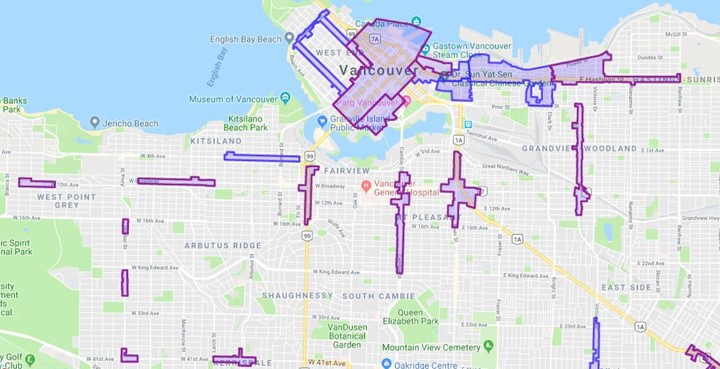
These centre locations are intentional. Together, they form the bones of a “City of Neighbourhoods.” They deserve thoughtful political support through strategic public investment that strengthens each one as a distinct urban heart—a place that convenes and serves its surrounding community within a comfortable five- to seven-minute walk.
These are Vancouver’s villages.
The proposed aqua polygons will never become genuine villages unless the existing centres and BIAs are first allowed to decline. And that is a real possibility if Council approves the proposed Villages strategy tomorrow.
What I struggle to understand is what is driving these policies—and the urgency to approve them.
Instead, let’s return to the CityPlan implementation work and update it for today’s challenges. We need thoughtful intensification that delivers genuine affordability while building on a planning framework that already has deep community legitimacy. It reflects a time when staff and residents rolled up their sleeves together to imagine the future of each neighbourhood centre. (We can even call them “villages” if that helps secure political buy-in.)
Below are a few relatively recent examples—in city-building terms—of that foundational work. Each invited local insight and identified ways to accommodate growth alongside placemaking through what was then described as “aspirational engagement.” All of these images were produced by the City of Vancouver at public expense and remain relevant—perhaps more than ever.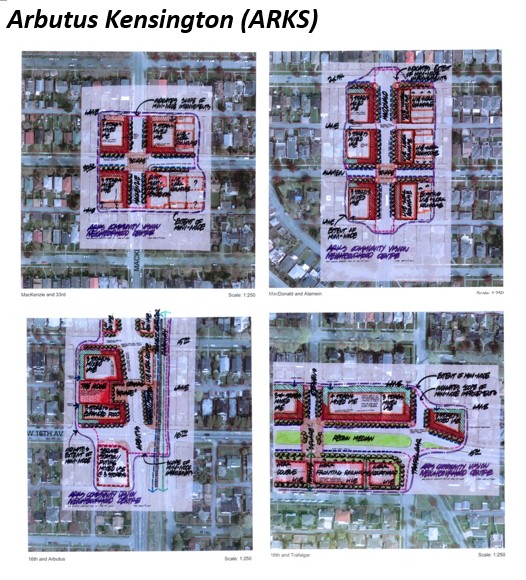
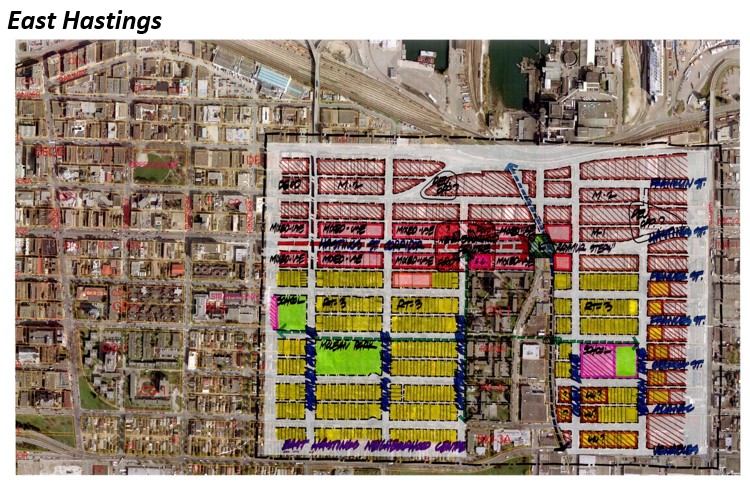
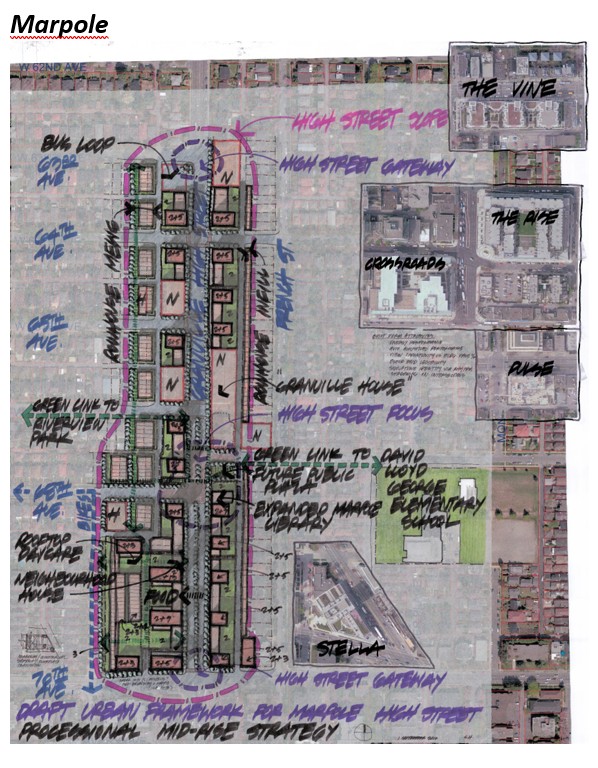
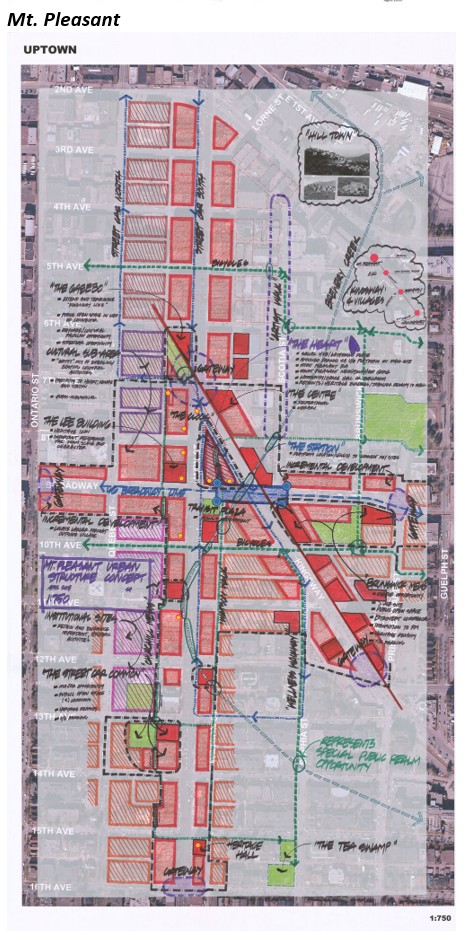
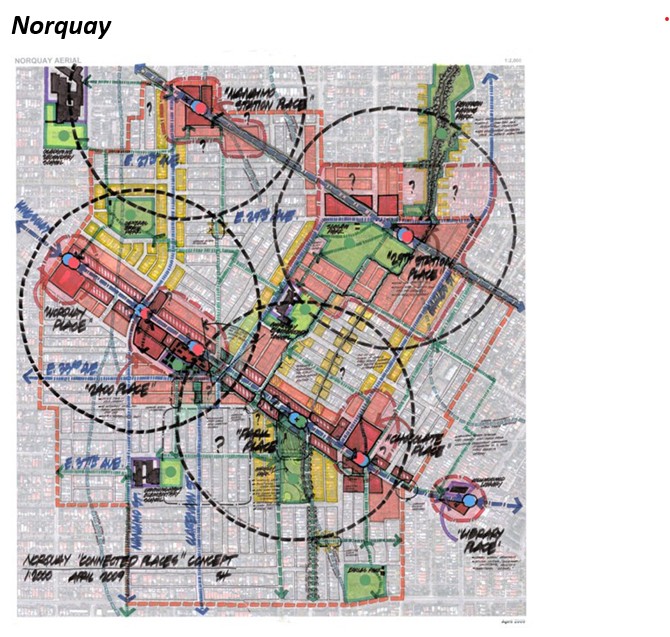
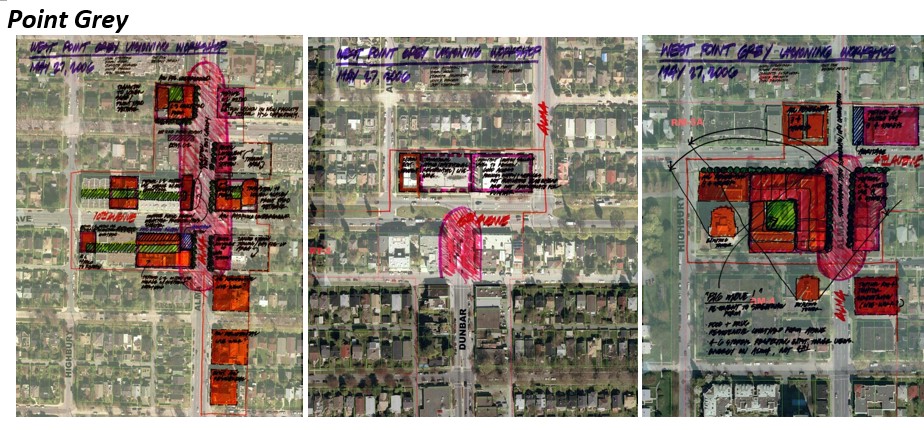
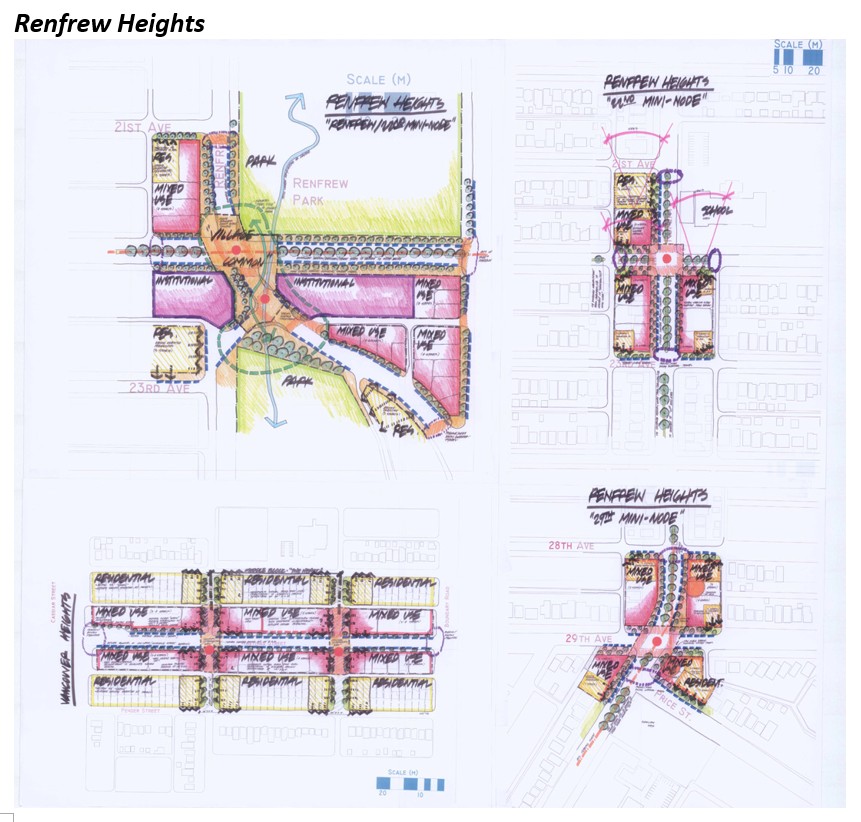
These community sketch frameworks provide the essential groundwork for strengthening our existing villages—the places that already function as neighbourhood hearts.
The next phase of implementation should begin with updated community mapping, including:
- Existing commercial tenancies, including anchor businesses, to identify strategies that strengthen long-term viability and vibrancy.
- Local urban systems—including open space, food, water, ecology, habitat, and movement—to better integrate neighbourhood systems with citywide and regional networks.
- Strategic sites where additional—or reduced—intensification is appropriate, including opportunities for City acquisition before upzoning increases land values.
- Indigenous, cultural, historical, thematic, and landscape features that can inform authentic storytelling, interpretation, and permanent or temporary public art.
- Recreational, institutional, religious, and social assets, together with service gaps, to support more effective amenity bundling and co-location.
- Opportunities for placeholding that enable community-led initiatives and build participatory social capital through stronger local relationships.
- Site-specific precedents that reinforce neighbourhood character while responding to local programming needs.
We already know how to do this work.
So what is stopping us?
Council should direct staff to renew their focus on strengthening these existing neighbourhood hearts and report back with the work program and budget needed to advance them. That work should be undertaken in consultation with local communities and should guide strategic public investment that responds to neighbourhood, citywide, and regional priorities.
If Council truly wants villages, Vancouver already has them. The task before us is not to invent a new geography but to strengthen the one that generations of residents, businesses, planners, and elected officials have already built together.
***
Related Spacing Vancouver articles: