
Many residents encounter municipal government for the first time when a controversial proposal appears in their neighbourhood.
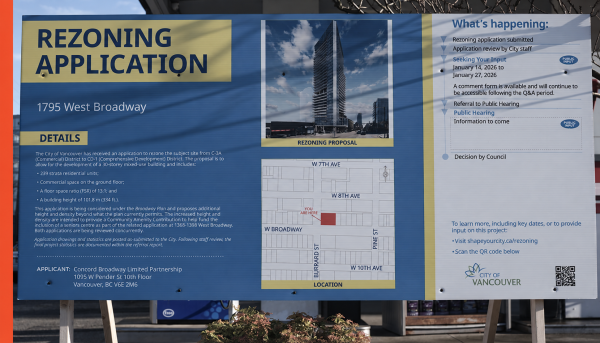
A rezoning sign goes up on a familiar block. Neighbours begin discussing it online. Community groups organize meetings. Local media publish opinion pieces. Councillors receive emails from supporters and opponents. Weeks later, a public hearing is held and council votes.
From the outside, it can appear as though municipal decisions emerge suddenly. In reality, by the time a proposal reaches council chambers, it’s often been under review for months—even years. The public moment is usually the final act of a much longer process.
Understanding how decisions move through city hall helps explain why municipal government can feel both highly participatory and frustratingly slow.
A Different Kind of Government
Unlike provincial or federal governments, municipalities deal primarily with the physical city. They regulate land use, infrastructure, public space, transportation, utilities, and development. As a result, many municipal decisions involve not only political judgment but also engineering, financial analysis, planning policy, environmental review, legal requirements, and public consultation—often simultaneously.
That complexity shapes everything about how decisions are made.
Consider a hypothetical proposal for a new rental apartment building near a SkyTrain station. Long before residents see a public notice, the project may already have undergone extensive preliminary discussion. Architects, planners, engineers, and developers typically begin by examining existing zoning regulations, neighbourhood plans, transportation requirements, urban design guidelines, infrastructure capacity, and financial feasibility. Early conversations with city staff frequently occur before a formal application is even submitted.
This pre-application phase is largely invisible to the public. But it shapes what eventually gets proposed—and how.
Moving Through the System
Once an application enters the municipal system, it moves through a series of reviews involving multiple city departments. Planning staff evaluates whether the proposal aligns with existing policy and long-term planning objectives. Engineering staff assess transportation impacts, utility servicing, drainage, and infrastructure capacity. Other specialists may review heritage considerations, accessibility requirements, environmental performance, childcare needs, public realm improvements, or park impacts.
Many significant projects are also reviewed by specialized bodies that most residents rarely encounter. Vancouver’s Urban Design Panel provides professional design advice on major developments, while the Development Permit Board reviews significant development permit applications involving major projects. These institutions help shape the quality of buildings and public spaces long before they become part of the city.
Throughout this process, projects often change significantly. Building heights may be adjusted. Public spaces may be redesigned. Unit mixes may evolve. Transportation access points may shift. Affordability provisions and urban design details can all be revised before a proposal ever reaches council.
Many projects are also shaped by planning documents approved years earlier. Community plans, area plans, transportation strategies, neighbourhood policies, and city-wide planning frameworks establish expectations long before an individual application reaches city hall.
As a result, debates that appear to concern a single building are often influenced by decisions made through earlier planning processes that received far less public attention. When staff evaluates a proposal, they often interpret policies adopted years before the project itself was conceived.
How Discretion Works—and Why It Matters
This iterative, negotiated character is one of the defining features of Vancouver’s planning system—and one of the least understood.
Many cities rely primarily on zoning codes: fixed rules that specify what can be built where. A building that meets the rules gets approved; one that doesn’t does not. The system is relatively predictable, if sometimes inflexible.
Vancouver takes a different approach. Many significant projects are evaluated through a discretionary process that combines technical analysis, policy interpretation, design review, and negotiation. Zoning sets parameters, but within those parameters—and sometimes through processes that seek to change them—considerable judgment may be exercised. Height, density, setbacks, public benefits, and architectural design can all become part of the review and negotiation process.
In many municipalities, zoning functions primarily as a fixed rulebook. If a proposal complies with the rules, approval is largely administrative. Vancouver instead evolved a hybrid system in which policy, design review, staff judgment, public benefits, and negotiated outcomes can all play significant roles. This approach emerged gradually through Vancouver’s distinctive legislative framework and decades of planning practice.
The result is a system capable of producing highly tailored urban outcomes—but also one that can appear difficult for outsiders to understand.
One of the most consequential expressions of this discretion involves Community Amenity Contributions, or CACs. When a developer seeks to rezone a property to allow more density than existing zoning permits, the city may seek a contribution as part of the rezoning process—through cash payments or in-kind amenities such as affordable housing, childcare spaces, community facilities, or park improvements. In negotiated CAC rezonings, the contribution can be informed by the increase in land value associated with the rezoning.
In principle, CACs allow the city to capture some of the value created through rezoning and redirect it toward community benefits. In practice, negotiated CACs can be difficult for the public to follow. Negotiations occur largely outside public view, and residents may have little insight into what was requested, what was offered, or how a particular outcome was reached. This can make the relationship between additional development rights and resulting public benefits difficult to understand.
Supporters of discretionary planning argue that it gives the city flexibility to achieve better urban design, secure community benefits, and respond to changing circumstances in ways that rigid zoning codes cannot. Critics contend that the absence of fully predetermined outcomes can create uncertainty for applicants, inconsistency across decisions, and a process that favours those with the resources and expertise to navigate it effectively.
Both perspectives have shaped civic debates for decades. Neither has fully prevailed. What is undeniable is that discretion—much of it exercised during staff review and before a proposal reaches council—can shape outcomes long before any public hearing occurs.
Public Consultation
As proposals move through review, public consultation often begins. Open houses, workshops, online surveys, advisory committees, stakeholder meetings, and formal comment periods allow residents to learn about projects and provide feedback.
Consultation serves several purposes. It can identify local concerns, reveal unintended consequences, improve project design, and help decision-makers understand public sentiment. It also serves a democratic function—embedding public voice into processes that would otherwise be conducted largely by professionals.
At the same time, consultation is among the most contested aspects of municipal governance.
Some residents feel their input arrives too late to meaningfully influence outcomes. Others argue that consultation processes can be dominated by a relatively small number of highly engaged participants who may not reflect the broader community. Still others maintain that public participation—however imperfect—remains one of the most important democratic functions of local government.
These tensions have become particularly visible in debates over housing and growth, where the stakes are high, and the range of competing views is wide.
Council and the Public Hearing
Eventually, many major proposals arrive before council.
At this stage, councillors are typically reviewing extensive staff reports that summarize technical analysis, policy considerations, consultation results, and recommendations. Public hearings, where required, allow residents to address council directly before a final decision is made.
These hearings are among the most visible rituals of municipal democracy. They can also be among the most emotional. Housing projects, neighbourhood plans, transportation changes, and major developments often raise questions that extend well beyond the specific proposal: questions about growth, affordability, community identity, environmental priorities, and the future direction of the city itself.
A rezoning vote, in this sense, is rarely just about a building.
No Single Actor Controls the Outcome
Even at this final stage, council is not making decisions in isolation. Municipal governance is shaped by a continuous interaction among elected officials, professional staff, private applicants, regional agencies, provincial legislation, financial constraints, and public opinion.
This complexity helps explain why municipal processes can sometimes feel slow.
A single proposal may involve transportation planning, utility infrastructure, environmental standards, legal review, public engagement, financial analysis, and long-term policy objectives. Balancing these considerations takes time.
It also helps explain why municipal politics can feel contradictory.
Residents may want more housing but less disruption. More consultation but faster decisions. More public amenities but lower taxes. These are not irrational positions—they reflect the genuine difficulty of reconciling competing priorities in a dense, growing city.
Municipal government, in this sense, is less about imposing solutions than managing ongoing trade-offs. Every neighbourhood, street, building, park, and public space reflects countless decisions made over time by different actors working within different constraints.
Understanding that process does not eliminate disagreement. But it does make the city easier to read.
Next in the Series: Part 3 examines why housing has come to dominate municipal politics—and what that dominance reveals about the limits and possibilities of local government.
All the articles in the City Primer series:
- City Primer — Part 1: What Is Municipal Government?
- City Primer — Part 2: How Cities Actually Make Decisions
- City Primer — Part 3: Why Housing Dominates Municipal Politics
- City Primer — Part 4: Why Cities Are Always Short of Money
- City Primer — Part 5: Why Municipal Politics Feels So Broken
- City Primer — Part 6: Why Civic Literacy Matters
***
Erick Villagomez is the Editor-in-Chief at Spacing Vancouver and teaches at UBC’s School of Community and Regional Planning. He is also the author of The Laws of Settlements: 54 Laws Underlying Settlements Across Scale and Culture. This series is part of an ongoing effort to make urban governance and city-building more accessible to a broader public audience.