
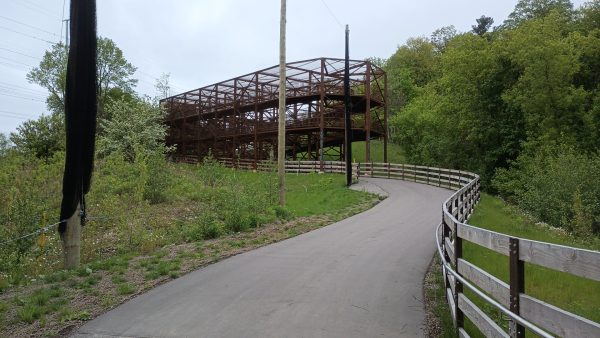
Last year was a tough year for cycling and road safety in Toronto. The Ford government secured a third straight majority in February and followed up on last year’s Bill 212 with Bill 60, which banned cities from converting motor vehicle lanes to bike lanes or any other prescribed purpose. They also banned speed cameras via Bill 56 despite the evidence proving speed cameras save lives. These two bills effectively denied the residents of Parkside Drive a safer street – something already approved in principle by Toronto City Council – while several other cycling projects are also at risk of being scrapped.
The consequences of this provincial legislation were evident at the city level in the pausing or scrapping of projects such as the Beltline Gap Connections, Jones Avenue upgrades, contraflows on Logan and Carlaw, and Sheppard Avenue East. The city also proceeded with resurfacing parts of Eglinton Avenue without putting in the long-promised bike lanes.
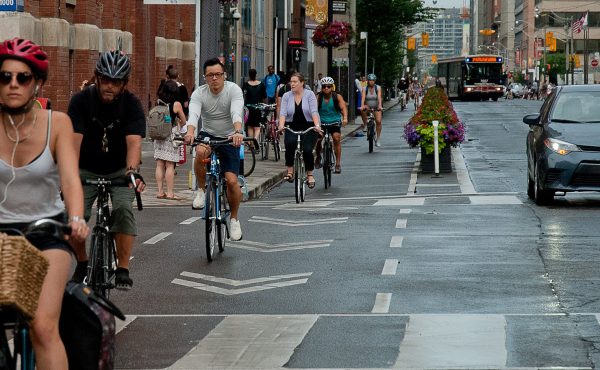
In terms of cycling installations, this year saw roughly ten kilometres of new on-street bike lanes, making 2025 the slowest year since the pandemic. Port Union Road was the most significant installation at almost two kilometres, after many years of delays, while other notable installations included Steeles from Brimley to McCowan, Champagne-Alness from Chesswood to the Finch Hydro Corridor, Mill Road in Etobicoke, the Wallace-Emerson Neighbourhood Streets Plan, and contraflows on Silverthorn and Blackthorn. As for off-road trails, the Finch Hydro Corridor in Scarborough got extended west from Birchmount to Pharmacy, while The Meadoway gained a new stretch from Marcos to Midland.
2025 additions are in green. For the complete map legend click on the arrow in the upper left.
2025 marked what would have been the end of the 2016 ten-year cycling network plan that called for 335 kilometres of on-street bike lanes – a plan that has since been replaced with rolling three-year near-term plans. During that 2016-2025 timeframe, almost 144 kilometres were installed, or about 43% of that plan. While that progress may appear to be slow, it still represents more bikeways than everything installed from the first bike lane on Poplar Plans in 1979 to 2015. It’s also double the prior ten years’ installations from 2006 to 2015, which saw about 68 kilometres installed. However, such progress needs to be made faster given the growing pace of climate change.
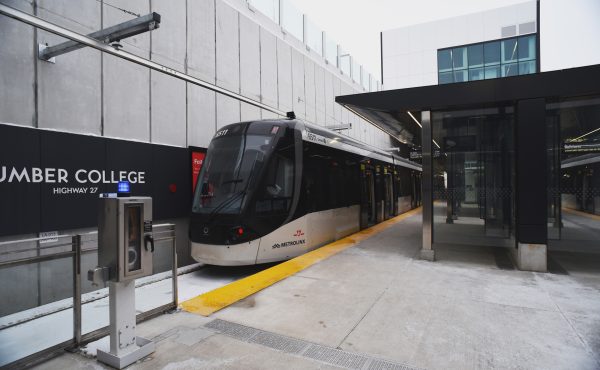
Even with the latest bike lane restrictions under Bill 60, there is a lot to be optimistic about as we approach an election year. Last month saw City Council approve twenty kilometres of bikeways; more than in any previous cycling motion excluding the bike plans, which only get approved in principle and require projects to return to council. The bulk of those projects are outside the downtown core, with Kingston Road being the longest at six kilometres. With Bill 60 exempting projects underway, the imminent opening of the Eglinton Crosstown LRT could finally give the City of Toronto the green light to install bike lanes on Eglinton from Keele to Mt Pleasant in the spring, though Phase 2 from Mt Pleasant to Brentcliffe remains at risk. Finally, the Province reconfigured 500 metres of Bloor Street west of Islington Avenue to add an eastbound traffic lane while preserving – but narrowing – the bike lane.
On the trail front, the East Don Trail is expected to open this spring, which will become a game-changer by bringing Toronto one big step closer to having a continuous trail from Lake Ontario to the Toronto Zoo! A short stretch of The Meadoway from Bermondsey to Eglinton is expected to be built in due course, while a few other gaps remain to be filled. Etobicoke will get its own hydro corridor trail through the Etobicoke Greenway, which is expected to be completed in late 2027. The West Scarborough Rail Trail will move forward per last month’s approval of Councillor Parthi Kandavel’s member motion, though it’s not a slam dunk given the TTC’s desire for a pocket track at Warden Station to store two subway trains.
Finally, 2025 saw the lowest number of traffic fatalities since Toronto’s Vision Zero road safety plan was approved in 2016; the number of deaths dropped by half from 78 in 2016 to 39 in 2025. One cyclist* – Samuel Willetts – was killed in 2025 compared to the record-breaking six killed in 2024. However, it remains to be seen whether this trend can continue in light of the speed camera ban.
With nine months until Torontonians head to the polls, I encourage you to ask your candidates to continue supporting cycling and safer streets in general. Last month’s City Council meeting proved we can continue to move forward despite the Ford government’s actions, but we need to keep holding Mayor Olivia Chow and councillors accountable to ensure this happens.
*AUTHOR’S NOTE: The City of Toronto’s Vision Zero dashboard stated two cyclists were killed in 2025. However, one of those deaths, in Etobicoke, involved a motorcycle style e-bike that wasn’t pedal powered and therefore shouldn’t be counted as a cyclist death.
Robert Zaichkowski is an accountant, long-time road safety advocate, and author of the Two Wheeled Politics blog.
One comment
Thank you for such a high resolution article with data since 1979 bike lanes plan, more recent developments and future developments. We need to keep the pressure on Mayor and Councillors. While Toronto has lost policy space on Municipal issues because of the bully Ford (bike lanes, speed cameras, affordable housing, safe sites…), we must resist and make best use of space available to us and protect it.