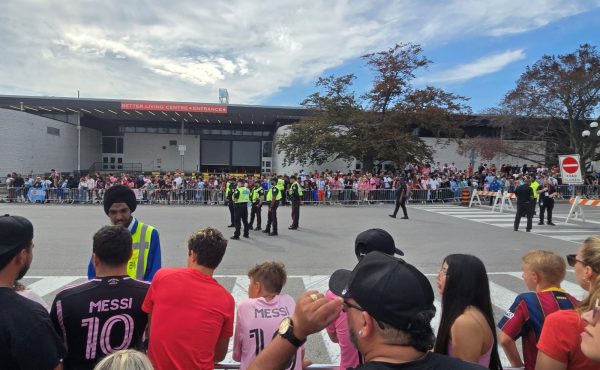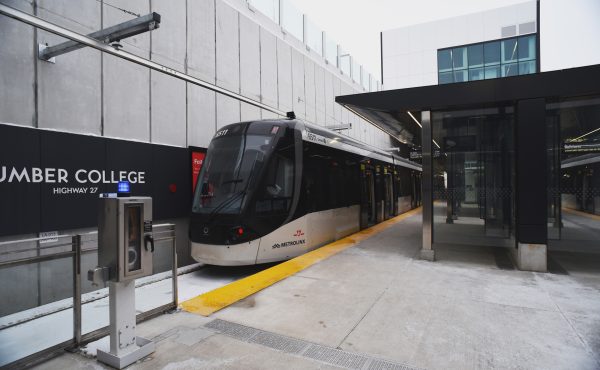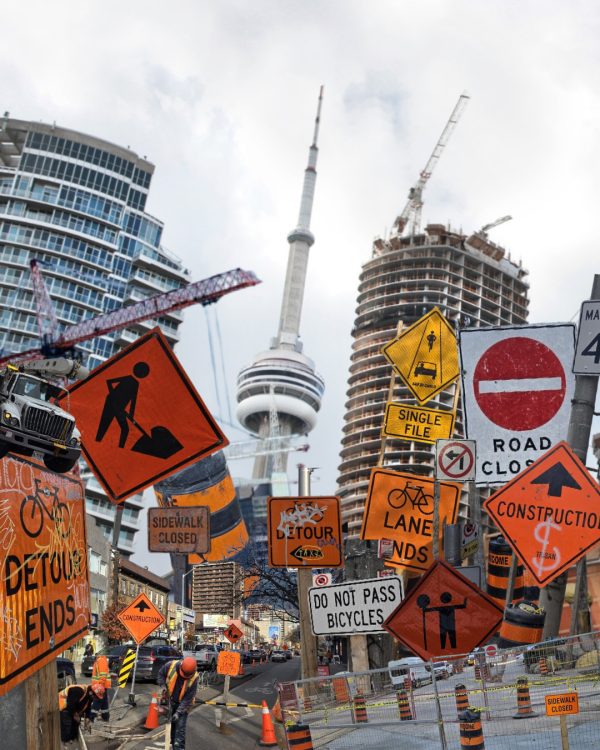
As the World Cup rolls into town, Toronto is bracing for a centre-stage summer welcoming thousands of fans, players, and staff arriving to enjoy the festivals, the food, the patios, and to endure the city’s other seasonal pastime: construction
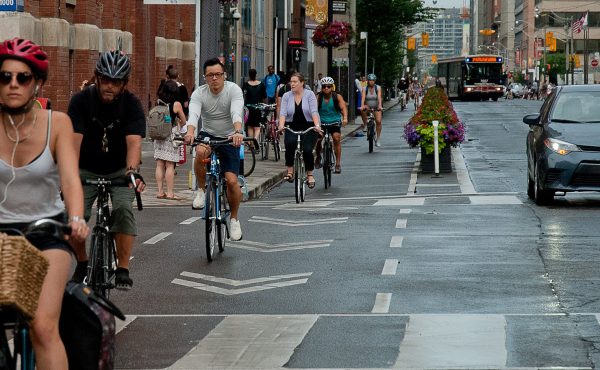
Toronto is one of the most congested cities in North America, largely due to the sheer amount of ongoing construction. The city has over 750 active sites at any given time and regularly holds the North American record for most cranes. While construction is a nuisance for drivers, these sites can pose real dangers to pedestrians and cyclists, who have to deal with direct exposure to debris, potholes, poor signage, and reduced road space forcing them to share the road.
A new research report on cycling safety I have prepared as part of my graduate work at the University of Toronto paints a stark picture of construction’s negative impacts on the city’s cyclists. The study combines nearly 10 hours of site surveys and bicycle counts with 13 expert interviews with city staff, activists, and researchers. It overwhelmingly found that construction across Toronto routinely prioritizes motor‑vehicle flow, often at the direct expense of cyclist safety
None of the sites surveyed met all of the best practice standards set out in the Ontario Traffic Manual (Book 7) and most had glaring safety issues that significantly affected how cyclists navigated those sites. Less than half of the sites had advanced signage for cyclists before the bike lane abruptly ended due to construction. Seven out of ten sites had obstructed sightlines preventing cyclists from looking before merging with traffic, and only two sites had tapered bike lanes (allowing a slow transition into vehicle traffic). Moreover, eight out of ten sites had some sort of observed negligence on the part of the contractor including no (or wrong) signage, debris left askew, open fencing, and on-site workers not paying attention to cyclist safety. And while accessibility was not the primary focus, the study also found that only half of sites had pedestrian ramps for mobility devices when the sidewalk was closed and people were forced to detour onto the road.
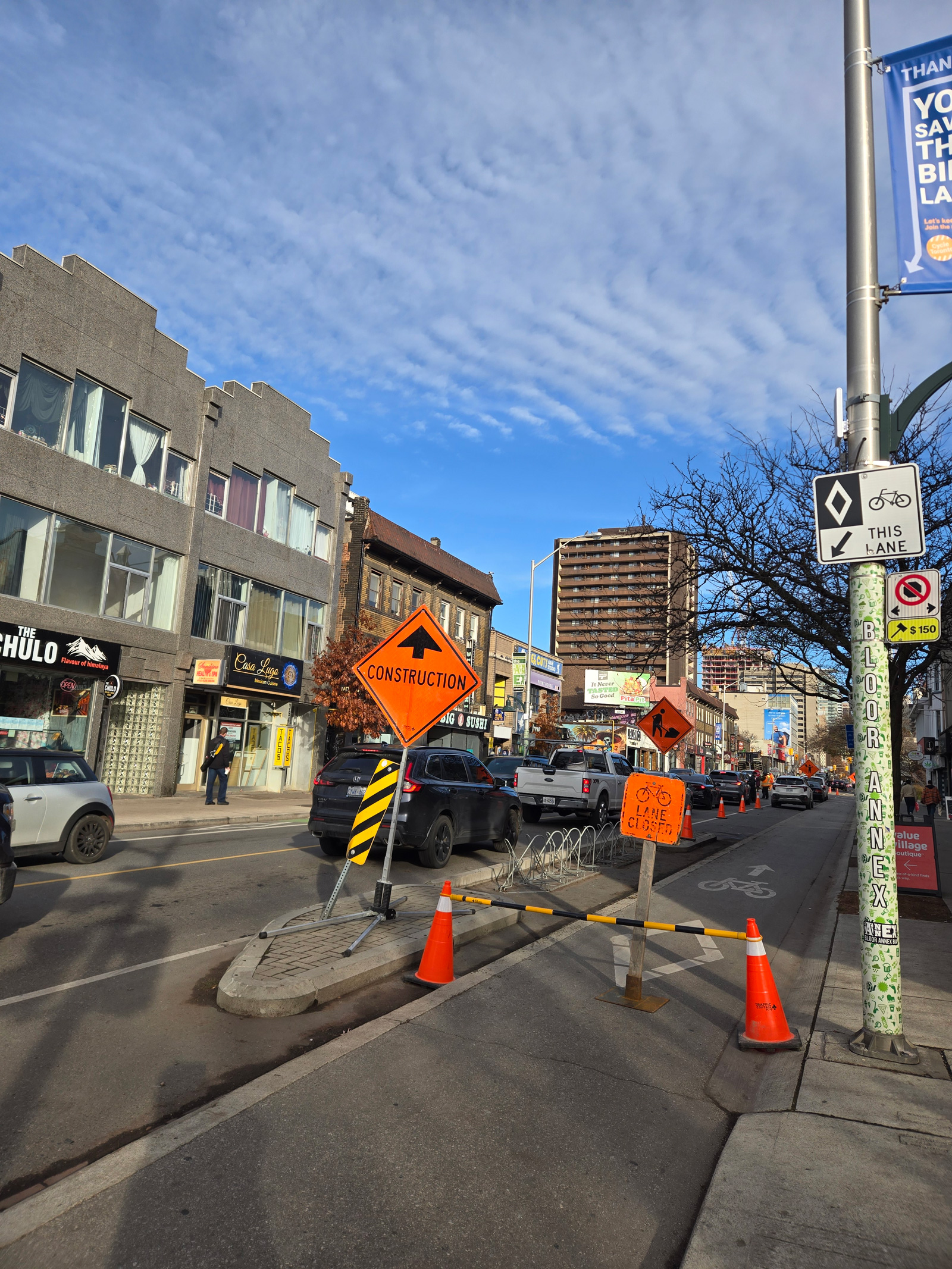
The sudden end of safe cycling infrastructure due to construction forced cyclists onto the roadway where they had to contend with a stream of vehicle traffic, with often little to no space between themselves and passing cars. To avoid merging, many cyclists chose to take the sidewalk (90 riders) or even ride though active construction zones (61 riders). Interviewees overwhelmingly agreed that vehicle exposure is the biggest risk and a deterrent to cycling: “you’re going to lose a lot of people who are just starting to feel comfortable cycling,” one road‑safety researcher warned. That loss matters; with a limited cycling network and ambitious active‑transportation targets,Toronto cannot afford to let construction erode hard‑won modal share.
For many cyclists, the results of this study will not be surprising. It’s been less than two years since a woman was killed as a result of an illegally placed construction bin in the cycle track, another tragedy among others who have been killed or seriously injured by construction related causes. Yet as activists point out, the city has done very little to address these problems, allowing contractors to continuously get away with negligence.
“It’s so frustrating and just makes me really, really angry. The choices that are made at every, almost every construction zone. It’s not saying that to you in words, but it’s saying to you in the design that you don’t matter if you’re not in a car. If you die, it doesn’t matter. If your life is ruined by injuries, it doesn’t matter. As long as that driver got through, that’s what matters.”
– Road safety advocate interviewed for the report
Despite having policies like VisionZero that claim to protect all road users, the on-road reality often falls short. Now, as the world turns its eyes to the city, the cracks in the pavement will be on full display. The city needs to take serious action to ensure everyone can safely get to the places they live, work, and play. Practical steps include better design and clearer rules: mandatory advance signage, protected detours for bikes, stricter contractor enforcement, and higher road‑closure fees to fund compliance. Toronto will always be growing, building, and moving but public safety cannot be left perpetually under construction.
Images by Jessie Ye.
Jessie Ye is a graduate research student at the University of Toronto, Department of Geography and Planning.