
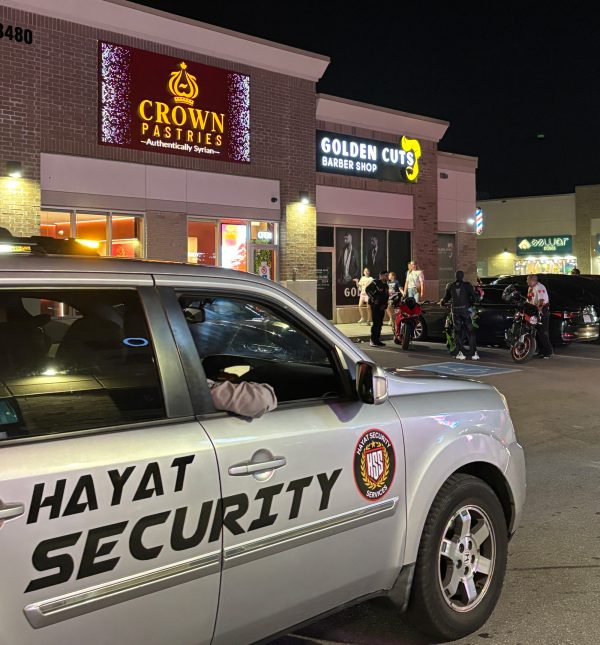
The way spaces are designed influences how people socialize, build community, and go about their day-to-day lives, directly impacting how they commute, shop, and eat. That influence can manifest in unexpected ways, however, as the City of Mississauga is discovering through Ridgeway Plaza.
Have you heard of the term “bed town”? It is used to describe commuter suburbs where folks who work in the city return primarily for their dwelling, or, namely, just to go back to their beds. This phenomenon is driven by the suburban sprawl, the centralized economy, and the commercialization of city centres, creating a culture that is increasingly car-reliant. This auto-centric city plan is visible across major North American cities, including ours, creating a stark contrast between downtown Toronto and the rest of the GTA.
Mississauga has traditionally been perceived as an iconic example of such a “bed town.” That is why it was surprising when, in March of this year, the New York Times put Mississauga on the map, calling it “The Suburb That Won’t Sleep”, thanks to the booming popularity of Ridgeway Plaza. Located at the furthest west point of Eglinton Avenue, this warehouse-lot-turned-food-plaza continuously attracts locals and tourists alike. This unforeseen popularity has led to challenges for surrounding neighbourhoods in adapting to its growth. Congestion and noise have triggered escalating demand for measures to address these issues. In the aftermath of the City of Mississauga’s direct intervention in May of this year, I wanted to explore Ridgeway from the inside and through the voices of visitors and locals.
Not your average Canadian suburb
Growing up in a bed town myself, in Port Coquitlam, B.C., my youth was backdropped by the classic suburban landscape, where strip malls and bus station loops were our after-school hang out spots. Whenever I visit, my hometown remains comfortably familiar – the convenience stores, barbershops, local grocery stores, with the same cashiers as when I was a teenager, are still there. The neighbourhood isn’t flashy, nor does it attract people beyond the local residents, but its consistent use over decades keeps it going. This is why I was intrigued by Ridgeway Plaza. How did this outer city strip mall attract global attention? Is the Plaza reinvigorating local residential neighbourhoods? Bringing these questions with me, I decided to spend seven hours observing the Plaza and talking to people there and in the surrounding neighbourhoods to get a better sense of its appeal, the concerns, and the impact of recent changes. Seeing teenagers seeking shade under storefront signs in the perimeters of parking lots triggered a deeply rooted nostalgia, a universal language of the Canadian suburb.
Isolated amidst quiet residential and formerly industrial areas, the Plaza is a massive outlier in the landscape. Its sprawling layout houses over 115 food spots, including a wealth of Halal options, as well as clinics, massage parlours, hair salons, boutiques, and jewelry stores. Many of them are open well past midnight, or even for 24 hours. Fields of parking lots spread around the islands of businesses. At peak times, cars queue up, waiting for spots to open. To a traditional urban planner, it may be a nightmare of auto-centric design, but to the thousands who gather there daily, the space has adapted to the particular needs of local communities, organically transforming this former empty lot into something between an open-air mall and a marketplace. It has become a third space – neither home nor work – for a car-dependent suburban city.
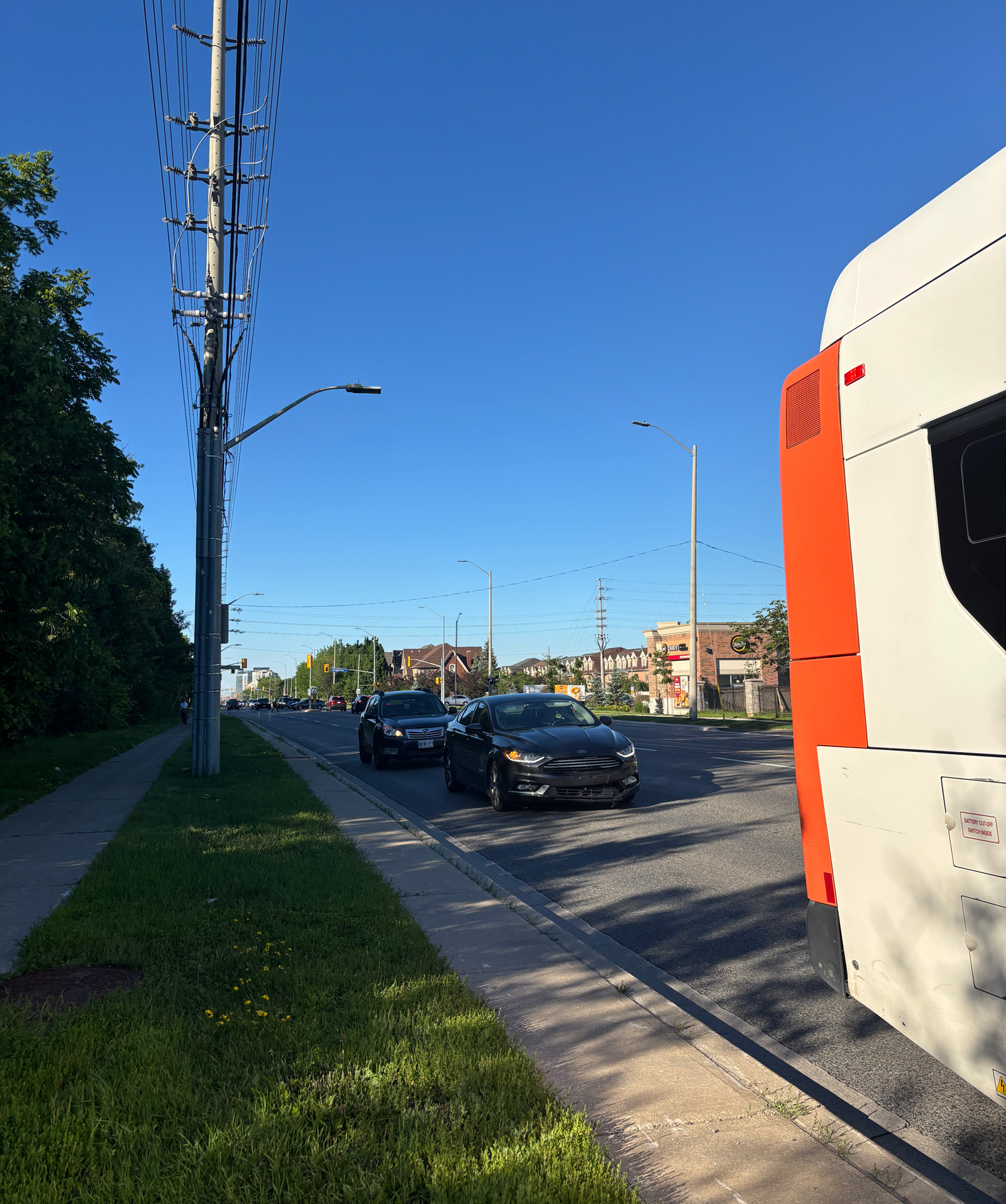
Evolution throughout the day
From 4 PM to 11 PM on a Saturday in late June, I witnessed a dynamic transformation of the Plaza.
4:00 PM
The plaza appears to be a larger-than-average suburban commercial hub. Rather than one mega strip mall, the Plaza is structured like a village of businesses, clusters of stores and restaurants tracing along parking lots and interconnected by single-lane roads lined by sidewalks. Cars dominate as people hustle into medical appointments or grab early dinners. I also notice groups of teenagers on the sidewalks, talking and walking with a cold drink in hand. The late-afternoon sun feels especially blistering because of the vast stretches of asphalt and the lack of trees, carrying the remnants of its past as a warehouse lot.
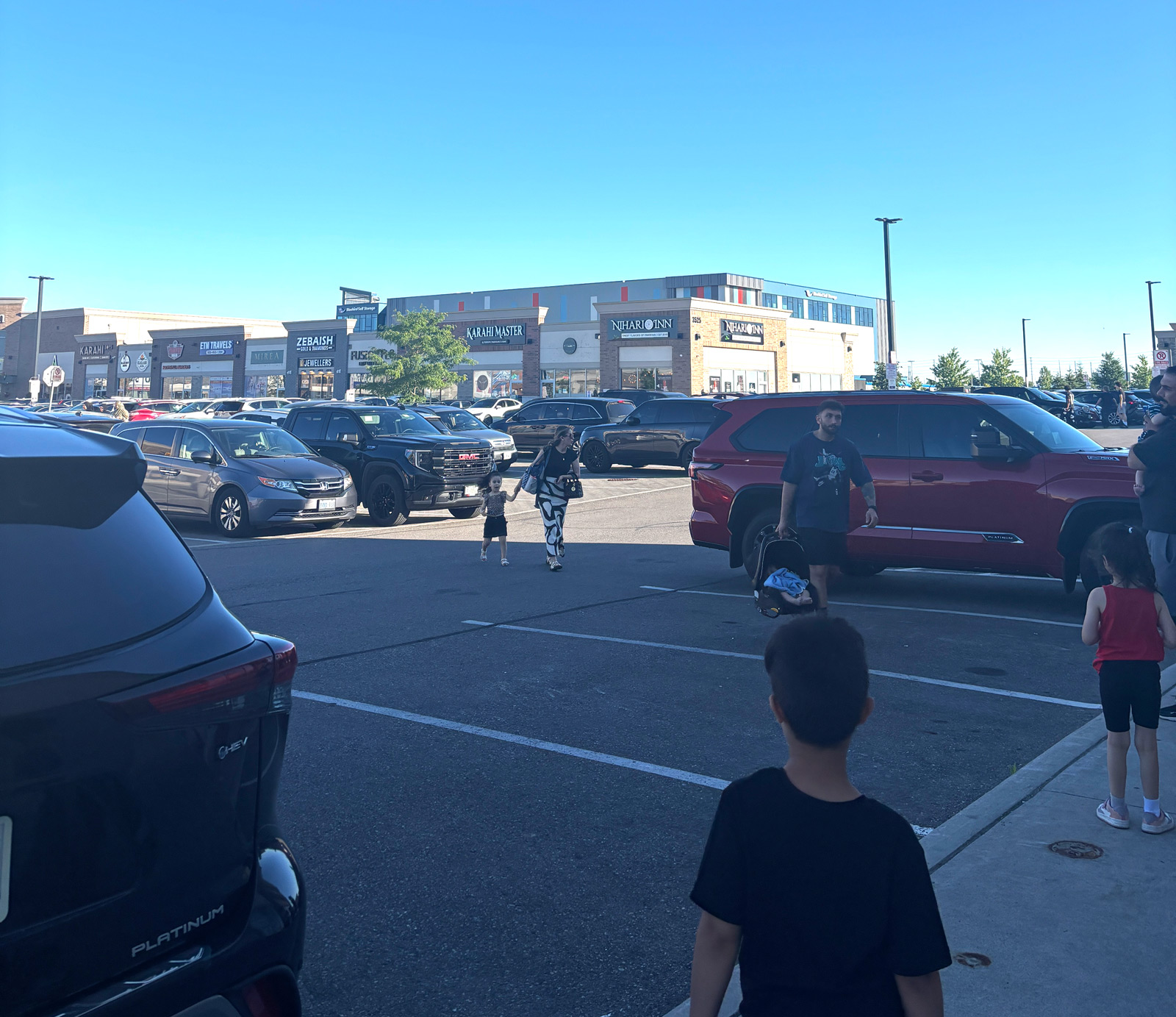
7:00 PM
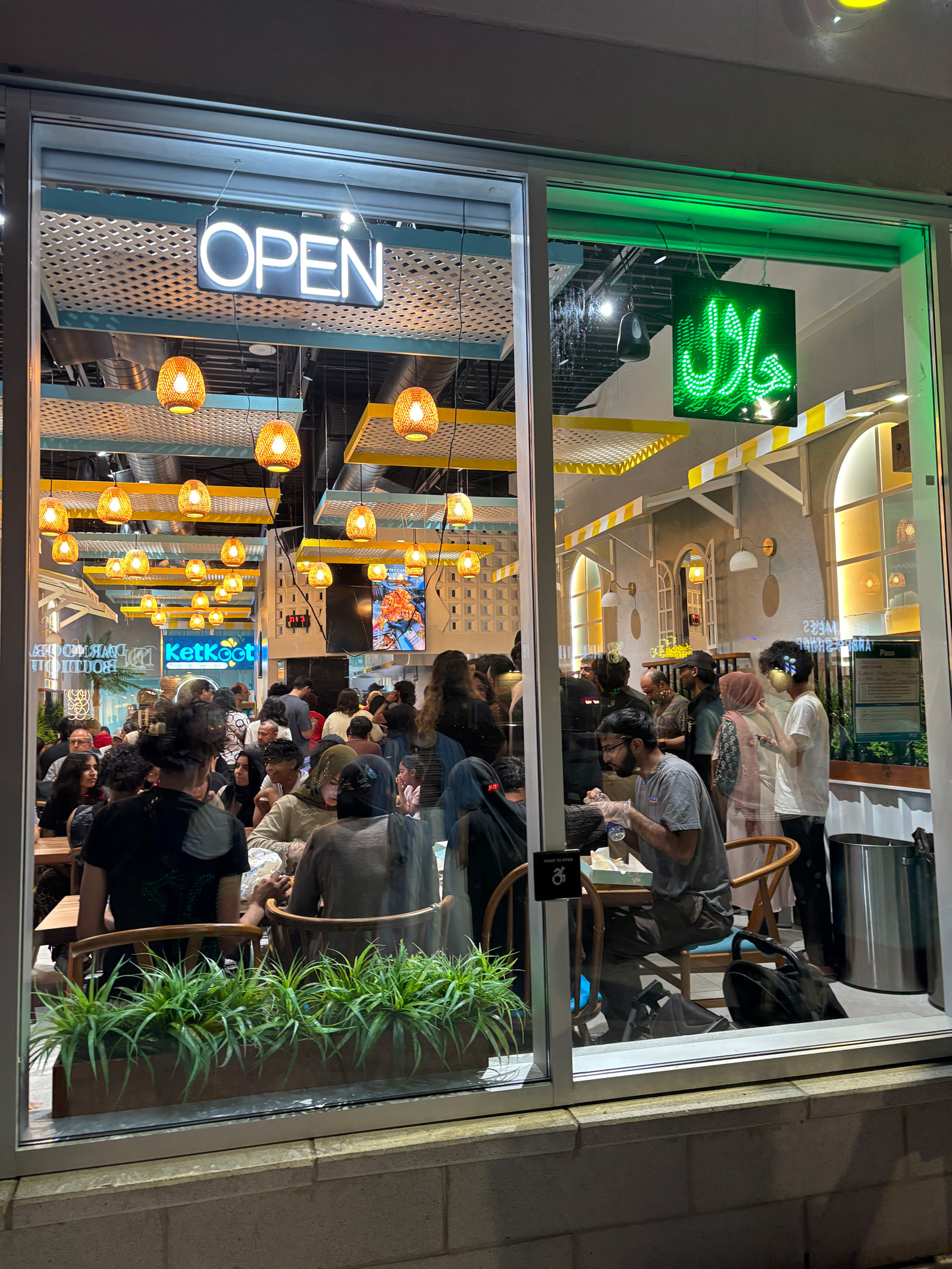
As the sun begins to set, the energy of the space shifts. Bigger groups begin to pour in and customer lines start to form, spilling out of restaurants and onto sidewalks. The Plaza quickly fills with multi-generational families, couples, and friends talking and eating around restaurant tables and catching a FIFA game on the wall-mounted TVs.
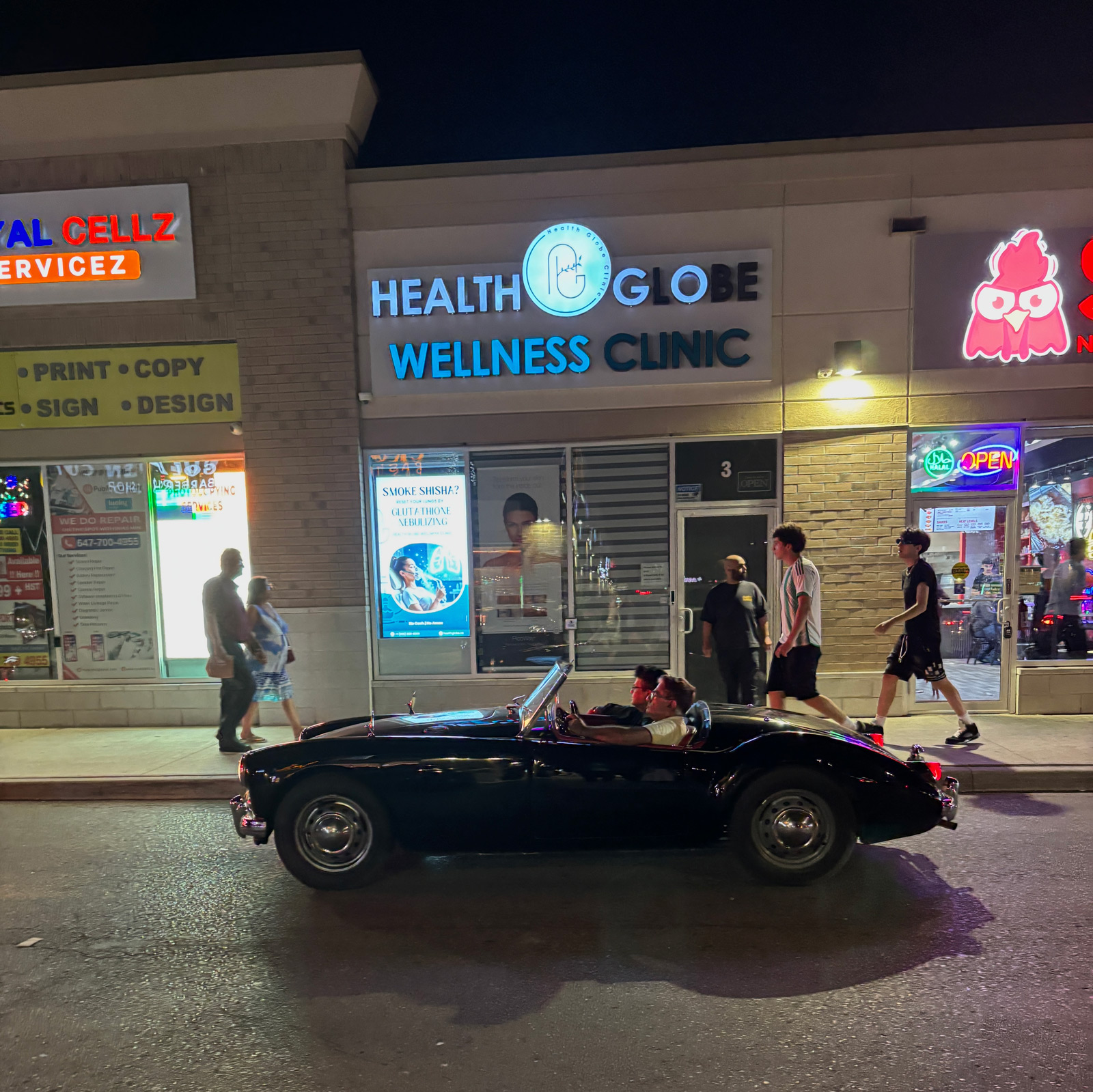
10:00 PM
By 10 o’clock, the space has shifted from family dinner to a night market filled with younger people. Cars idle, waiting for an empty lot. At this hour, the physical geography of the parking lot is completely rewritten. People use car hoods and popped trunks as dining spaces and seats to chat. The use of this space challenges how we view the parking lot and strip mall, as people adapt them to stay longer and create more spaces to hang out. It’s an enactment of civic agency.
The manufactured vs. organic third space
Intentionally designed third spaces are often curated to garner hype, such as the themed cafes, bars, and lounges that have been popping up downtown in recent years. Ridgeway Plaza is an antithesis to this manufactured idea of a third space. The Plaza seems to have emerged organically and unexpectedly, moulding itself to the auto-centric mobility of the communities who live in the area.
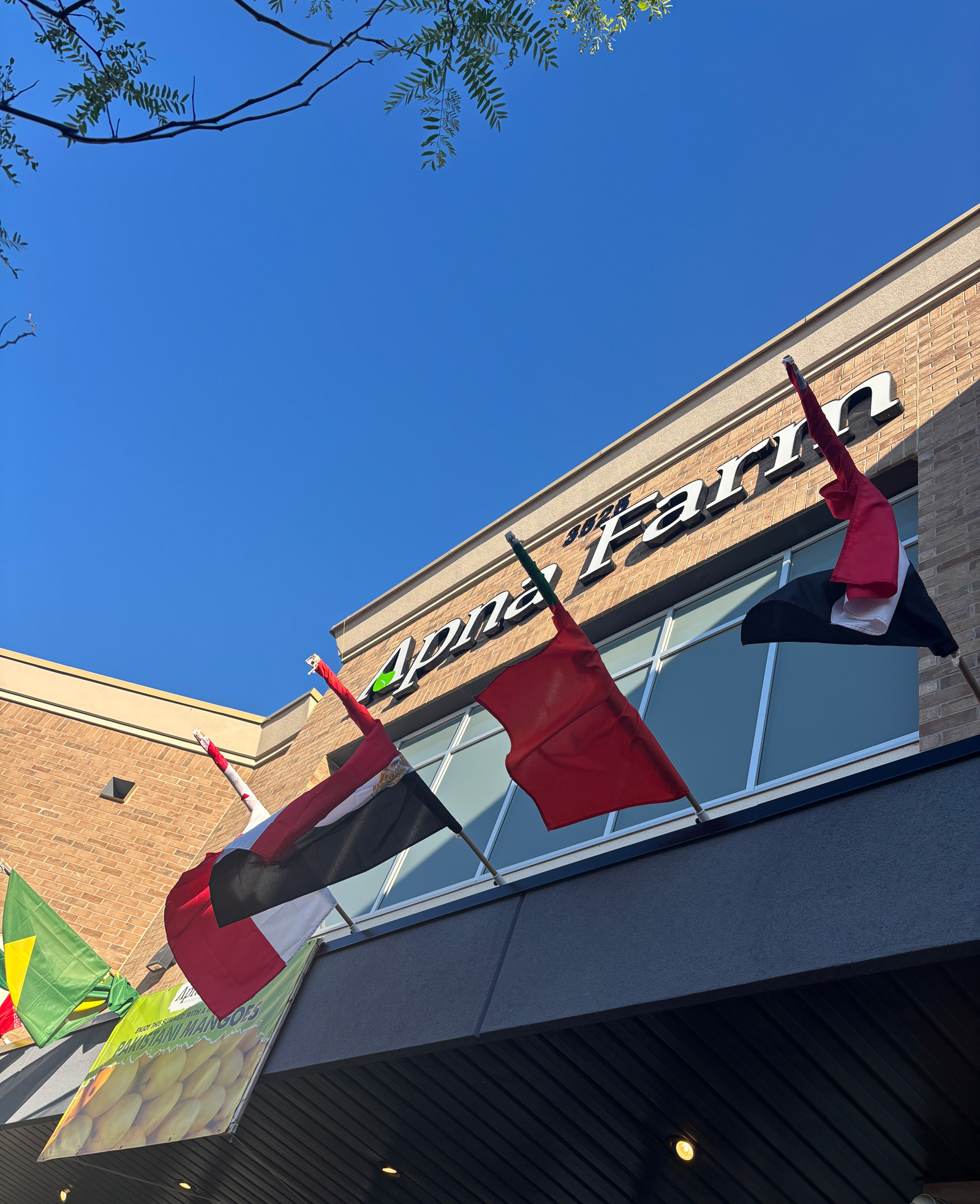
For multicultural communities, the Plaza is a safe space. Some visitors describe it as a “little slice of home”, reminiscent of West and South Asian (amongst other regions) tastes and sounds familiar to them. Crucially, the businesses and customers here are not a monoculture. As one of the interviewees, Laiba, described it:
“I know it’s known as a Halal Plaza, but it’s not a monolith by any means. Visiting here could expose you to such diverse cultures. You can experience cuisines ranging from Palestinian, Turkish, and Ethiopian to Somali, and we shouldn’t generalize the clientele into a broad group of people.”
The cost of success: Contentious space
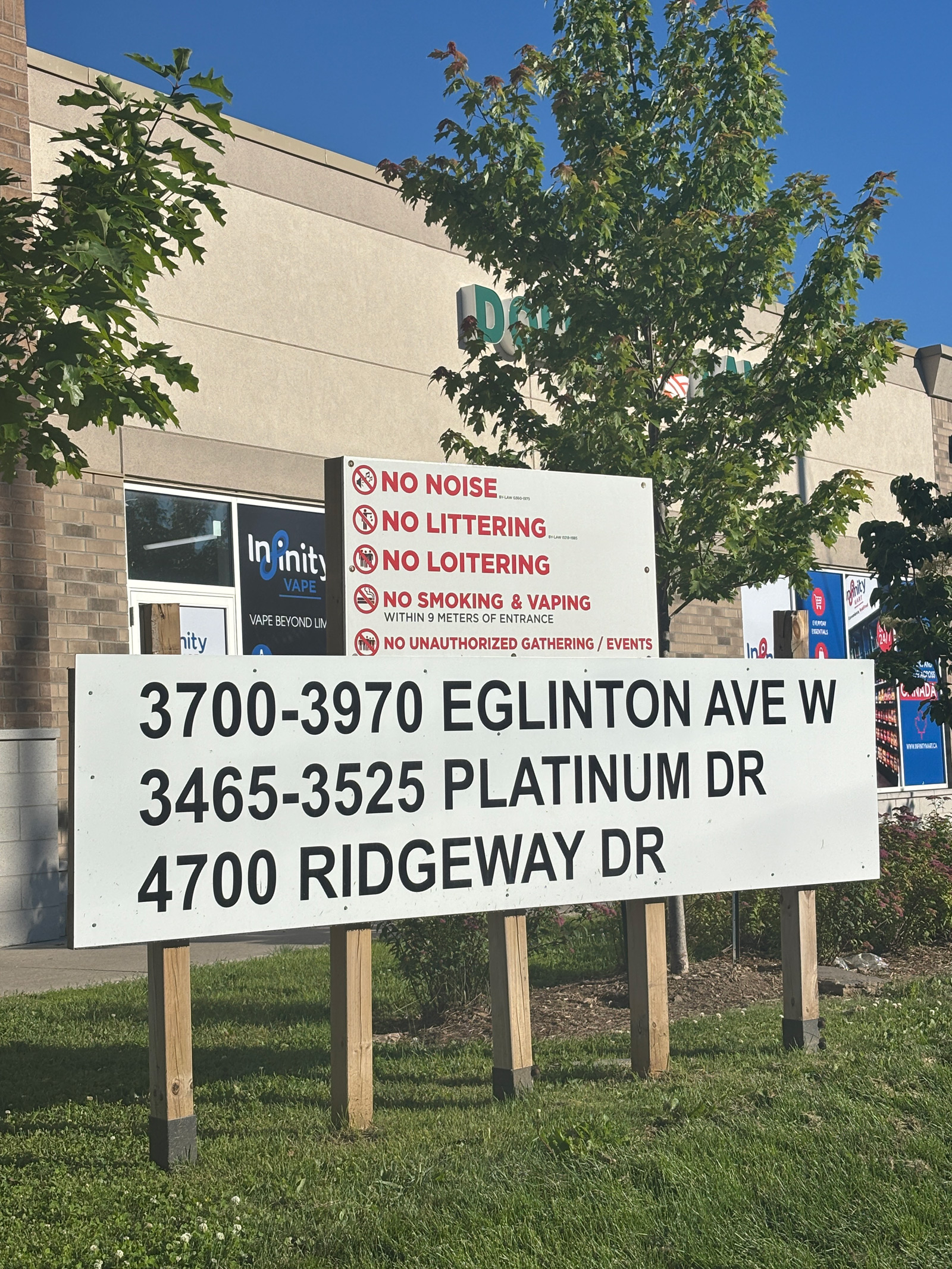
However, this booming popularity has not been met with universal welcome, becoming a contentious space between its enthusiasts and its residential neighbours. Since 2022, when the Plaza opened, the City of Mississauga has received 112 complaints regarding extreme congestion, late-night noise, unauthorized fireworks, street racing, and waste storage issues.
Residents living nearby have expressed frustration over the chaos. One resident, S*, noted:
“The place is open very late and serves local cuisines, nothing like what you might see at Square One. I like the food, but I try to avoid eating there because some people drive like back home, wherever it might be. It’s poorly planned and busy most of the time. The noise, garbage flying around, and people speeding with mufflers off. It’s gotten a little better over time, though.”
Another resident, J, shared similar feelings:
“I essentially live down the street from it. I do get takeout from there and appreciate the diversity of choices and how late they’re open. But the reckless driving is such a big problem. So many people who drive like traffic laws don’t apply to them.”
After the storm: Ridgeway restrained
To address these “nuisance gatherings”, the city considered zoning changes to scale back and limit the number of restaurants. This prompted pushback from business owners, who petitioned for expanded parking and better traffic management instead, growing concerned that a reduction, rather than accommodation, may hinder the Plaza’s presence for the communities and customers they serve. Ultimately, the city decided on a 15 percent reduction in restaurant space, anticipating a natural cool-down could occur as businesses close.
The city further pursued a legal injunction to prevent “planned unsanctioned events” (such as the Pakistani and Afghan independence day events that took place last year) to reduce density and control large-scale activity. After months of discussion, in May, the city and the Ridgeway Plaza condo corporations struck a formal security deal, altering the landscape by installing 11 entrance gates, 17 security cameras, 61 speed bumps, and aggressive no-parking and surveillance signage alongside a heavy presence of paid-duty police.
This raises some questions: when does socializing get flagged as “loitering”? Who gets to decide where and how people celebrate their heritage? As a result of implementing these security measures, the Ridgeway Business Association formed, expressing concerns that while these changes appear to be a step in the right direction, some of these safeguards could interfere with customer access, and the massive costs to implement and maintain security infrastructure may ultimately trickle down to tenants through increased fees.
For regular patrons, seeing gates and cameras go up in a space where they come to socialize may feel like an invalidation of their community. Another Ridgeway visitor, Mozhdeh, echoes this sentiment, highlighting potential underlying prejudices:
“My family from the U.S. and Europe exclusively eats and shops at Ridgeway when they visit. The food is really unique. I do understand the concerns from locals about noise, but when I lived in the area in the early 2000s, the traffic and noise were always there. People should know that Ridgeway was extremely popular for street racing even back then, and the area is a mix of houses and warehouses, not just a residential area.”
Another visitor, F, responded similarly to these changes to the Plaza, expressing that while some bylaw infractions are genuine, the policing of minority joy often carries double standards:
“The energy at Ridgeway does kind of feel different compared to a few years ago. Yes, the parking issue has gotten better since the city got involved, but it used to be an even more lively place than you see now. I think the complaints about this place are also fuelled by people who are already upset about immigration. I’m guessing a majority of the complaints are from people who have never been, but they know who goes there.”
A bed town no more: Mississauga’s new identity
What is a third space if restrictions and surveillance continue to suppress its flourishing and natural use? A parking lot where people crowd together to share food, culture, and conversation is fulfilling the sense of civic life, a space that’s not work, nor home, but somewhere in between. The friction caused by Ridgeway’s unexpected surge may be a symptom of a city undergoing growing pains, as Mississauga rapidly transitions away from its sleepy suburban identity to becoming a self-sufficient and cosmopolitan city. Echoing Laiba, the city is not becoming a “little Toronto” but something else, something that emerged and adapted from its residents’ everyday lives and needs.
“People I met in San Francisco even know about this place. Now, Mississauga is a place where people from the GTA will travel to do things. It’s not even like a mini Toronto anymore. It’s its own ecosystem”
The Plaza challenges the dominant urban planning ideal of what counts as a third space and the forms it can take. Its rapid growth may be a testament to how much a space like this was needed. Ridgeway reminded me of how strip mall parking lots served as a backdrop to my adolescence – sitting on a hot concrete curb with a slushie from the convenience store, or late-night hangouts in a friend’s parked car. People can turn anywhere into a third space, no matter its intended purpose. The Plaza is proof that in a car-centric suburban context, communities will find ways to bend the built environment to their needs. The solution to congestion and safe access must benefit both neighbouring residents and the Plaza’s visitors. It has to be possible to find a version of Ridgeway Plaza where neighbours are respected, communities feel welcome, and the continuing excitement and sense of pride that this Plaza brings are fostered. Beyond the growing pains that the Plaza is experiencing, I hope the tensions of this transition may be supported safely, while also retaining its authenticity that shaped this space in the first place.
*Some interviewees are identified only by an initial for the sake of privacy
All photos by Kaede Ashizawa
11 comments
Well written. Yes, Ridgeway is no longer the same. The way the city started charging has made it difficult for store owners to survive. When it first opened, we used to go with friends and enjoy it. It is a family hub. They could ask the police to patrol the area to keep it safe, but restricting it too much makes store owners feel overwhelmed and local people feel unwelcome by the city.
Excellent obsrvation
Being a foodie, when it all began, I was a regular visitor. Now, although the food is still good, the hassle of getting in and out is not worth it and, There are plenty of quality places across Miss. that will offer you quality food without the overcrowding you experience at Ridgway!
As a resident of the community adjacent to the plaza, I have significant concerns about its impact on the surrounding neighborhood.
First, the volume of traffic has led to frequent accidents and reckless driving along Ridgeway Drive and Eglinton Avenue. This has become an ongoing safety concern for residents.
Second, while it is understandable that teenagers gather to socialize, these gatherings too often result in fights, disruptive behavior, littering, excessive noise from revving engines, and modified exhaust systems. These issues negatively affect the quality of life for those living nearby.
The Ridgeway Plaza is far more than a typical strip mall. With over 200 storefronts, it functions as a major commercial destination rather than a neighborhood shopping plaza. Its scale is not comparable to the small community strip malls many people remember growing up with, and it has brought levels of traffic, congestion, and activity that are disproportionate to the surrounding residential area.
The article refers to the nostalgia of spending time at a local strip mall as a teenager. My question is this: was the strip mall being referenced anything like a commercial plaza with more than 200 storefronts? Comparing a small neighborhood plaza to a development of this size overlooks the very real challenges faced by the residents who live beside it.
Bed Town? You just made that up. The term Bedroom Community has been around forever.
First of all, Mississauga is a wealth of culture… it doesn’t need to be isolated in an industrial plaza not mean for kitchens and the grease and garbage that comes with them. The proper industry standards for such activism are not in place. That’s why the place is disgusting and has barrels of grease waiting outside the front door, in some cases (Iraqi street food), and why we often see pest control companies visiting each establishment on a regular basis.
Diversity of choices? There are a million shwarma joints… that hardly seems diverse.
“When does socializing get flagged as “loitering”? What a ridiculous question. Do you bother asking it of kids who are removed from malls for “socializing”? Do you raise the question when kids are chased out of public areas for skateboarding?
It becomes flagged as “loitering when it is unwanted activity that causes a disruption in a specific area.
The city has by-laws in place. Or can enact new ones to deal with situations as they arise. Like the city did here.
If people want to celebrate their heritage, then they can apply for a permit to do so, like everyone else. You can’t just disruption an entire neighborhood and do it whenever or wherever you like. There are rules. Follow them, or deal with the consequences without being a baby about the choices you decided to make.
This is an Industrial plaza, not a Food plaza. So, if you want to stay here, then these are the costs of business to do so. Otherwise find another location. The City screwed up in the first place allowing these restaurants to move in in the first place. So, now everyone has to play by the new rules implemented to solve the problems that have come along with this mistake.
Again, these visitors who are complaing about an invalidating of their community, don’t live in the neighborhood. And these implementations, such as cameras, would be needed if the people who use the plaza acted right. You quoted 2 neighborhood resident who both complained about the cars and garbage. Plus, I dont see people crying about the camers installed at Square One, so what makes these concerns valid and worthy of discussion?
The next visitors complaing that it isn’t lively enough? Are you serious… again, someone who does not live there and have to put up with the constant noise? You started off your story saying that you were going to talk to residents… who cares what someone says who doesn’t live there. Their thoughts are irrelevant, especially when the fact that it was too lively triggered the 100 plus complaints. This has nothing to do with immigration and everything to do with community comfort. A lot of the people making the complaints are of the same heritage.
Way to race bait! A parking lot is not meant to share food. That’s what the restaurant is for. And that place that’s not your home, is someone else’s and they are fed up with all of it. They too deserve respect and peace in their home.
It’s sad to see “reporters” writing from a place of personal bias. When did they forget that the story is just about the facts and not their feelings or that their friend has a restaurant in the plaza.
This is about a city growing organically. Not everything you do needs a permit from government. Not everyone needs to sleep by 9 pm. Let locals gather, have fun, socialize as long as people around are not unduly disturbed.
If someone doesn’t like it, just dont go. That leaves just vehicle noise complaints as genuine. Those infractions are car infractions though – speeding modified cars and exhaust removals are not allowed, and is enforced by police, not anyone else.
Get out of your cocoon and realize that the city has grown up.
Absolutely natural. Look at the demographic mix of Mississauga. The “whites” are 38% and different ethnicities are 62% – of course needs of its residents will change.
I’ve lived in this area since 2009. The vehicle, motorcycle racing that exists on Eglington from 9th line to Winston Churchill is evey night. There have been many accidents, all that get brushed under the rug as the tax revenue outweights the security to this community. The residents are tax payers and have invested in this community. Id like the police to set up radar and start administrating street racing tickets and impounding anyone who brakes the rules that we all have to follow.
I have no issue with having the restaurants and establishments in this plaza, but I have an issue with the lack of safety being monitored on the roads around the plaza.
Ridgeway plaza is a no go for me…hours to find parking…hours to get out of the plaza….hours to get food….not worth it..and its way too crowded….this plaza was a big mistake…..this is like an outdoor mall except no space to walk…What kind of an idiotic engineer though this was a brilliant idea…
I even try to avoid driving by that area just because of the ridiculous traffic….this country is doomed….
Ridgeway is beautiful and would have been more beautiful if thplanners had allowed pedestrian and non vehicle spaces. Allowed for outdoor seating. Off site parking that is sufficient. If planners had planned garbage and recycling. It is still possible. Instead of policing and restrictions make changes to the planning of the plaza. Have a space for celebration with permits like other squares. That way everyone will be happy.