
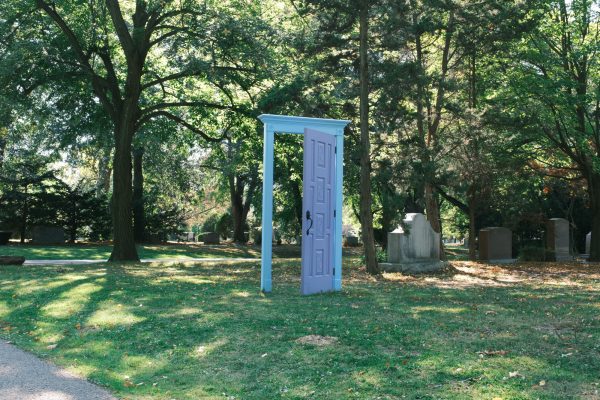
Looking through a bright and colorful door set against an open grass field, the serene landscape of Mount Pleasant Cemetery shifts. Framed by the doorway, the distant headstones become surrounded by vibrant and cheerful color. Home to hundreds of gravesites within the city, the cemetery exists as a collective network of human memory through its varied tombstone designs and mausoleum architecture, showcasing the shifts in eras through monument styles and designs.
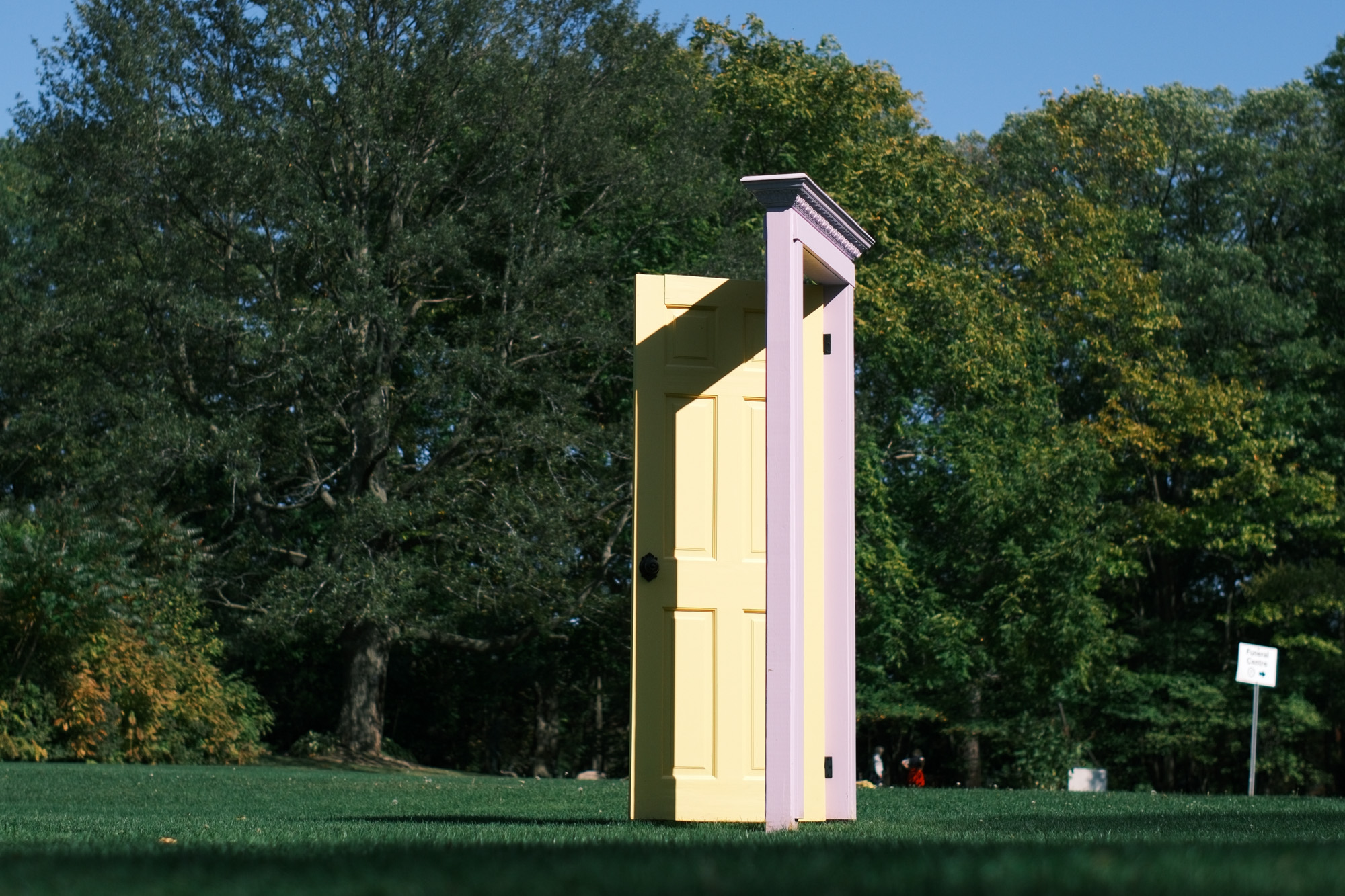
Within this landscape sits a collection of installations that make up the “Portals”— reclaimed doors positioned in dialogue with both the site and each other, resting across the burial grounds. Designed by the Space for Grief artists collective in celebration of the 200th anniversary of the Mount Pleasant cemetery group, the first couple of doors are located near the main building of the cemetery. Coated with bright floral colors, each door features a unique pattern.
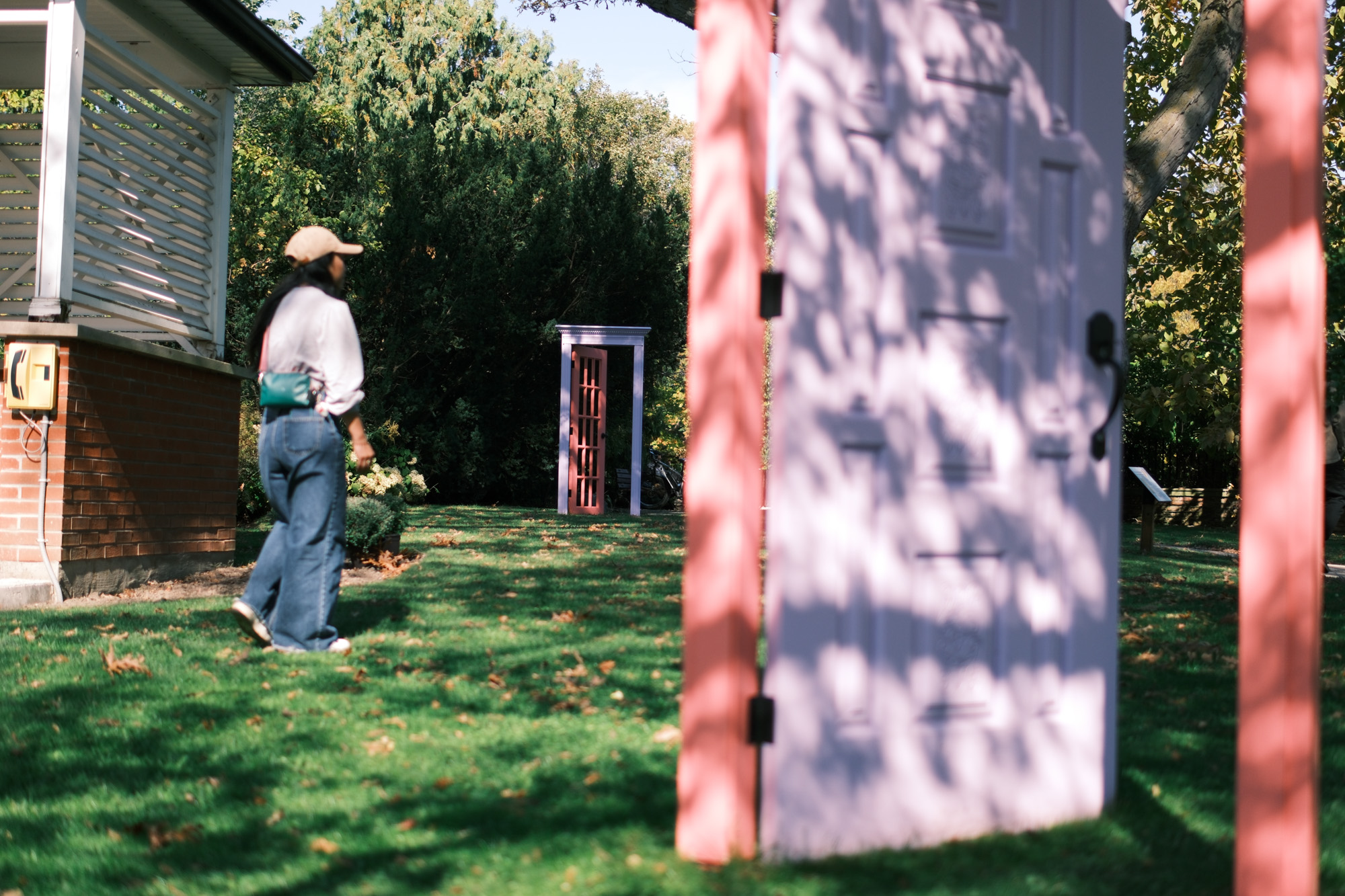
In order to source the materials for this piece, the team looked for old, reclaimed doors from all across Toronto. “The fact that [the cemetery] has been around for so long,” explains Fran Quintero Rawlings of Space for Grief, “we wanted to have that representation through the doors as well. The lived experiences of people who have walked through the doors carry the memories of their lives past.” Each door from old demolished buildings has a unique history.
Walking through the door, each frame felt like a piece of Toronto’s past. The different designs reflect Mount Pleasant’s layered histories, while the vibrant design of the portals contrast with the somber nature of the cemetery, opening up conversation about how grief does not always have to be hidden and private. In a way, these placemaking efforts help form a new identity for the cemetery, one separate from death and loss.
Space for Grief is a creative project that aims to encourage conversation on our relationships with grief and the ways we experience it throughout the city.
“There really is no place to talk about grief, and what you need when grieving is to be in community,” says Rawlings.
“In Toronto, a lot of ways you’re expected to deal with or acknowledge grief are in private,” adds Ziyan Hossain. “But as we recognize that [grief] is a part of our life, how do we create or design for something that we are expected to bear in private, but in reality wind up carrying with us into public spaces?”
Calla Lee continues, “Rather than making another report on how grief affects us, what if we could find a different way to engage people in education about [grief], and to take this into their everyday life and decision making?”
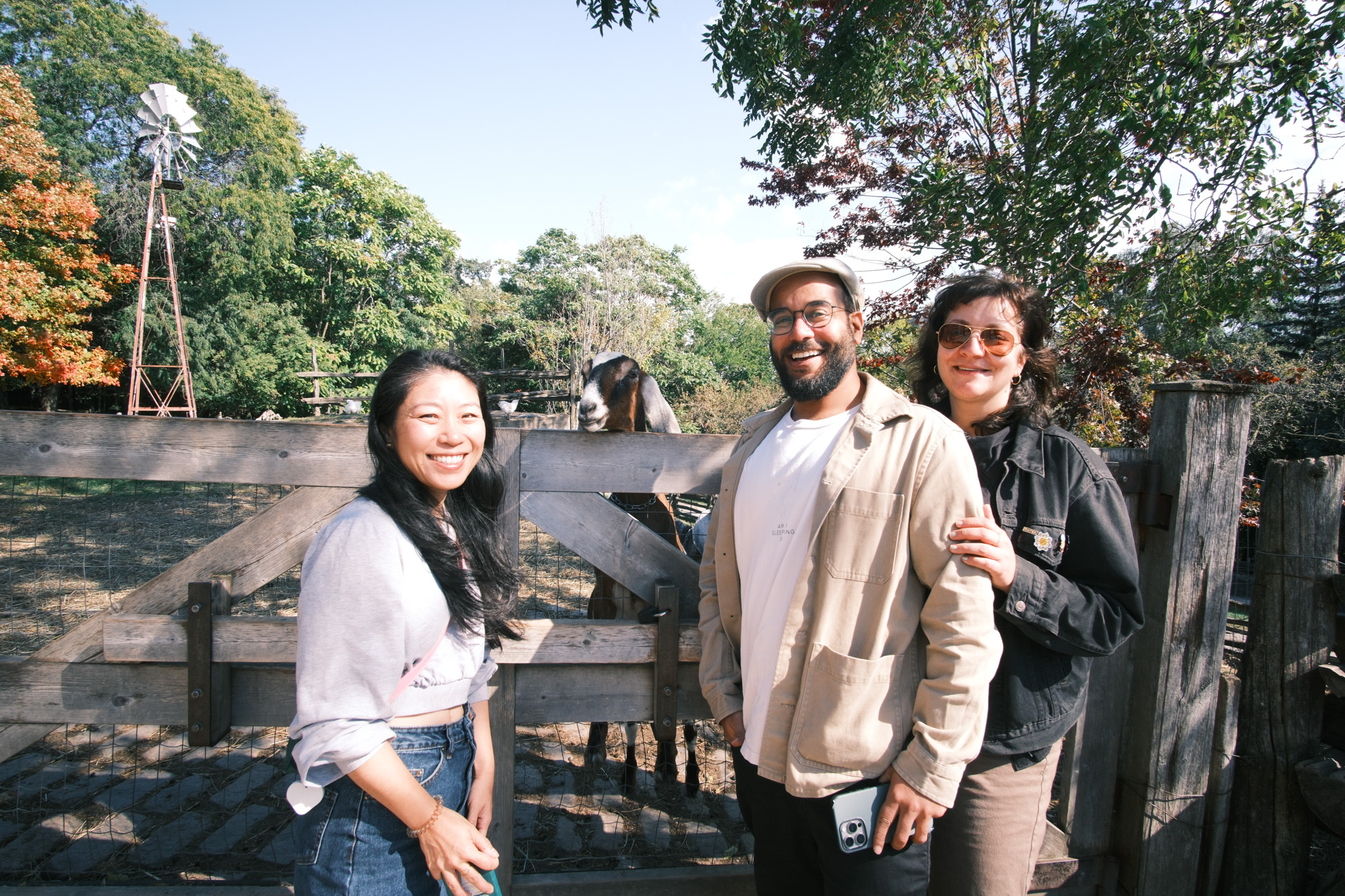
Ziyan, Fran, and Calla are the three co-founders behind Space for Grief, and some of the artists behind “Portals” in Mount Pleasant Cemetery, which is one of ten exhibits that are part of Yesterday. Today. Forever., a collection of installations dispersed throughout the Mount Pleasant group’s cemeteries across the Greater Toronto Area. Having worked on this project for the last three years, the trio have designed exhibits that incorporate mixed media ranging from music and visual effects to woodworking and painting, to create environments and spaces that connect with grief. By avoiding one specific medium, the team hopes to emulate how grief is a “broad concept” supported by different artistic textures.
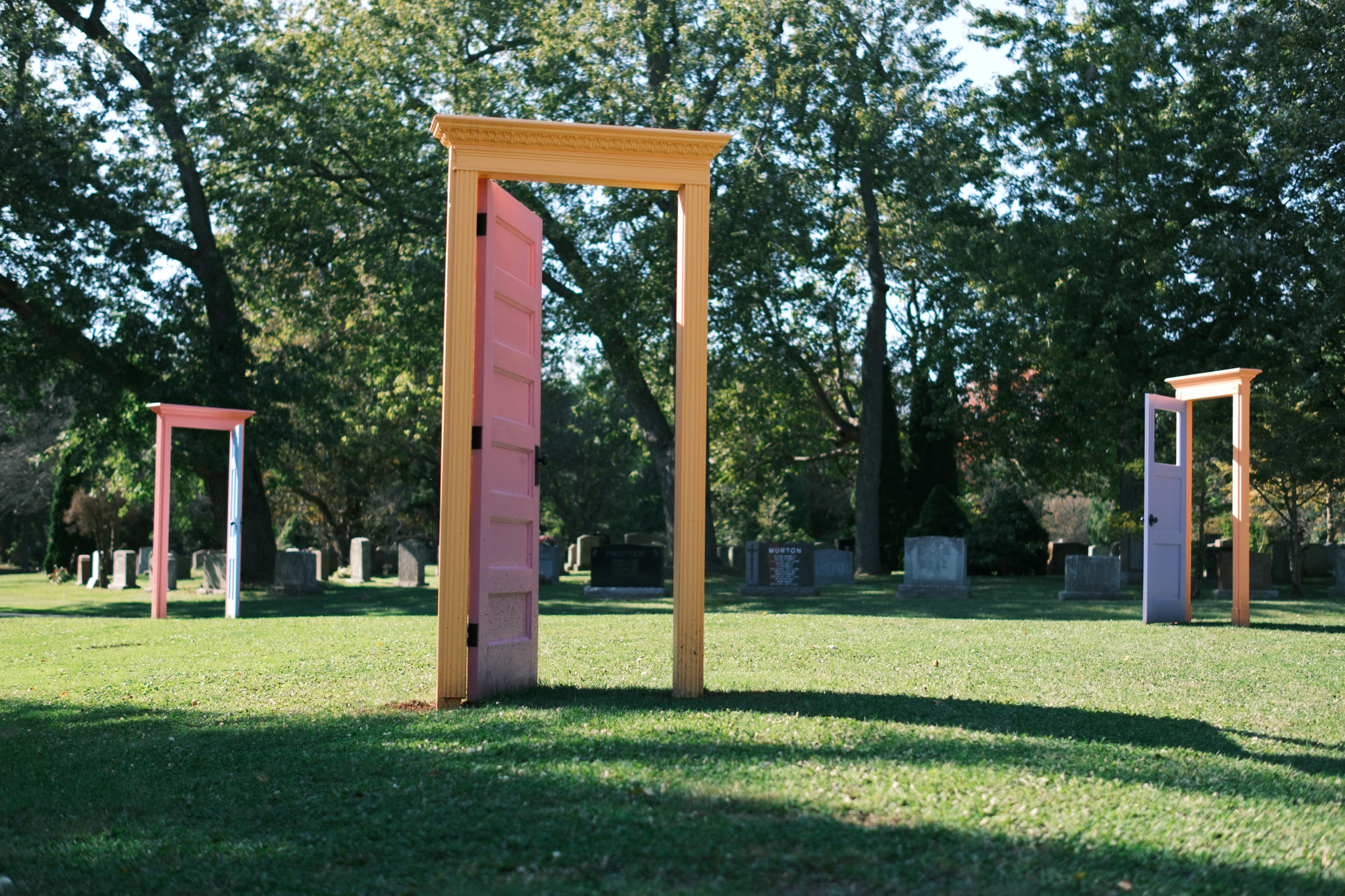
Driving through the rest of the cemetery, we came across other sites where “Portals” were located. One was a collection of three doors sitting in the centre of a three-way intersection, another was a lone door accompanied by a plaque, while another installation rested in the midst of a garden, facing a sundial in the center. Through each set of doors, visitors are offered a distinct perspective of the burial grounds. Placed within intersecting crossroads, solitary gardens, or facing each other in an open field, each portal offers us a reminder that grief isn’t just something that remains still. We are left to navigate grief throughout our lives. It stays with us, and becomes a part of us.
We left the quiet paths of Mount Pleasant and made our way south, to the Toronto Necropolis. Located at the edge of the Don Valley and situated opposite Riverdale Farm, it is even older than Mount Pleasant, established in 1850 as one of the city’s first non-denominational burial grounds. Guarding the cemetery’s gated entrance into the graveyard, the chapel sat at attention, inviting us into its dimmed interior.
Here, hidden within this quaint building, is the exhibit “We Remembered the Monoliths,” another installation in the Yesterday. Today. Forever. series.
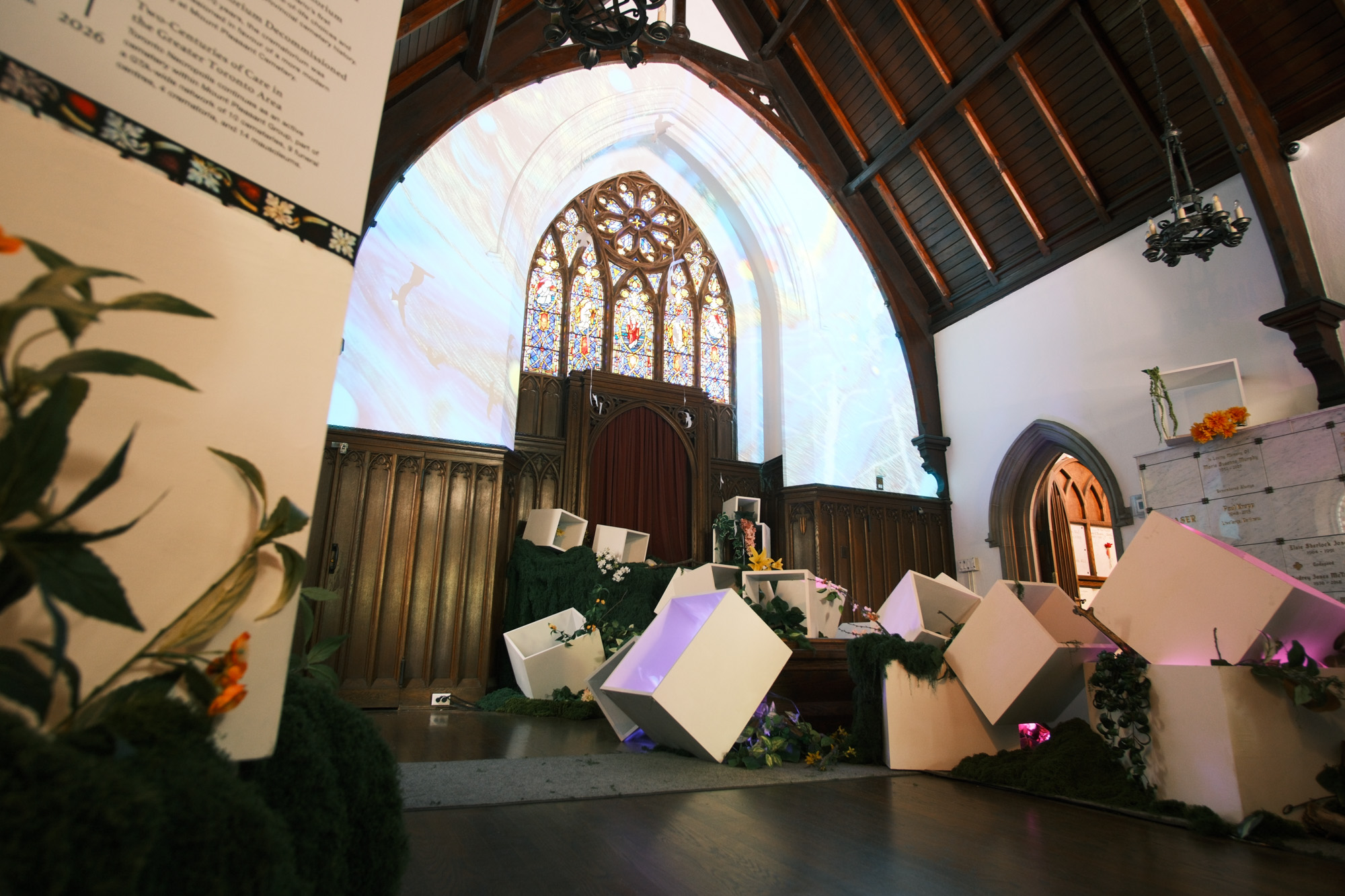
Hollow boxes covered by vines are neatly scattered across the front of the chapel, forming a line that draws your eyes up to the stained glass. A projector emits a video of flowers blowing in a field, dissolving into an artificial pattern of lights and colors dancing across the wall. I sit down in one of the pews, close my eyes, and take in the exhibit. As a reverberated guitar tenderly plays through a speaker, I hear a faint rustle of leaves behind me, coming from outside as the autumn breeze dies down.
Soundtrack to “We Remembered the Monoliths.”
In a city where grief can often feel isolating, Space for Grief invites us into a collective sanctuary. By placing art within spaces traditionally meant for mourning, we are reminded that we never have to face our grief alone
Space for Grief’s installations will be open indefinitely for the foreseeable future. Find out information on site locations and opening times here. A special exhibit, “Transitions,” at Evergreen Brickworks will be available until November 9th.
All photos by Aiden Fung.