
News dropped this week that Anthony Furey, the right-wing broadcaster turned occasional candidate, has graciously withdrawn from the 2026 mayoral race in an attempt to not fracture the political right, whose de facto standard-bearer is Brad Bradford — for now.
“My advisors tell me that my latest polling numbers are actually pretty good for a busy hockey dad who’s been keeping a low profile this year,” he wrote in a post on X. “That said, I don’t feel the time is right for me and I’m going to sit this one out.”
Furey, lest we forget, won almost four times as many votes as Bradford in the 2023 mayoral by-election — 35,899 to 9,254 — but belonged a collection of right and centre-right candidates who succeeded in fracturing that end of the city’s electoral base. They included Ana Bailao, the John Tory heir apparent, and Mark Saunders, Doug Ford’s stalking horse.
All told, the self-identifying right/centre-right candidates garnered 342,495 votes to Olivia Chow’s 269,372. What’s more, she won in a year with middling turn-out, on the heels of a mini-scandal.
I get that it’s a bit of a mug’s game to perform reverse calculus on elections using such tallies, but there’s little doubt that Toronto’s political right shot itself in the foot three years ago, and is, perhaps, keen to not reprise that particular mistake. (Bailao and Saunders are certainly not going to re-surface, and there aren’t obvious other candidates with sufficient profile.)
However, I’d like to argue that a more unified political right in the coming election can be good for the political centre-left and Chow, provided the mayor and her advisors recognize this opportunity for what it is, and also for what it isn’t.
In politics, as in sports, it is always better to be competing against someone who’s going to make you work as hard as you can to win. The problem with races like 2023 is that they allow the beneficiary of a fractured opposition to coast, or at least take certain things for granted, namely the circular firing squad effect.
Chow in 2023 ran a decent campaign, with a significant assist from the operatives at Progress Toronto. But Bailao — a less high-profile figure, who then served as Tory’s deputy mayor and his housing czar — came pretty close to besting a politician with a long and illustrious political resume who also carried the change mantle after nine years of Tory rule.
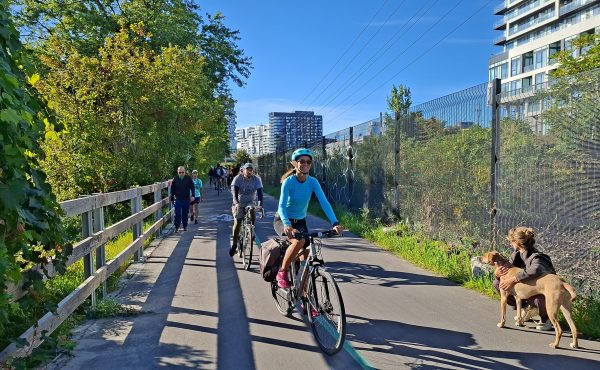
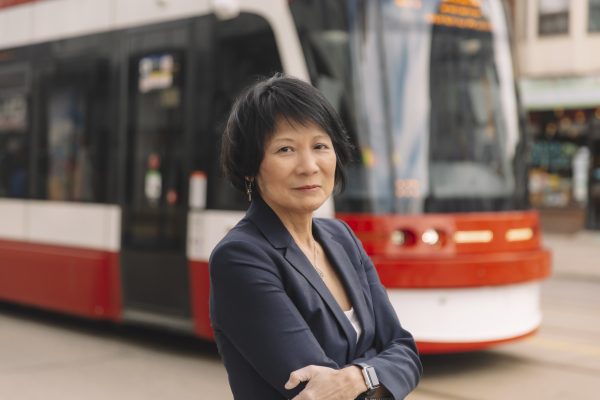
In office, Chow has served as a competent chief magistrate, with some important policy wins (e.g., stabilizing the city’s finances, significant advances on affordable housing, a certain amount of movement on gridlock), some expedient trade-offs (e.g., the city highways-for-cash deal with Doug Ford) and some cringe moments, when you wish she’d do more to vigorously stand up for Toronto (e.g., the island airport, Ford’s attack on bike lanes).
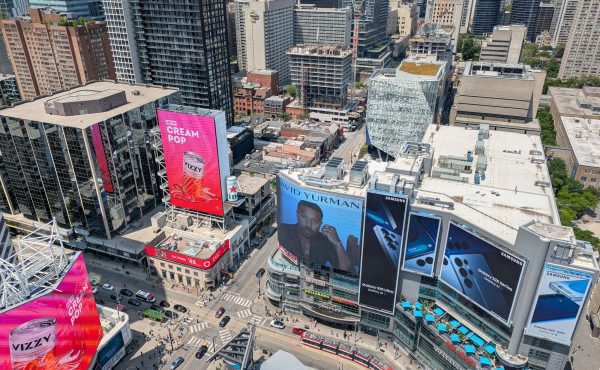
Yet I’d also say that she tends to defer to city staff more than she should — case in point, the seemingly endless bureaucratic gamesmanship over proposals to pedestrianize lower Yonge Street, or the mess accumulating around Toronto’s slice of the FIFA World Cup.
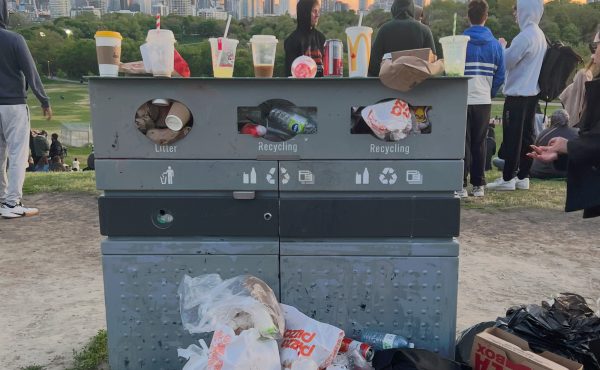
What’s more, Chow’s going to wear quality-of-city-life issues that grate on residents, including shoddy TTC service, ambient upper-middle-class anxiety about crimes such as car thefts and home invasions, and Toronto’s perennial pre-occupation with urban filth.
Mainly, she’s got to pass the electoral blink test: Does she project some combination of leadership, the gravitas befitting the mayor of Canada’s biggest city, and energy? Sort of…? Indeed, you don’t have to be a conservative to wonder if Chow needs to find ways to up her political game now that she’s an incumbent as opposed to a change candidate.
Bradford and his acolytes will be making precisely this assertion — that he is the change candidate: younger, more energetic, and performatively scrappier than a mayor who, like her predecessor, too often reckoned she could cut back-room deals with a bully-boy premier.
But to my eye, his decision to be the `angry young guy,’ there to sublimate middle-class frustrations about whatever, not only misses the lesson of the moment we’re in, but also provides Chow an opening — potentially. The caveat is that she has to figure out how to campaign in the register of voters’ craving for something other than, well, anger.
New York’s mayor, Zohran Mamdani, is the obvious exemplar here, but far from the only public figure who understands the profound importance of optimism in a period of surround-sound, Trumpian chaos. Lighting the proverbial candle instead of cursing the political darkness.
This is a life lesson that Manitoba’s Wab Kinew embraces, as well the amazing Artemis II astronauts, and especially Canada’s Jeremy Hansen. Consider, by contrast, why Conservative leader Pierre Poilievre remains so deeply unpopular: he’s all smarmy negativity and petulance, whereas Prime Minister Mark Carney demonstrates a remarkable confection of resolve and intelligence, leavened with good humour.
I don’t think either Chow or Bradford communicate optimism in the face of adversity with any great degree of authenticity. Bradford doesn’t try at all, whereas Chow’s boosterism often comes across as forced.
Maybe they should both search more deeply. The 2026 version of the civic zeitgeist, it seems to me, not only craves this kind of voice, but actively demands it. Truthfully, Toronto voters may have to go without. Nonetheless, I would argue that the candidate who manages to find a way to be positive, hopeful and an advocate for genuine reform will emerge victorious this October, regardless of how many vote-splitters find their way onto our long ballot.