This article is part of a series by Christopher Balkaran on ways to approach and engage with the municipal election campaign.
Political campaigns must compress complex problems into phrases we quickly can understand. Our job as voters is to notice what those words are asking us to see.
Consider this phrase: “fix the TTC.” The words assume something is broken, but leaves the audience to fill in what that means. Is the problem reliability, frequency, cleanliness, safety, aging infrastructure or service in underserved neighbourhoods? Or is there a problem at all? And how do we measure what’s being fixed? If a commuter’s wait times are not improving, would this lead to them losing faith in elected leaders?
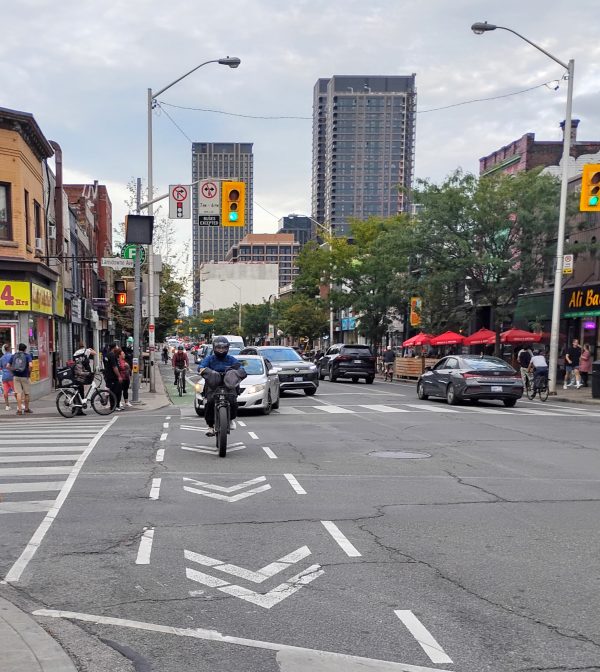
Another phrase, “Bike lanes are coming out and vehicle lanes are going back in” does something different. It claims to provide an immediate and visible solution to congestion. The framing suggests that a previous decision was wrong and can now be reversed — urgently.
Residents have legitimate frustrations with municipal decisions. Recognition of these issues matter, but recognition itself is not evidence. A neighbourhood could remain underserved by the TTC, congestion may stay the same after removing bike lanes (or, get worse). And bigger questions of the overall capacity of the TTC and the safety of cyclists can remain unanswered.
That is why the words candidates choose deserve attention. They reveal not only what candidates want to do, but how they want us to understand the problem in the first place.
Political communication scholars have a word for this: framing. Robert Entman described framing as the process of making certain parts of an issue more prominent while, inevitably, making others less visible. A frame helps define what the problem is, what caused it, and what kind of response appears appropriate.
That matters because political language intentionally narrows the questions, we are encouraged to ask. “Fix the TTC” directs our attention toward a system in need of repair but tells us little about which parts of the system should receive priority. Removing bike lanes focuses the conversation on road space usage and congestion, while questions about cyclist safety or where cyclists should travel move outside the frame entirely.
A frame can tell us where a candidate wants us to look — but evaluating the proposal means we are looking beyond the frame itself. Different questions begin to emerge: what can government actually do? What will it cost? Who will be affected? What does success look like?
A proposal eventually has to survive budgets, Council votes, staff analysis, public consultation, and the practical realities of implementation. That is where voters should begin asking a different set of questions.
Consider Toronto’s plan to extend library hours and move toward seven-day service at more branches. On its face, it is easy to support. More access to libraries sounds like an obvious public good. But the useful questions come next. What problem is the policy intended to solve? Are some neighbourhoods currently underserved? How many additional hours would be added, and at which branches? What staffing and security costs would come with those hours? Would the money come from new spending or from somewhere else in the library system? And several years later, what evidence would tell us that the investment had worked?
Those questions help us evaluate the proposal itself beyond the headlines we see. This same test can be applied to almost any municipal promise: identify the problem, examine the proposed action, ask who benefits and who bears the cost, and decide what measurable result would count as success.
Every campaign promise contains both a trade-off and an underlying assumption. Trade-offs involve what we are willing to spend, prioritize, or give up to achieve a particular outcome. Assumptions involve why we believe a proposal will work in the first place. A promise to “fix the TTC,” for example, assumes that the proposed solution addresses the most important causes of poor service. A proposal to remove bike lanes for vehicle traffic assumes that reallocating road space will improve traffic flow and reduce travel times. Voters do not need to be policy experts, but they should develop the habit of examining those assumptions and asking whether they are supported by evidence.
Platforms must simplify complex issues, but that should not prevent us from asking critical questions about the reasoning behind them.
A candidate may offer twenty individual commitments, and use emotive language that speaks directly to your experience and perspective. Taken together, these may articulate a clear vision of the City you’ve long wanted to see happen. When you start feeling this connection, it’s important to pause and start the questions. Who pays? What gets built? What gets maintained? What gets deprioritized? What kind of public life is being imagined?
It’s not a matter of whether you feel connected to a candidate – although that is a very important factor; the harder question is whether the Toronto behind those promises is one we want to live in and if the evidence suggests they can build it.
Christopher Balkaran is a Toronto-based policy professional and host of the Open Minds Podcast, where he explores public policy, civic life, and the questions shaping Canadian society.