
I recently found myself wandering Commercial Drive, reading between its pulsing cafés and restaurants.
An empty storefront. Another. A familiar music store, windows wallpapered in letter-sized ads. A “For Lease” sign taped inside an empty retail unit. Plywood windows awaiting tenants.
At first, these moments barely registered. Every commercial street has turnover. That’s the nature of cities, right? But was I really looking at turnover—or evidence that the street’s retail ecology was changing?
We rarely talk about shopping streets this way. We hear about vacancy rates, retail footage, pedestrian counts, market demand. Technical language: measurable, useful.
But something essential is stripped. Commercial streets are living systems. Not simply collections of shops: ecosystems. Composed of—not only individual organisms—but relationships unfolding over time.
A café benefits from the bookstore next door. The bookstore benefits from the bakery across the street. The bakery depends on foot traffic from the corner grocer. Customers—we—don’t simply visit businesses. We navigate retail networks, creating something more than the sum of their parts.
Not every anchor here sells anything. A library, a community centre, a school gate function as keystone species—the foundation an ecosystem depends on. Retail clusters around them: cafés near the school run, shops by the library. Remove the anchor and the habitat around it destabilizes too.
This is what gives Commercial Drive, Main Street, Fraser Street, and Victoria Drive their distinct personalities. Their character is not “designed”. It emerges…and emergence takes time.
A café opens because an older building offers affordable rent. It survives long enough to build a loyal clientele. An independent florist inhabits the vacancy next door. A repair shop remains: the owner purchased the building decades ago. A second-hand bookstore quietly occupies a space too small or awkward for a national chain.
These decisions aren’t coordinated. But together, they produce something remarkably coherent. Magical. Not because anyone “planned” them, but because relationships have had time to accumulate.
Ecologists distinguish between disturbance and succession. Disturbance resets ecosystems. Fire. Flood. Landslide. Habitats disappear. Relationships break. Succession follows. Species return. Relationships deepen, complexity accumulates. Given enough time, the system becomes richer than before.
A forest doesn’t become old growth because someone planted trees. But because time was allowed to do its work.
Commercial streets are similar. Twenty years on, “that café” anchors the block. The florist next door survives on foot traffic it didn’t create. The butcher expands. The hardware store quietly remains. Unplanned.
The ecosystem simply had time to mature.
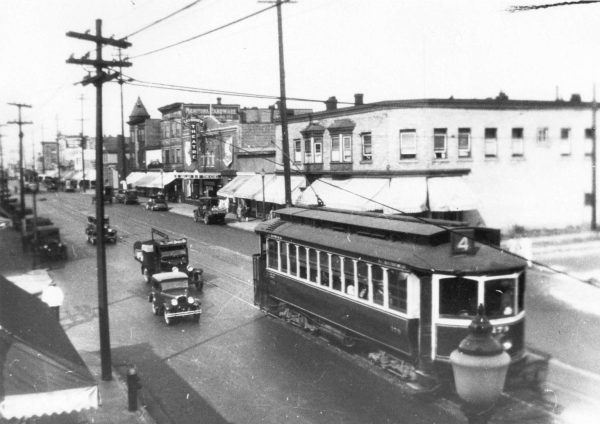
The richness of Vancouver’s most beloved shopping streets accumulated through thousands of small decisions. Experiments. Failures. Successes. Each generation inheriting conditions created by those before. Not a collection of tenants. A layered commercial ecosystem beyond design.
Old-growth forests carry visible evidence of their age: Dead trees sheltering insects, birds, fungi. Fallen logs, decomposing slowly, feeding the next generation of growth. Ecologists call these legacy structures. They’re what time looks like.
Commercial districts have their own legacy structures. A lease signed decades ago at a rent no new tenant could match. A grocer recognizing faces before names.
None of this sits in a zoning bylaw; All of it shapes what a street becomes. Demolition changes more than buildings.
Planning documents accept temporary disruptions of redevelopment: existing retailers disappear, new space opens, commercial life is deemed “restored.”
But retail ecosystems aren’t measured in square feet. They’re measured in relationships. Relationships measured in time.
Demolish the buildings—those relationships don’t relocate. Legacy structures are cleared with the site.
What’s lost is not retail space. It’s economic memory—the unrepeatable record of who trusted whom, and for how long.
This raises an uncomfortable question: are new mixed-use buildings with retail at grade replacing commercial space, or one commercial habitat with another?
Retail buildings aren’t neutral containers. They’re habitats. Time vessels.
A narrow storefront in a century-old building carries decades of small debts, repairs, neighbourhood familiarity. A newly completed retail shell begins at year zero.
Architecture doesn’t just house commerce. It selects it naturally.
A newly built retail unit carries higher development costs, higher rents, shorter timelines to profitability—a threshold only franchises and standardized operating models cross easily, not a first café or neighbourhood repair shop.
This explains a pattern many notice. The familiar cast of new mixed-use developments: banks, national coffee chains, bubble tea, cosmetic clinics. Nothing wrong with them. They’re not the cause. They’re indicator species—well adapted to a habitat too young to support anything else.
Will that habitat ever leave room for the next generation of independent businesses? Or is year zero, year zero forever?
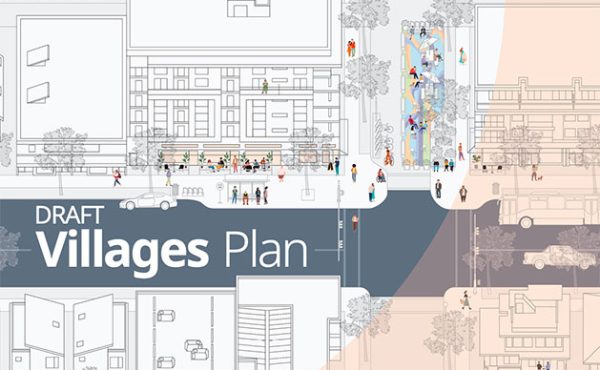
Reading the City’s Village Plan reports, I was struck less by what was measured than what couldn’t be. Projected population. Retail demand. Retail absorption. All important: measurable.
Time is not—yet it may be the most essential ingredient in the “villages” declared.
The reports speak of supporting existing businesses and expanding local-serving retail. Worthy aspirations. But villages aren’t produced by demand curves alone. They are produced by succession.
Ecologists rarely begin by counting trees. They ask: How diverse is the forest? How resilient? How connected? How much succession has occurred? Are there legacy structures still standing, or was the ground cleared too recently?
The proposed “Villages” deserve the same.
If villages are ecosystems, planning can’t stop at retail floor area, active facades, or housing densities. It has to ask whether the conditions exist for commercial ecosystems to evolve. Whether succession has time. Whether libraries and schools anchor. Whether today’s experiments can become tomorrow’s institutions.
Walking home that afternoon, I realized the empty storefronts were the symptoms of a much larger question: planners say villages should evolve, but can evolution be accelerated by changing a zoning map?
We can approve six-storey buildings overnight. We can’t approve a fifty-year-old bakery. We can require ground-floor retail. We can’t require that neighbours depend on it. We can designate a “Village.” But “villages” remain stubbornly indifferent to top-down designation.
They emerge at the speed of relationships—relationships that, like forests, grow at the patient speed of time.
***
Related Spacing Vancouver pieces:
- Entitled to Flip
- The (Ur)banality of Evil
- The Coriolis Effect (3-part series)
- The Pro Forma Problem
- Defining “Viability”…and Who Decides What Counts?
- The Trifecta of Control: Stealth. Speed. Complexity.
*
Erick Villagomez is the Editor-in-Chief at Spacing Vancouver and teaches at UBC’s School of Community and Regional Planning. He is also the author of The Laws of Settlements: 54 Laws Underlying Settlements Across Scale and Culture.