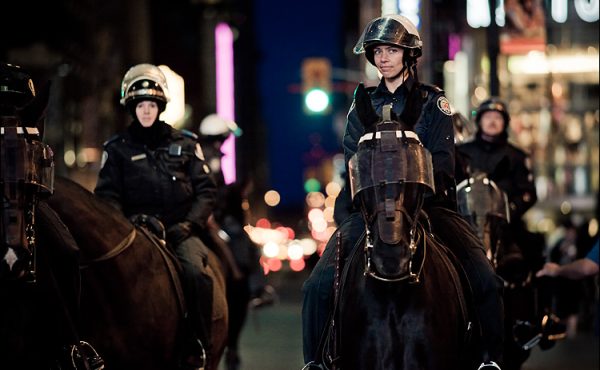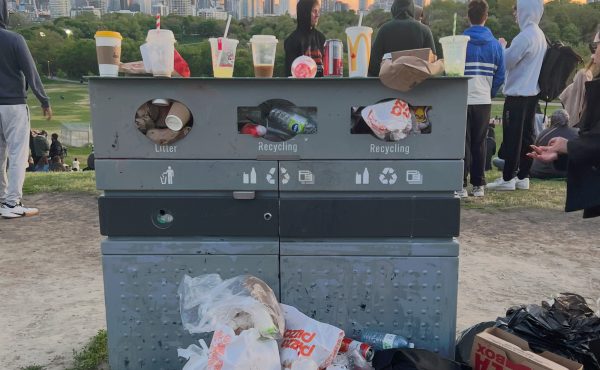
The waterfront as an east-west canvas for events and animation in Toronto will show its potential like never before during the upcoming FIFA World Cup. Not just the main stadium at Exhibition Place and Fan Festival at The Bentway and Fort York, but as a corridor heading east along both Bremner Blvd and Queens Quay. Both Pride House Toronto and Canada Soccer will have their fan zones on Queens Quay. The City and our BIA are programming the Malting Silos with art projections and a market around game days, and there will also be a marine transit connection to the Port Lands by Waterfront Toronto.
The official Fan Festival itself has a daily capacity of 20,000, but with this programming over more than five kilometers, those of us working along the water are wondering how we’ll learn how to host extended waterfront-wide events more often in the future.
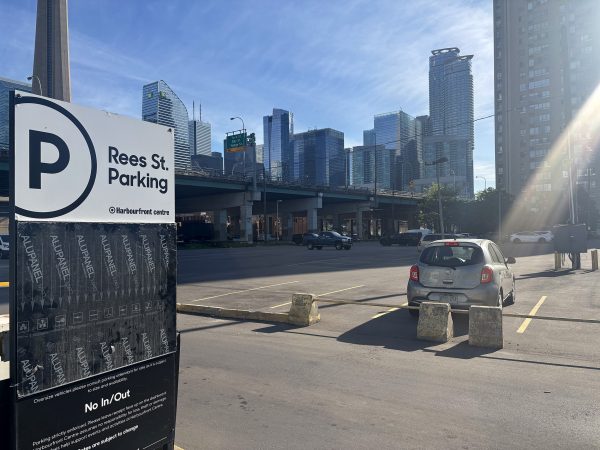
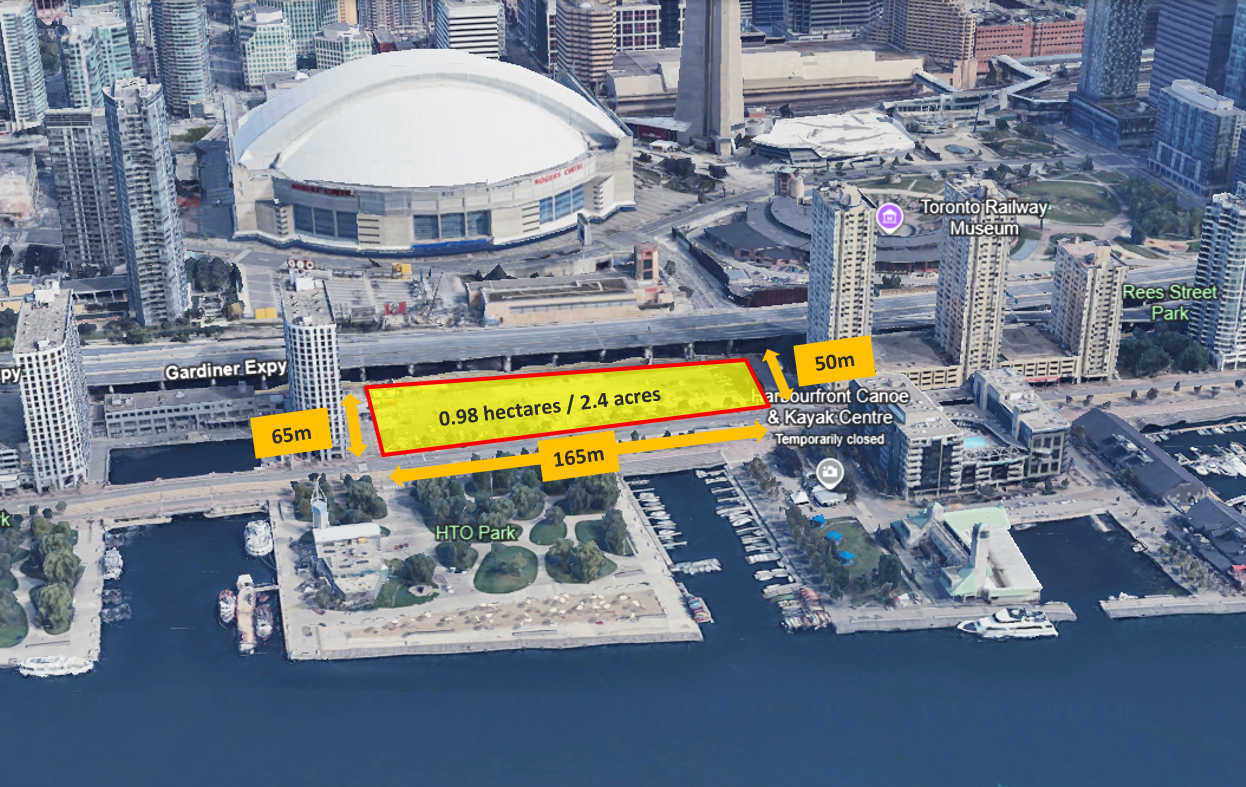
One key to the answer may be a site that’s pretty low on most people’s radar right now. It’s a parking lot at Rees Street and Queens Quay, which is set to become a park, but is currently operated by Harbourfront Centre. That space happens to sit right between Harbourfront’s main arts and culture campus and some of the city’s largest attractions: the Rogers Centre, CN Tower, Ripley’s Aquarium and the Metro Toronto Convention Centre are all less than a five-minute walk from the lot.
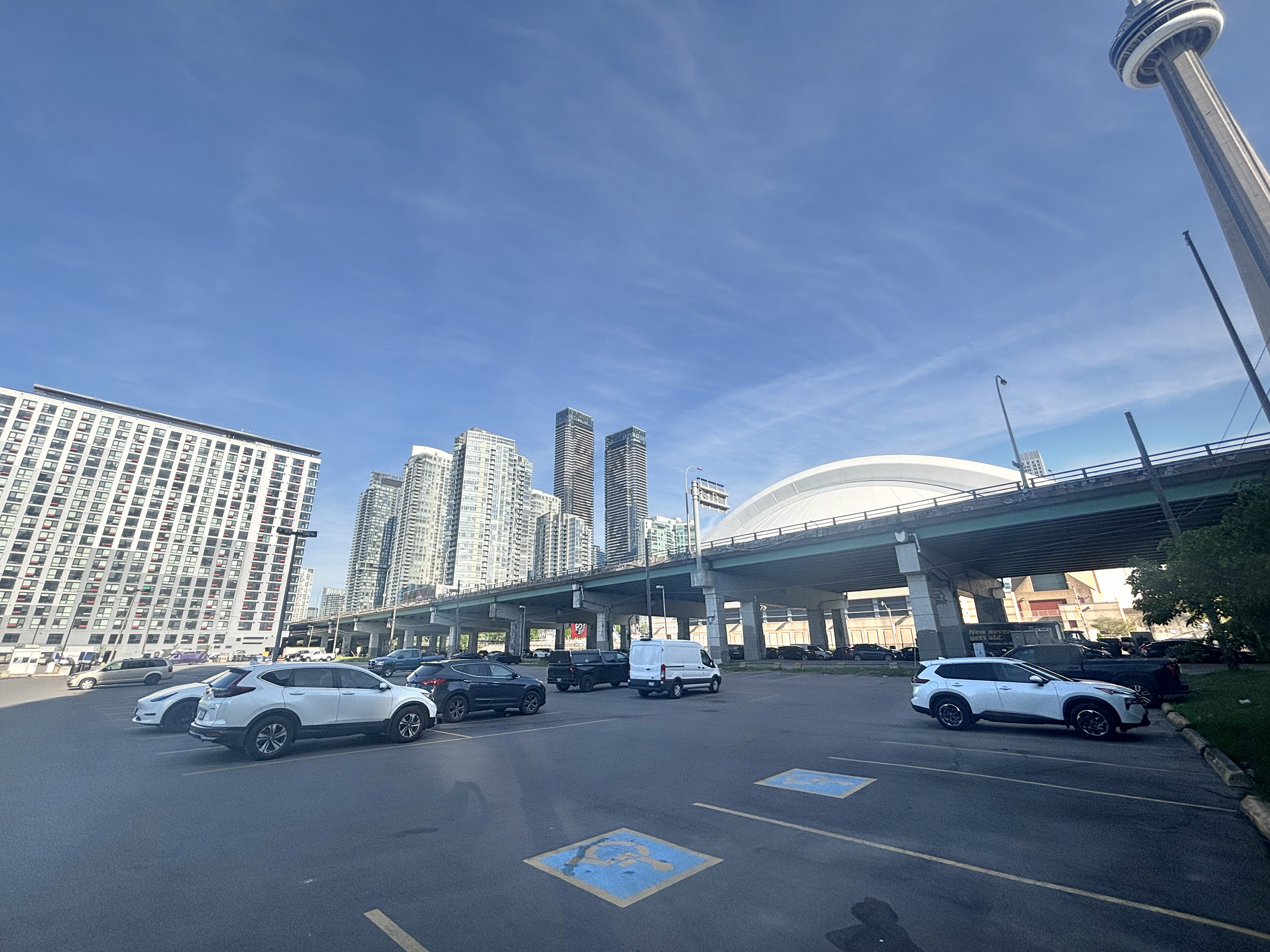
For the waterfront to be a recurring canvas in support of major events, getting opportunities like Rees right will be critical. If you’ll allow me a Big Lebowski joke, a high-potential space like this may be the rug that really ties the whole waterfront together.
To zoom out a bit, our Waterfront BIA represents the businesses along Queens Quay south of the Gardiner Expressway. However, we increasingly encourage our friends on the water to see the broader ’10 km waterfront-wide opportunity,’ from Exhibition Place and Ontario Place in the west through our central waterfront and right into the massive Port Lands that are just beginning to re-develop.
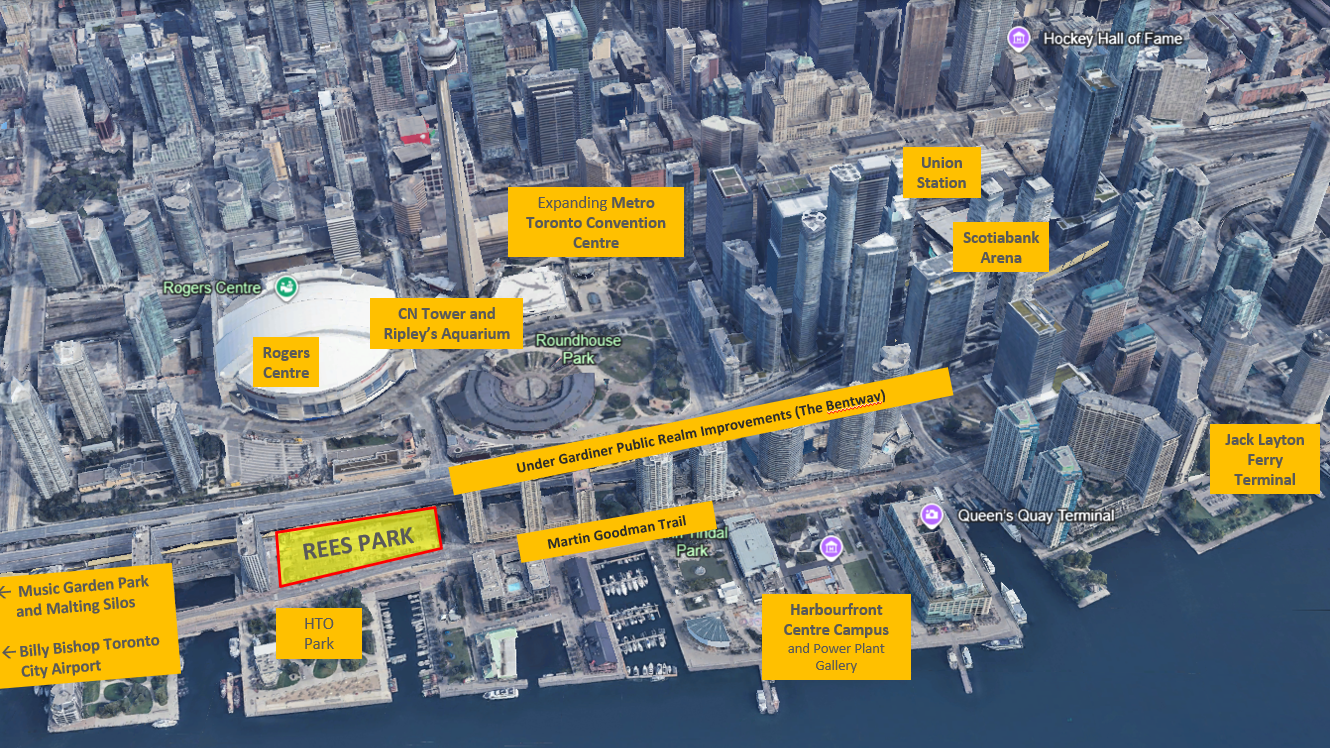
This connectivity was well-summarized in a report by The Toronto Region Board of Trade in 2023, Ripple Effect, that took an international perspective on waterfront development in Toronto. While it started as a number of great but completely separate entities – Toronto Islands, Harbourfront Centre, Ontario Place – the waterfront is entering a phase where it should be seen as an inter-connected and complimentary ecosystem of attractions.
The Rees Street parking lot has been set aside as a future park area. There was a previous design called ‘Rees Ridge’ selected in a design competition in 2018 alongside the now iconic Love Park. The City and Waterfront Toronto decided to not use the previous design in 2023.
This re-design discussion should allow stakeholders to better consider the utilization of this space as a connected part of the wider waterfront, not just as another standalone park. The previous design was literally a ‘ridge’ that looked to cover up the Gardiner Expressway. But The Bentway’s vision of improving the experience under the highway was far more tangible and will be a complimentary element.
The pandemic also transformed a lot of expectations, roles and relationships around the waterfront. Harbourfront Centre, for example, has become more integrated and collaborative with area stakeholders. It will look to have a significant role with the Rees space once it loses the current parking lot. Just having celebrated their 50th anniversary, Harbourfront should see programming at this site as stepping stone to expand their presence as an anchor partner for arts and culture programming in their next 50 years.
A limiting factor for a future park is that it will be on the north side of Queens Quay, not beside the water and the busy Martin Goodman Trail, which brings bikes and strollers by the thousands. People are less likely to enjoy just sitting on the eventual Rees park site and relaxing – they’ll do that on the south side, near the water. Consequently, it will need to have multiple diverse and exciting uses to become a prominent and well-used park.
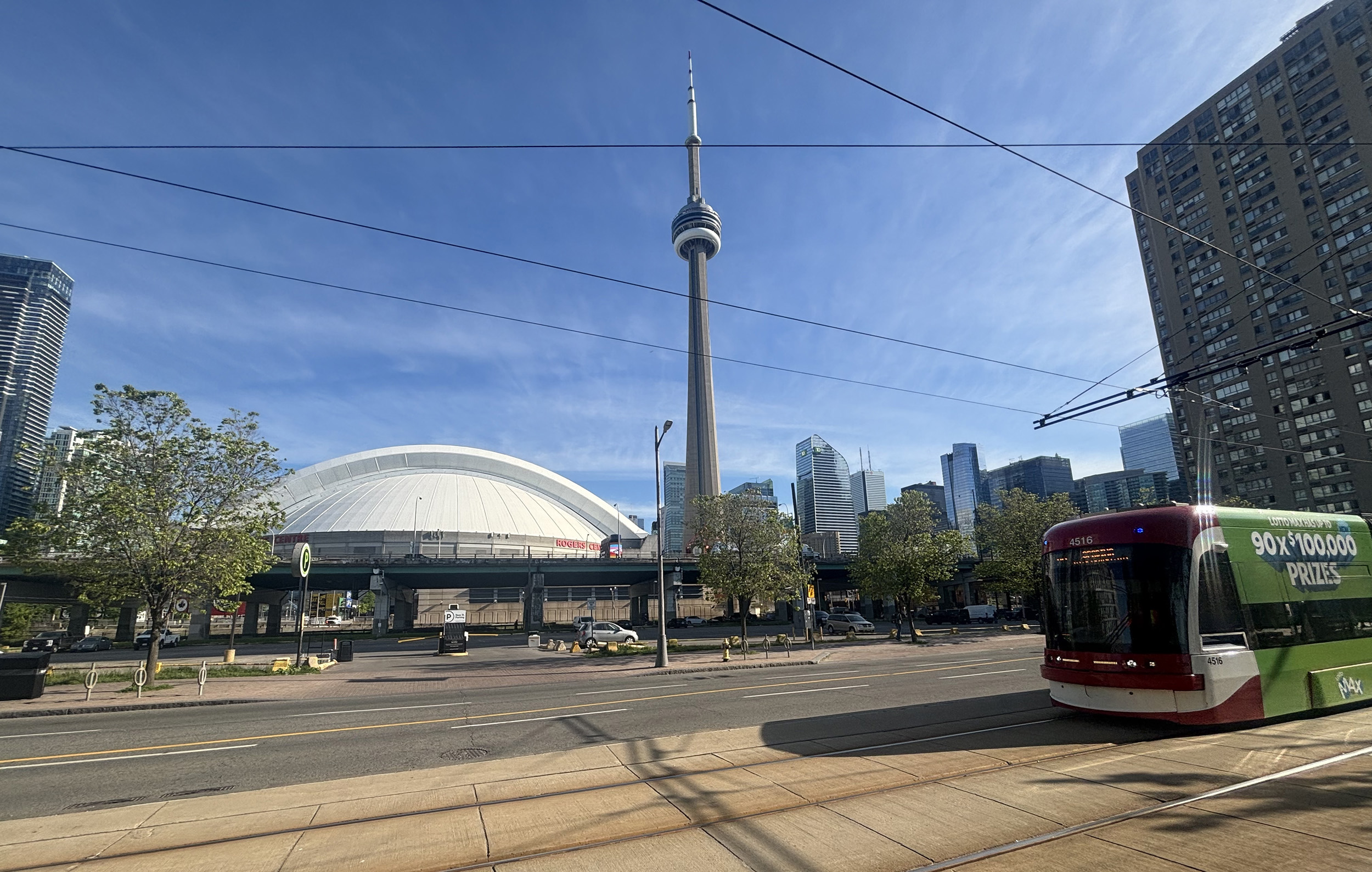
One of the best ideas we’ve heard so far was that it should take advantage of its proximity to the Rogers Centre. If a permanent screen could be there showing Jays games, that would be 162+ days of programming per year. Screens could be free to access for the public and local residents, but also support an attractive vendor to provide food and beverage in a sectioned off area. Not a full ‘Jurassic Park’ sized experience, but more of a community-minded game-viewing area in part of the larger space.
Even more ambitiously, the space at Rees should be protected long-term for a more permanent attraction opportunity. As Gail Lord and Joe Berridge recently wrote, this is the “best location in the central waterfront” and better utilization of it should be seen as an opportunity to attract more permanent cultural buildings. With 100,000 sq. ft., (approximately one-hectare), even one-third or a half the site could house a new permanent attraction while leaving the remaining space flexible for large events or a diverse mix of programming.
If Toronto is going to attract more major events in the future, flexible spaces that can be used for crowds on special occasions will be necessary. For New Year’s Eve fireworks, the city has been encouraging visitors to watch from the other new parks on Queens Quay because even a site like Harbourfront Centre’s main campus can get crowded if 100,000+ people visit at once. To build a truly world-class waterfront, we’ll need to be able to accommodate even more than that number on special occasions. Rees Park with a flexible space design could be one of those ‘gathering spaces’ utilized for the next World Cup scale event, or something more local, like Nuit Blanche.
Another similar-sized temporary open space site is at 50 Queens Quay East Park. With a pickleball court and dog run, it’s great for now and is being held for re-design later. When the waterfront hosts another event in the future that will be watched from around the world – why not a World Expo? – the 10-km wide waterfront will almost certainly be the canvas, and spaces like Rees will be a big part of holding it all together.
Tim Kocur is Executive Director of the Waterfront Business Improvement Area (BIA) in Toronto, and a Board Member of the International Downtowns Association (IDA) and The Power Plant Contemporary Art Gallery.