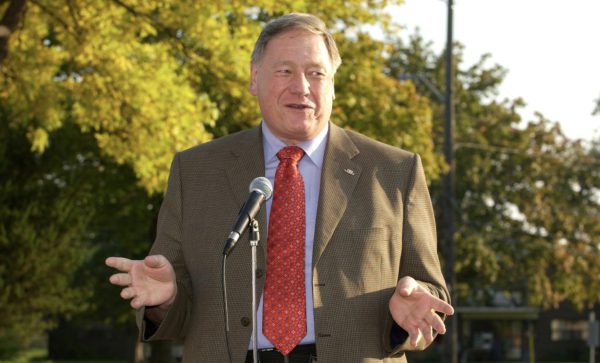

At this week’s City Council meeting, Mayor Olivia Chow will move a motion to develop a plan for commemorating the veteran North York city councillor Howard Moscoe, who died in late May at the age of 88. A similar motion emerged from the TTC board.
All the official process notwithstanding, it seems likely and appropriate that his name and memory will be attached to the transit agency which he helmed for several years and whose operations he profoundly influenced. Among other things, Moscoe was behind the decades-long push to make all subway stations wheelchair accessible.
In the news reports and obituaries following his death, the phrase “larger than life” popped up numerous times, and the shoe fits. Howard’s ambition matched the scale of the TTC, as did his political persona — the long-running battles with his nemesis Mel Lastman, the Borscht belt gags, the self-mythologizing anecdotes, and his massive reputation within national organizations like the Federation of Canadian Municipalities.
Unlikely many local politicians, I never found him to be warm or especially friendly. Perhaps his mask-like affect was a reflection of all the big goals he had on his political to-do list.
Yet his career includes a pair of connected public space battles that he fought and lost — not because of a failure on his part, but rather due to the reality that some civic obstacles in this town can withstand the ministrations even of someone as willful as Howard Moscoe.
The setting for this collision was Lawrence Heights, the least successful of Toronto Community Housing’s ambitious plans to intensify and renew long-isolated public housing communities. Unlike Regent Park, there were no developer champions for Lawrence Heights, and unlike Alexandra Park, its location left much to be desired.
Lawrence Heights, as we all know, is bisected by the Allen Road — the west side, jimmied between Lawrence Ave. and Yorkdale, was known as America while the east side was dubbed Canada, owing to the relatively larger number of social service agencies operating there. After almost 20 years of “revitalization,” only a handful of mid-rise projects and a few blocks of townhouses have been built, while the city’s project timelines extend out to the late 2030s.
Back in the mid-aughts, Moscoe glommed on to what can only be described as a hairy and audacious idea: capping the Allen and using this new open space to connect the two halves of the community. He socialized the scheme and even generated some backroom conversation with RioCan, which owns the Lawrence Allen Centre at the top of Marlee.
This move would have been transformative in all sorts of ways, not least of which was serving as an accelerant for the planned intensification that refused to happen. The new development could and should have back-stopped the capital cost. Yet city officials couldn’t get their heads around something that would have shifted the Overton window. The technical complexity, the impact on traffic, the always scary prospect of creating new public spaces…
The worst I can say of Moscoe’s idea, conceptually, is that he was too far ahead of his time. After all, the private proposal to develop over a portion of the GO/Via rail corridor — John Tory’s earlier mega-park scheme collapsed over an air-rights dispute — has only just landed, some 20 years after Moscoe started talking about the Allen.
The second public space conflict, which also included a transportation corridor, had to do with a long-contested access point between Lawrence Heights and the middle-class enclave immediately to the east, Lawrence Manor. The two had always been physically separated, largely because of concerns from affluent (and white) Lawrence Manor homeowners about incursions from Lawrence Heights’ poor and brown youth.
Three internal streets in Lawrence Manor essentially dead-ended at the fenced border zone between the two communities, including Rondale Boulevard. It turned into a “bare paved [path] that [is] permanently blocked by physical barriers,” according to a 2019 master’s thesis on Lawrence Heights.
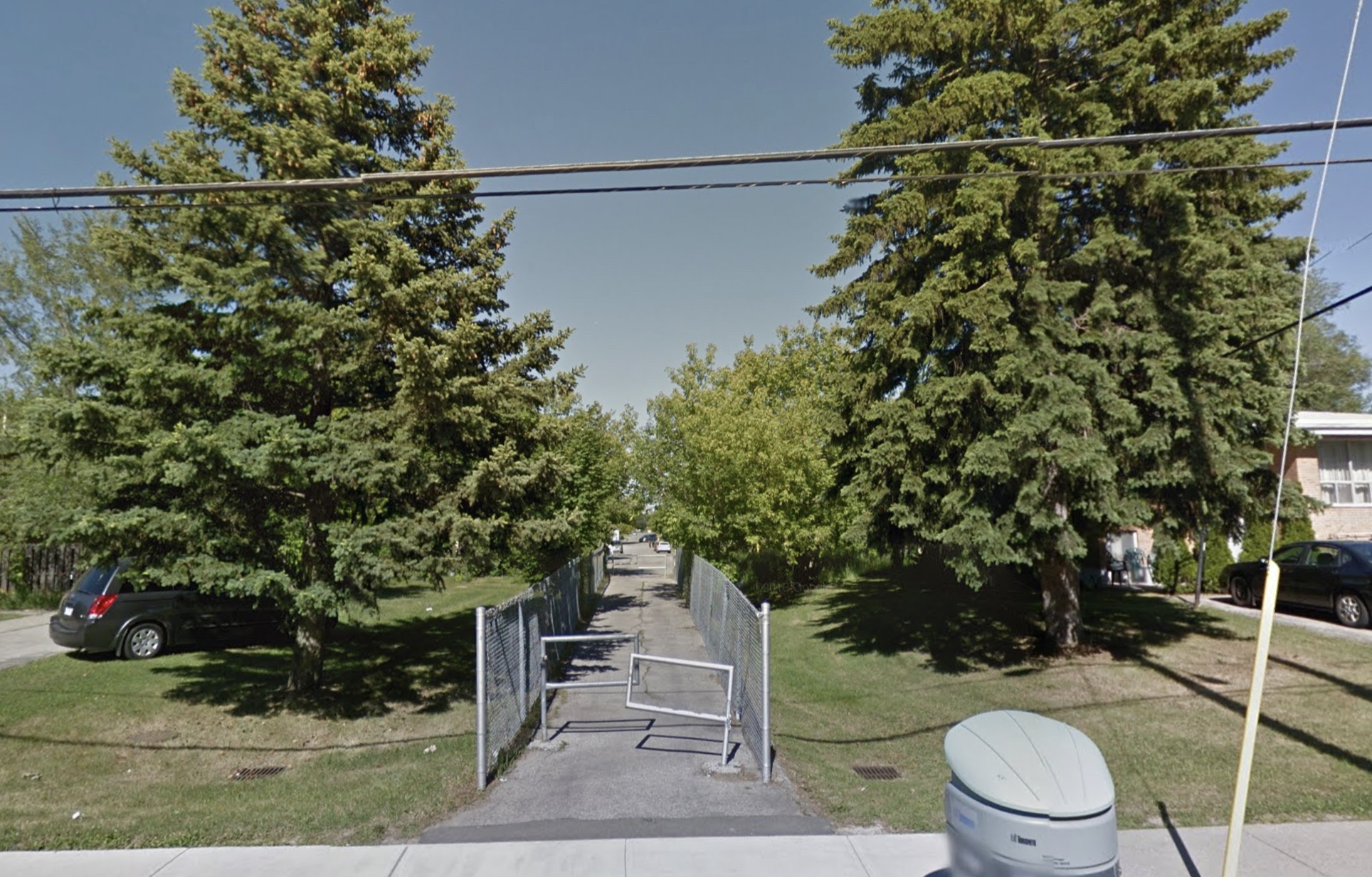
The city, TCHC and Moscoe, the local councillor, engaged in some heavy-duty horse-trading, offering to reduce the proposed density in that part of Lawrence Heights in exchange for improving those grudging pedestrian connections. But as planning consultations reports dutifully noted, residents’ feelings about those links were intense and unyielding — a bright red line on maps depicting the idealized community meant to grow within Lawrence Heights.
Moscoe even sought to leverage his credibility as a Jewish politician to convince the predominantly Jewish and orthodox residents of Lawrence Manor, but to no avail. That bare path remains pretty much what it was then — a narrow strip bounded by wire fencing, the physical expression of an unresolvable municipal conflict. Not even Howard Moscoe, with his tenacity, his ability to code switch as needed, and his instinct for a deal could sort this out.
The former art teacher — son of Toronto’s first licensed cabbie, grandson of a bootlegger in The Ward — won’t of course be remembered for these battles in Lawrence Heights, nor should he be. They merely serve as reminders that local political power has very real limits in this municipal democracy of ours. After all, if a big shot like Howard Moscoe couldn’t surmount those obstacles, likely no one ever will.