
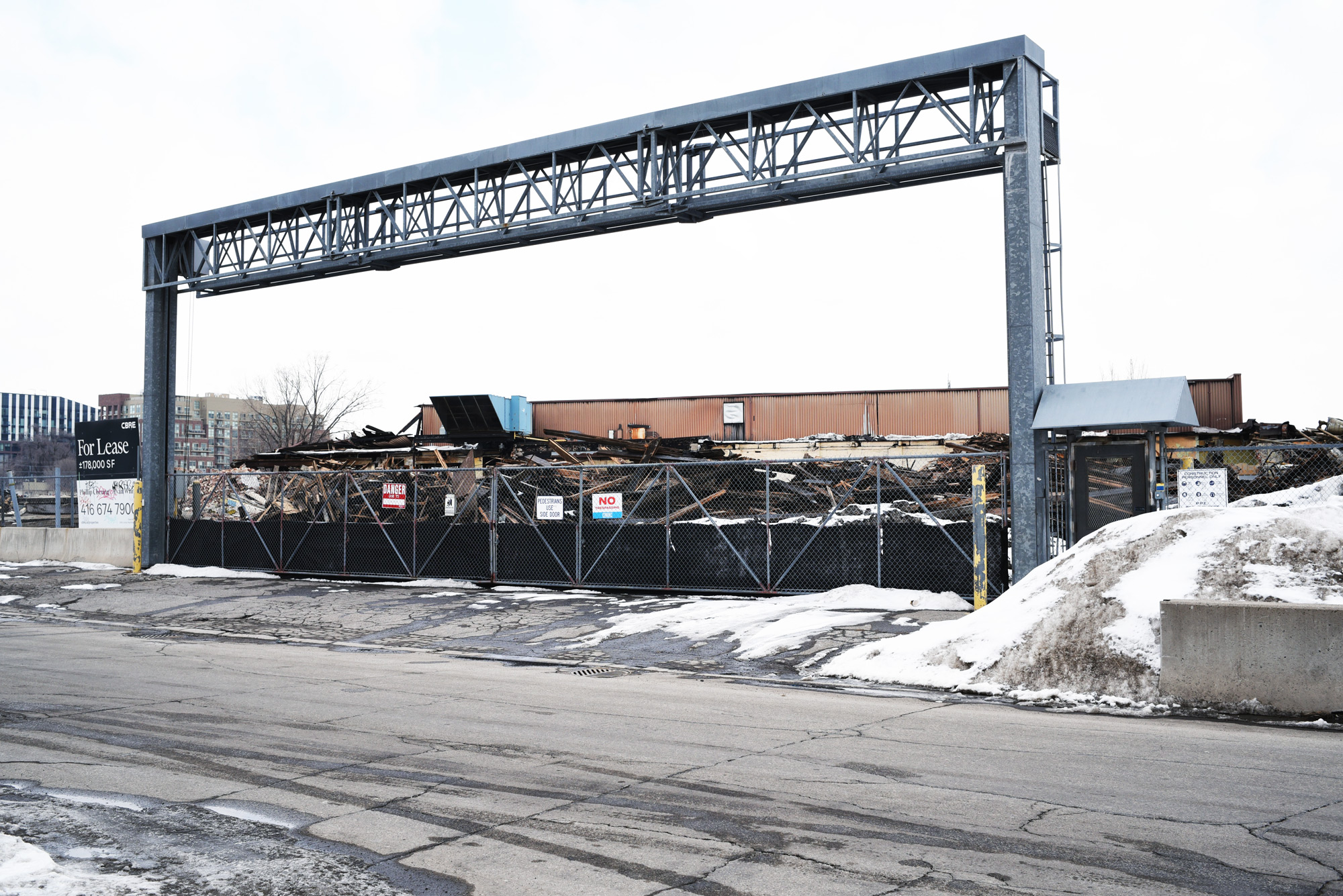
In February, 2026 a friend who lives in the Junction emailed me to report that demolition had begun at the site of the former National Rubber factory on Cawthra Avenue. Having already produced an extensive photographic record of this plant, I couldn’t resist the opportunity to take a few images recording its end.
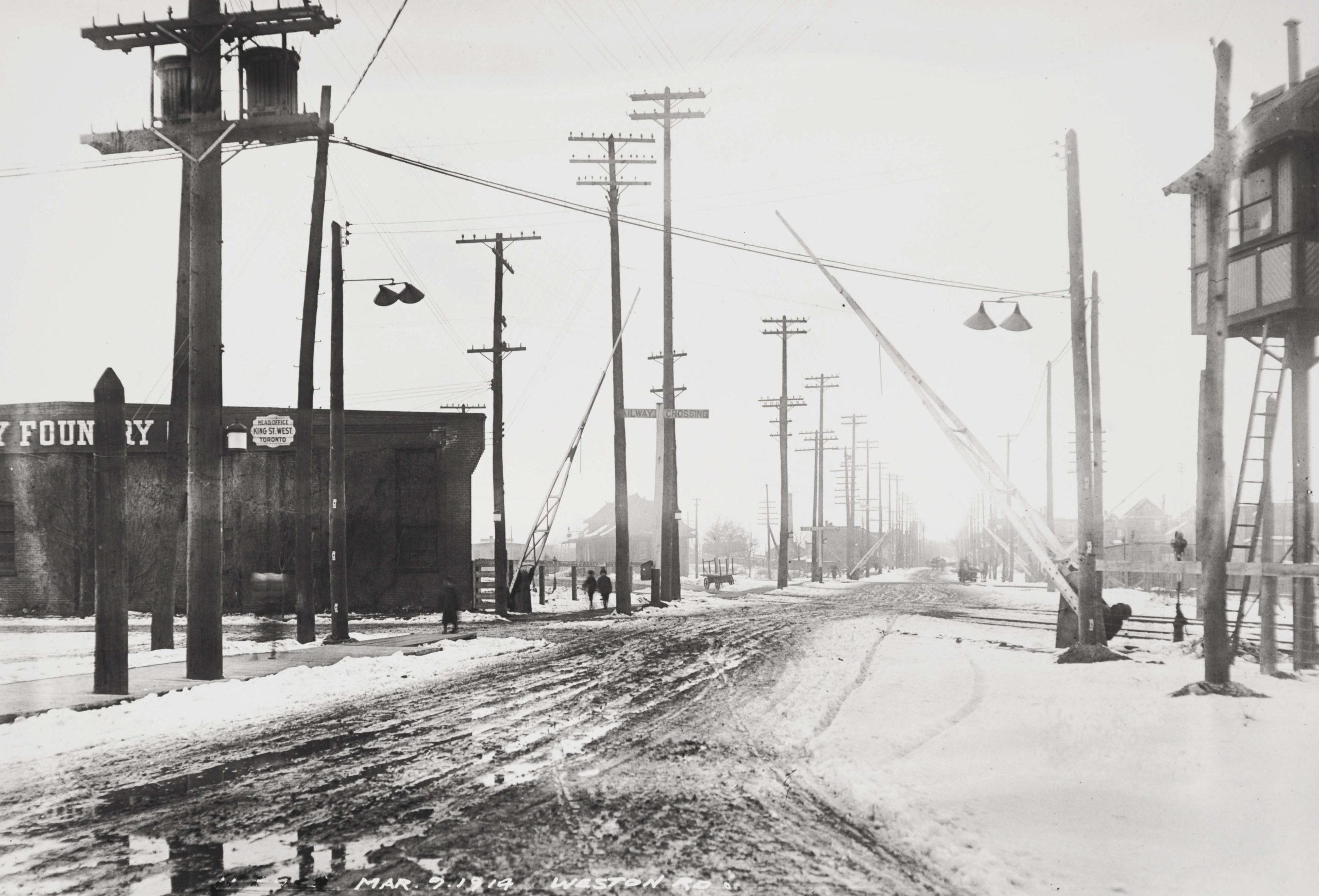
The block-long single-storey shed housing the National Rubber Industries Cawthra Avenue Plant had been built in 1902 for the E.&C. Gurney Company as a boiler and radiator foundry and pattern works. In a snowy view of (Old) Weston Road taken by Toronto’s official photographer Arthur Goss in March, 1914, the southeast corner of the foundry building appears on the left side, and the Grand Trunk Railway’s West Toronto station in the near distance.
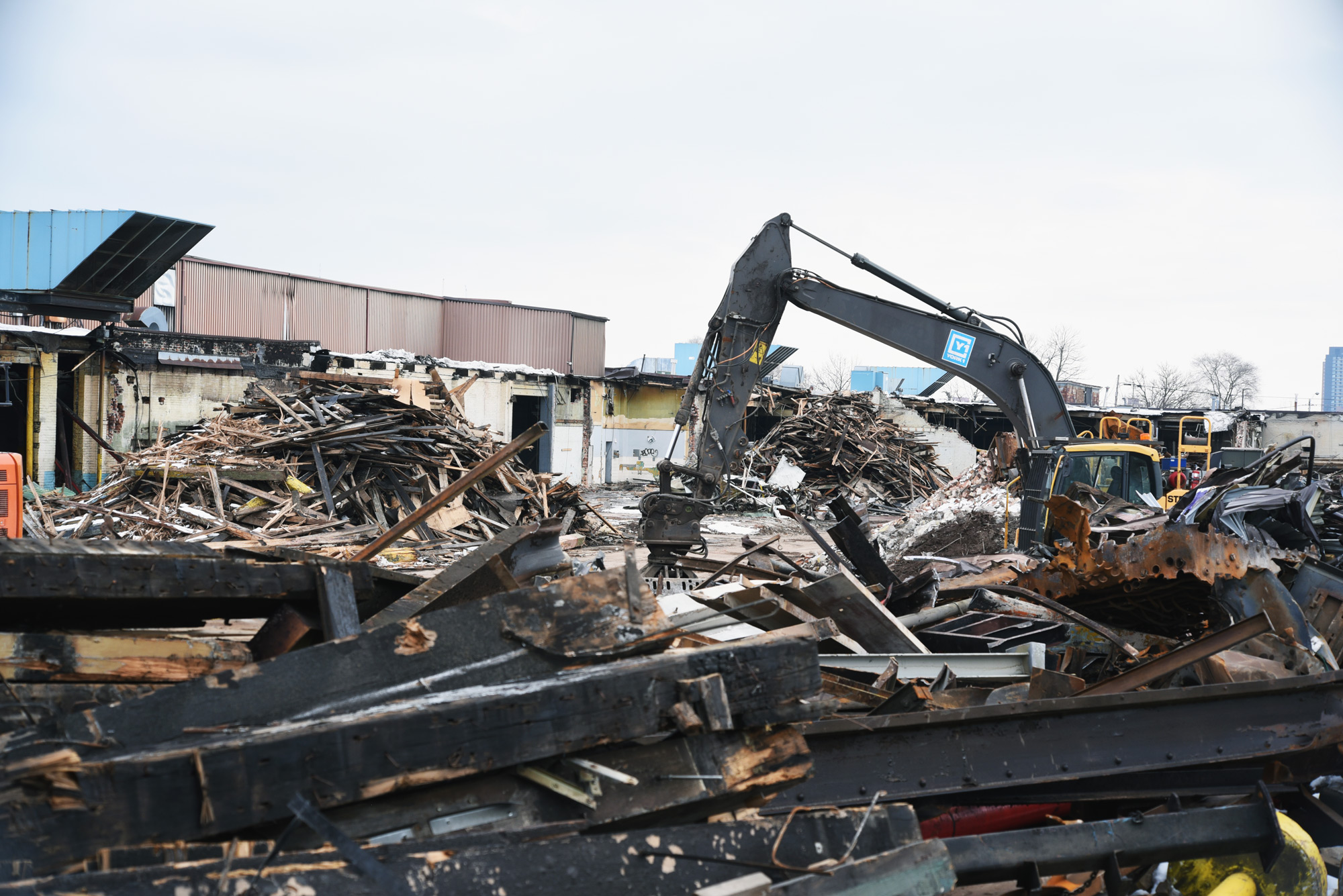
When I visited the site on February 27, camera in hand, a realtor’s sign attached to the fence was still advertising +-178,000 square feet of interior space for lease. The sprawling plant had been vacant since the company ceased operations in December 2024, but now its structures were being reduced to sorted piles of mangled wood, brick and metal.
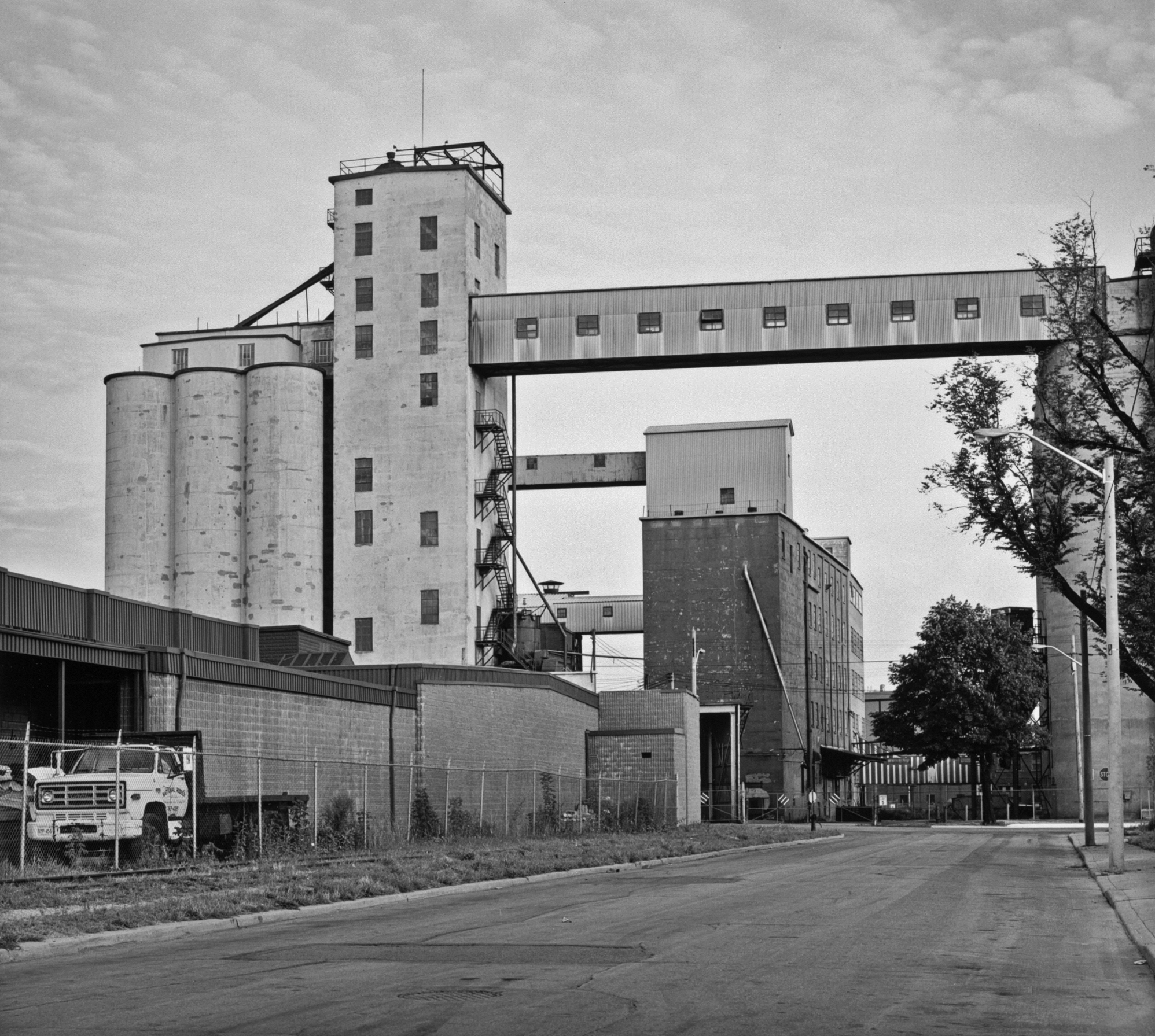
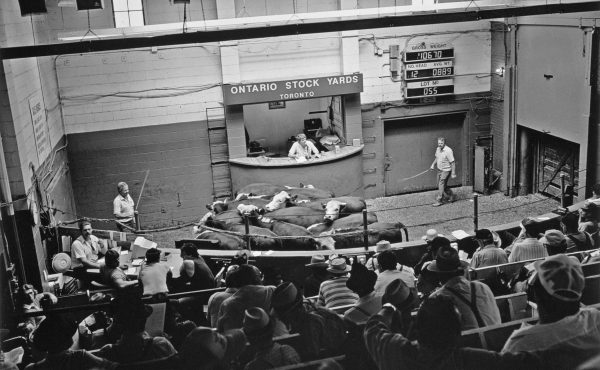
I first became aware of the historic heart of the Junction in 1991, while I was busy documenting the nearby Ontario Stockyards. The Maple Leaf Mills flour mill on Junction Road, dating from 1892, had just been shut down and was awaiting demolition. In August, 1991 I took a view looking south on Cawthra Avenue showing the mill complex with a corner of the National Rubber factory in the foreground.
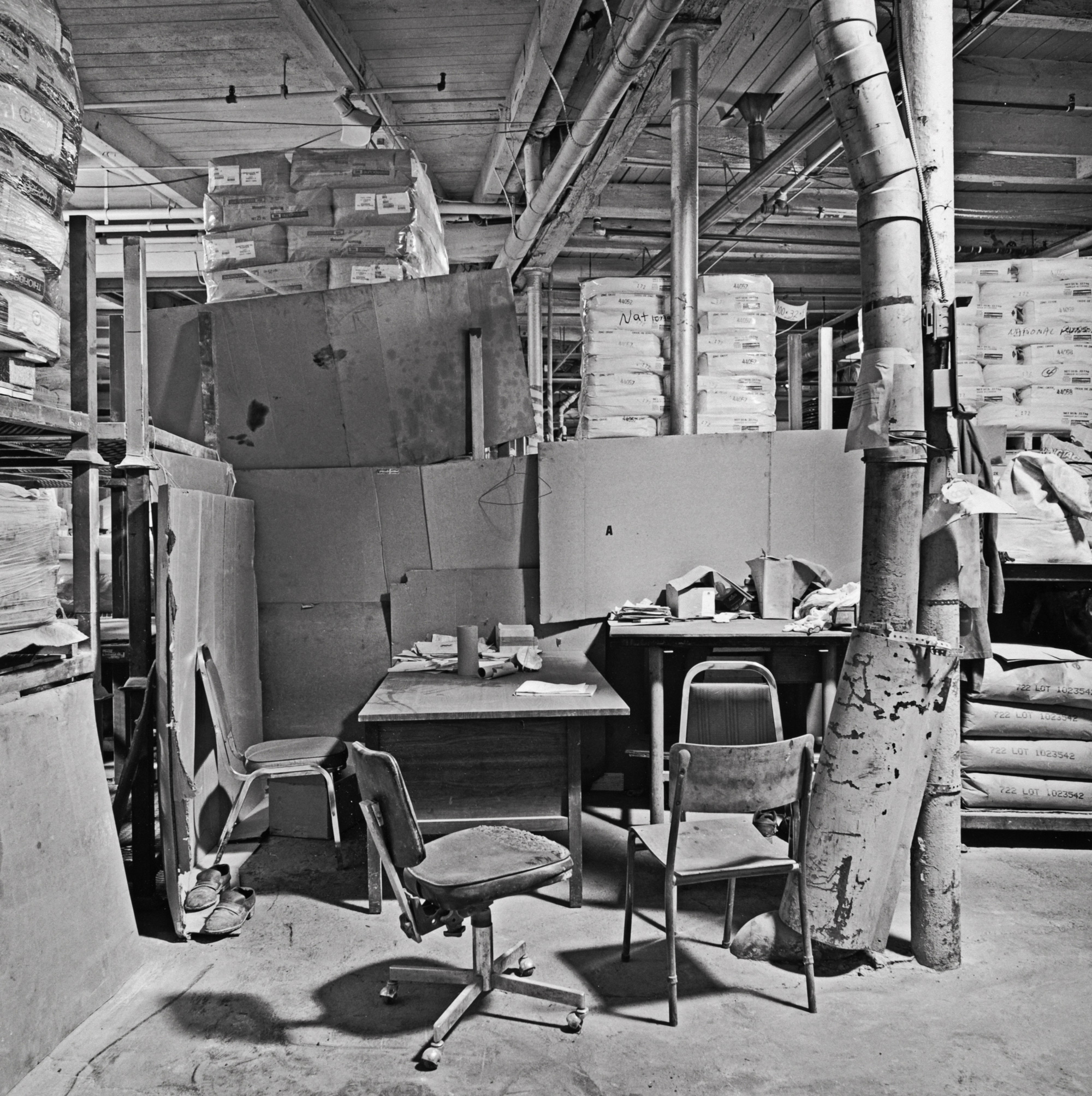
National Rubber was founded in 1927, and it opened a modern plant and head office on Symington Avenue in 1958. Archival sources, including the City Directory, give no indication of when the Gurney Foundry closed and National Rubber took over the Cawthra Avenue complex. In 1989, its windows were blocked up and its facades were completely re-clad using precast concrete and corrugated metal panels. However, its original brick and timber structure remained visible on the inside.
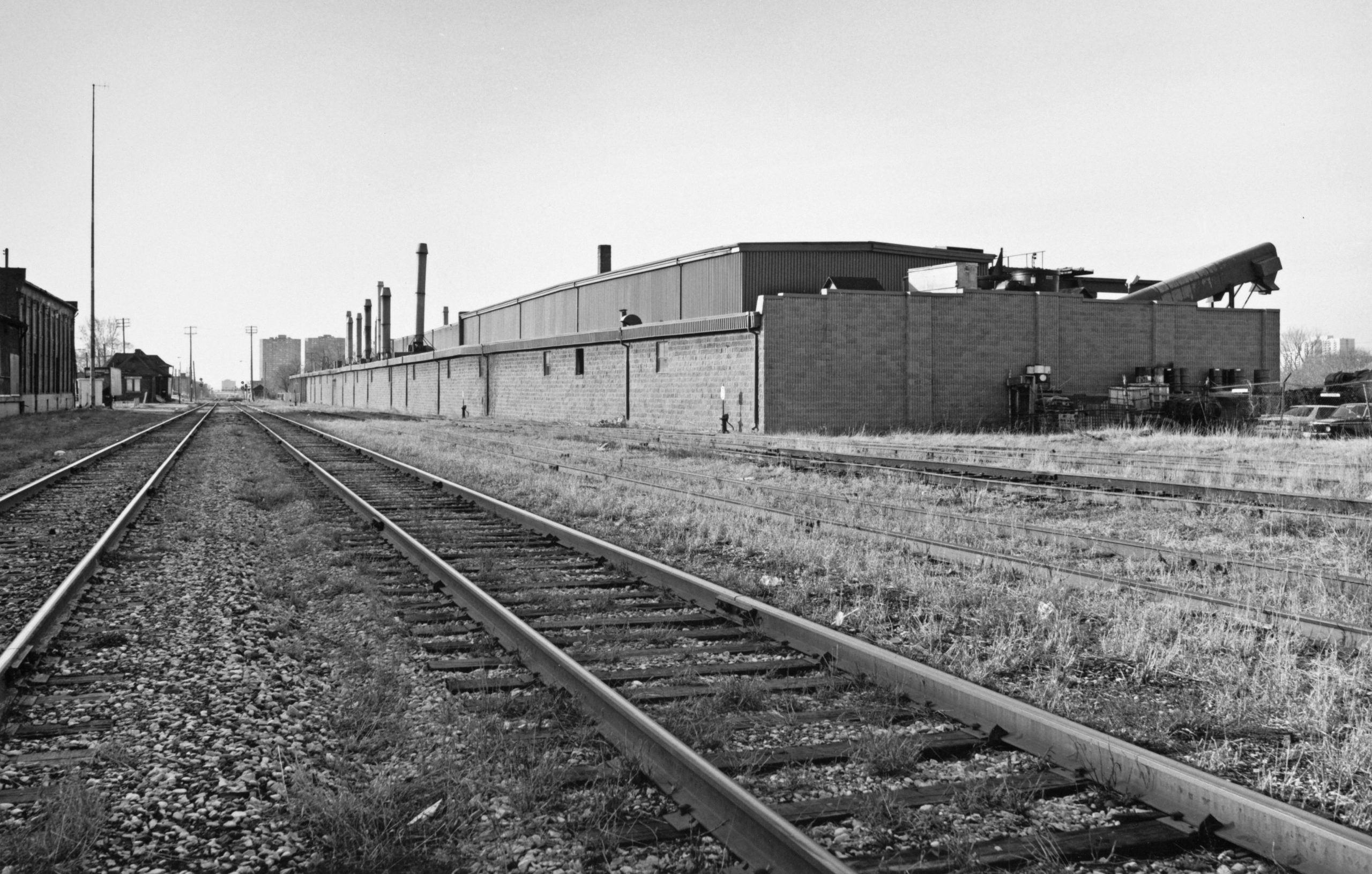
Industries on right (after recladding), CN West Toronto station and freight shed on far left
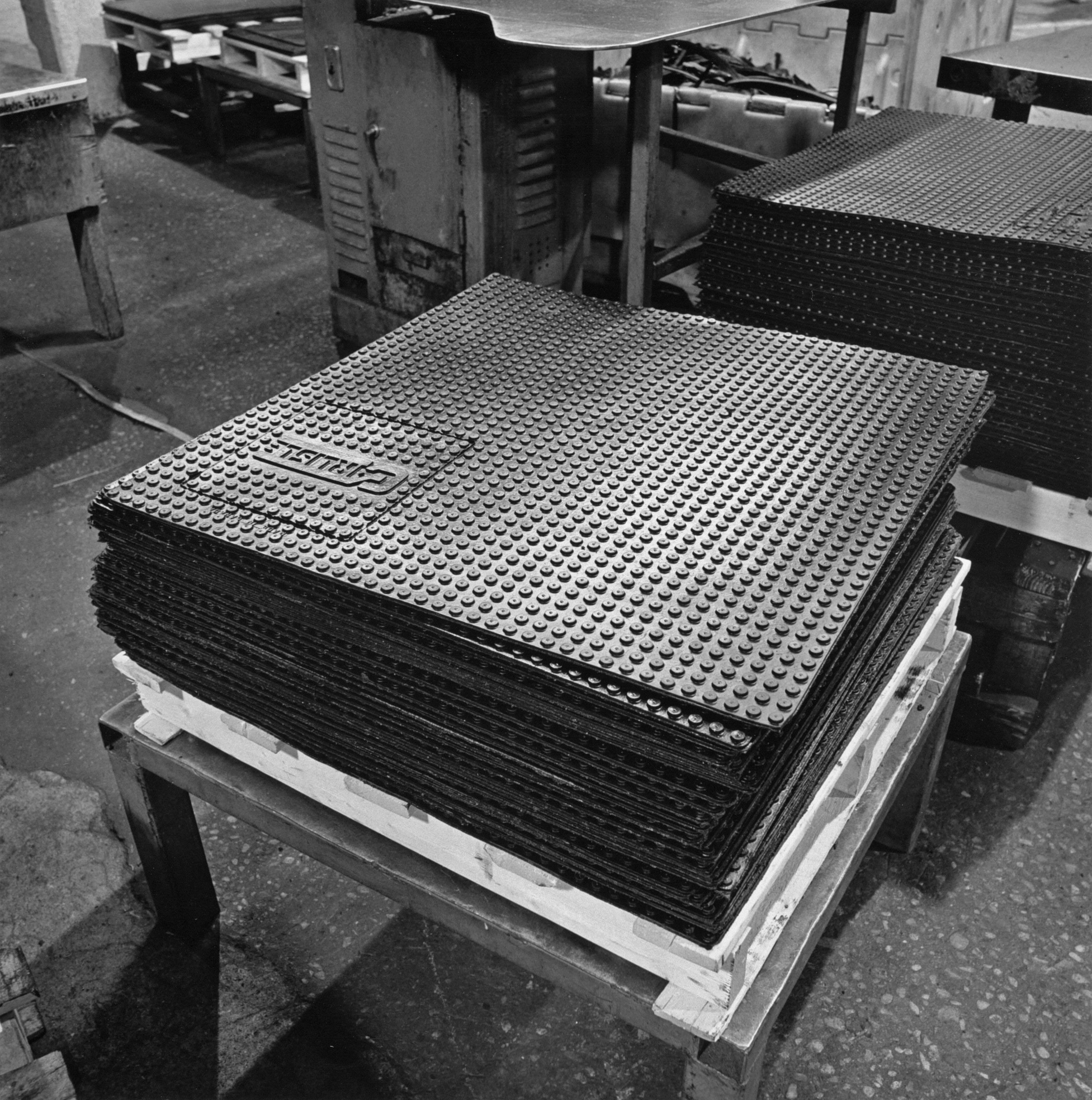
In 1992, when I obtained permission from the company’s new president Ted Pattendon to photograph the Cawthra Avenue plant, National Rubber had recently taken on a new identity as a “green” industry. Its technology for recycling ground tire rubber called “tire crumb” into a variety of new products was seen as a solution to Ontario’s glut of discarded tires piling up in scrapyards.
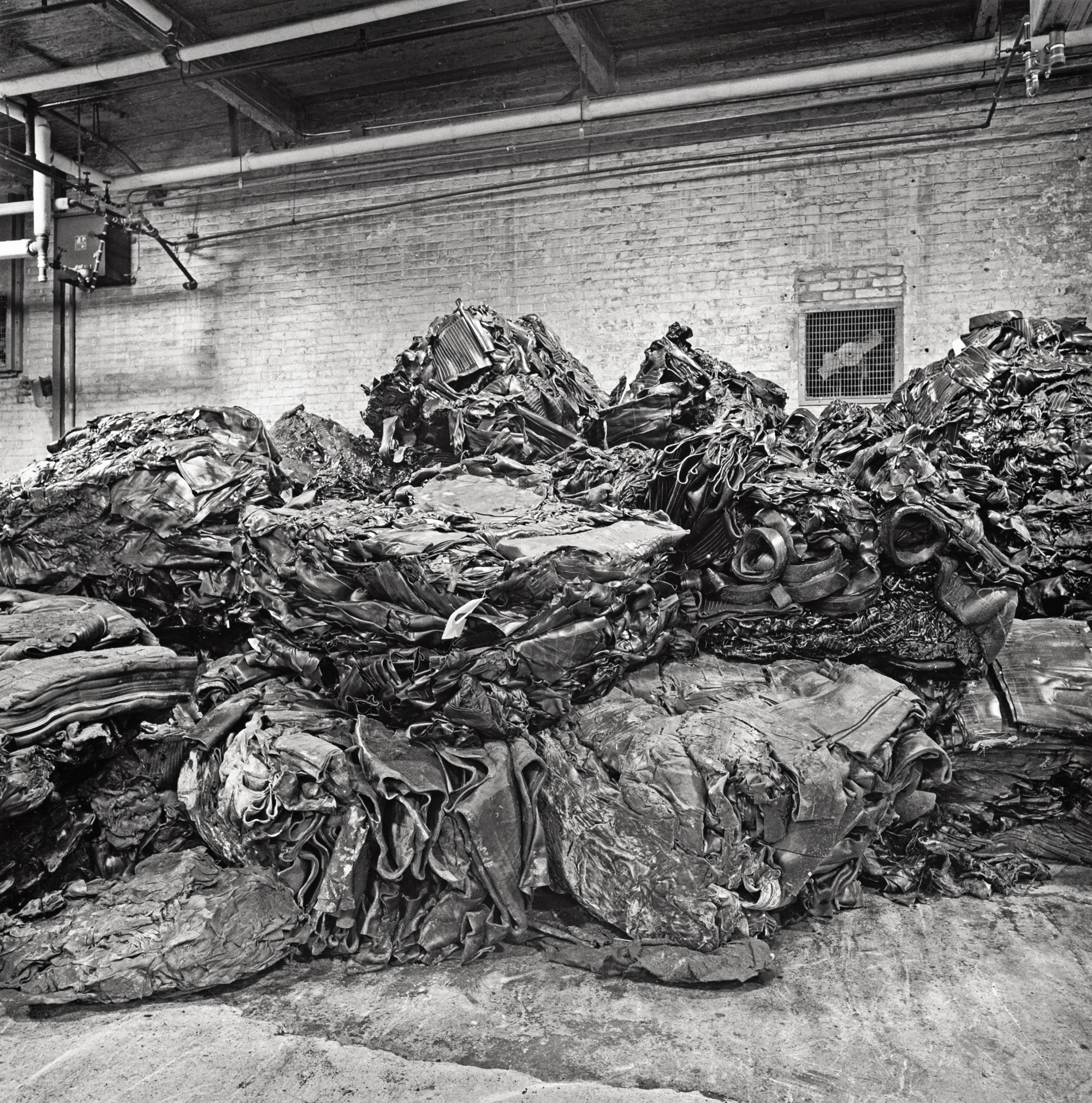
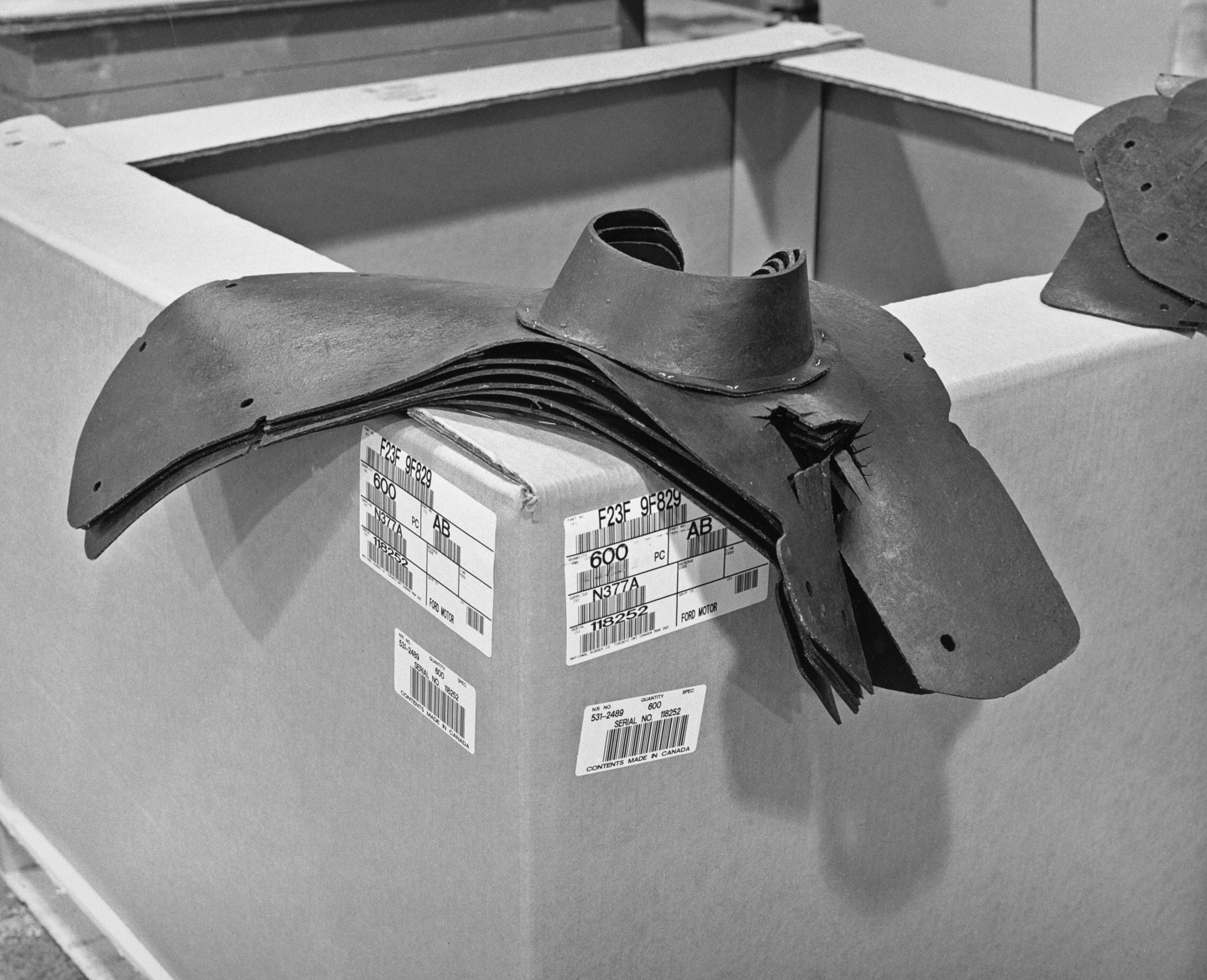
Using a combinations of tire crumb and “friction” (uncured waste rubber from tire manufacturing), the company was making moulded rubber parts for Honda, Nissan, GM, Chrysler and Ford. It was also producing commercial products such as playground mats and wheel chocks. (A full list of products from 1993 is attached below).
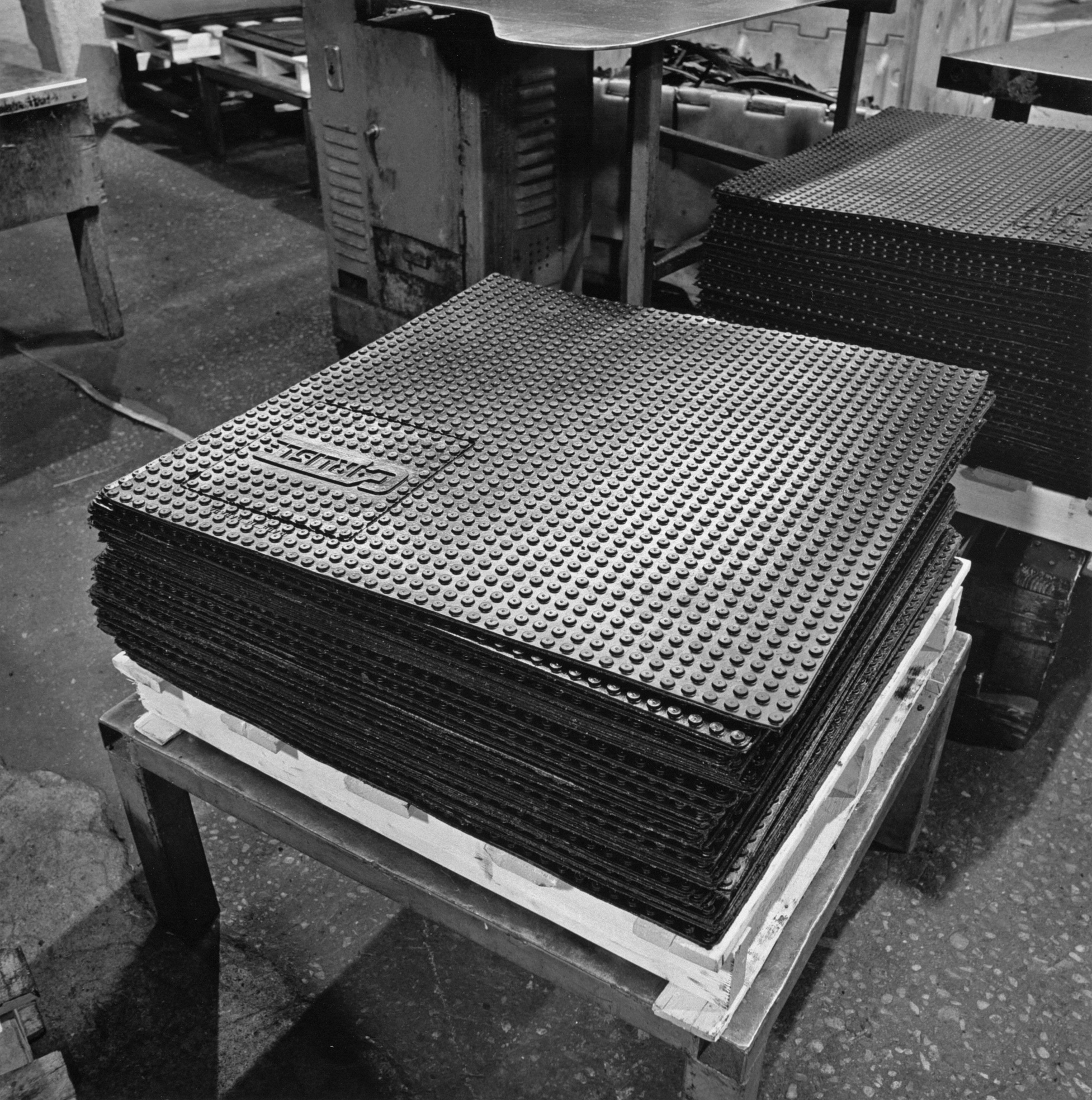
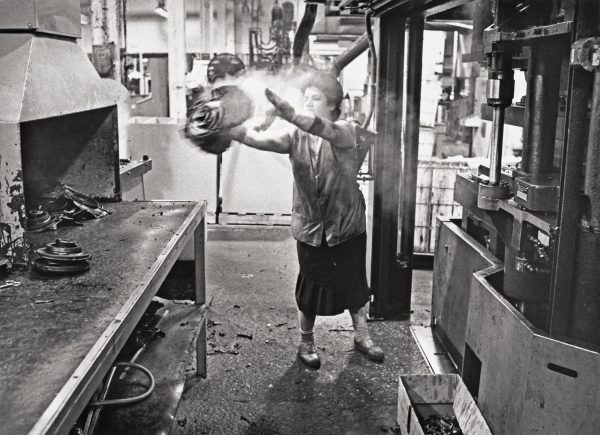
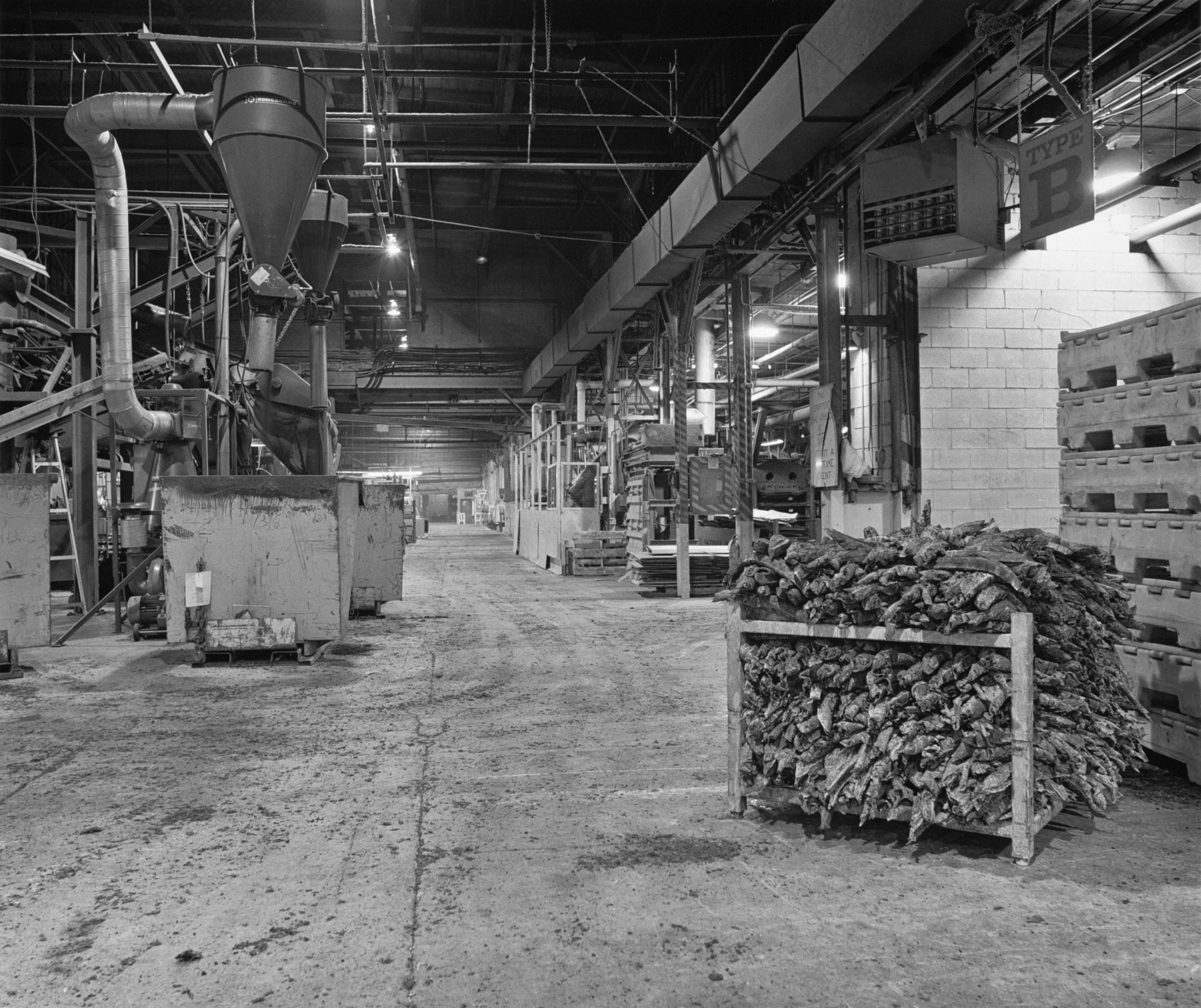
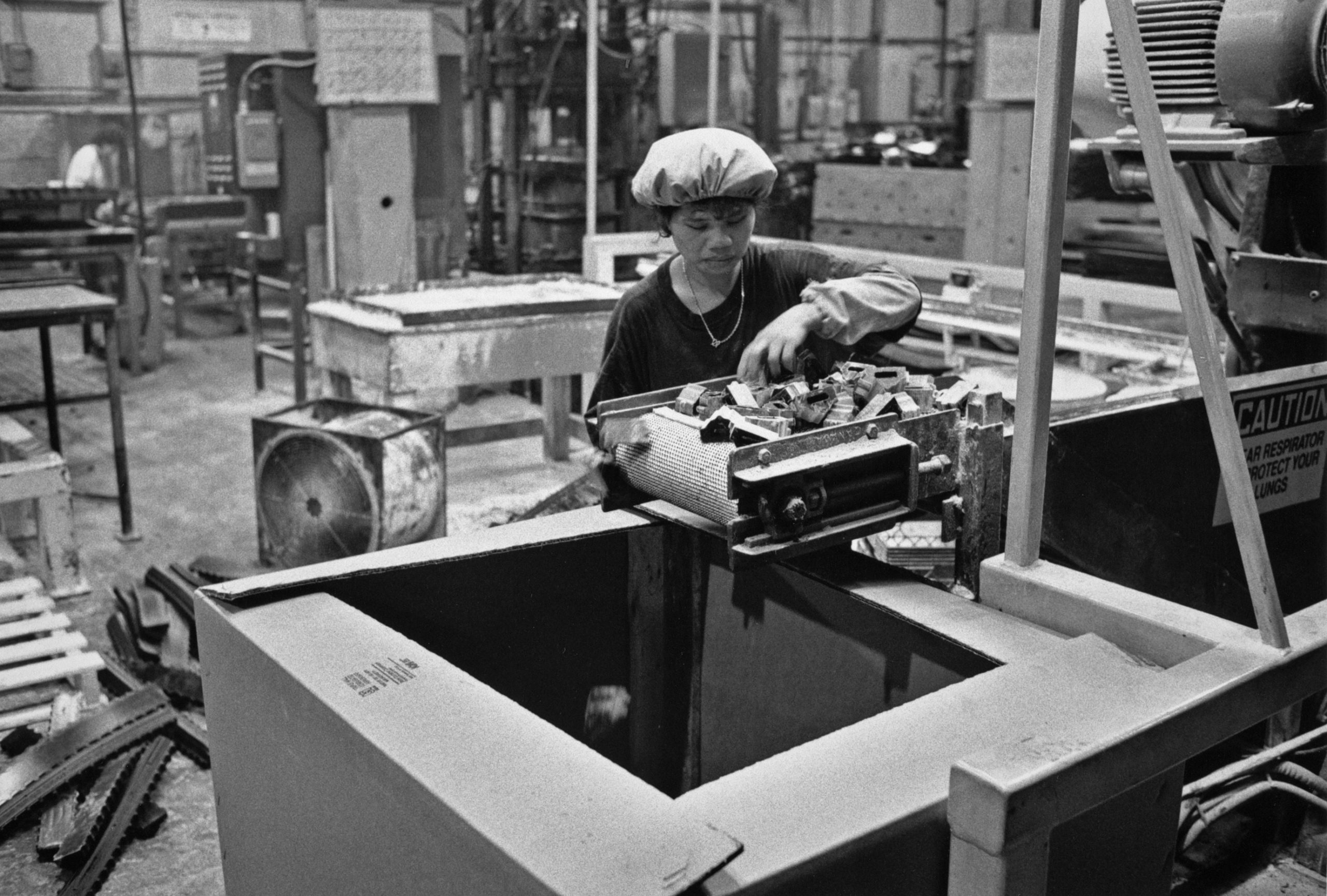
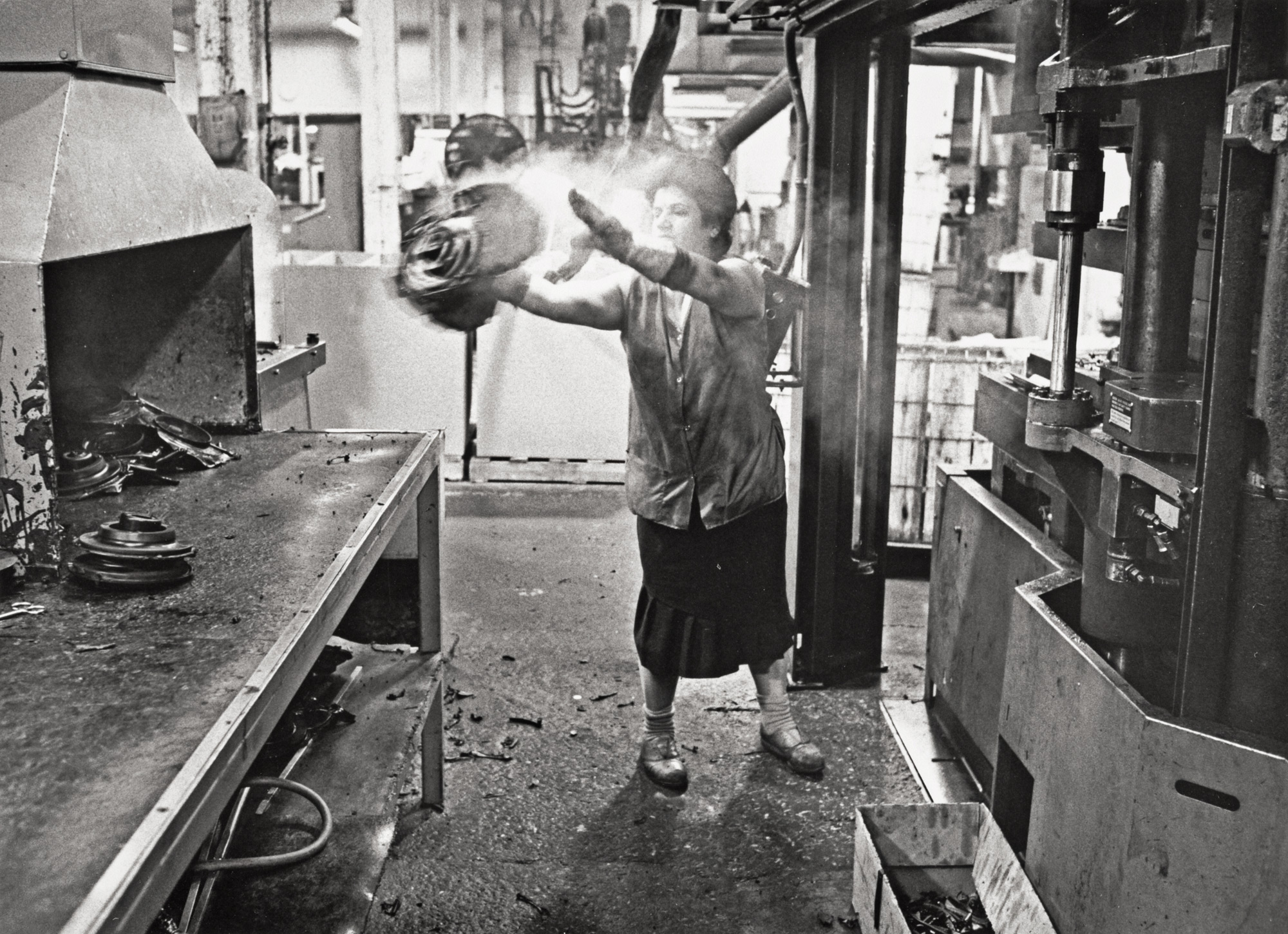
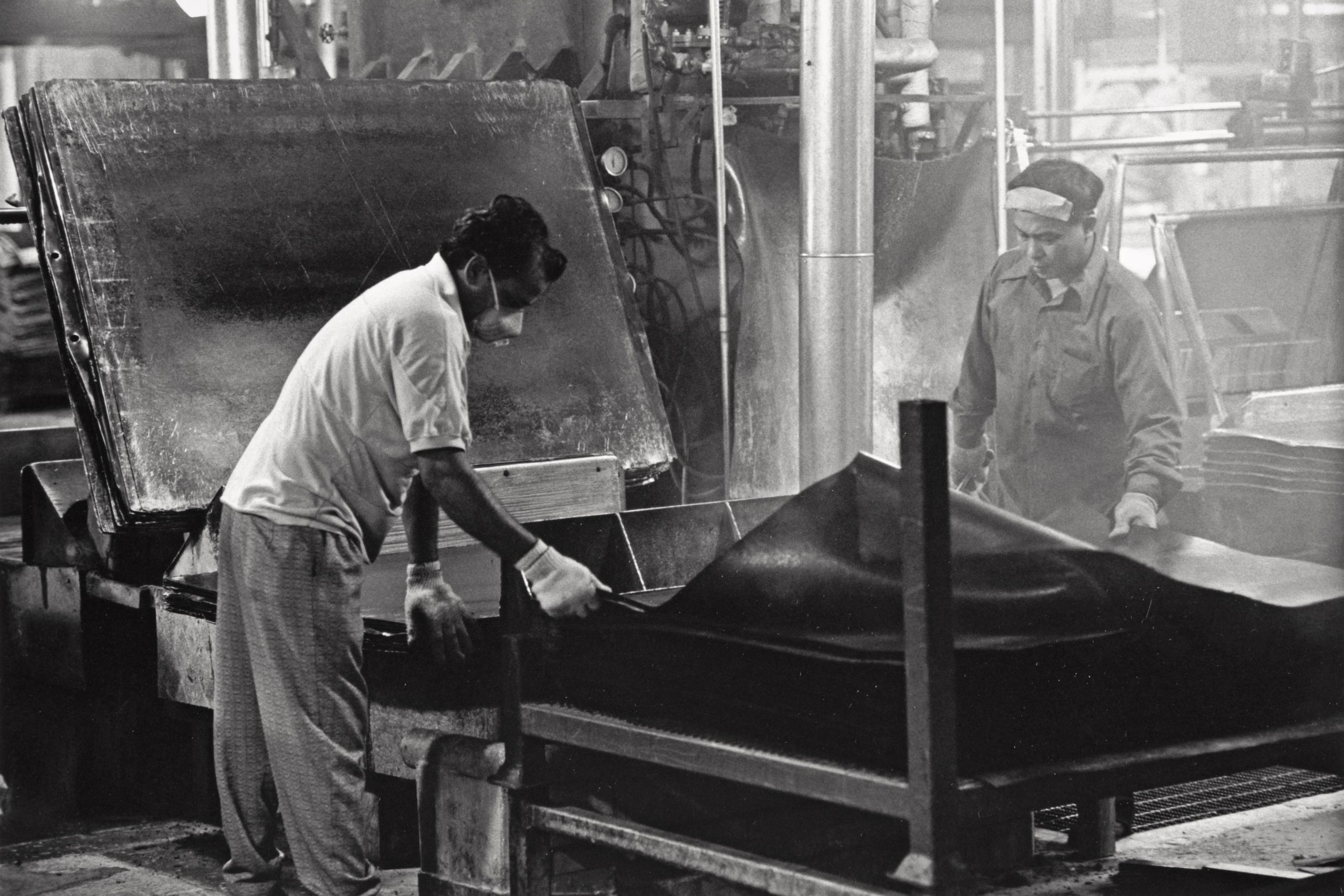
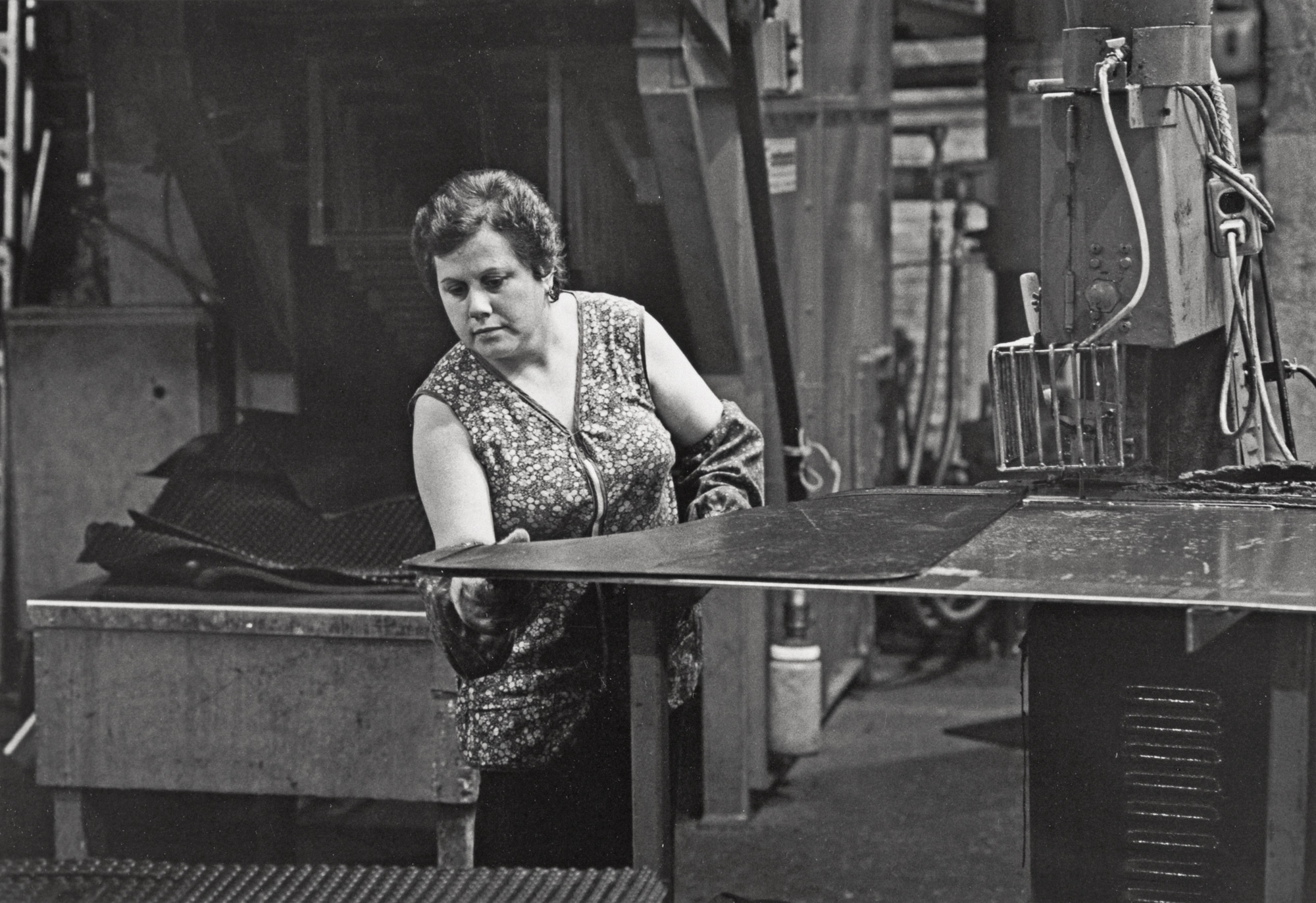
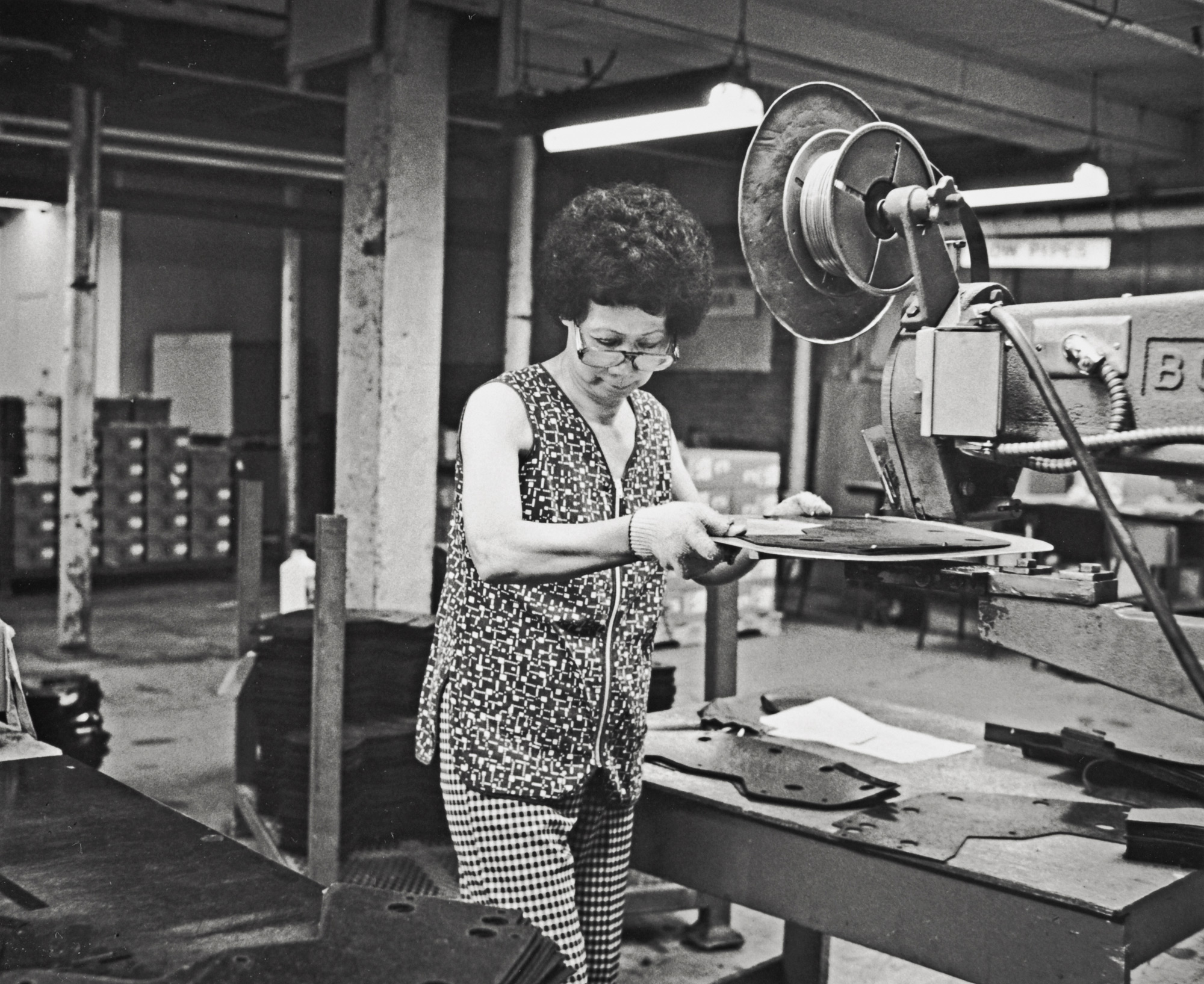
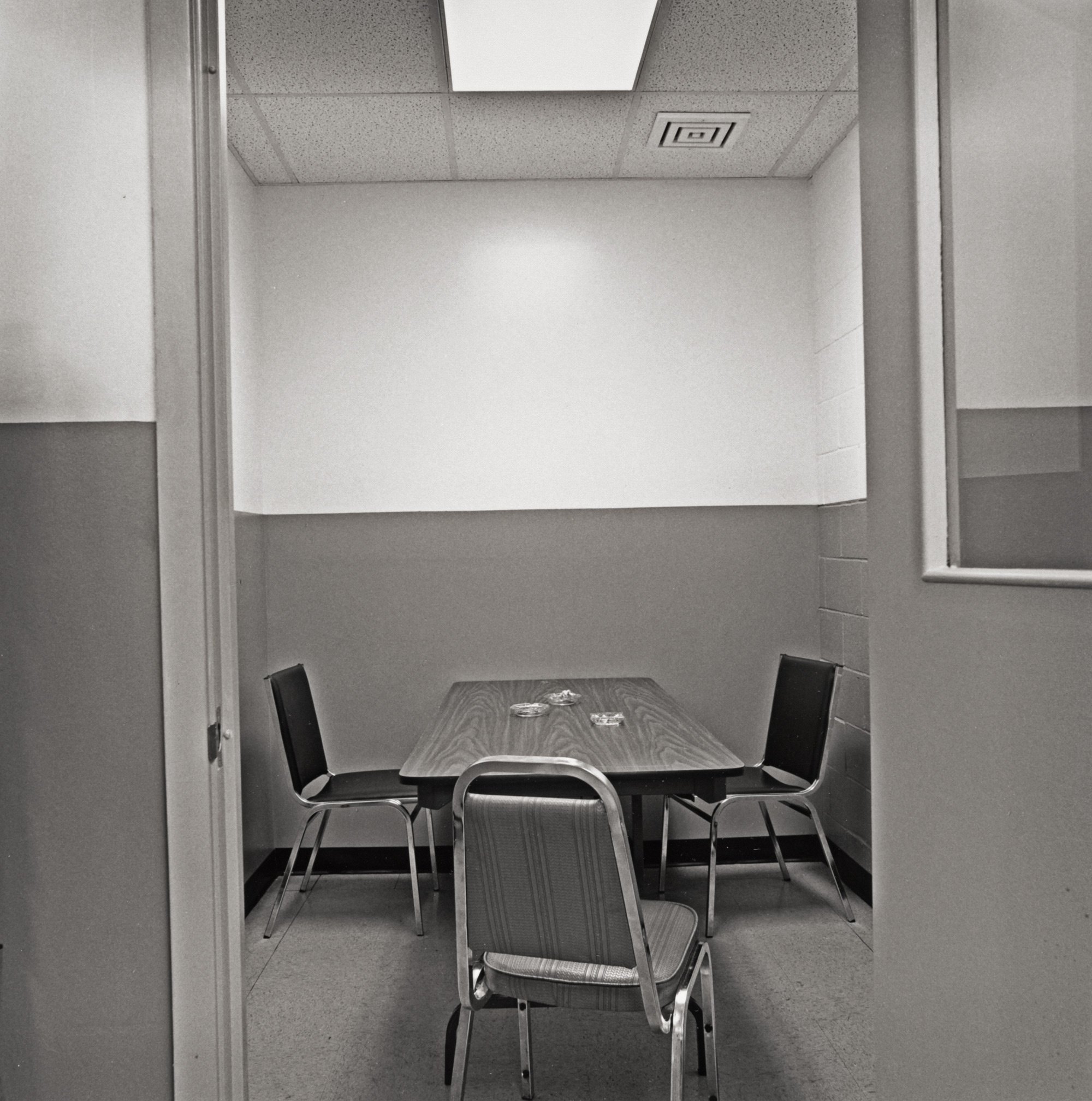
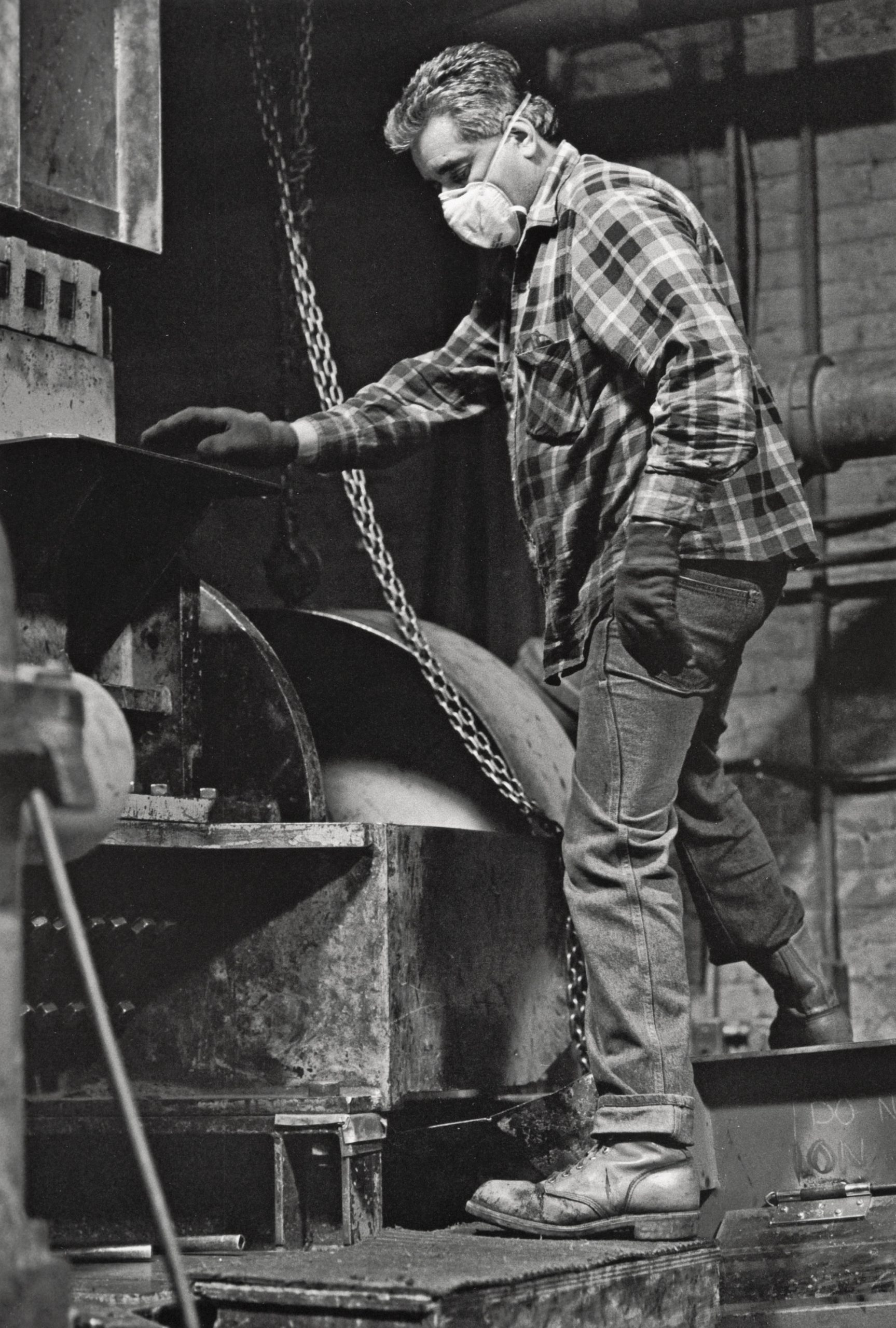
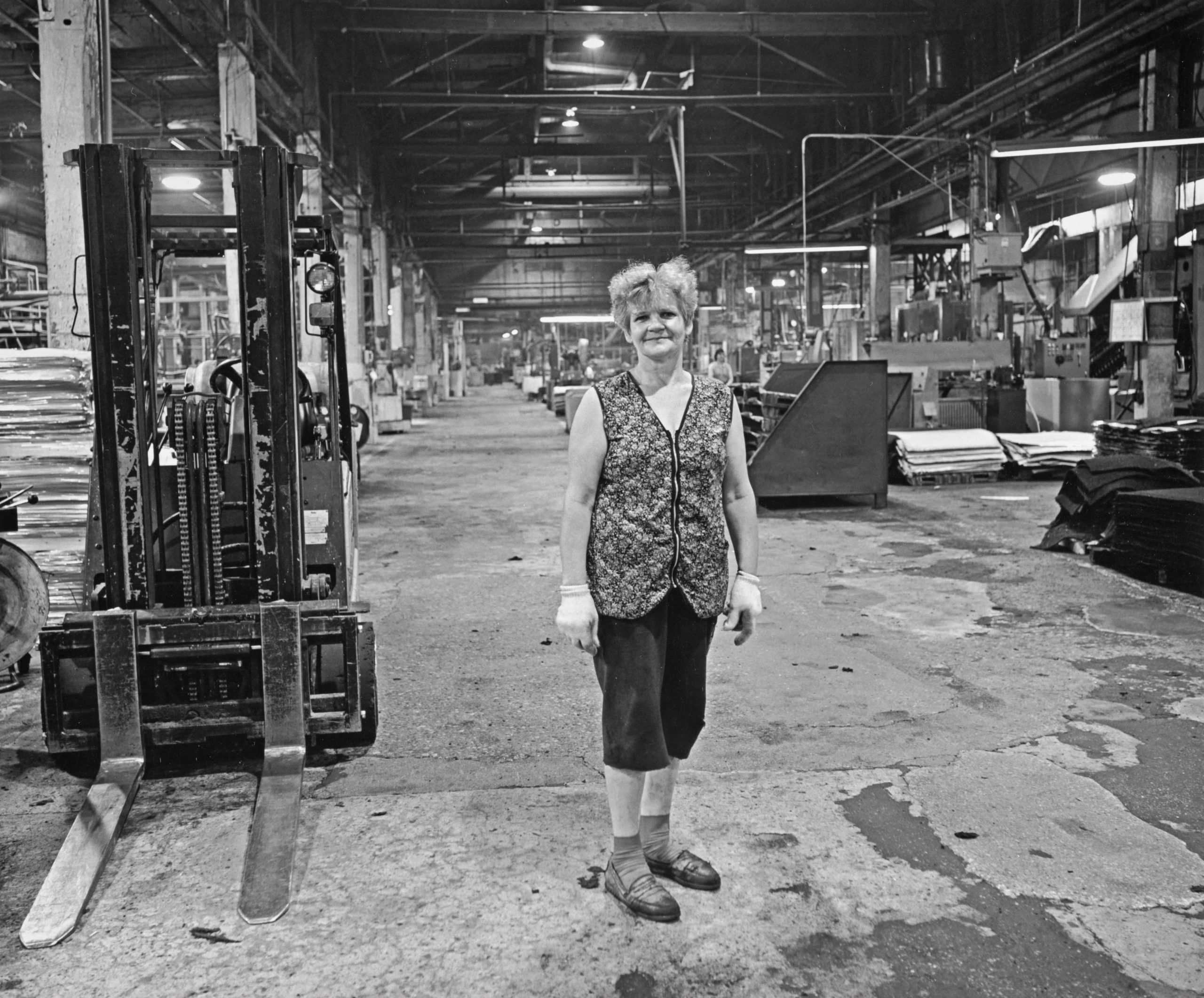
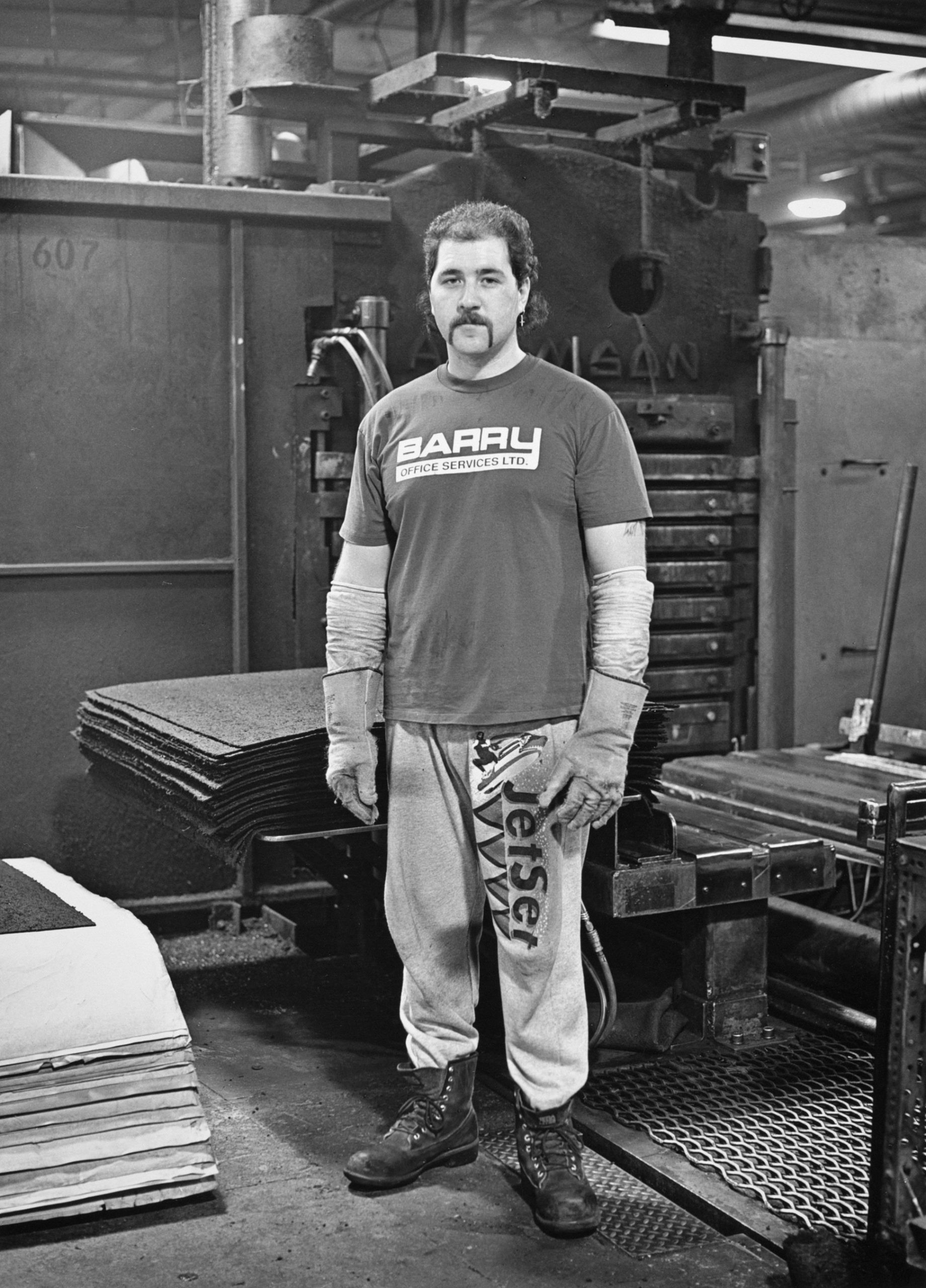
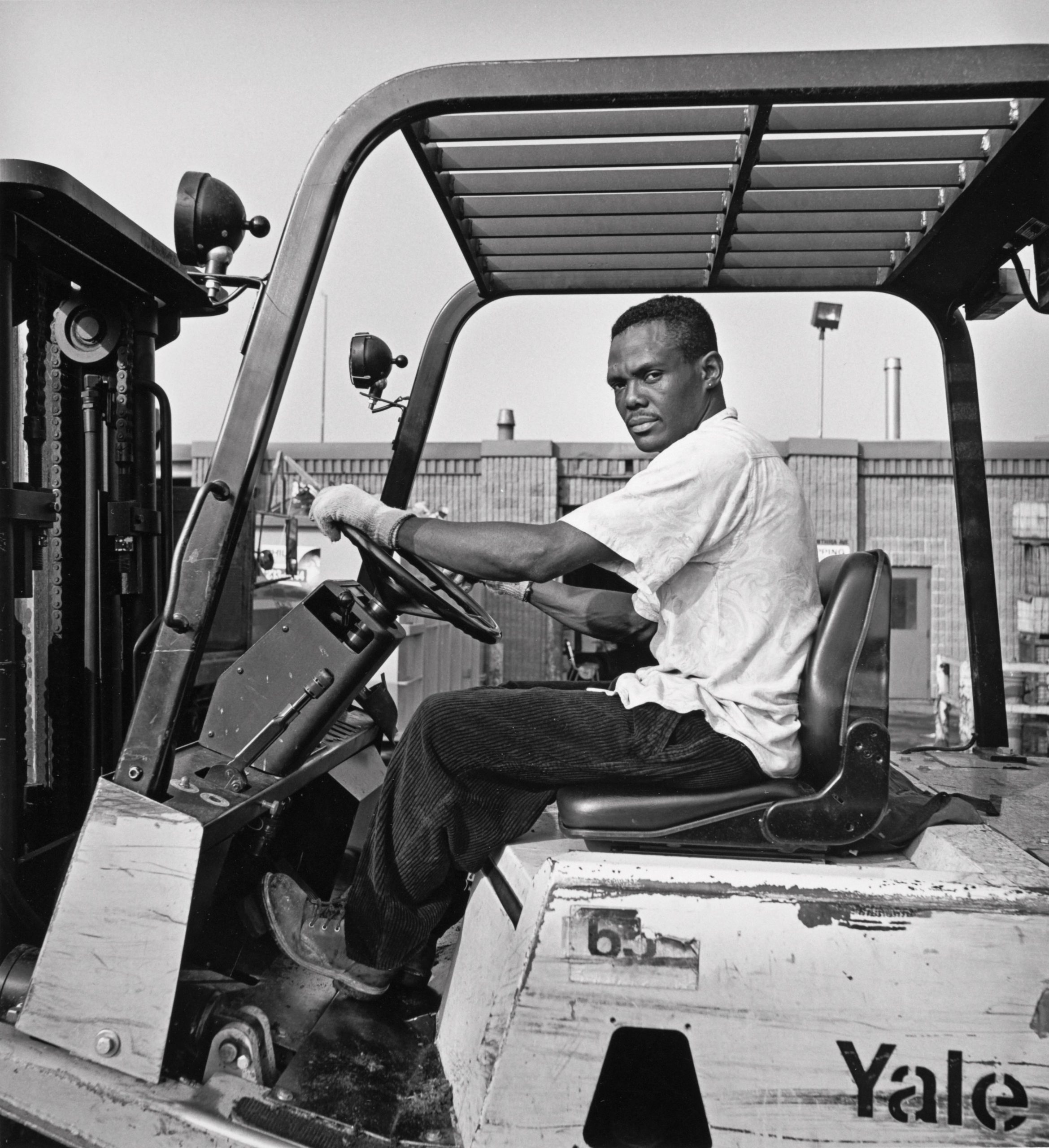
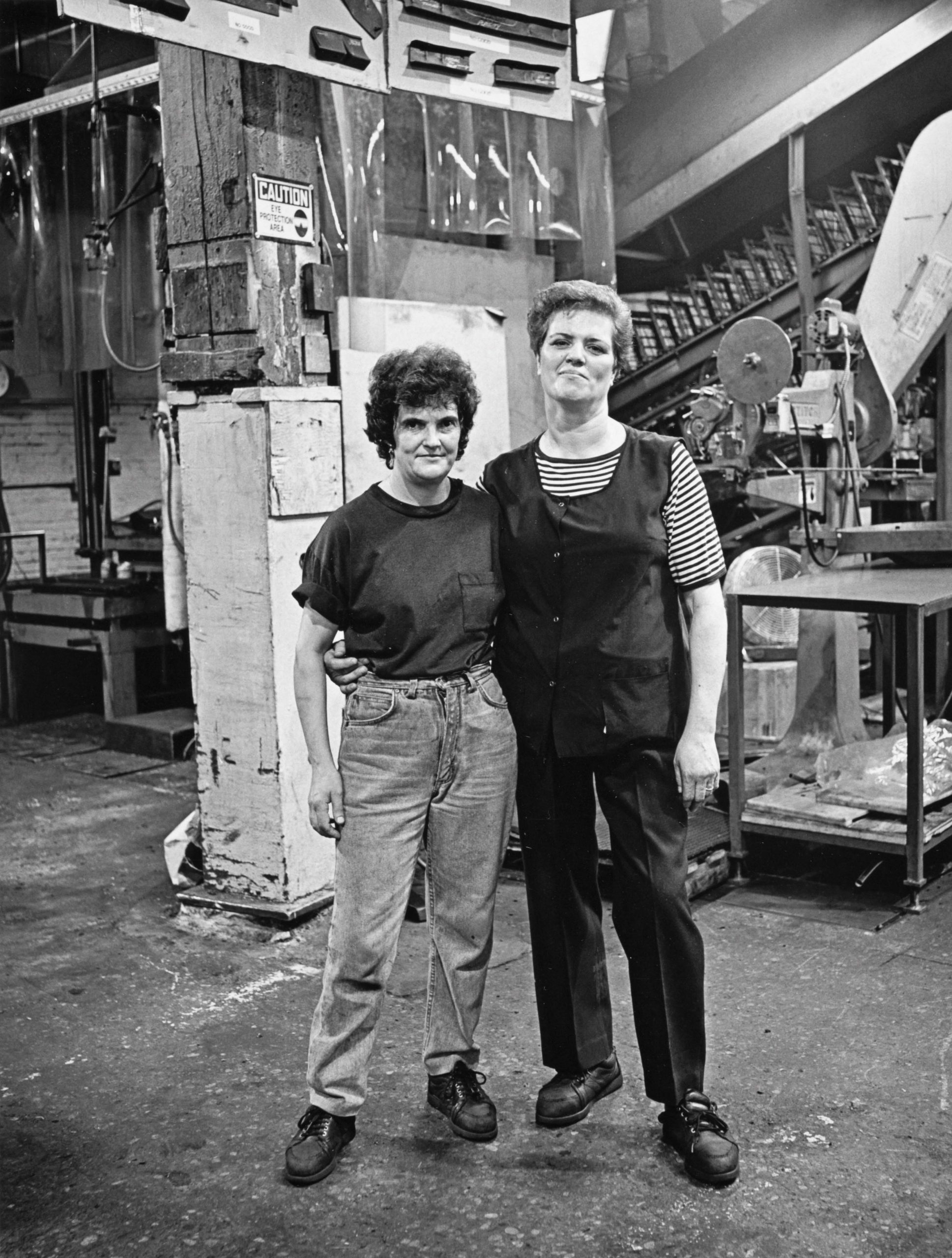
I was determined to make the most of a fortuitous opportunity to document an industry that is seldom seen in photographs. Between January 1993 and December 1994, I made regular Saturday visits to Cawthra Avenue. The available lighting in the plant, a mixture of sodium vapour and fluorescents, was just bright enough to allow me to freeze motion using ultra-high speed film. For architectural views and portraits, I used a Hasselblad on a tripod. By the end of the project, I had exposed 97 rolls of film.
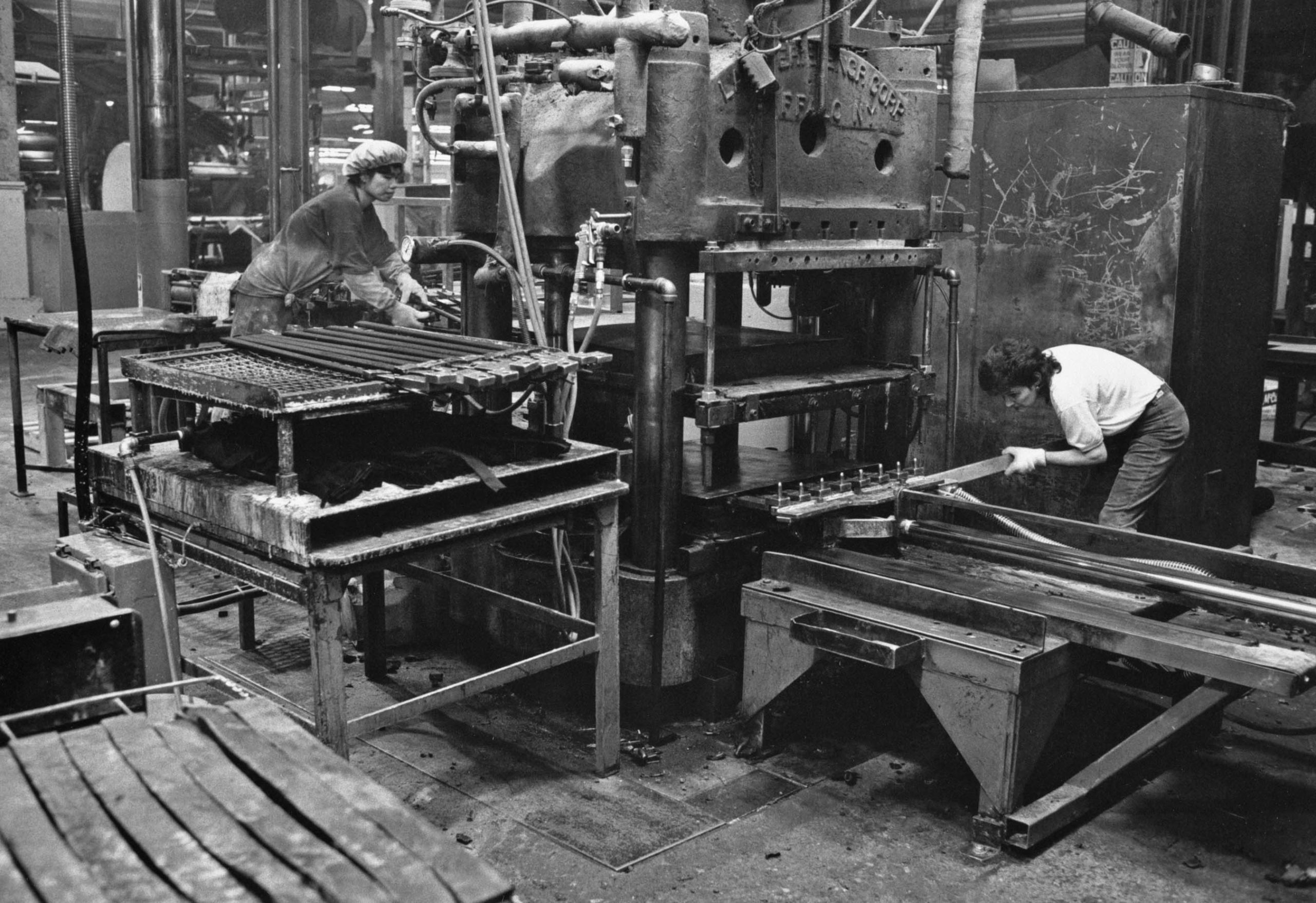
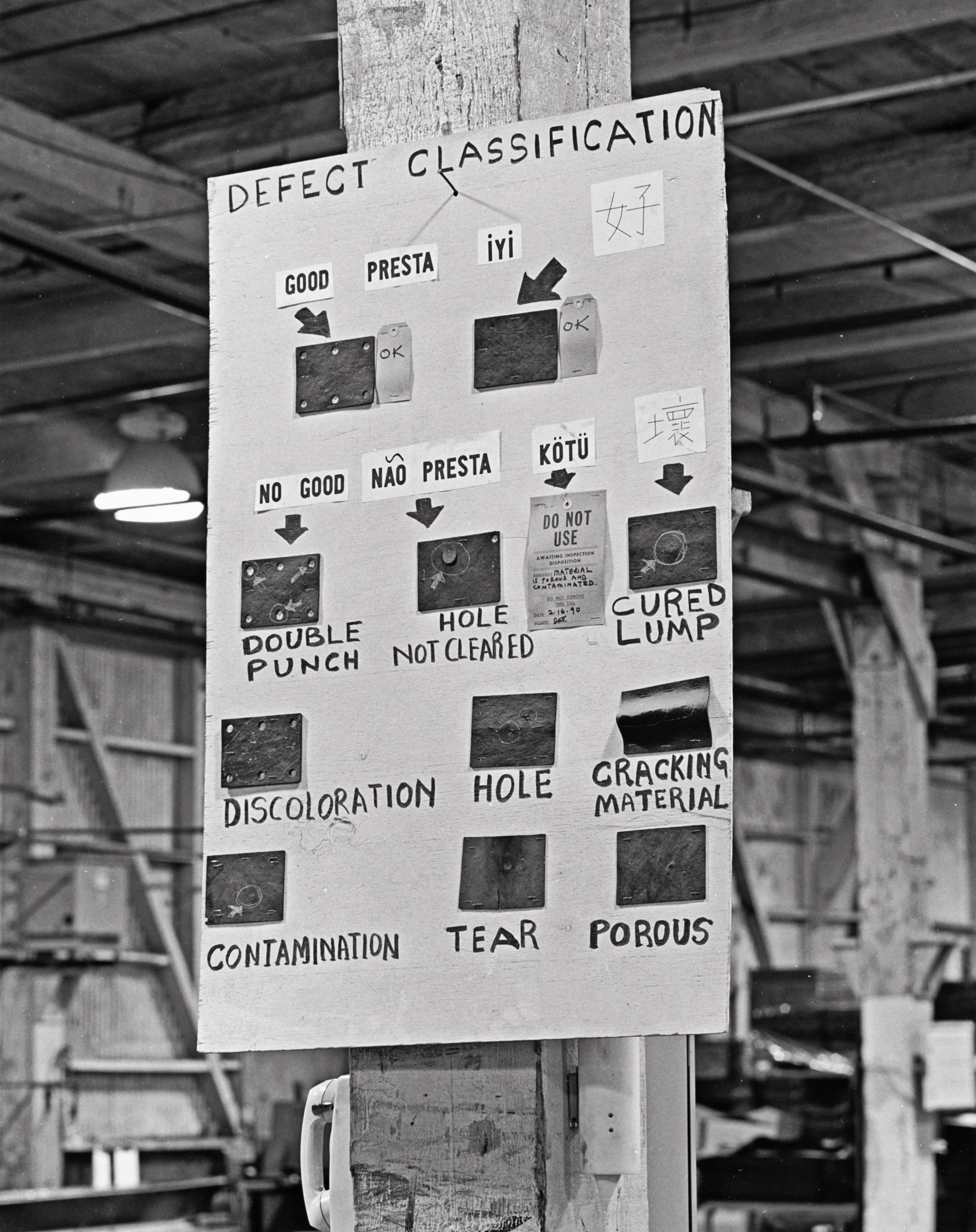
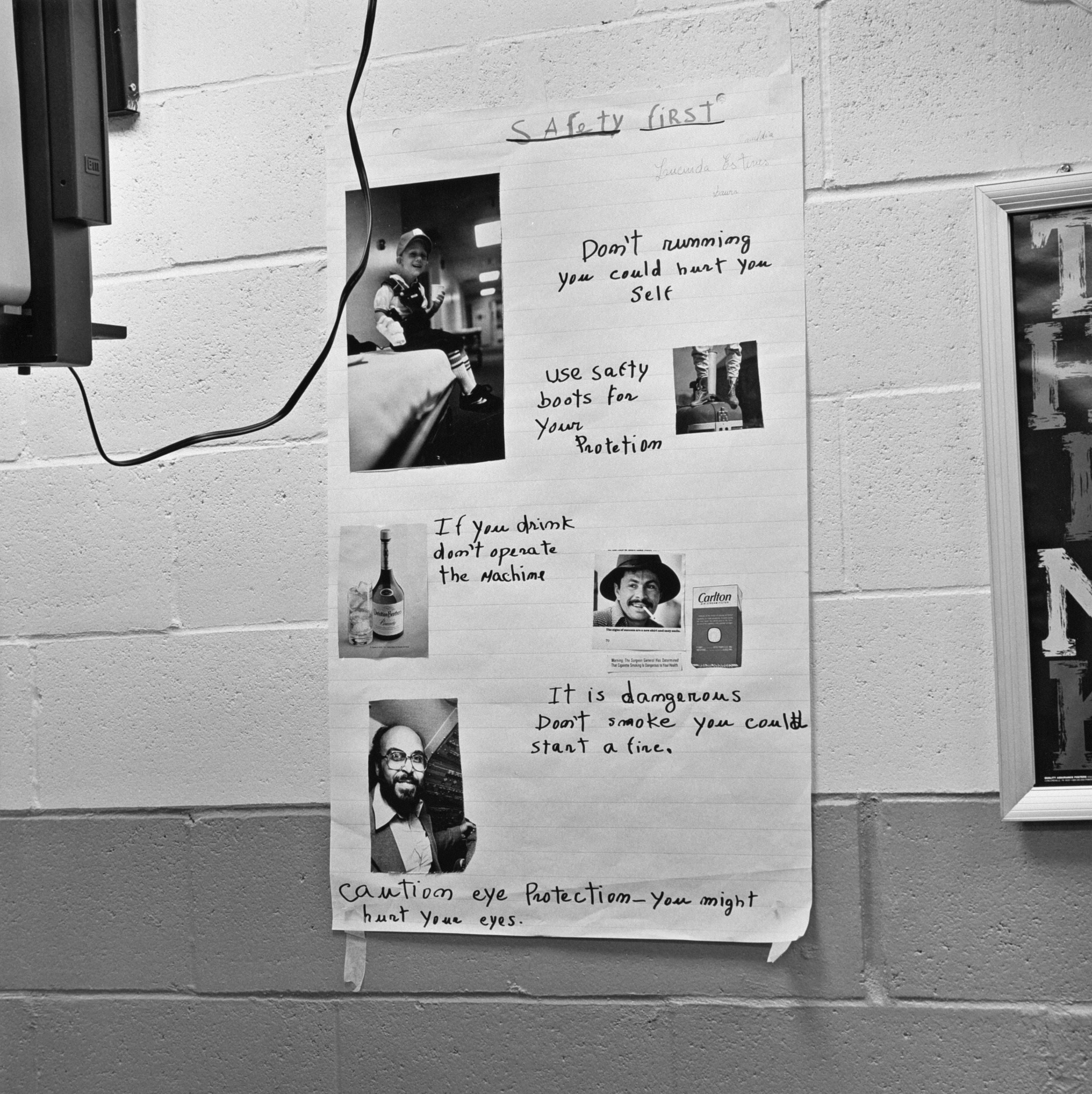
The unionized workforce at the plant exemplified the ethnic diversity still to be found in Toronto industries dependent on lower-wage immigrant labour. Portuguese Canadians, including bilingual second-generation managers and engineers, made up a majority of employees. In some cases, both parents in a young family worked at the plant, managing child care by taking opposite shifts.
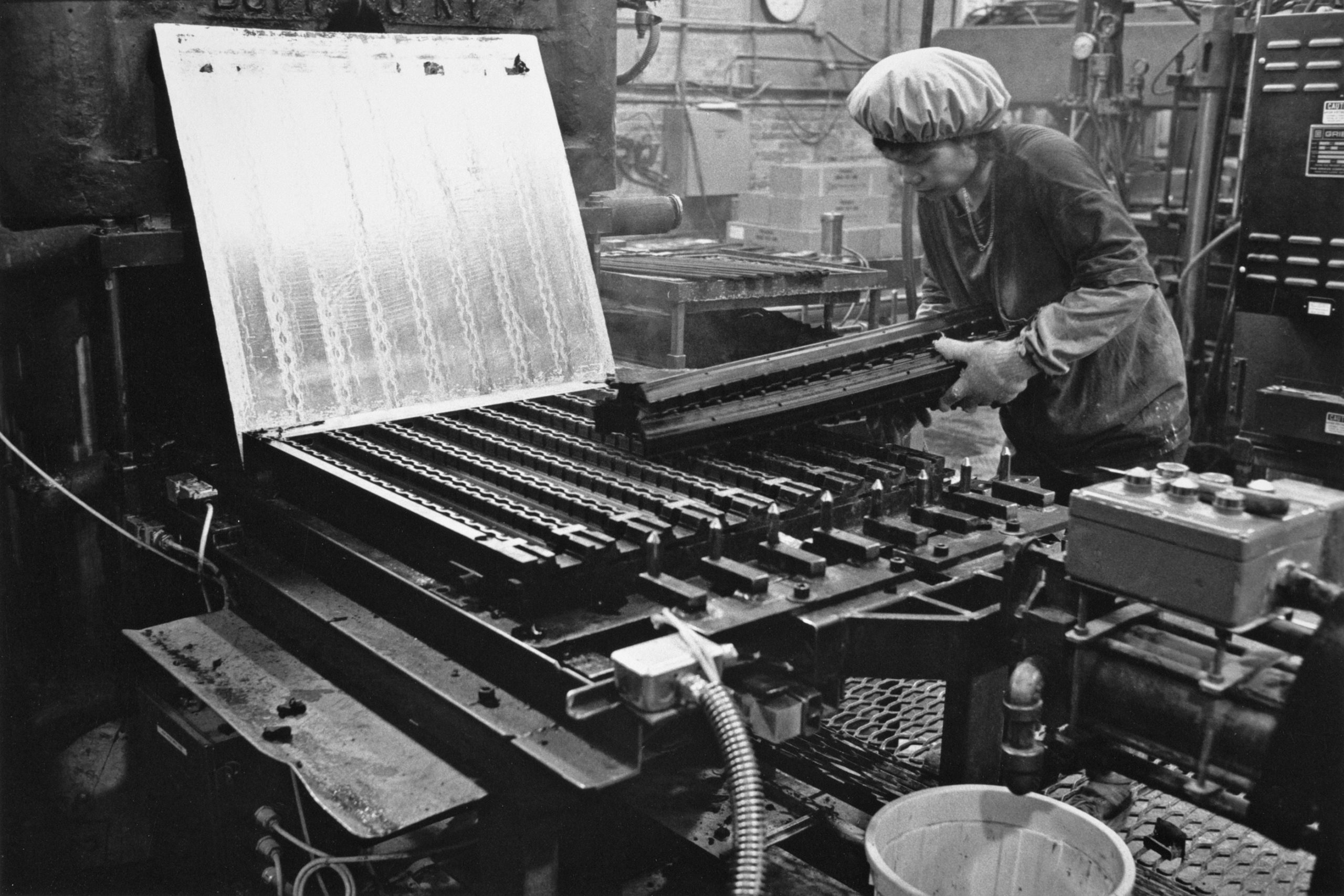
Working in the plant required endurance, especially on humid summer days. The vulcanizing of rubber uses sulfur, and requires high temperatures in a press. The plant interior was often filled with sulfurous smoke, which sometimes escaped through open doors into the surrounding neighbourhood. The effect of smoke lingering in the air can be detected in the altered halftones of many of my images.
My knowledge of labour relations in the plant remained limited, but on the surface they seemed harmonious. Although the company’s management style could be described as paternalistic, my project benefited from good relations between the new president and his employees.
During my project, managers were on a campaign to improve the company’s poor workplace safety record. The machinery that was used to process the uncured rubber could be dangerous. I witnessed the aftermath of one incident in which a worker sustained a painful hand injury in a machine.
As I had done during my previous long-term project at the Wickett and Craig Tannery, I aimed to present the employees as individuals, showing them at work, but also encouraging them to pose for portraits whenever possible. On every visit, my first job was to distribute 8 X 10 inch prints of the photos I had taken on the previous visit.
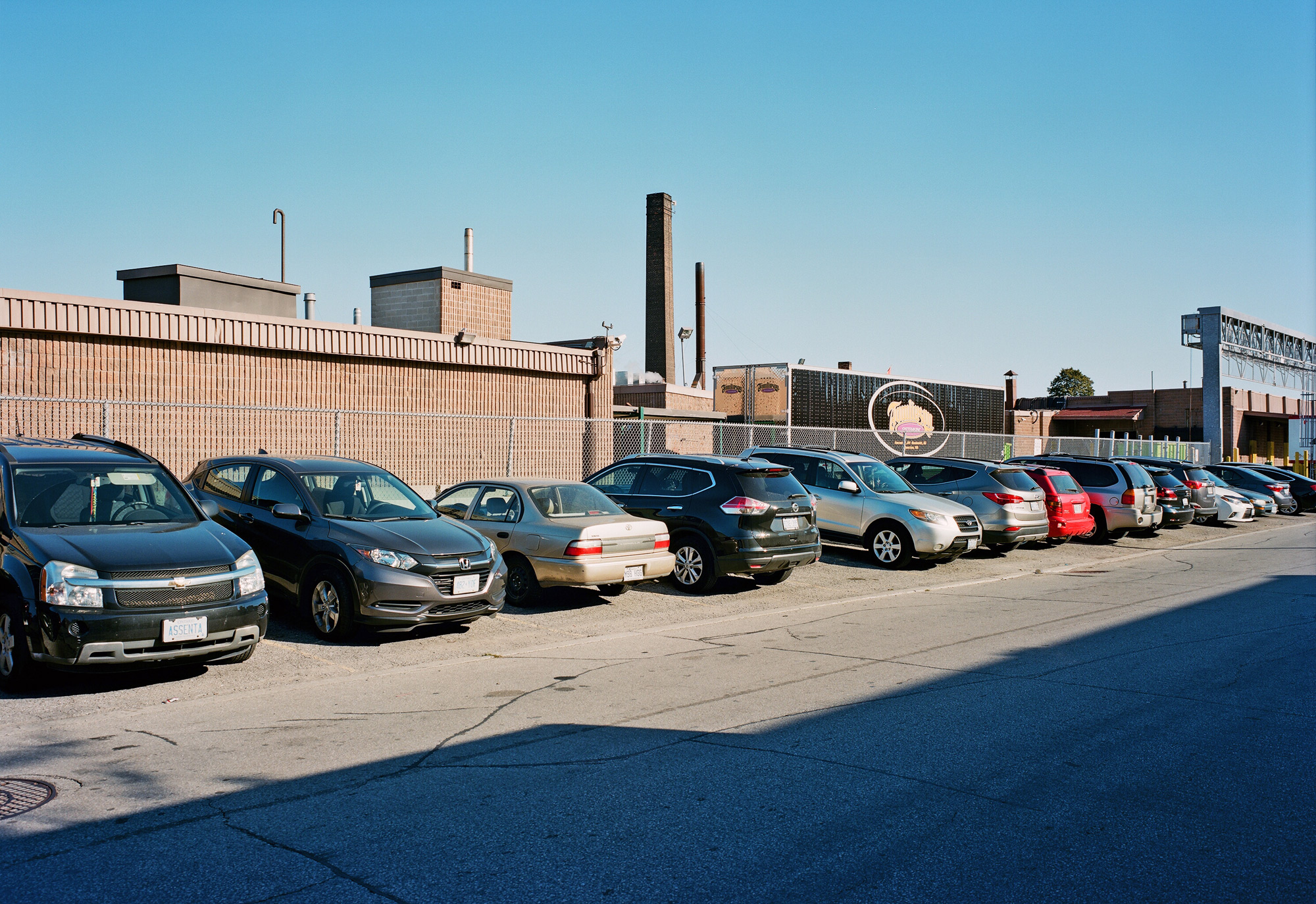
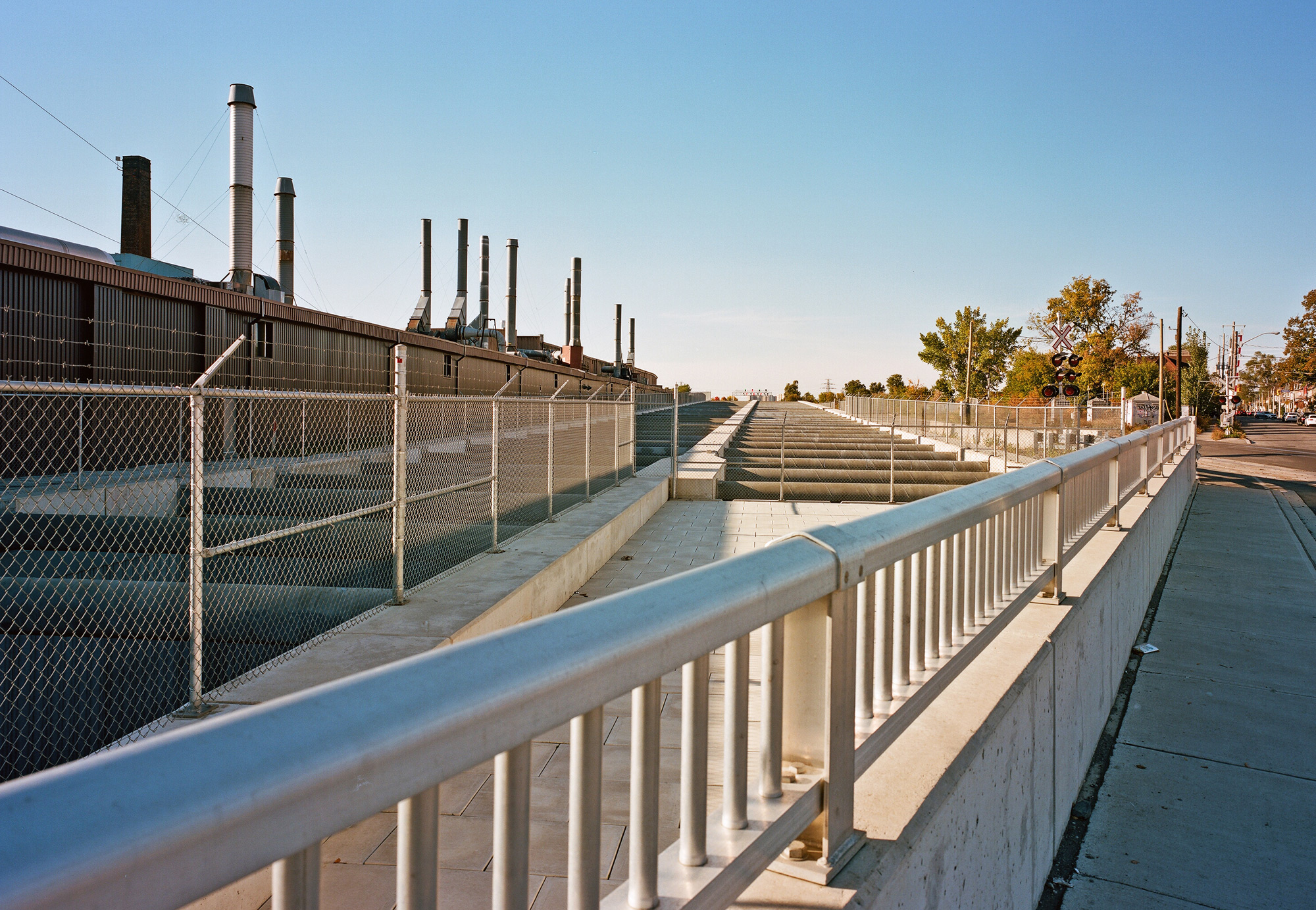
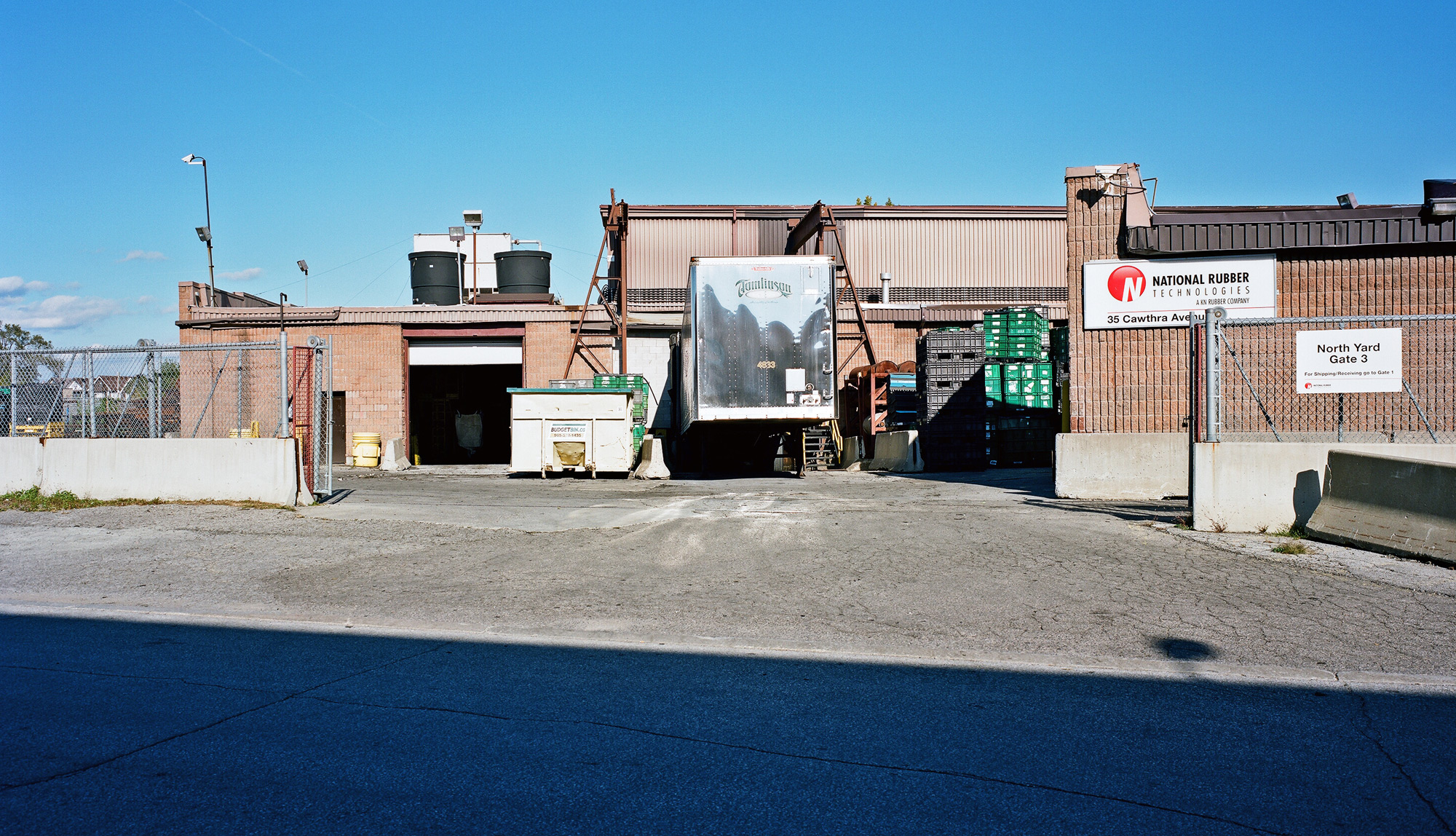
More than three decades later I have added some footnotes to my documentation of National Rubber Industries, later re-named National Rubber Technologies. In October, 2016, after improvements were made to the Go Transit rail corridor along the plant’s east side, I took a series of architectural photos in colour showing its changed setting.
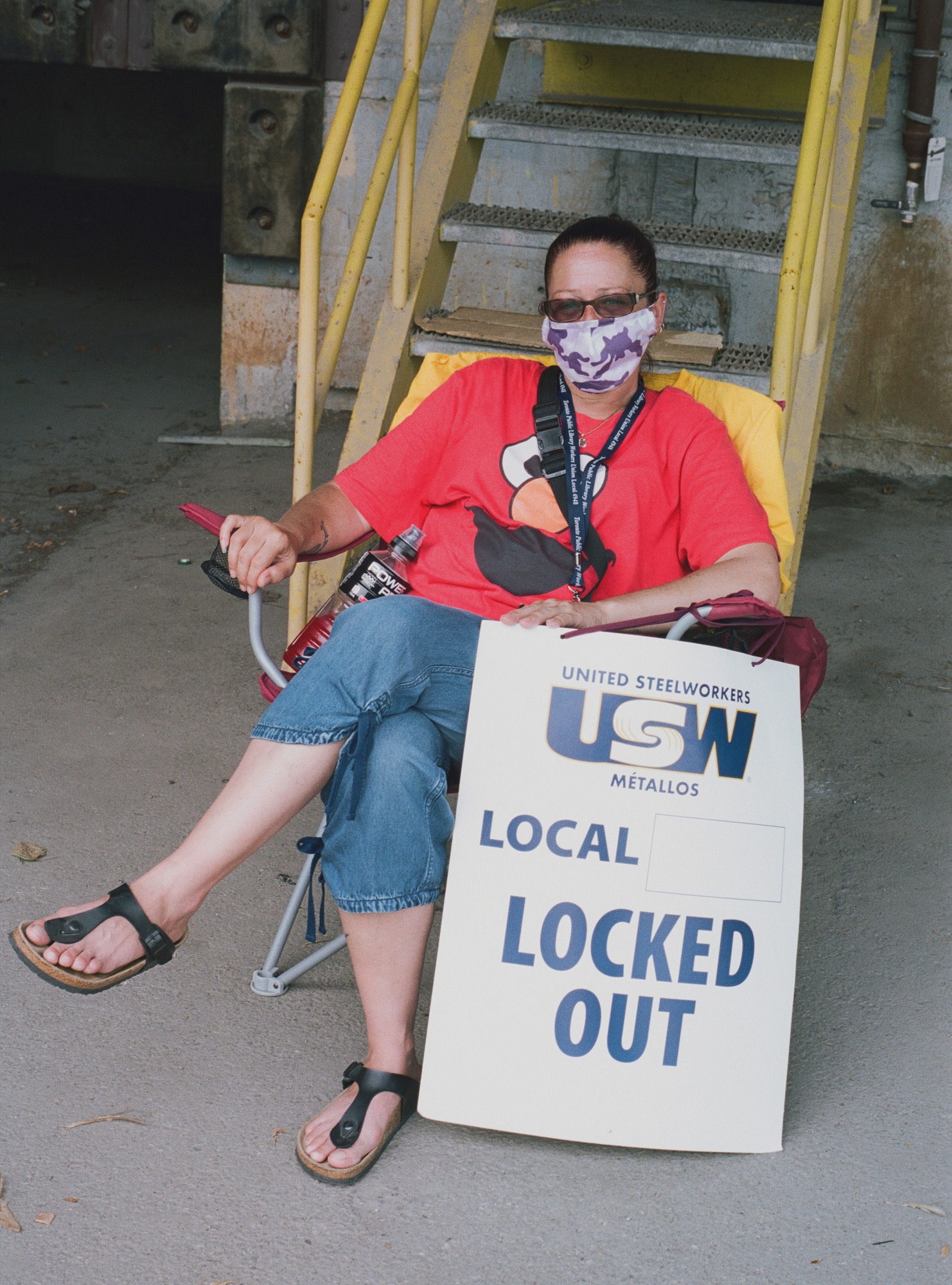
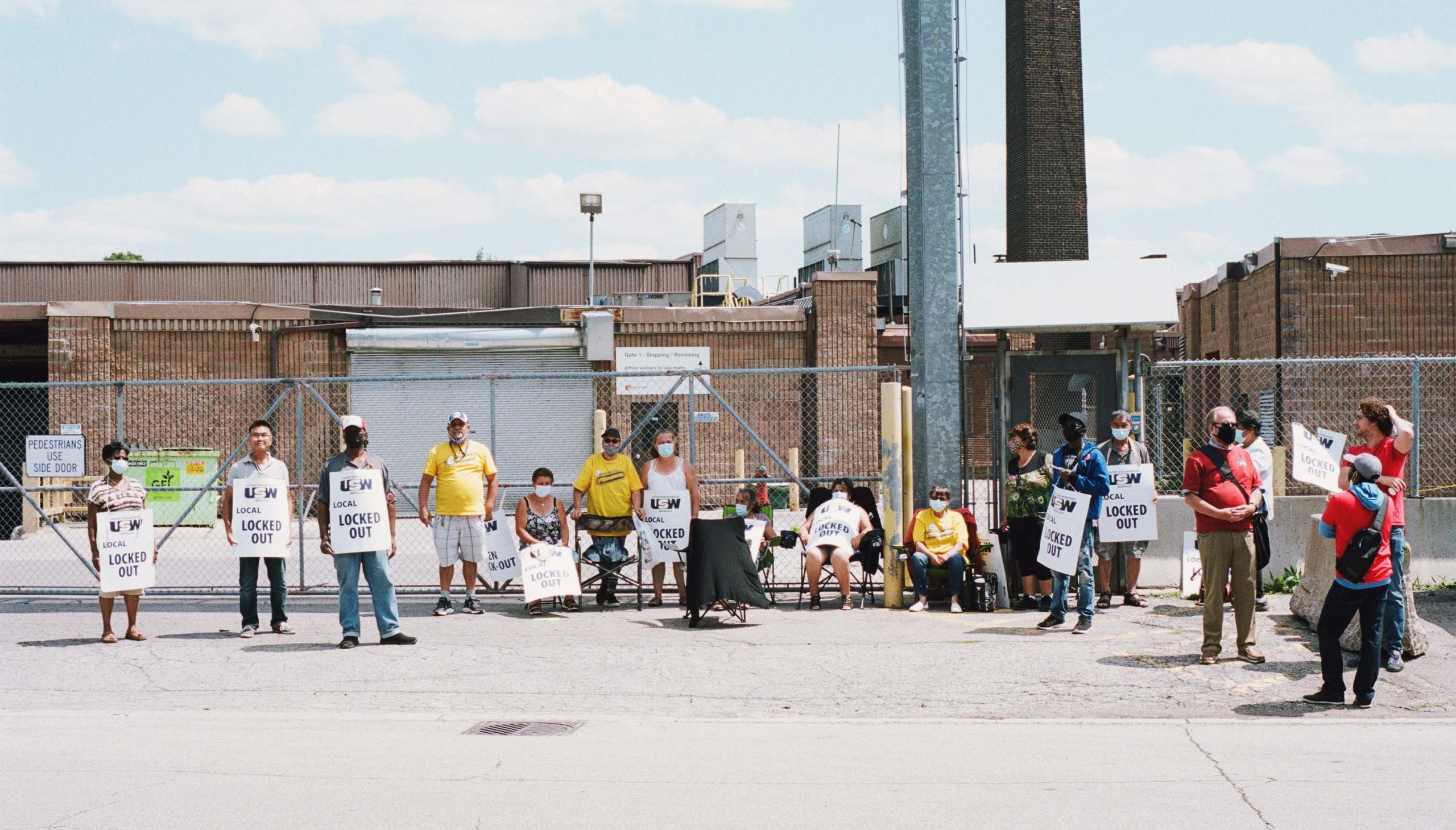
A second opportunity arose by chance on a hot, humid day in June, 2021. Biking down Cawthra Avenue, I encountered locked-out workers picketing in front of the NRT factory gate. Learning from them that the current owner was threatening to close the plant, I returned the next day to take snapshots of the picket line. The plant didn’t close then, but it only lasted another three years.
As the architectural historian Robert Harbison has observed, while functioning industrial plants can be forbidding, abandoned industrial facilities elicit pathos. This is because, unlike classical ruins, we know they are certain to be destroyed in the name of progress. Even in its abandoned state, the Cawthra Avenue plant, while still standing, continued to represent the Junction’s rich industrial heritage. Its destruction had for me a pathetic finality.
Appendix: National Rubber products
(via NR NATIONAL RUBBER & DESIGN — 0739105C. Trademark Copyright Information, 1993)
Molded, die cut and extruded rubber products, namely wheel chocks, dock bumpers, truck and trailer bumpers, truck splash guards, passenger splash guards, camper flaps, customized splash guards, die cut splash guards, masticated rubber sheet, rubber load bearing pads, rubber door panels, dirt shoe runners, golf mats, golf cart mats, cargo anti-slip pads, electrical insulators, roof walkway pads, playground mats, brake and clutch pedal pads, rubber wheel segments, truck bed mats, bumper pads, rubber insulators, baffles, seals, shields, deflectors, bumper assemblies, splash shields, shock absorbers, bumper rub strips, bumper guards, end caps, deflectors, muffler hangers, insulators, tie straps, mud flaps, fuel tank pads, shims, spacers, shift lever boots, gaskets, air ducts, spring seat assemblies, isolators, distributor cap protectors, crankshaft dampers, and manhole covers, collars and risers.
Photogallery
All photographs by Peter MacCallum


4 comments
I’ve previously seen some of these photos in the City’s archives, but it really great to read more of the stories and context. The portraits are especially good. Thanks for putting this together.
Great piece! I also love that the workers are identified by name in the photo captions. It’s a rare touch, but an important one—it helps ensure the people who built these industries aren’t lost to history.
Thank you for documenting this, the photos are amazing.
Impressive work documenting this historic building! While I lament its loss as an interesting brick-and-beam warehouse from the early 20th century, it didn’t seem like it could be adapted to too many new uses.
Many locals wanted it gone, as it emitted a plume of noxious pollution next to residential areas and inhibited the redevelopment of other properties. City planners wouldn’t allow high-rise buildings within a certain proximity of it.
I appreciated seeing the names of the employees in the photos, as it makes the project more personable.