This story is published in conjunction with Spacing’s upcoming “summer reading” issue, which will be available on bookstore shelves shortly.
I approach an unfamiliar neighbourhood a little east of the downtown core. I know I am at the right house when I notice Perry Walker standing on the second-storey front balcony. The host, today’s balcony-side storyteller, generously invites me to join them.
Once I’m let in, I notice Walker has set up his camera and tripod at the corner of the west-facing balcony. Settling in, we all chat about the quiet neighbourhood, the different streets we took to get here, how long our host has lived here, and stories about their neighbours. Walker settles behind the camera and starts it rolling.
The interview is not really interview-like at all. The host is a natural storyteller, and the conversation is more like a stream of consciousness. From roommates, landlords, job security, aspirations, people-watching, to using the CN Tower as a wayfinding guide, the conversation ebbs and flows between big and small ruminations from our host’s perspective.
For the most part, Walker is quiet in this interaction. His eyes monitor the camera, listening attentively. Once in a while, he might make a brief, acknowledging remark, a sympathetic agreement, or an occasional follow-up question. Walker’s camera captures not just the host, but little things that build the reflective atmosphere and nostalgic feeling of chatting on a sunny balcony- the half-eaten oranges, the view over the street below, the hand tapping the ashes from the cigarette, and the cat perched by the balcony window.
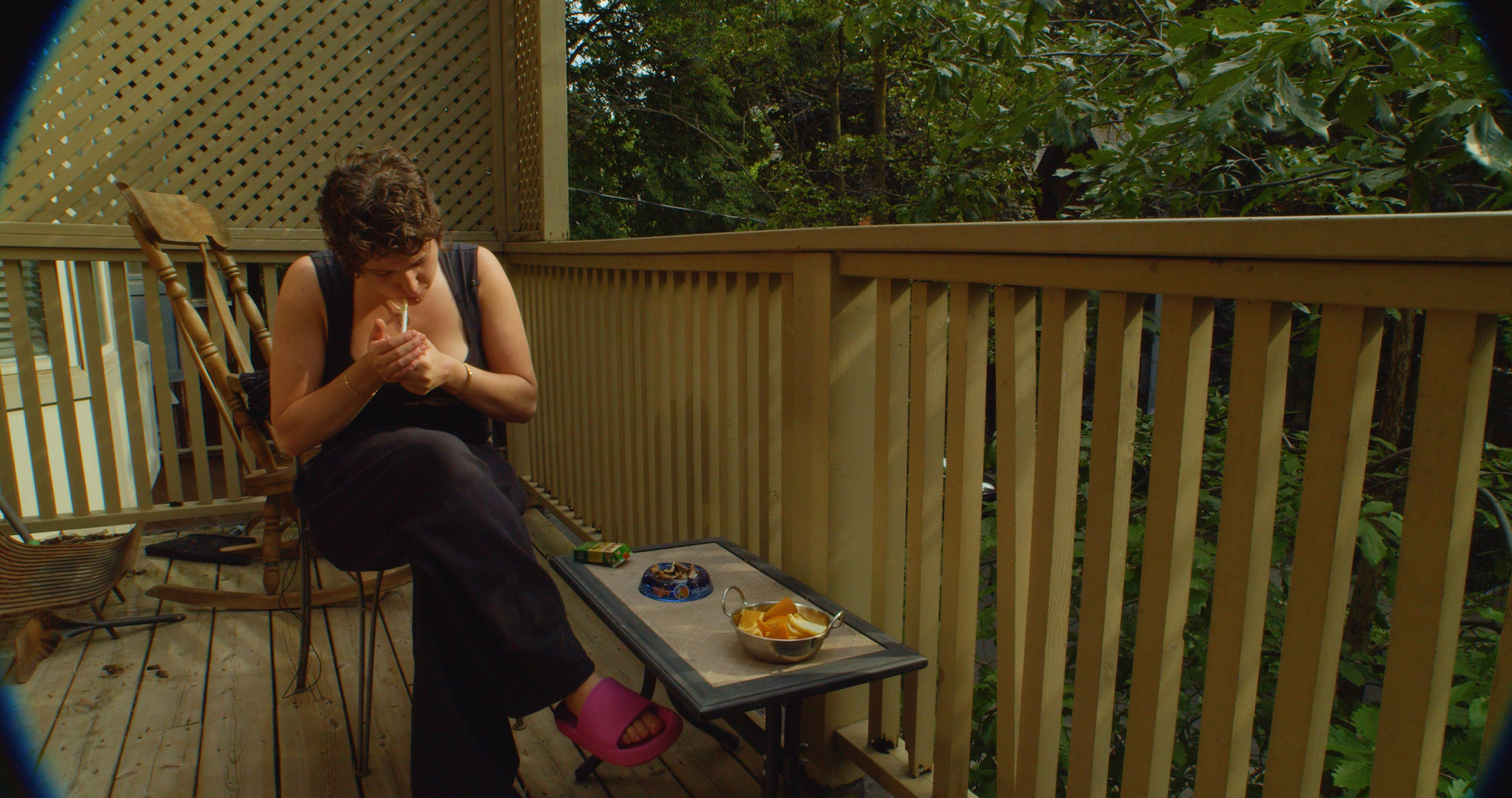
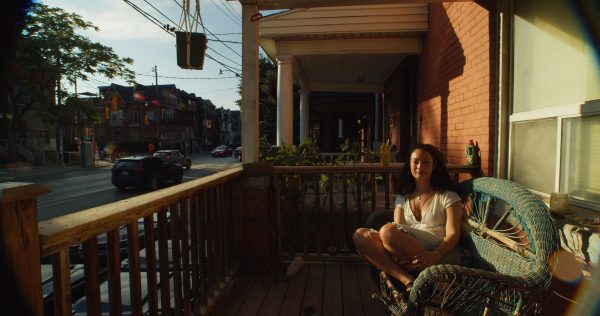
This interview is part of Walker’s documentary film project From Where I’m Sitting, which maps Toronto in a unique way. His background in film theory and 15 years of experience in documentary filmmaking shine through in his non-fiction storytelling approach. In this project, he travels across Toronto to record anonymous, podcast-style conversations with residents from their front porches, balconies, and similar spaces that face onto public surroundings. Centred around the core question of “what can you see from where you live?”, the project documents how residents interact with their immediate environment and explores the everyday issues currently occupying their minds. Ultimately, these intimate, observational interviews will culminate in a feature-length anthology film as a snapshot of the city through the eyes of its inhabitants.
The film captures the ephemeral moments felt in the city- summer, a break from the fast-paced day-to-day, a thoughtful moment shared with a stranger. As Walker says,
People are busy in this city. So, a part of the overall concept is to try to capture that essence of summertime in Toronto. Everyone’s cooped up indoors for so many months, and then spring hits, and people are like, “Okay, time to live life again, time to go out and talk to people,” and the amount of socializing people do in this three or four-month span, I think, is more than the rest of the year combined.
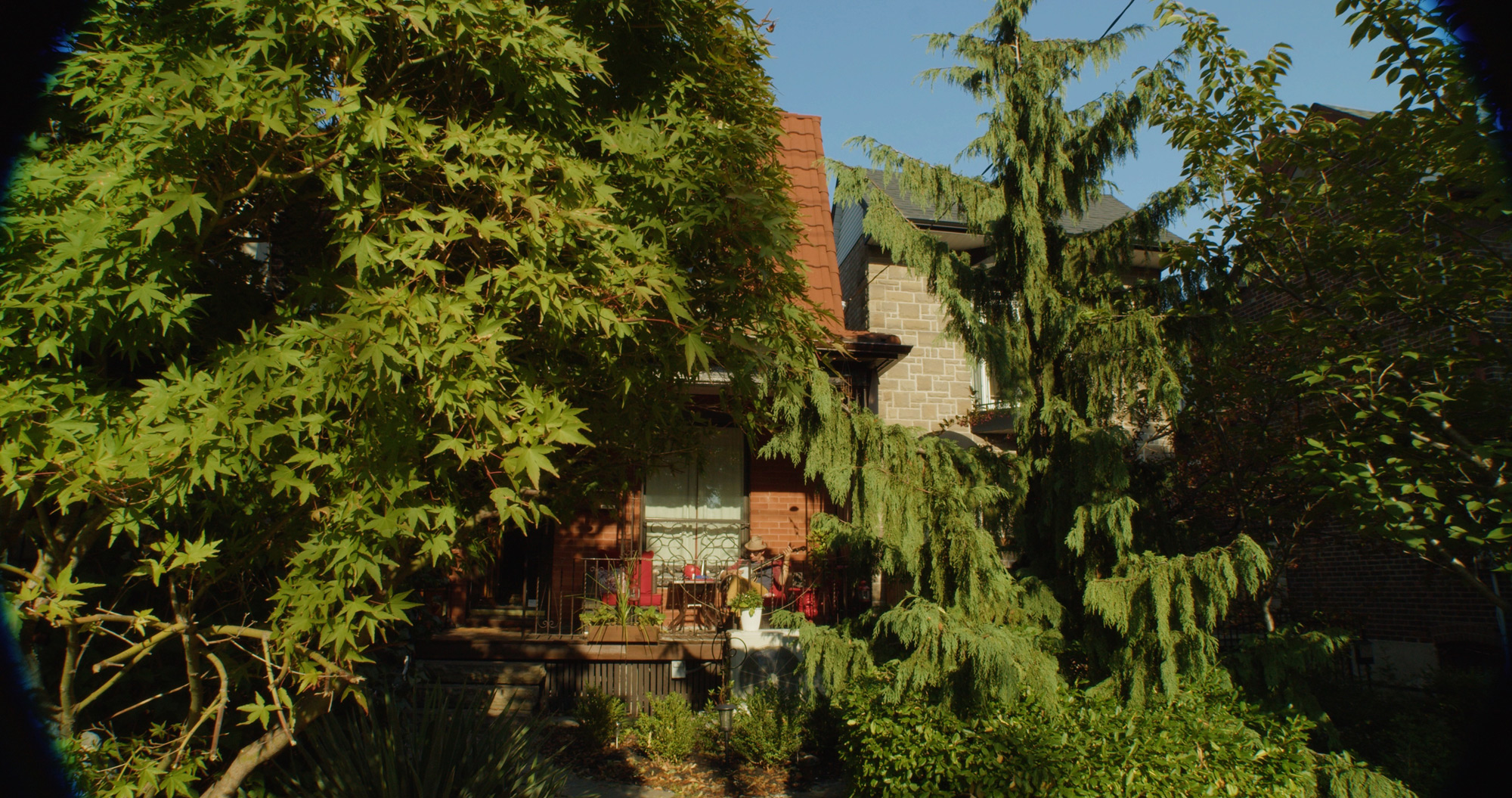 Since its production started in Spring 2025, From Where I’m Sitting has reached over 100 participants (and counting) in different neighbourhoods around the city.
Having this many participants involved, especially considering the range of neighbourhoods he’s visited thus far, from St. Clair West, Lansdowne, Roncesvalles, College, to Danforth, is no easy feat. Walker shared the journey of exploring how he approaches potential interviewees in the city.
Posters and flyers are my number one way right now. Now that I have my website set up and the project has been underway for a while, potential participants can learn about it in their own time, and they can reach out to me and invite me in, which is nice.
Last spring and summer (when the production began) was tricky because I was trying to establish the project. I was doing a lot of walking, talking to people and seeing who was up for it, but I’m doing less of that now- it’s nicer if people invite me in because I think it’s a bit more comfortable if people initiate the interaction.
Sometimes, someone sees me with my camera or hears what I’m doing, and they say, “Oh, my neighbour would be perfect for this”, or “I know someone who is always out front.” This kind of word-of-mouth, organic recommendation process keeps this project going.
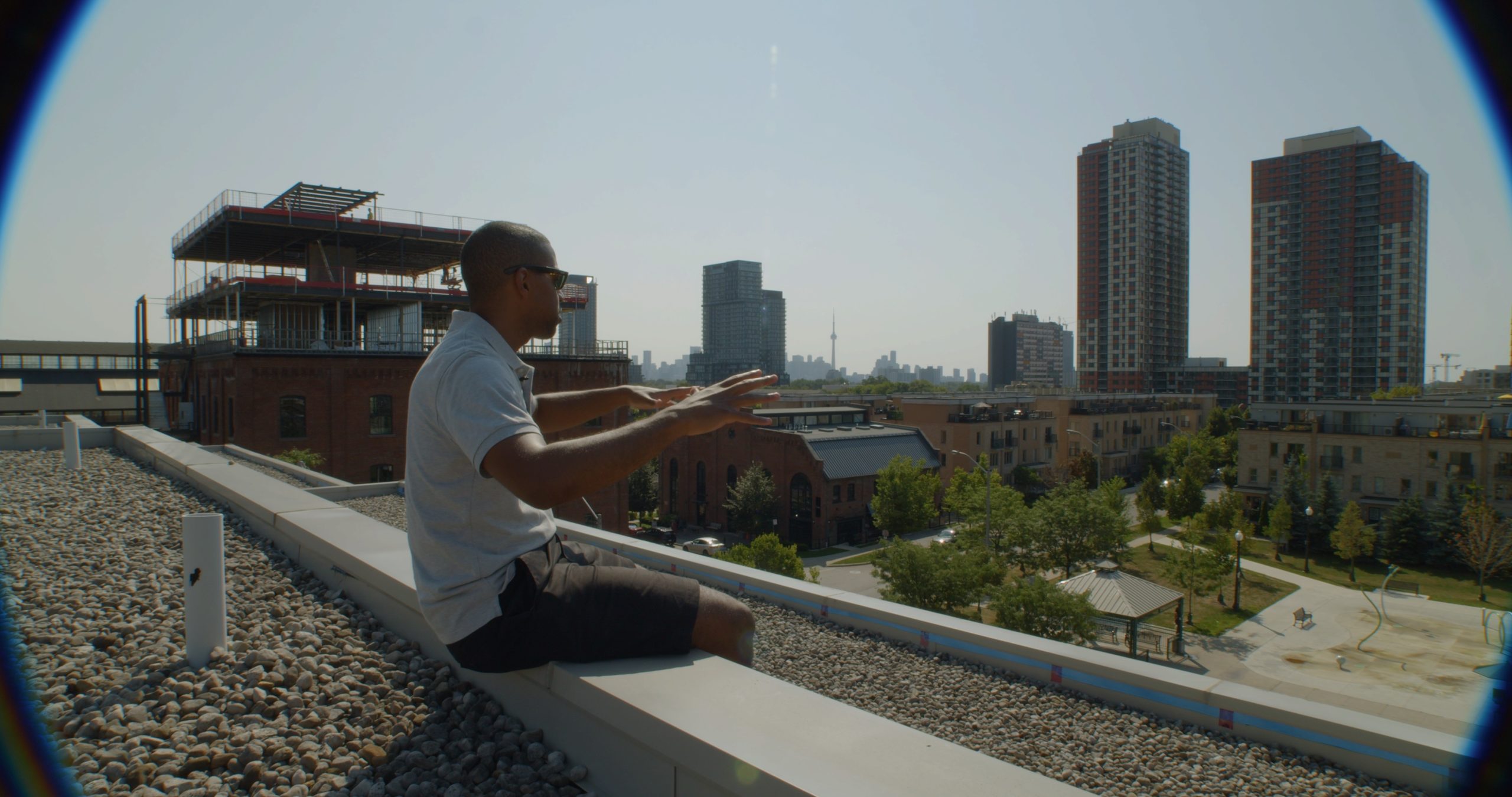
When I asked Walker about his specific angle of porches and balconies as a motif for this project, he explained how he views the front porch as a particular point of view.
Choosing this specific space invites the question of what people can see from their front porch, what they see from where they live, and the world as they see it within their vicinity. So there is that idea of the porch almost being like a stage, looking out into the city, and watching the show going on.
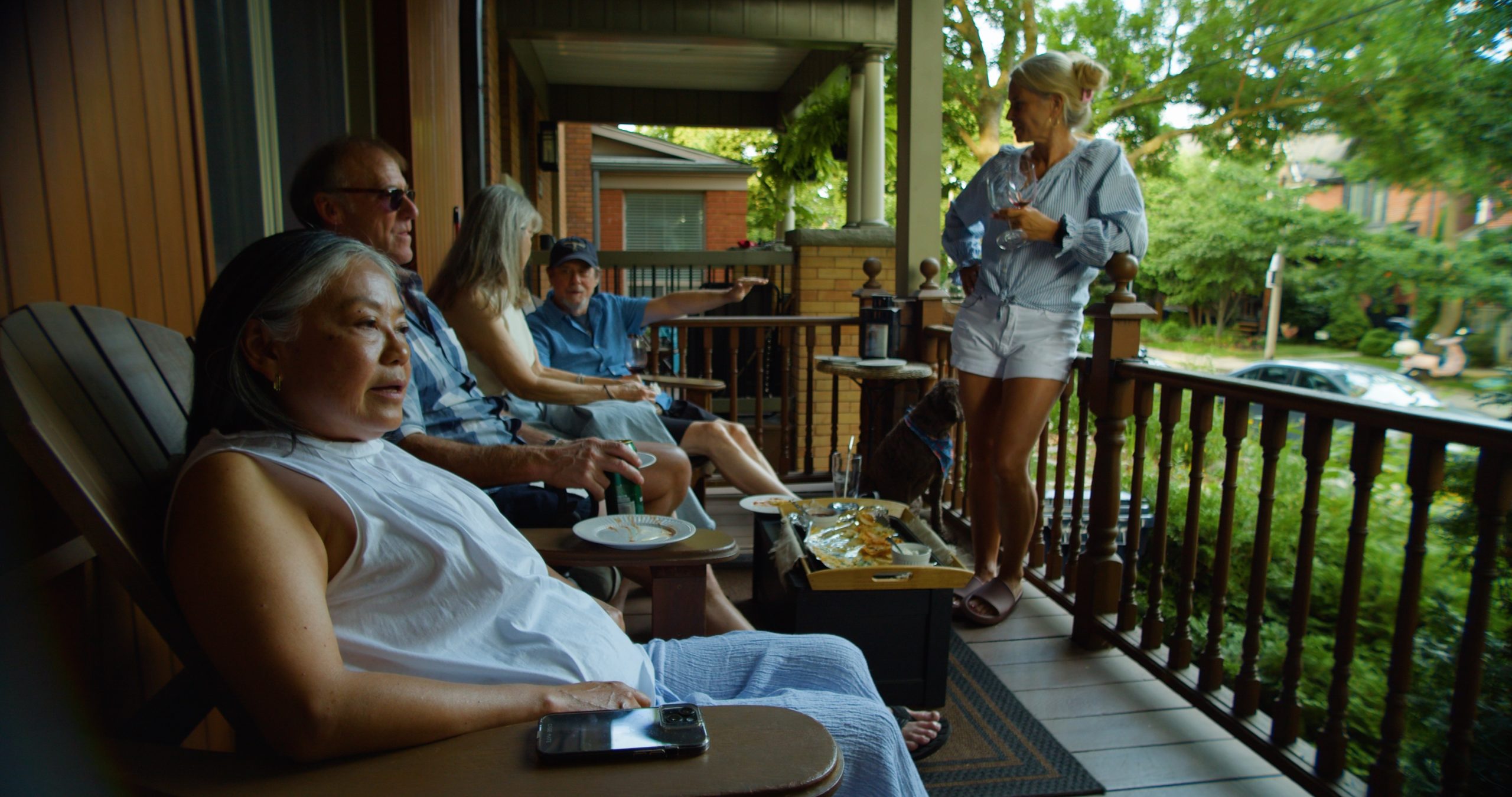 For this project, the “porch” is a metaphorical concept that includes balconies, stoops, rooftops, and front steps. This setting creates a familiar, vulnerable backdrop, as a boundary between the private home and public street. Unlike stopping a person out and about, people on their porches are unwinding from the stress of their day, lending themselves to reflection and contemplation.
The porch setting also removes the pressure of hospitality. Because Walker does not enter their homes (unless the space is a balcony), participants do not need to worry about tidying up or hosting. Walker strikes the sweet spot of a not-too-public, not-too-intimate interaction.
This is why the porch works, it can be more casual, and people are at home, so they’re relaxed, but because it’s outdoor facing, it doesn’t feel like I’m invading anyone’s privacy, hopefully. The porch is almost this liminal third space.
Younger demographics I’ve interviewed live in houses that the landlord has chopped up and divided to the point where there isn’t even a real gathering spot. So sometimes the porch or doorsteps function as a living room, because it’s the one common space they have.
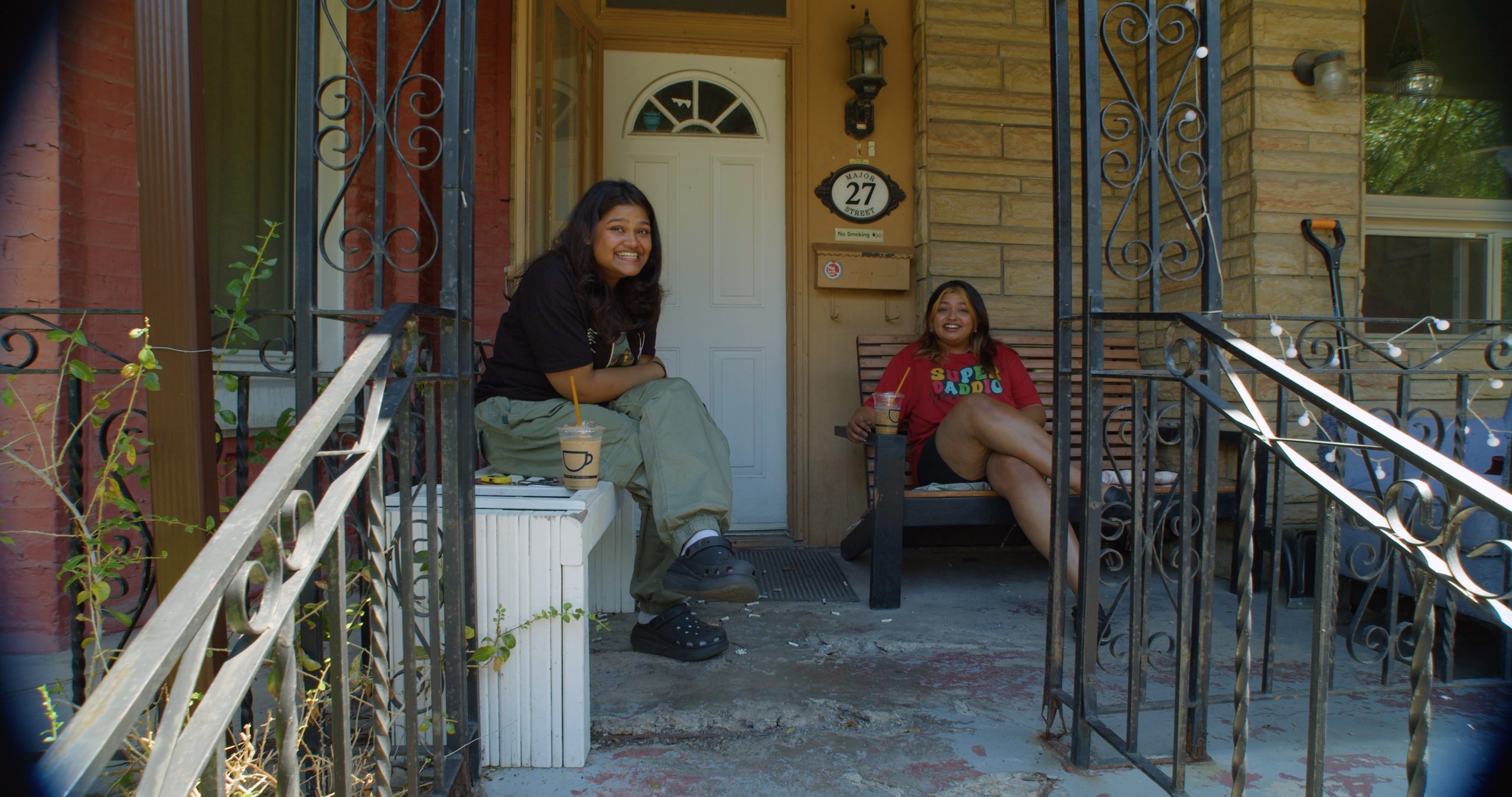 Walker’s subjects are a diverse mix of homeowners, renters, professionals, students, and anyone in between. Conversations often reveal the unique challenges tied to a person’s stage of life. Especially for younger folks, recurring themes include affordability, the job market, AI, and anxiety about the future.
Through this project, Walker has observed a shift in modern city life in Toronto. He notes that people-watching has become less of a social activity because residents are increasingly isolated in their own lanes.
There are a lot of times where people watching is now very much a one-way thing, where I feel like a few generations ago, it might have been more normal if you’re looking at someone, they might look out at you, nod or open up to you. I don’t know if that happens as much now because we’re in our own pressurized bubbles.
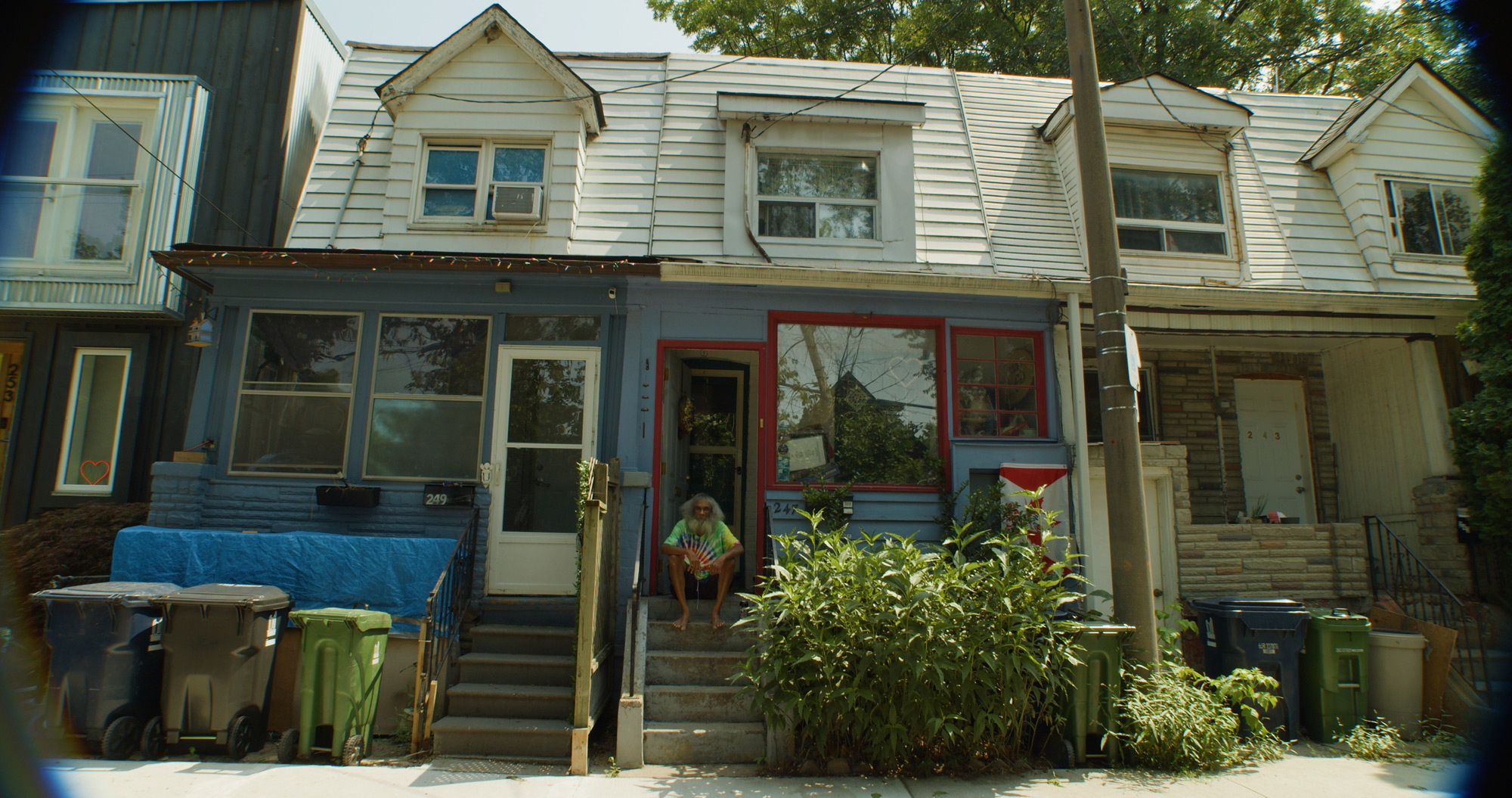 Walker came to embrace an organic approach of capturing a snapshot of participants’ stories and moments in these contemplative spaces. At first, he felt an internal pressure to accurately represent the city. He was considering approaching people who might explicitly comment on Toronto culture or those with historical knowledge of the city. But that internal pressure eased with each new person he encountered. Over time, he realized that Toronto was far too diverse and expansive for a rigid ethnography, and he pivoted to being receptive and letting people come to him.
[Loosening expectations] has been better for me creatively because I’ve been able to accept the true documentary ethos of letting reality and the participants dictate the story’s organic path.
The more I let go and allow people to tell their own story, letting them lead the way, the more I can focus on what’s happening in the present. As a filmmaker and storyteller, I try not to get stuck in what I think is going to happen or what I want the results to be. The project’s been unfolding in ways I didn’t expect, which makes it interesting and exciting to keep going.
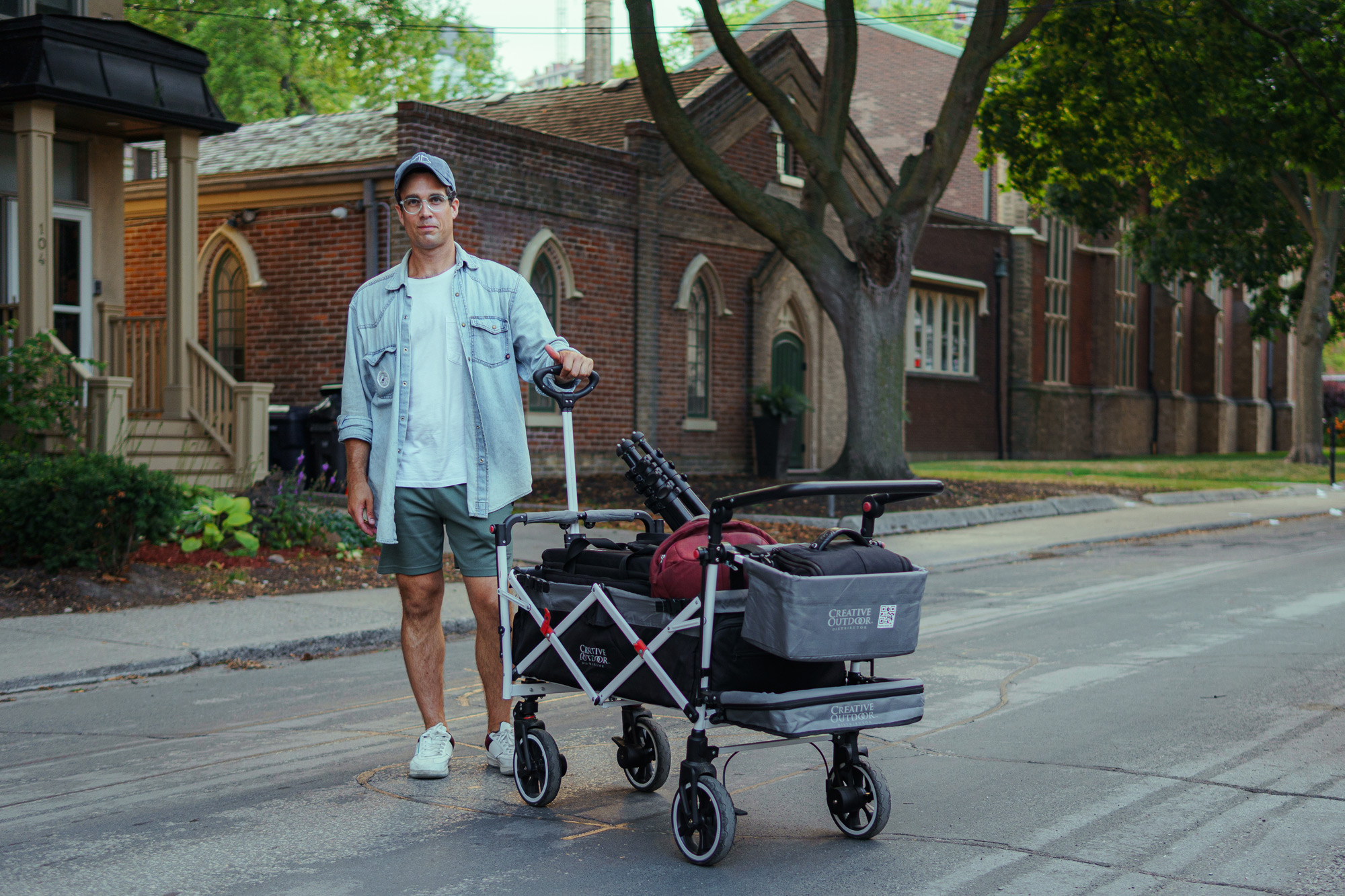
Stories shared by participants from diverse backgrounds and walks of life encapsulate the separate, yet shared life cycles experienced by residents. From welcoming a new child into the world, to finding your footing in your 20s and 30s, to the “what now?” of your twilight years, this project carries the essence of “the days are long but the years are short”, experiencing the passage of time and changes in landscape through the eyes of different people living in the same city. Even though Walker spends a brief moment of a single, ordinary day with Torontonians, his work captures the collective human cycle that keeps us connected and keeps us going.
Further information about this ongoing project can be found on the official website: fromwhereimsitting.ca. From Where I’m Sitting is looking for more participants — especially those who watch the world go by.
All images are stills from From Where I’m Sitting by Perry Walker unless otherwise specified. Participants agreed to be filmed and recorded, but exact locations and names are kept anonymous.