
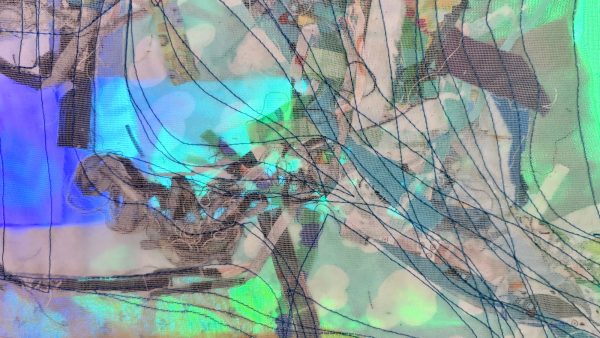
Lisa Ditschun is an artist, urbanist, educator, and PhD candidate at Trent University whose ongoing research-creation project, Cities for Seven Generations, examines relationships to place, memory, and urban futures.
Most maps of Toronto tell us how to get somewhere. They focus on roads, transit lines, bike routes, neighbourhoods, and boundaries.
Few maps ask what places matter to us, how memories become attached to those places, or what stories remain long after we leave them behind. My research explores how relationships to place are remembered and carried forward. It begins with a simple question:
What does Toronto remember?
When I began Cities for Seven Generations, an ongoing research-creation project exploring relationships to place, memory, and urban futures, I was focused on individual experiences of urban regulations and public space — things like policy, governance, and the commons. I wanted to find out what people thought about these things, and how they navigated their way through the city because of (or in spite of) them. I was expecting conversations about traffic, transit, and infrastructure, maybe someone sharing a few of their favourite hotspots. I worried about my research being boring. I worried about it finding nothing of interest. I worried that no one would want to share their thoughts.
I worried too much.
When asked about policy, people spoke about parks, libraries, and waterways. When asked about transit, they shared stories about food, ceremony, and their neighbours and families. When asked about neighbourhoods, they described places they loved so much they visited them over and over again. People told me about their shortcut routes through the city, or how seeing the same strangers during their commute brought a sense of comfort to their day. Nearly everyone told me about a “secret” spot they go to in the city. These places were not necessarily spectacular or famous. Some were parks, some were stretches of shoreline, some were strip malls, gardens, libraries, or community spaces. What these places shared was a sense of personal significance. People spoke about them as though they were friends.
Where I expected conversations about policy, regulations, routes, and infrastructure, people consistently returned to something else: relationships. They wanted to talk about the places that mattered to them, the people they encountered, and what made them feel a sense of belonging in Toronto. Cities for Seven Generations is grounded in Indigenous teachings about relationships, reciprocity, and responsibility across generations. These teachings shaped not only the questions I asked, but also how I approached listening, storytelling, and relationships throughout the research. Participants from many backgrounds connected with these questions through their own experiences of place, even as their access to resources, support networks, and opportunities within the city differed significantly.
These conversations began to reveal a different map of the city. This map was less concerned with movement and navigation than with connection, memory, and the often invisible structures of everyday life. Lake Ontario has a profound effect on Toronto’s geography, ecology, climate, and identity, shaping weather, settlement, recreation, and cultural life. Yet many residents rarely spend time at the shoreline. Like many of the forces that shape a city, its influence is often felt more than consciously recognized. Despite remaining invisible, many of Toronto’s hidden infrastructures are integral to its experience. For example, research collaborators described parks, libraries, and community centres not just as places to go, but as places that both create and enable social infrastructure, an aspect that is often hidden behind building walls. These are places that anchor daily routines and offer moments of connection, repeating in patterns that create a sense of belonging.
Places that anchor routine, connection, and relationships often continue to hold significance long after people have stopped visiting them. Research collaborators recalled them years later, often with remarkable clarity. How does a place carry this memory? An example is Toronto’s Lost Rivers (lostrivers.ca), which continue to shape the city (sometimes as dramatic sinkholes) long after they disappeared from maps. Memory does not reside exclusively in archives, monuments, or “official” written histories. It can also be found in buried rivers, recurring encounters, neighbourhood rituals, and places that continue to matter long after they disappear from view.
What matters most in a city is not always visible.
As these conversations accumulated, I found myself wanting a way to better understand and represent these emerging relationships. Conventional maps could show where people were, but they struggled to capture why a place mattered, how it was remembered, or what connections people carried with them.
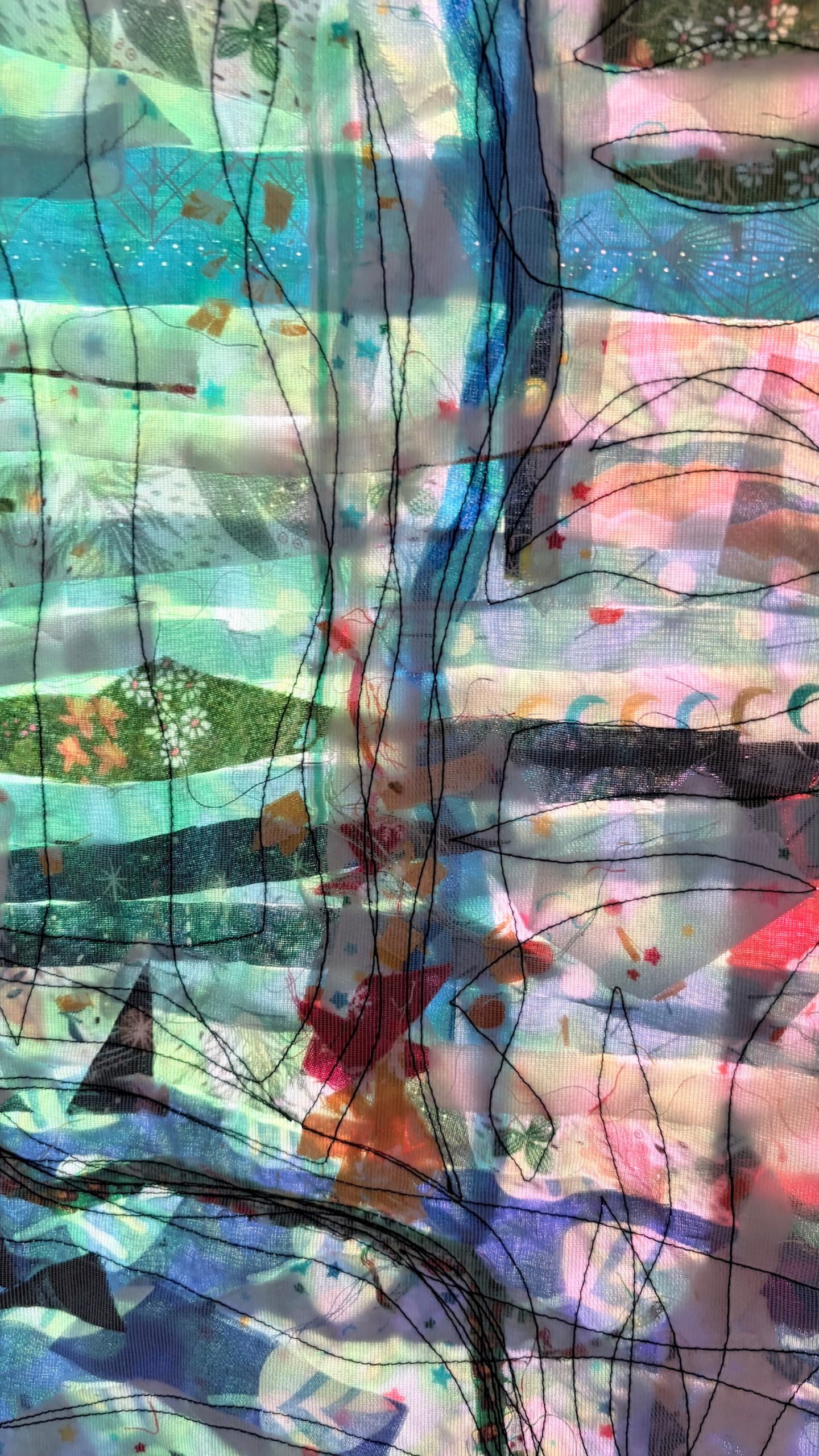
Thinking through the interviews meant considering layers of nuanced experience, interactions, and memory. I began to use cartographies as a way of representing these relationships. These maps wouldn’t have roads, transit, or boundaries. They would map relationships, memories, care, connection, and belonging. While conventional maps privilege efficiency and navigation, these maps would invite lingering.
What draws us back? What connects us to a place? What do we carry forward?
Most participants live or work in Toronto’s downtown core, or just outside it. Yet, no two people described the same Toronto. The same city, the same geography, is inhabited in dramatically different ways. A park described by one person as a place of meditation might appear in someone else’s story as a gathering place. A library might function as a study space, a warming space, a community hub, or a refuge, depending on who was speaking. The same geography carried different meanings, memories, and relationships.
In this research, the city began to feel less like a fixed place and more like a collection of overlapping stories. Yet, that doesn’t even quite describe it: the overlapping stories are also themselves connected in surprising ways. People often spoke about different places, yet similar themes emerged repeatedly: care, belonging, water, community, safety, and connection. A library in one neighbourhood and a park in another could serve remarkably similar roles in people’s lives. The stories were distinct, yet they also echoed one another.
Cities, it seems, remember through water, practices of care, routines, relationships, and stories. Together, these stories contribute to a collective memory of Toronto — something that exists beyond monuments, archives, and buildings. Remembering is not only an act of looking backward. It can also shape the future through responsibilities we carry forward.
A Translucent City: Collective Memories of the Future is an exhibition that emerged from these questions. It includes illuminated textile cartographies in dialogue with a documentary film and evolving public participation. Rather than providing answers, the exhibition invites visitors to contribute their own cartographies and reflections. Together, these contributions continue the conversation by asking: What does Toronto remember, and what futures become possible when we carry those memories forward?
A Translucent City: Collective Memories of the Future runs Monday-Saturday, 10 a.m.-6 p.m., from September 1 to December 31 at the Urbanspace Gallery, 401 Richmond Street W. Visit urbanspacegallery.ca for a listing of upcoming workshops and events.
One comment
Wonderful. I love the idea of maps of memory, stories and experiences. It makes me think of all the places I love and different ways I could visualize them. It’s such a clever way of connecting people too – creating something visual that allows people to experience other people’s experience. ❤️