
Author: Jay Pitter (Penguin Random House, 2026)
What is public space for?
Most planners would answer with some combination of safety, accessibility, mobility, and democratic participation. These are necessary conversations. Yet amid endless debates about sidewalks and bike lanes, parks and plazas, libraries and transit stations, a surprisingly simple question often goes unasked: What does it mean for a public space to succeed truly?
Jay Pitter’s Black Public Joy offers an answer that feels both obvious and surprisingly radical: joy. But the book earns that answer the hard way.
The story begins with a childhood memory. As a young girl dancing to music in a shopping mall, Pitter is sharply reprimanded by her mother. The lesson is not about manners. It is about survival. Her mother — a Jamaican immigrant navigating single parenthood and public housing — understood that Black people, particularly poor Black people, were judged differently in public and therefore required a different set of rules.
Never wear ripped jeans. Never eat on transit. Never use large hand gestures. Never dance.
Each prohibition is less about propriety than about the cost of misstepping under what Pitter calls “the gaze” — the surveilling, objectifying attention of those who hold power over those who don’t.
Pitter traces that gaze with historical precision. From the auction block—where enslaved people were made to dress well, stand tall, and sometimes sing and dance before being sold—through sundown towns, Jim Crow segregation, and vagrancy statutes designed to keep Black bodies in their place, the book builds a detailed cartography of public restriction. This is not only American history. Pitter finds sundown towns in Ontario. She draws a direct line between curfews imposed during the 2020 uprising following George Floyd’s death and laws dating to the post-Civil War era. For her, the where of an injustice is as important as the injustice itself.
For planners, this geographic insistence raises an uncomfortable diagnostic question. If spatial entitlement—Pitter’s term for how much public space a person feels they deserve to occupy—is unequally distributed before anyone arrives at a park or plaza or transit platform, what exactly are we measuring when we measure public space quality? Foot traffic and accessibility scores tell us whether a space functions. They tell us much less about whether it feels alive, or alive for whom.
It is a powerful concept. The book would be more useful to practitioners, though, if Pitter developed what it actually asks of us. How does spatial entitlement get redistributed? What does a planner do differently on Monday morning having absorbed it? The diagnosis is sharp. The prescription remains largely unwritten.
This is where the book’s greatest strength emerges. Pitter is not writing as an outside critic. She is a working placemaker who has led projects in Vancouver, Lexington, and Detroit. She knows how design, policy, and programming interact—and how well-intentioned decisions can accumulate into public environments that are orderly and safe but strangely lifeless. Benches removed to discourage loitering. Parks so thoroughly programmed that improvisation has no room to breathe. Gathering spaces surveilled more than they are stewarded.
Planning seeks legibility. Joy often thrives in improvisation. Planning seeks predictability. Joy frequently emerges through surprise.
This is not an argument against regulation. It is an argument that the absence of harm is not the same as the presence of flourishing—and that our metrics have been far better calibrated for the former than the latter.
Pitter also takes direct aim at a figure close to this publication’s own history. Her critique of Jane Jacobs is precise and, for urbanists, genuinely uncomfortable. She credits The Death and Life of Great American Cities as a brilliant work on walkability and street culture. But she argues that concepts like “eyes on the street” and “natural proprietors of the street” carry an unexamined shadow: if there are natural proprietors, there must be unnatural ones—people whose presence warrants watching, whose behaviour justifies a call to security.
As the book states, Pitter has led hundreds of public consultation meetings. She has watched engaged neighbours become “raging gatekeepers demanding that ‘those people’ be barred from the public realm.” She calls this citizen profiling, and locates its intellectual roots, however unintentionally, in Jacobs. That is an argument planners should sit with rather than dismiss—particularly because it forces a reconsideration of one of urbanism’s most celebrated ideas. Even readers who ultimately reject the critique will likely find themselves returning to it long after they have finished the book.
That said, it would be stronger if Pitter engaged more directly with the tension at its centre: Jacobs was herself critiquing the top-down urban renewal projects that displaced exactly the communities Pitter champions. The “eyes on the street” that enabled citizen profiling emerged from a vision of bottom-up community life, not surveillance.
That irony deserves more than a passing acknowledgement.
Perhaps the book’s most contentious claim is its critique of protest itself. Pitter is not dismissive of Black public protest—she profiles April, a Kentucky civil rights organiser whose courage and sacrifice are rendered with real tenderness and care. But she argues that the constant cycle of public protest has become a kind of trap: exhausting its participants, casting Black bodies as placards rather than people, and allowing the state to facilitate Black anger without ever addressing its causes.
“How can the same state violating Black people’s rights in public spaces also issue permits, dispatch police, and establish curfews for peaceful protests?“
The question is pointed, and the book would benefit from more direct engagement with cases where protest has in fact produced durable structural change. But the concern is not made from comfort. It is made from watching what sustained, unreciprocated activism costs the people doing it.
What Pitter ultimately argues—and what makes the book matter beyond the planning profession—is that joy is not simply the reward that arrives after justice. It is one of the ways justice becomes visible.
The ability to gather, dance, linger, and take up space without apology is not incidental to democratic life. It is evidence that democratic public life is actually working.
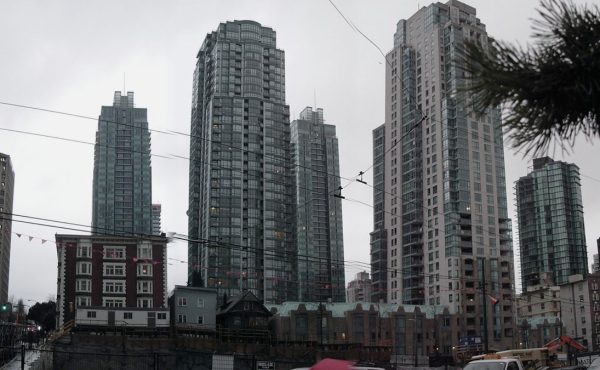
Vancouver congratulates itself on its parks, seawall, and public realm. Black Public Joy asks whether those spaces work for everyone—and whether “working” means something more demanding than we have typically been willing to measure.
Perhaps that is the question lingering beneath the entire book. Not whether our public spaces are accessible. Not whether they are safe. But whether they are places where people feel entitled to occupy them fully, freely, and joyfully.
That’s an uncomfortable question. It’s also an increasingly unavoidable one.
***
For more information on Black Public Joy: No Permit or Permission Required, visit the Penguin Random House website.
**
Erick Villagomez is the Editor-in-Chief at Spacing Vancouver and teaches at UBC’s School of Community and Regional Planning. He is also the author of The Laws of Settlements: 54 Laws Underlying Settlements Across Scale and Culture.