
In July 2026, I had the opportunity to visit Mexico City for the first time. The metro area of nearly 25 million people has a fascinating history that extends back thousands of years. Getting to Mexico from Vancouver is a simple 5-hour flight, and because there is only a minimal time change, it’s an easier trip than to Toronto. I don’t want to retread ground that many Canadians have no doubt already trodden, but I think there are observations about how modern infrastructure has been implemented that can serve as a local reminder that we tend to overcomplicate things here at home.
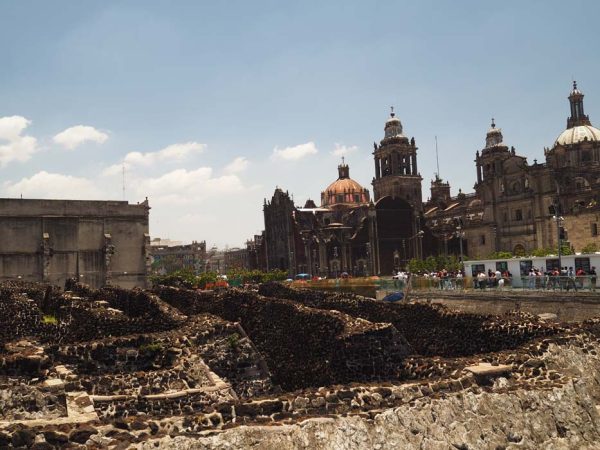
The idea of new over old in Mexico City is a story that has played out since the city was founded. Ancient pyramids found throughout Central America were continually rebuilt, literally placing new, larger pyramids atop existing ones to coincide with celestial cycles or changes in government. The story of Mexico City, however (much abbreviated), goes that the city was founded during an Aztec search for a new homeland, which was revealed when they saw an eagle eating a snake on a cactus (an image that is on the country’s flag to this day).
The group searched for this sign over decades and eventually found it in present-day Mexico City, which, at the time, was in the centre of an ancient lake. Thus, the first iteration of new over old occurred as the Aztecs built their city at the centre of Lake Texcoco, starting in the 14th century. The city was built in the centre of the lake and connected with long causeways. Over time, it grew and evolved, and the lake grew smaller and smaller.
In the 1500s, Spanish colonizers entered the picture and sparked a devastating upheaval that devastated existing civilizations and their people. In an effort to erase and subjugate indigenous peoples, Spanish missionaries built their monasteries directly on top of existing cultural sites, literally burying them and using the stones to erect new structures—a dark form of renewal.
Beyond monasteries, when the Spanish established a new seat of administration in “New Spain,” they built on top of existing structures. During this process, the lake was eventually drained, and modern-day Mexico City began to take shape. Spanish colonial block forms and boulevards took shape as surveyors laid out blocks according to the measurement systems and civic standards they brought with them.
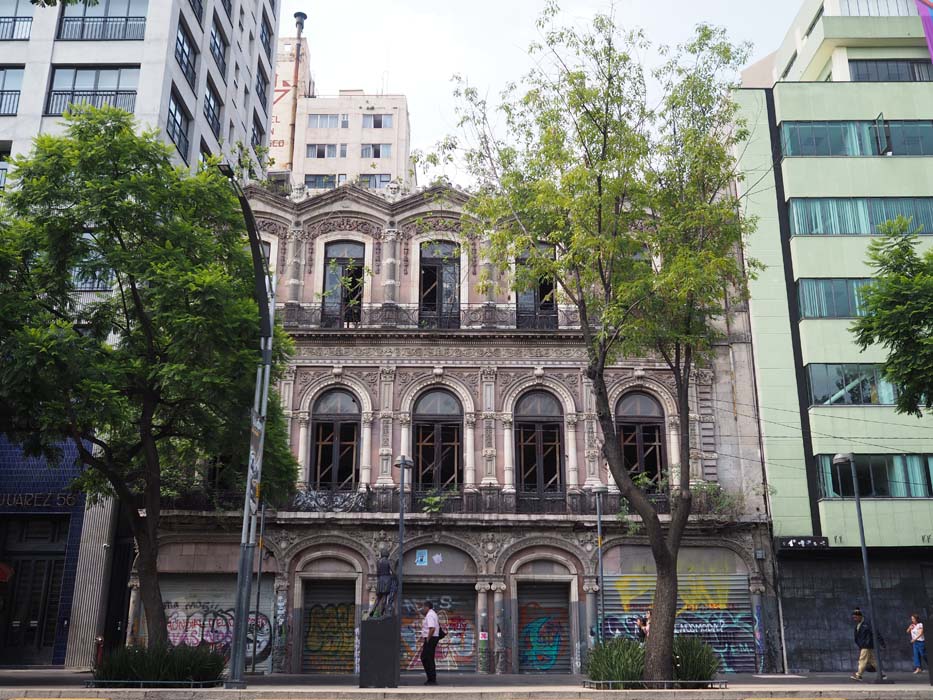
In the 1800s, President Porfirio Díaz sought to reimagine Mexico City one more through classical French-inspired architecture and implemented long boulevards dotted with impressive monuments and public buildings such as the Palacio de Correos and Museo Nacional de Arte in an effort to showcase the city as an up-and-coming cosmopolitan centre.
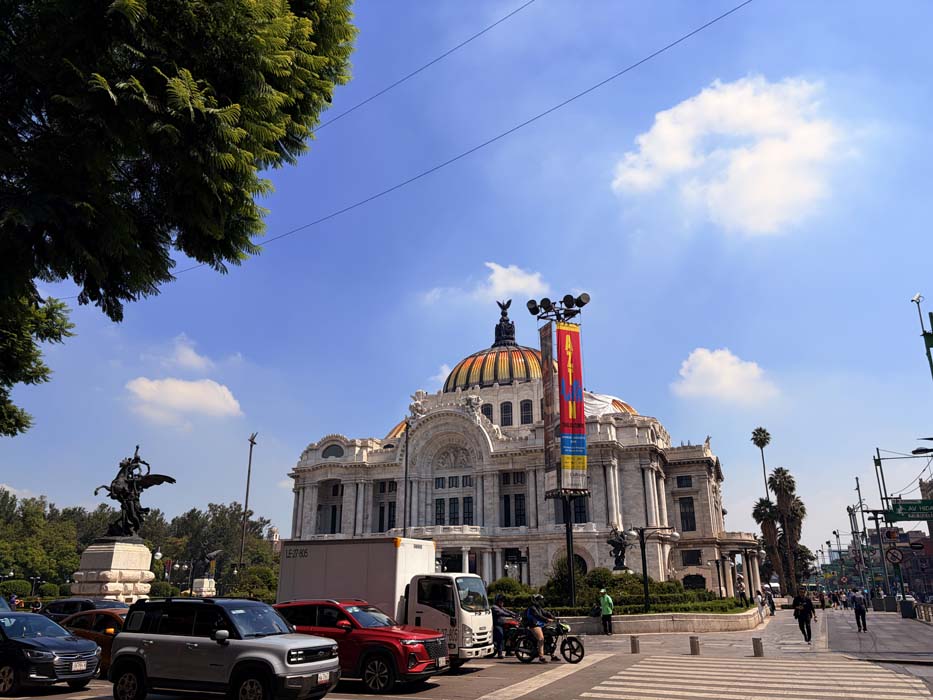
Today, the city is a diverse and bustling centre where all of these layers are visible, and new layers are still being added. At the same time, all historical layers continue to influence Mexico City today. The city’s famously tilted buildings illustrate the lasting effects of building on a lake bed. Because the city has such a long and complex history, implementing new things has its challenges; however, modern amenities like bike lanes, gondolas, and bus rapid transit are evident, plentiful, and successful.
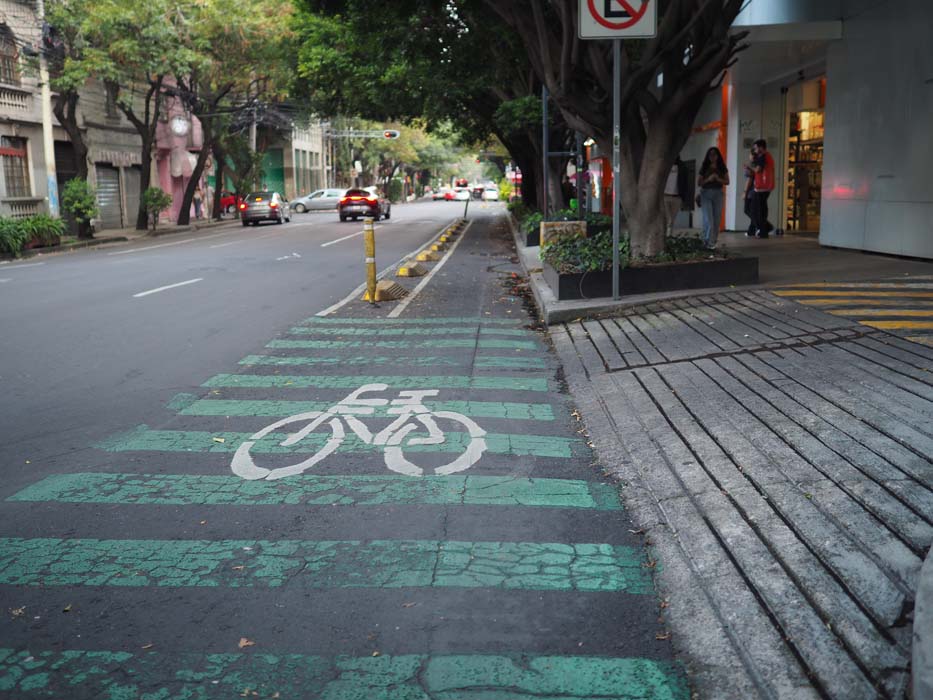
Physically separated bike lanes can be found on major streets throughout Mexico City. However, rather than using concrete and grade separation, simple bolt-in roll-over curbs are used. Some may disagree, but in a packed city with no alleyways, businesses need to load somewhere, and the curb remains the most obvious place. Low barriers like these allow trucks to gain curb access, but they are high enough that drivers must think twice about entering them and must navigate them carefully. Hitting one of these with a regular vehicle would be akin to hitting a curb, leading to natural avoidance.
Bus rapid transit, again, is a well-known retrofit that has benefited many places around the world, creating effective, long-distance, fast ways to get around akin to rail at a fraction of the capital outlay. Done properly, dedicated lanes, elevated platforms, and signal priority allow these buses to move smoothly through the city on existing roadways. Prioritized this way, the passenger experience is not much different from rail through the city, as the predictable cadence of stops allows for a smoother trip than a regular bus. Canada still lags in this respect, without a true comparable BRT anywhere in the country.
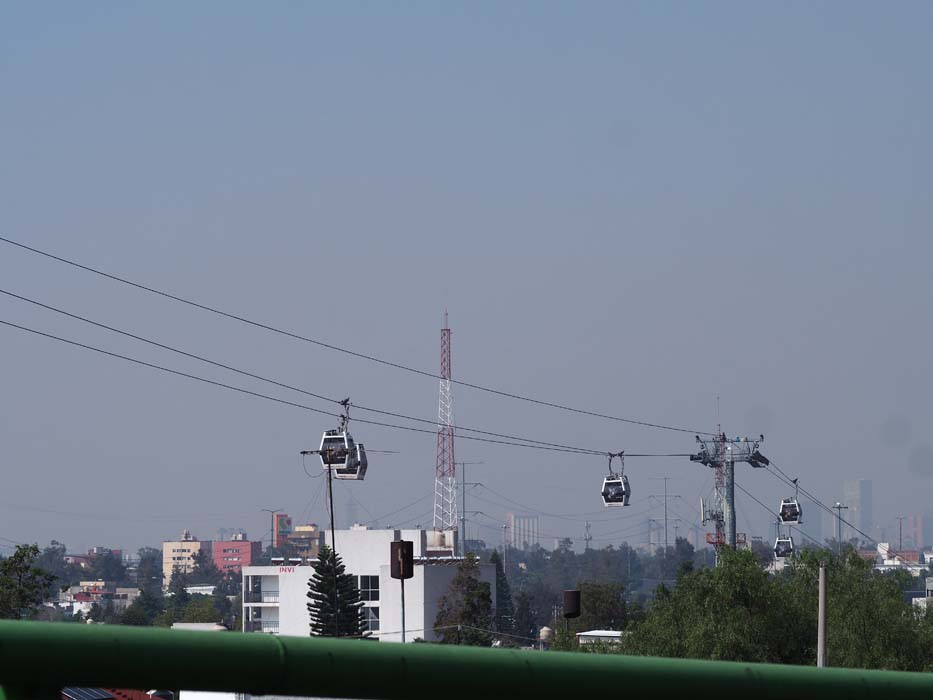
Medellin, Colombia gets outsized praise for its gondola system, but CDMX has quietly— unnoticed by the typical planning social media zeitgeist—built out a wide-ranging system that brings people to the city centre from far-flung suburbs and informal colonias paracaidistas (parachutist neighbourhoods). Systems like Mexicable (2016) or Cablebús (2021) are designed to address a difficult situation where informal neighbourhoods lacking typical infrastructure (roads, utilities) can access reliable transportation networks. The relatively small footprint of gondolas allows people to move over layers of the city in a way that is relatively inexpensive, low-impact, and electrically powered.
Microbility is ubiquitous. Small electric scooters and bikes are everywhere, much cheaper and more readily available than gas-powered counterparts. The integration of these modes seems natural amidst the city’s relative chaos.
The culmination of these relatively new infrastructure improvements has been the democratization of space, significantly improving how the city functions. While no system is perfect or directly replicable in another context, there are clear lessons from Mexico City on how to build infrastructure in a practical, simple way.
In Canada, we point to these examples again and again, but largely fail to imagine them in our own context, instead choosing technologies and infrastructure that are often much more expensive than they need to be.
Al toro por los cuernos!
***