
It’s possible to attend a Vancouver City Council meeting and come away with the impression that municipal government exists almost entirely to debate housing.
Council discusses apartment buildings, rental policies, density, development contributions, tenant protections, neighbourhood plans, public hearings, and rezonings. Election campaigns are fought over housing supply and affordability. News coverage tracks development proposals, growth targets, and construction approvals.
At times, this can seem strange.
After all, municipal governments are responsible for far more than housing. Cities maintain roads and sidewalks, manage parks and recreation facilities, oversee policing and fire protection, operate libraries and community centres, maintain utilities and infrastructure, regulate businesses, and deliver countless services that make urban life possible.
So why does housing occupy such an outsized place in local politics?
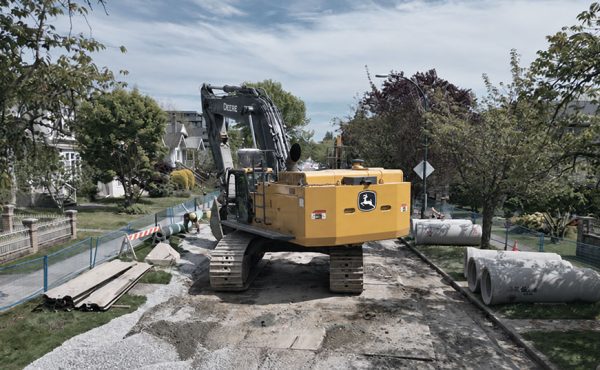
Part of the answer is straightforward: housing is one of the most visible ways cities transform. Most municipal decisions happen quietly. Sewer upgrades take place underground. Budget adjustments rarely attract public attention. Infrastructure maintenance goes unnoticed unless something fails.
Housing is different.
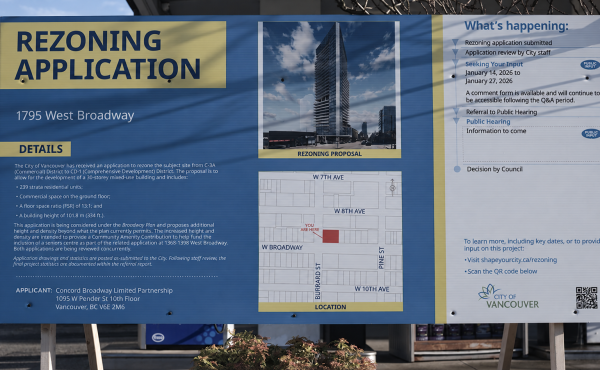
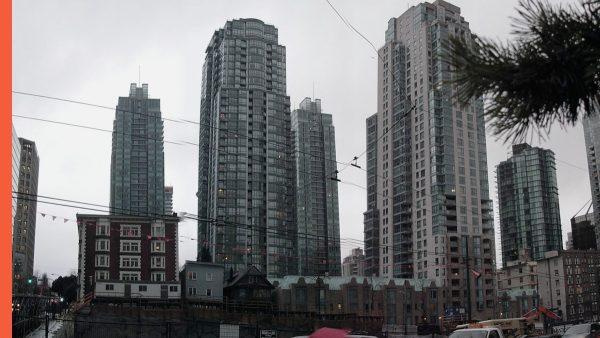
A new apartment building alters a street. A tower changes a skyline. A rezoning sign appears on a familiar block. Construction affects daily routines. New residents arrive. Shops evolve. Traffic patterns shift. Schools gain students. Neighbourhoods begin to feel different.
Housing is not simply about buildings. It is one of the primary ways people experience urban change itself. That visibility helps explain why housing debates often become conversations about much larger questions. What should the city look like? Who should be able to live here? How quickly should neighbourhoods change? What responsibilities do existing residents have to future ones? What does growth mean, and who benefits from it?
These are not merely technical planning questions. They are questions about the future shape of urban life.
Geography, Growth, and Constrained Supply
In Vancouver, those questions have become especially acute because housing sits at the intersection of several powerful forces.
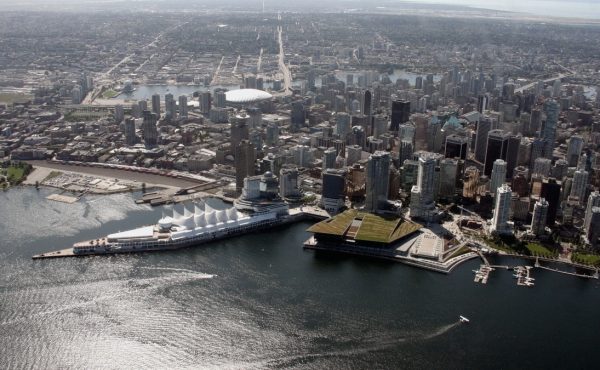
The city occupies a geographically constrained setting, bounded by water and neighbouring municipalities, within a region further shaped by mountains and the Agricultural Land Reserve. Population growth has continued for decades. Land values have risen dramatically. Housing costs have become a defining concern for households across the income spectrum, while regional and provincial governments increasingly view municipalities as key actors in addressing housing shortages.
But geography alone doesn’t determine how much housing a city can accommodate. Within those physical boundaries, municipal land-use regulations shape where housing can be built, at what densities, and in what forms.
The amount of housing capacity available in a geographically constrained city is therefore also a product of planning and political choices.
The result is that many of the most significant political debates in contemporary Vancouver ultimately return to land use. Should more housing be permitted in historically low-density neighbourhoods? How much growth should occur around rapid transit stations? What balance should be struck between rental and ownership housing? How should cities accommodate population growth while maintaining infrastructure, public services, and neighbourhood livability?
Because municipalities regulate land use through zoning and development approvals, city councils often become the arena in which these larger questions are negotiated—even when the forces shaping housing affordability extend far beyond municipal authority.
Housing as Political Economy
Housing dominates municipal politics not only because it changes neighbourhoods, but because it sits at the centre of the urban economy. Unlike many other policy issues, housing functions simultaneously as shelter, investment, and wealth—and as part of the physical fabric of the city.
For renters, housing is a monthly cost. For homeowners, it is often their largest asset. For developers, it is a business. For governments, housing and development generate tax revenue, development-related revenues, and economic activity. For neighbourhoods, new housing can reshape population, demographics, and demand for public services.
These roles also mean that unusually large financial interests converge around municipal housing decisions. Changes to zoning and development rights can affect land values and create significant opportunities for private profit. Developers, landowners, investors, homeowners, and other interests therefore have strong incentives to influence the policies governing where and how housing is built.
That influence is one reason housing politics can become so contentious. Decisions intended to increase housing supply or accommodate growth can also generate private gains, raising legitimate questions about who captures the value created by urban change and how much should be returned to the public through infrastructure, affordable housing, amenities, taxation, or other mechanisms.
The politics are not simply a contest between private profit and the public good. Existing restrictions can also confer economic advantages by protecting scarcity, limiting competition, or preserving existing property values. Housing politics therefore involves competing forms of economic interest—some highly visible, others less so—all operating through decisions about land.
These overlapping roles create tensions that are difficult to resolve.
They are also experienced differently across generations. Residents who purchased housing decades ago may view rising property values differently from younger households attempting to enter the market today. Renters, recent arrivals, long-term homeowners, and future residents often experience the same housing system from very different positions.
This does not mean their interests are necessarily incompatible. But it does mean housing debates frequently involve competing experiences of the same city.
Policies that enable more housing may affect land values and development expectations. Policies that protect existing neighbourhood character may constrain future housing capacity. Measures intended to improve affordability can have uneven effects across different groups.
In Vancouver, where land values have risen dramatically over several decades, debates about housing frequently become debates about wealth, opportunity, inequality, and the distribution of urban growth. Housing discussions often appear to be about buildings. In practice, they are often about much larger questions: who benefits from urban change, who bears its costs, and who gets to participate in the city’s future.
The Limits of Municipal Authority
This creates a persistent mismatch between public expectations and what cities can actually do.
Municipalities influence where housing can be built, what form it takes, and how neighbourhoods evolve. They do not directly control interest rates, immigration policy, construction costs, mortgage lending, global investment flows, or many of the economic forces that shape housing markets. As a result, municipal governments are frequently expected to solve problems that extend far beyond municipal boundaries.
This tension has become one of the defining features of contemporary urban politics—not just in Vancouver, but across North American cities grappling with affordability, growth, and displacement.
Where Everything Converges
Housing matters because it is simultaneously a local issue and a regional one, an economic issue and a social one, a planning issue and a political one. Few topics sit at the intersection of so many competing priorities at once. That is why housing has become the lens through which Vancouver debates growth, affordability, transportation, climate policy, neighbourhood identity, and the future of the city itself.
Housing approvals are also closely connected to municipal finance. New development can help fund infrastructure, parks, childcare facilities, affordable housing, community centres, and other public amenities through development-related charges and contributions. As a result, debates about growth are often simultaneously debates about how cities finance the services and infrastructure that growing communities require.
In many ways, housing does not dominate municipal politics because cities only care about housing. It dominates because it is where so many other questions about urban life eventually converge.
Next in the Series: Part 4 examines one of the least understood forces shaping local government: municipal finance—and why growing cities so often find themselves caught between expanding responsibilities and limited resources.
All the articles in the City Primer series:
- City Primer — Part 1: What Is Municipal Government?
- City Primer — Part 2: How Cities Actually Make Decisions
- City Primer — Part 3: Why Housing Dominates Municipal Politics
- City Primer — Part 4: Why Cities Are Always Short of Money
- City Primer — Part 5: Why Municipal Politics Feels So Broken
- City Primer — Part 6: Why Civic Literacy Matters
***
Erick Villagomez is the Editor-in-Chief at Spacing Vancouver and teaches at UBC’s School of Community and Regional Planning. He is also the author of The Laws of Settlements: 54 Laws Underlying Settlements Across Scale and Culture. This series is part of an ongoing effort to make urban governance and city-building more accessible to a broader public audience.