
Many residents assume cities operate financially in roughly the same way as provincial or federal governments.
They don’t.
Municipal governments are responsible for an enormous range of services and infrastructure: roads, sidewalks, parks, community centres, libraries, fire protection, policing, water systems, sewers, street lighting, recreation facilities, public spaces, and much of the physical infrastructure that makes urban life possible. Yet despite these responsibilities, municipalities possess some of the most limited financial powers of any level of government.
This mismatch—between what cities are expected to do and the resources available to them—helps explain many of the recurring tensions in municipal politics.
Why are cities so concerned about development? Why do infrastructure projects often take years to complete? Why do councils debate property taxes so intensely? Why do municipalities frequently claim they lack the resources to address problems residents consider urgent?
The answer often begins with how cities raise—and spend—money.
A Different Financial Model
Federal and provincial governments possess a wide range of revenue tools. They collect income taxes, corporate taxes, sales taxes, fuel taxes, and various other revenues. They also have substantially greater fiscal and borrowing capacity than municipalities.
Municipal governments operate very differently.
Cities cannot levy income taxes or general sales taxes. Their borrowing powers are constrained by provincial legislation, and their financial plans must balance proposed expenditures with available funding sources.
Instead, local governments rely heavily on property taxes, user fees and utility charges, development-related revenues, and transfers from senior governments.
This funding structure has profound consequences for how cities operate. When residents ask why municipalities seem preoccupied with property taxes, development applications, or infrastructure funding, they are often observing the practical effects of these constraints.
The Property Tax Dilemma
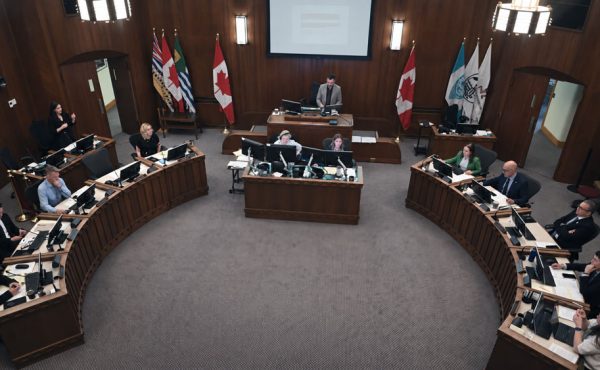
Property taxes are the largest single source of revenue for the City of Vancouver and a central source of funding for municipal services. Every year, council must determine how to fund the services residents use and maintain the infrastructure on which the city depends.
But property taxes are politically sensitive.
Residents see them directly. Tax increases are visible, measurable, and often unpopular. As a result, municipal governments face continual pressure to limit increases even as labour, construction, maintenance, and service costs rise.
This creates a difficult balancing act.
Residents often want better infrastructure, more parks, improved public services, faster responses to emerging challenges, and investments in housing, climate adaptation, transportation, and public amenities. At the same time, many also want taxes to remain stable.
Neither objective is unreasonable. But they can be difficult to reconcile. Municipal politics frequently involves navigating these competing expectations.
The Hidden Cost of Cities
One reason these tensions persist is that much of what cities do is largely invisible.
Residents see new parks, community centres, libraries, and public plazas. They see bike lanes, sidewalks, and transportation improvements. What is less visible are the vast systems operating beneath and around them.
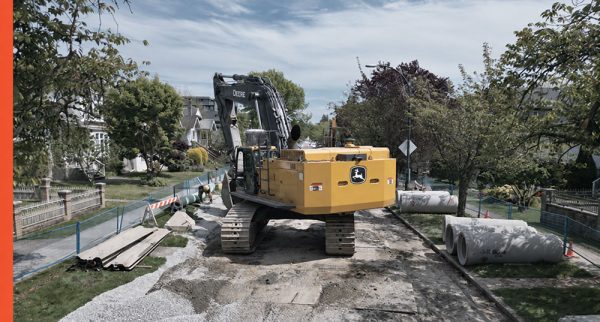
Water mains must be replaced. Sewer systems require maintenance. Bridges must be inspected. Roads need resurfacing. Public buildings require ongoing repairs and upgrades.
Much of this infrastructure was built decades ago and will eventually require renewal or replacement. That work is expensive. Delaying it can make the eventual cost greater. Unlike a new building or park, infrastructure renewal rarely generates public excitement. But cities cannot function without it.
A significant portion of municipal spending is therefore devoted to maintaining systems that many residents rarely think about—until something fails.
Municipal infrastructure is not simply expensive to build; it is expensive to own. Every road, water main, sewer pipe, park, bridge, community centre, and public facility creates long-term maintenance, renewal, and replacement obligations.
One challenge facing many cities is that infrastructure built during earlier periods of growth is ageing at the same time. Even when a city is not expanding, it must invest substantial resources simply to maintain and renew the systems it already has. In many cases, the financial challenge is not only building new infrastructure—it is taking care of what already exists.
Growth and Development
Municipal finance also helps explain why development occupies such a prominent place in local politics.
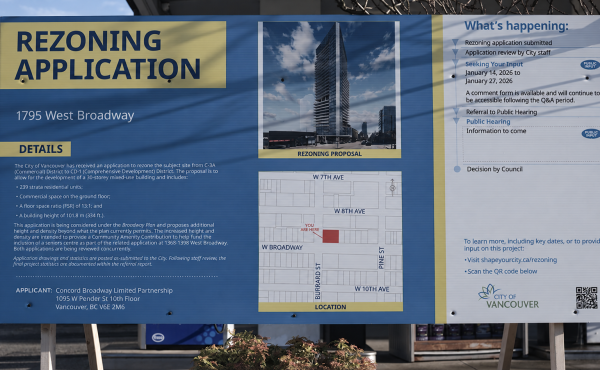
New development can create additional demands for infrastructure and public services. More residents and workers may require expanded utilities, transportation improvements, parks, childcare facilities, public spaces, and other community amenities. To help finance the infrastructure and amenities associated with growth, municipalities use a range of development-related charges and contributions.
Some are standardized and applied according to established rules. Others may be negotiated through rezoning processes. In Vancouver, these mechanisms have historically included Development Cost Levies (DCLs), Community Amenity Contributions (CACs), and other forms of development-related funding.
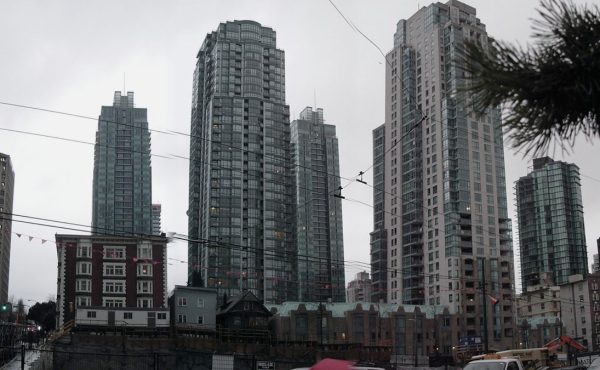
For example, many of the amenities residents now take for granted in Vancouver’s newer neighbourhoods were delivered through this broader model. Waterfront parks and walkways in areas such as False Creek North and Coal Harbour, along with childcare facilities, community spaces, public art, affordable housing, and other amenities, were secured through planning and development processes and funded, at least in part, through development-related contributions.
Growth did not simply produce new buildings; it also helped finance public spaces, infrastructure, and facilities intended to support growing communities.
The underlying logic is relatively straightforward: when public decisions allow additional development value to be created, should some of that value help finance public benefits and the costs associated with growth?
Reasonable people disagree about exactly how much should be collected, which mechanisms should be used, how predictable those mechanisms should be, and how the resulting funds should be spent. But the broader principle—that growth should help pay for growth—has long been an important feature of municipal finance.
This helps explain why housing debates are often also debates about parks, childcare facilities, community centres, affordable housing, transportation improvements, and infrastructure. These issues are frequently connected through the same system of planning and municipal finance.
The Limits of Local Capacity
Municipal governments are increasingly expected to respond to challenges that extend far beyond traditional local services: housing affordability, homelessness, climate adaptation, mental health crises, public health emergencies, economic inequality, and population growth.
These challenges often manifest most visibly in cities, even when their underlying causes lie at regional, provincial, national, or global scales. Residents naturally look to local government because municipalities are the most immediate level of government in everyday life. Municipal officials and services are often the parts of government residents encounter most directly.
Yet many of these issues require powers and resources that municipalities do not fully control.
Cities can influence housing supply through land-use decisions. They can invest in supportive infrastructure. They can coordinate with other governments and community organizations. But they cannot independently reform income-assistance programs, redesign health-care systems, regulate immigration levels, or deploy many of the fiscal tools available to provincial and federal governments.
This creates a persistent tension between public expectations and institutional capacity.
Why This Matters
Understanding municipal finance does not eliminate disagreement about public priorities. Residents will continue to disagree about taxes, spending, development, infrastructure, housing, transportation, and growth. Those debates are a normal part of democratic life.
But understanding how cities are funded helps explain why local governments behave the way they do.
It helps explain why councils spend so much time debating budgets. Why infrastructure projects can take years to deliver. Why development-related revenues attract so much attention. Why seemingly simple problems often prove difficult to solve. And why cities frequently find themselves caught between growing responsibilities and limited resources.
Municipal politics is often discussed as though it revolves around ideology alone. In reality, many local decisions are also shaped by something less visible: the practical challenge of matching public expectations with the financial tools available to meet them.
Understanding that challenge is an important part of understanding how cities actually work.
Next in the Series: Part 5 turns from municipal capacity to democratic legitimacy: why local politics can feel intensely participatory and strangely inaccessible at the same time.
All the articles in the City Primer series:
- City Primer — Part 1: What Is Municipal Government?
- City Primer — Part 2: How Cities Actually Make Decisions
- City Primer — Part 3: Why Housing Dominates Municipal Politics
- City Primer — Part 4: Why Cities Are Always Short of Money
- City Primer — Part 5: Why Municipal Politics Feels So Broken
- City Primer — Part 6: Why Civic Literacy Matters
***
Erick Villagomez is the Editor-in-Chief at Spacing Vancouver and teaches at UBC’s School of Community and Regional Planning. He is also the author of The Laws of Settlements: 54 Laws Underlying Settlements Across Scale and Culture. This series is part of an ongoing effort to make urban governance and city-building more accessible to a broader public audience.