An oblique aerial photo of the Toronto waterfront taken circa 1965 shows construction of the Gardiner Expressway nearing completion west of the Don Valley. Along the upper left edge of the frame, the Cherry Street bascule bridge near the end of the Keating Channel is seen with its roadway in the raised position.
Opposite the bascule bridge, the Gardiner diverts around a long industrial shed whose chimney is emitting a plume of grey smoke. This was the Canron pipe foundry, at 324 Cherry Street. Originally named National Iron Works, it was established in 1909 on a waterfront site purchased from the City. It remained in production until the mid-1980s.
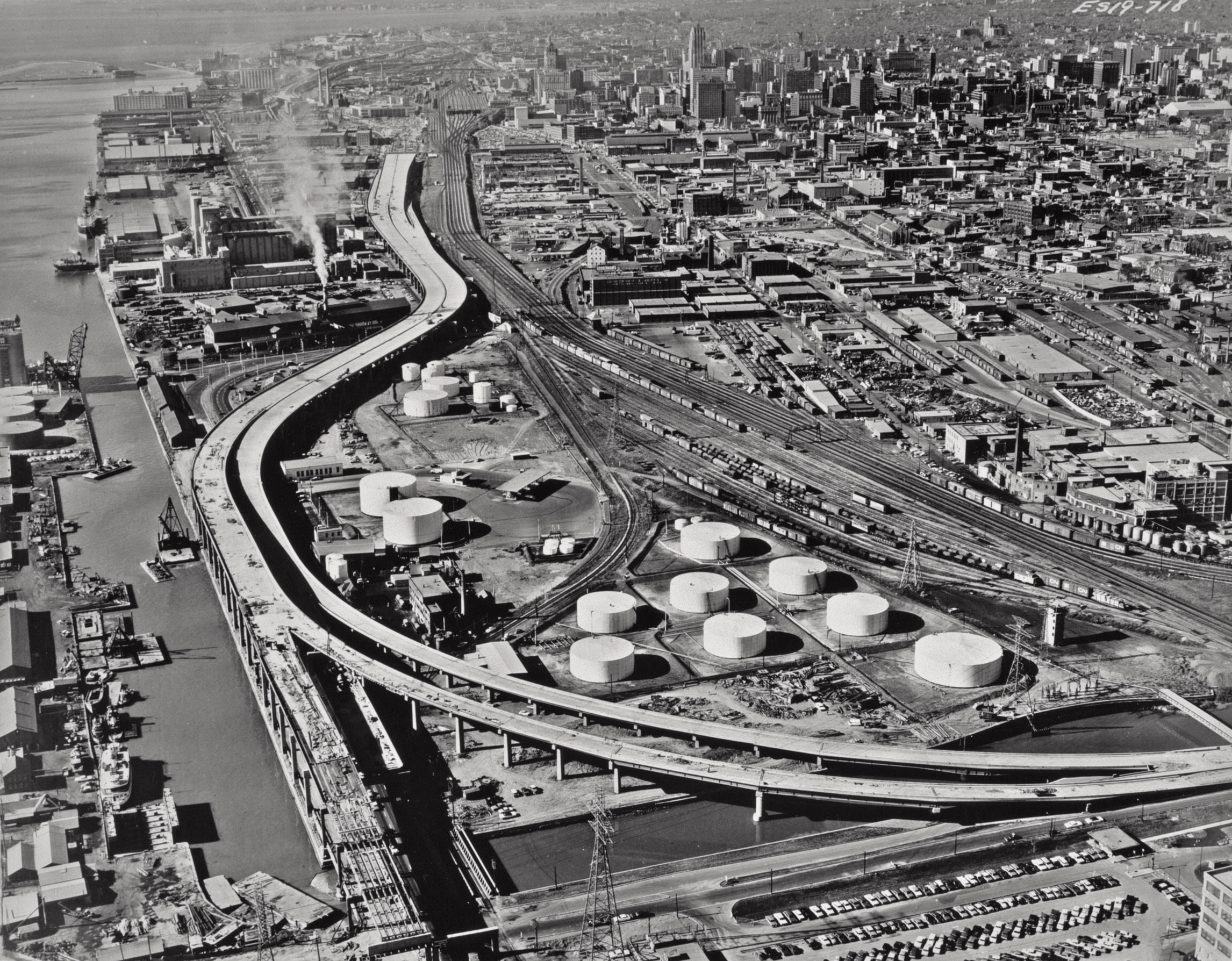
City of Toronto Archives, ES19-718
Unlike the other metallurgical plants located along the city’s waterfront a century ago, National Iron/Canron has left a unique legacy. It was a manufacturer of large-diameter cast-iron water pipe and fittings, which can last more that a century. A large proportion of the water consumed in Toronto today passes through pipes that were cast and finished in this plant during its more than seven decades of production.
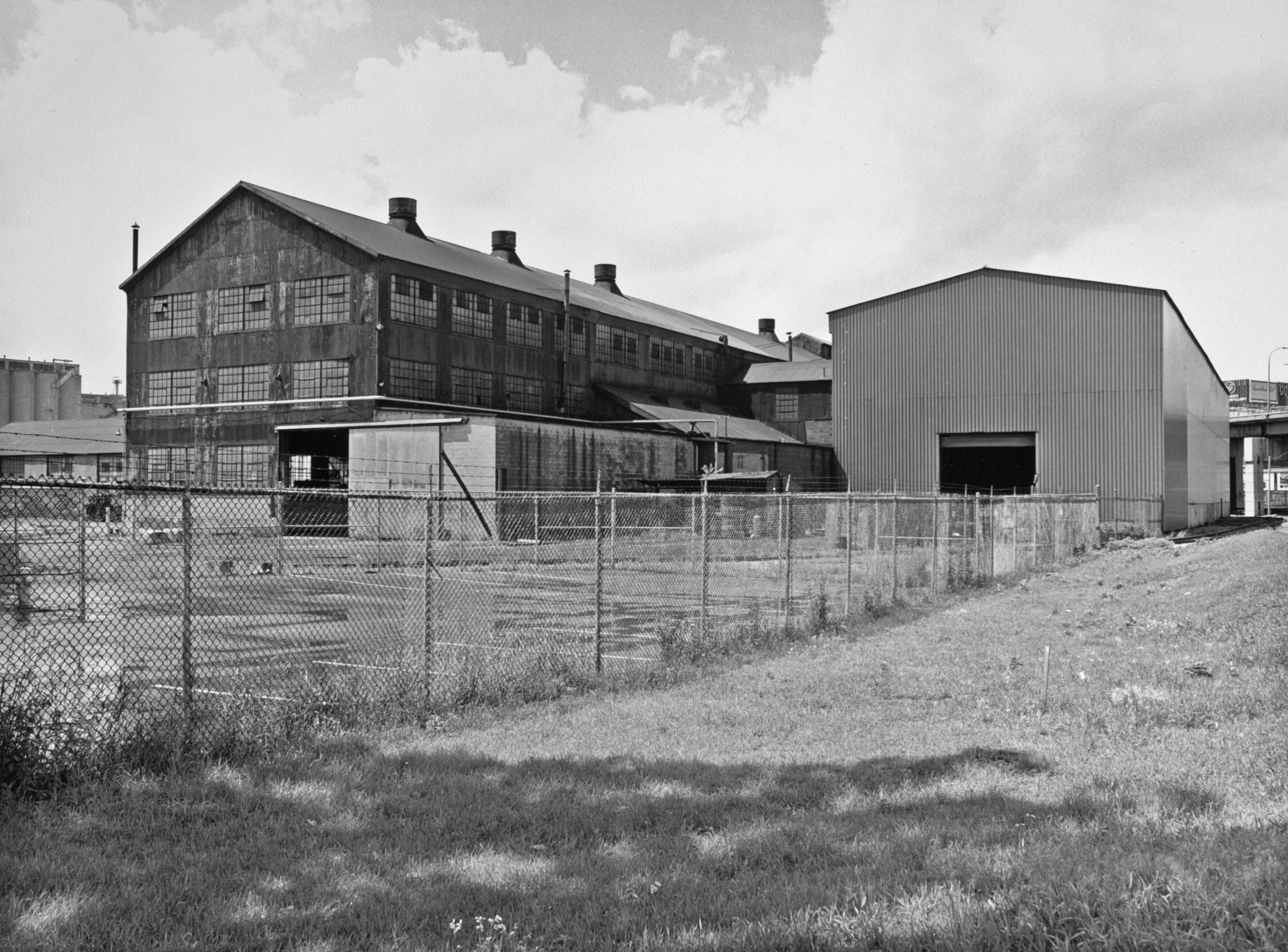
Although I was never able to photograph the Canron foundry from inside its gates, a single visit I made to 324 Cherry Street in the early 1960s had a profound effect on my imagination. During the summer holidays I was working for my father, who was a public works contractor. One hot summer day, I went along as a passenger in a truck sent to the foundry to pick up some watermain fittings.
On arrival at the foundry, we were directed to a corner of the yard. While the truck was being loaded, I was able to examine the foundry buildings, from which had emerged the huge array of products ready to be shipped. Fascinated by those drab and voluminous structures, I strained for a glimpse of what was going on in the shadowy spaces behind their open doors, but the process remained hidden. Later on, when I had become a competent architectural photographer, I sought out similar industrial plants to photograph inside and out.
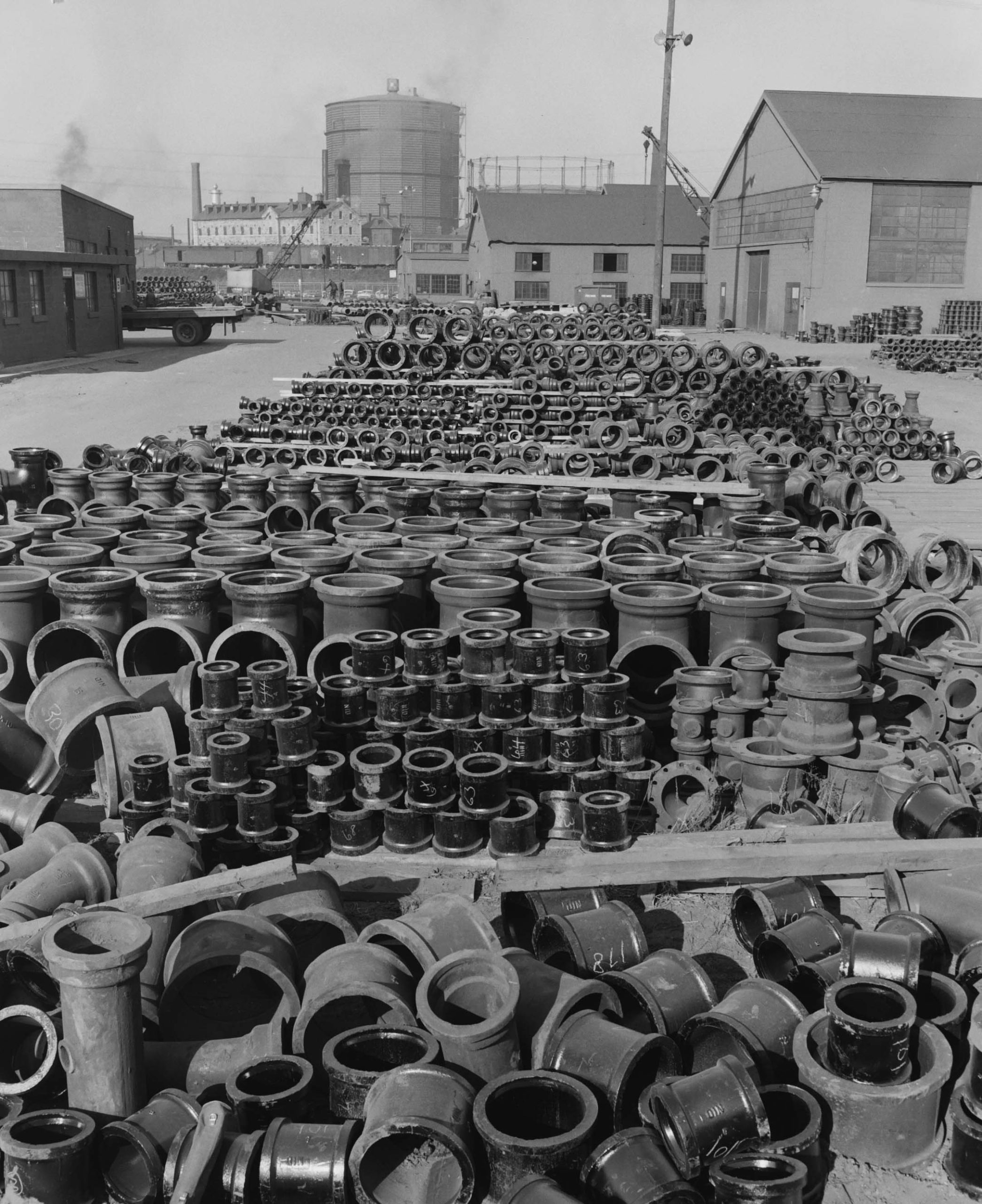
Fonds 1653, City of Toronto Archives
The surviving photographic record of early heavy industries in Toronto is usually quite meagre. Fortunately this foundry complex, in its early guise as the National Iron Works, was photographed repeatedly between 1916 and 1934 by the Toronto Harbour Commission’s official photographer, Arthur Beales. It first appears in his 1916 photos of dock wall construction along the Keating Channel (see below for the complete photogallery).
Arthur Beales documented the various activities of the Harbour Commission from 1914 until his retirement in 1951. Like Arthur Goss, his counterpart in City administration, he ran his own department and was responsible for churning out blueprints as well as photographs. Recording progress on the diversion of the Don River into the Keating Channel was one of his many photographic duties.
Throughout his long career, Beals exploited every opportunity to take elevated views of the waterfront and harbour. He took his earliest photo of the National Iron Works from atop the Gooderham and Worts distillery’s wooden grain elevator at the foot of Parliament Street. The elevated viewpoint emphasizes the foundry site’s irregular shoreline; it had originated as a sand spit.
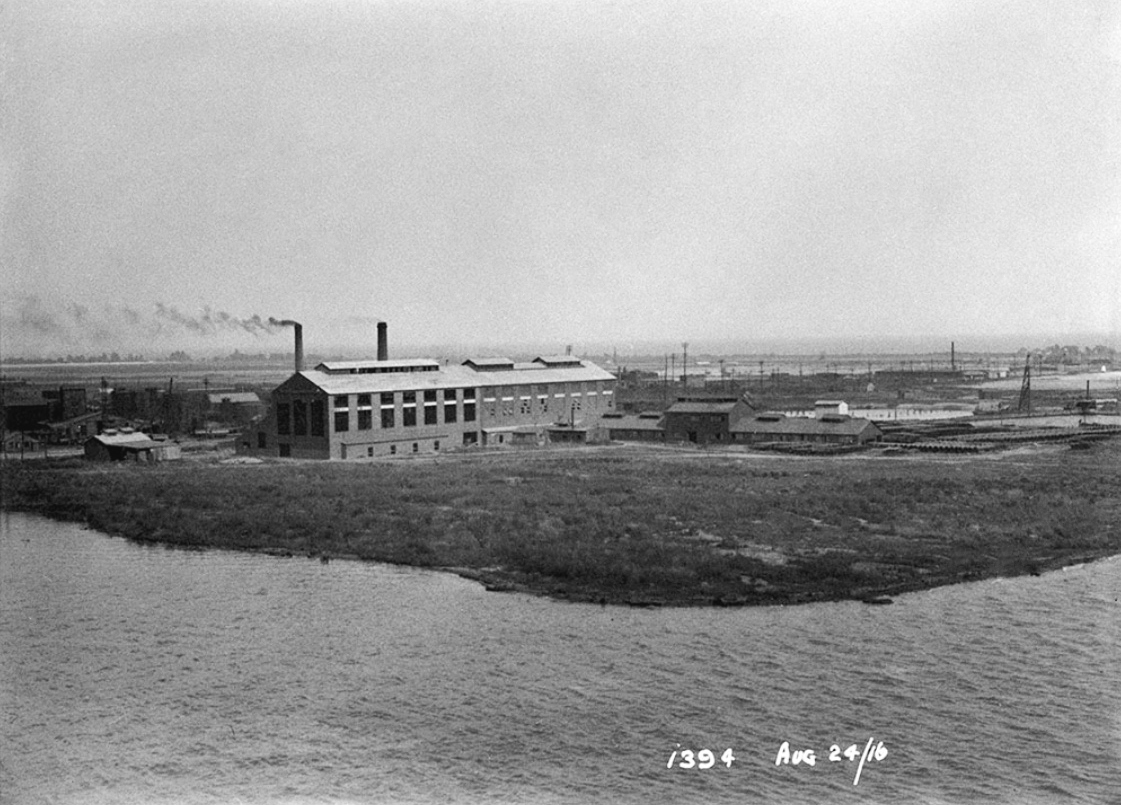
Toronto Harbour Commissioners collection, Library and Archives Canada, a098105-v8
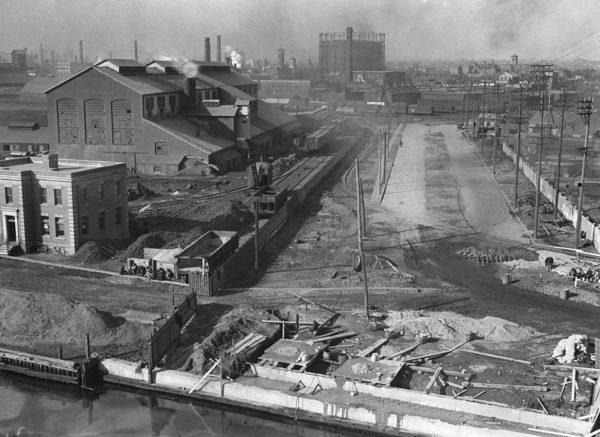
In 1917, Beales climbed to the roof of the National Iron Works two-storey office building to photograph the derrick being used to construct the Cherry Street bascule bridge. He then crossed the channel to take counter-views of the foundry and its surroundings from the top of the derrick.
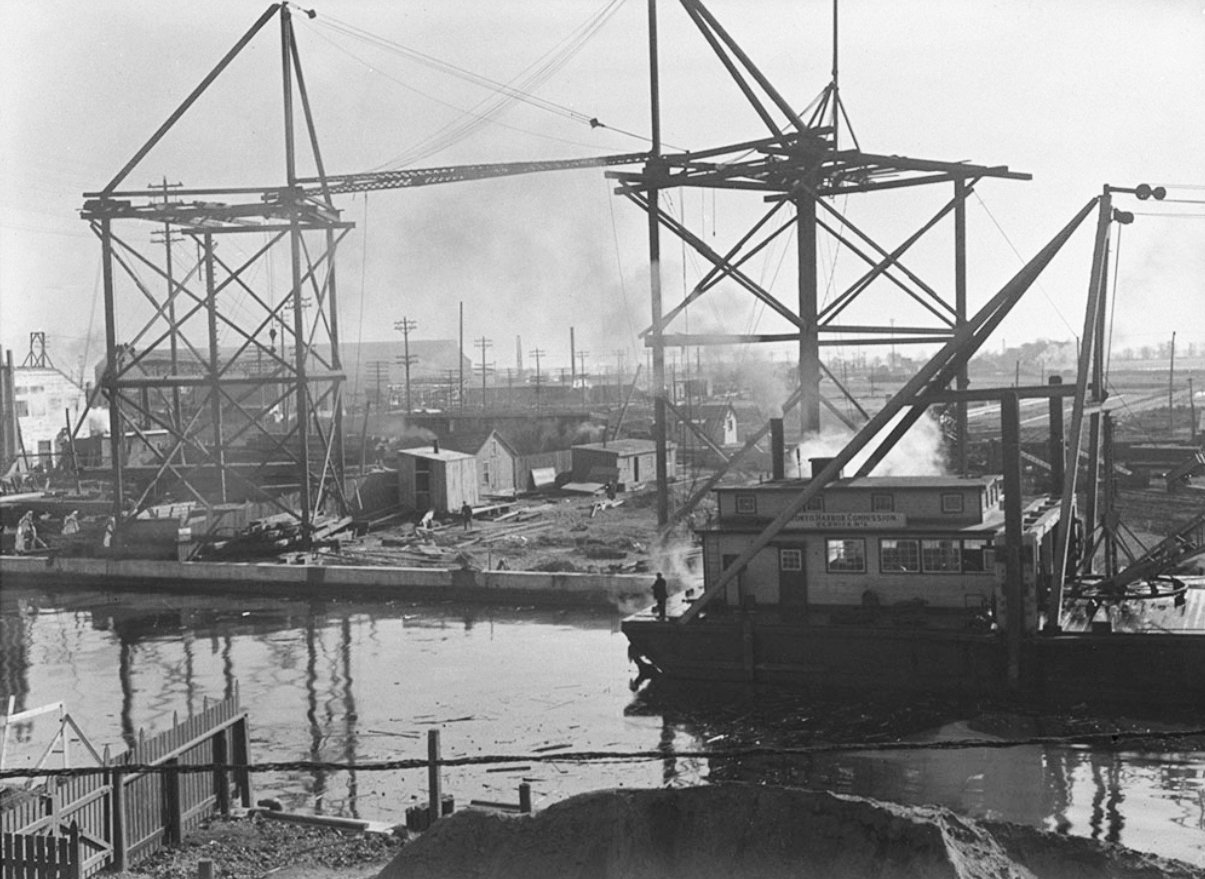
Toronto Harbour Commissioners collection, Library and Archives Canada, a097623-v8
Returning in 1918, the photographer used both the foundry’s office building and the completed bascule bridge to document the rapid development of the port industrial district. His subjects included industries related to the war effort, such as the Canadian Shipbuilding Company along the Keating Channel and the British Forgings munitions plant south of Commissioners Street.
Finally, in 1934, Beales mounted to the high roof of the foundry shed to take a general view looking south, then crossed the channel to take three overlapping views from the top of the bridge structure showing the downtown skyline with the foundry site in the foreground. His evident intention was to create a visual link between the financial and industrial centres of the city.
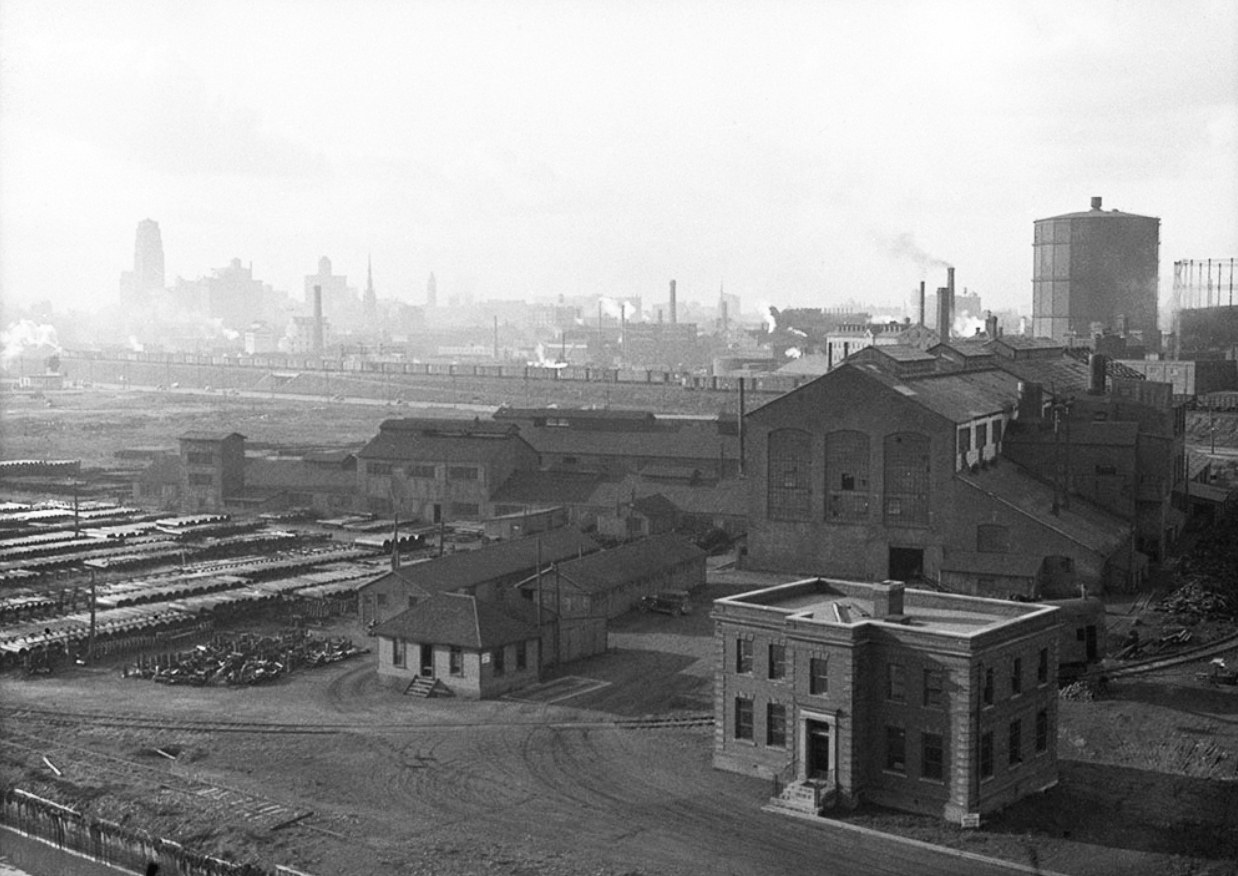
Toronto Harbour Commissioners collection, Library and Archives Canada
a098445-v8
Although many of Beales’ photos of the industrial waterfront feature leaden skies and clouds of smoke, there is no indication that he chose those light in conditions for pictorial effect. The dirty light was unavoidable, given the habitually high level of local air pollution from numerous sources. By the mid 1960s, when the aerial view described above was taken, the air had begun to clear.
Two photos taken at the plant in 1955 by commercial photographer Gilbert Milne, the year the National Iron Works became a subsidiary of Canada Iron Foundries, contrast in their matter-of-factness with Beales’ earlier work. My own view from 1986, shortly after production had ceased for good, is strictly a documentary image.
In 1968, a new, streamlined Cherry Street lift bridge replaced the one shown in these photos. In 2024, as part of Waterfront Toronto’s revitalization of the Port Lands, that bridge was demolished and not replaced. Cherry Street was relocated farther west, and it now runs through the centre of the former Canron foundry site. Twin fixed bridges connect it to the new island called Ookwemin Minising
Despite the pollution it undoubtedly caused, the National Iron/Canron foundry contributed to Toronto’s urban development by providing main components for its existing water distribution system. That it repeatedly served a vantage point for Arthur Beales’ documentation of the port industrial district allows us to better comprehend the gritty inter-war industrial waterfront of which few traces remain today.
Photogallery
City of Toronto Archives, ES19-718
Toronto Harbour Commissioners collection, Library and Archives Canada, a098105-v8
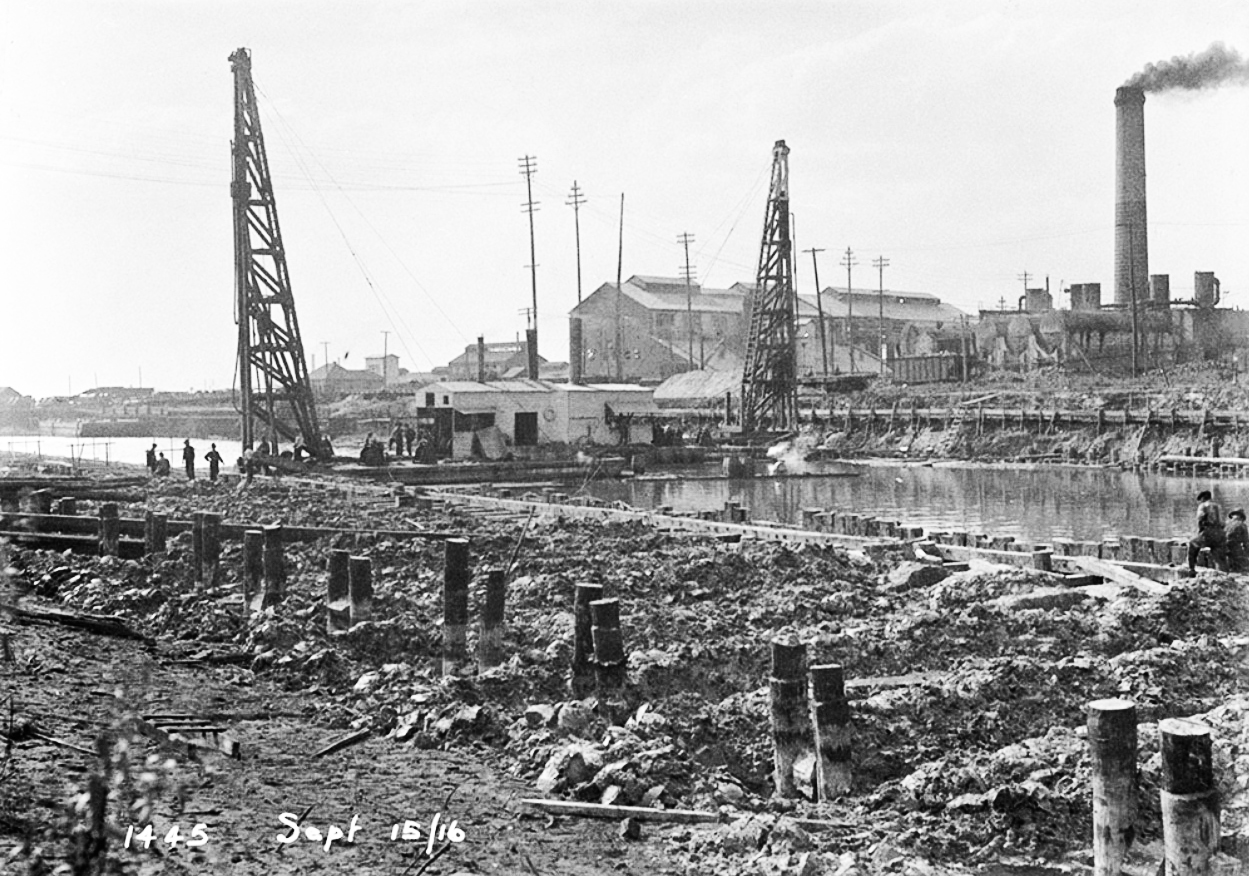
Toronto Harbour Commissioners collection, Library and Archives Canada, a098125-v8
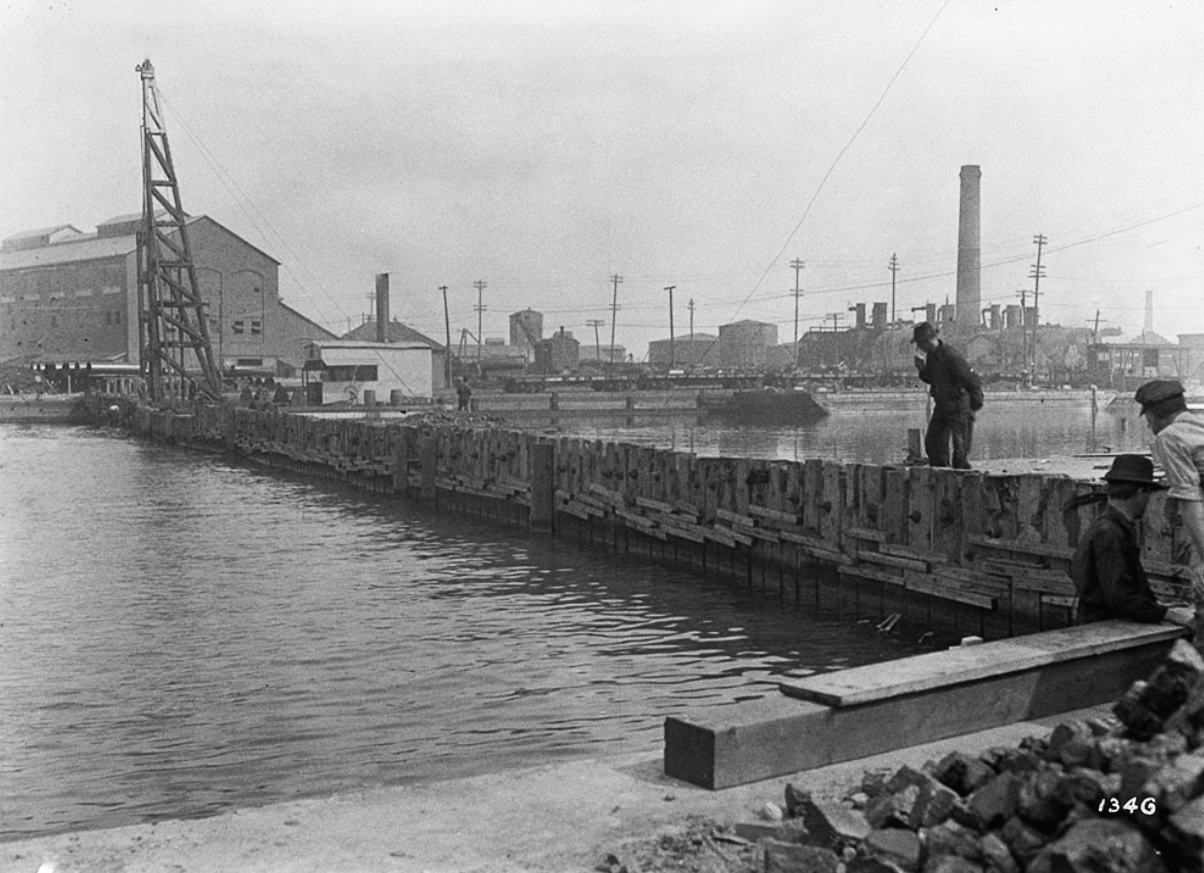
Toronto Harbour Commissioners collection, Library and Archives Canada, a098088-v8
Toronto Harbour Commissioners collection, Library and Archives Canada, a097623-v8
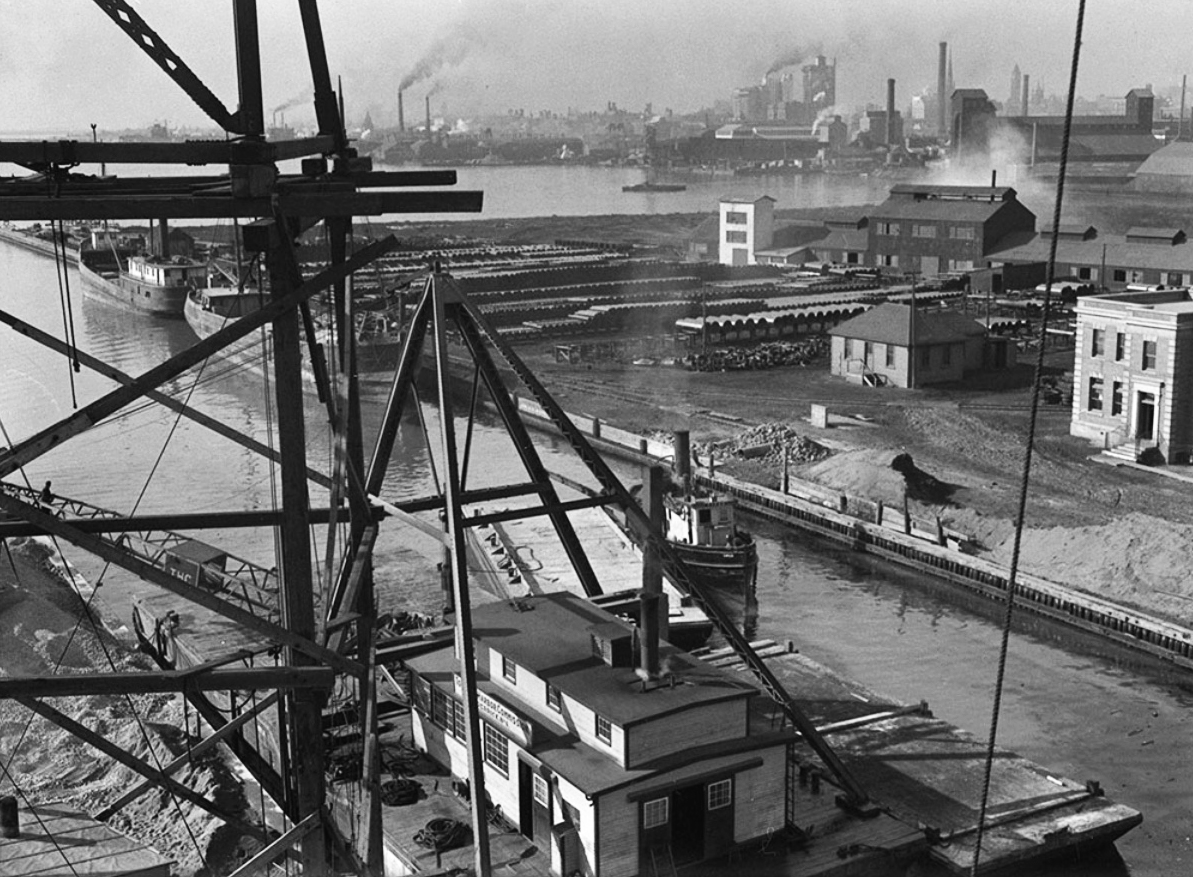
Toronto Harbour Commissioners collection, Library and Archives Canada, a097660-v8
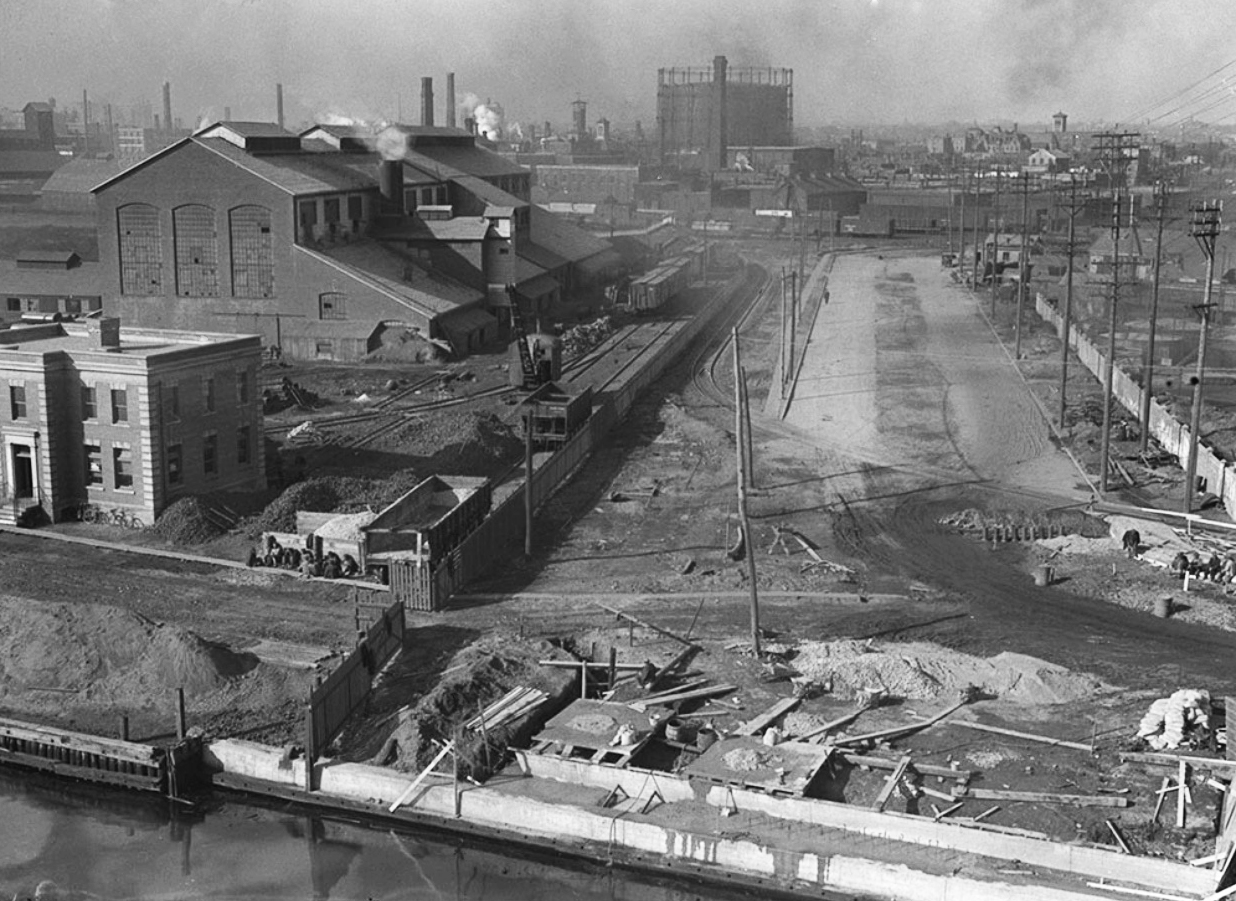
Toronto Harbour Commissioners collection, Library and Archives Canada, a097661-v8
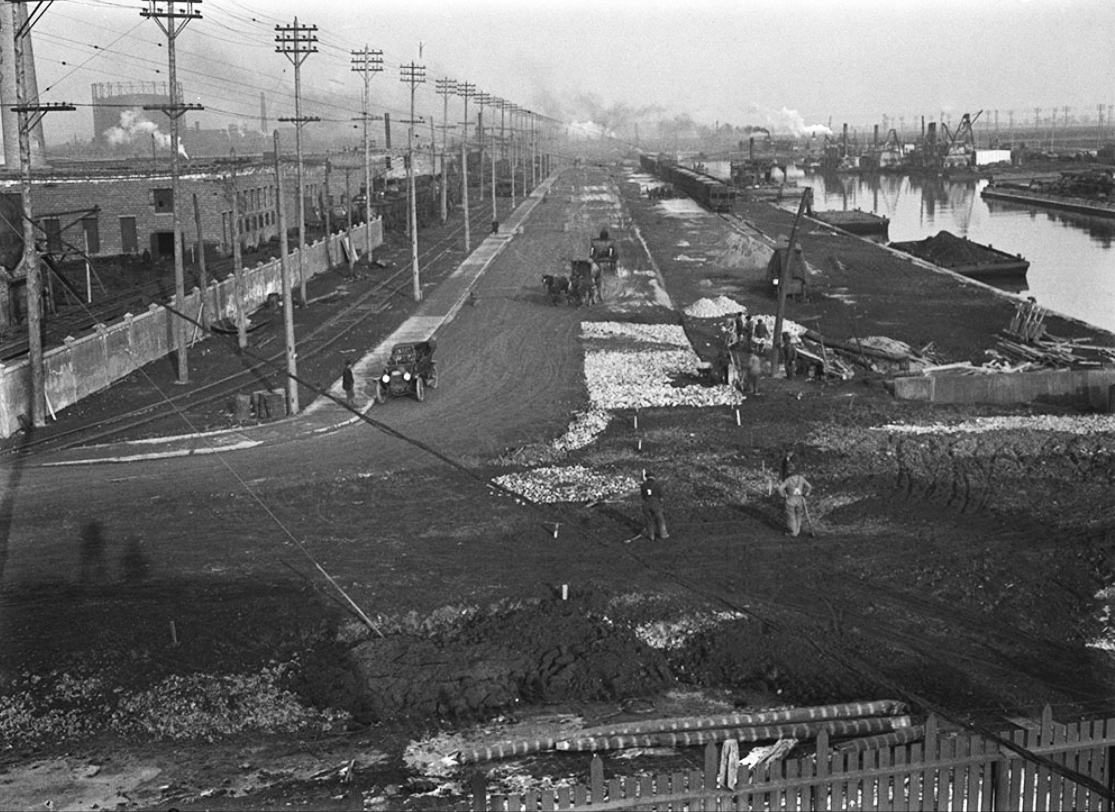
Toronto Harbour Commissioners collection, Library and Archives Canada, a097668-v8
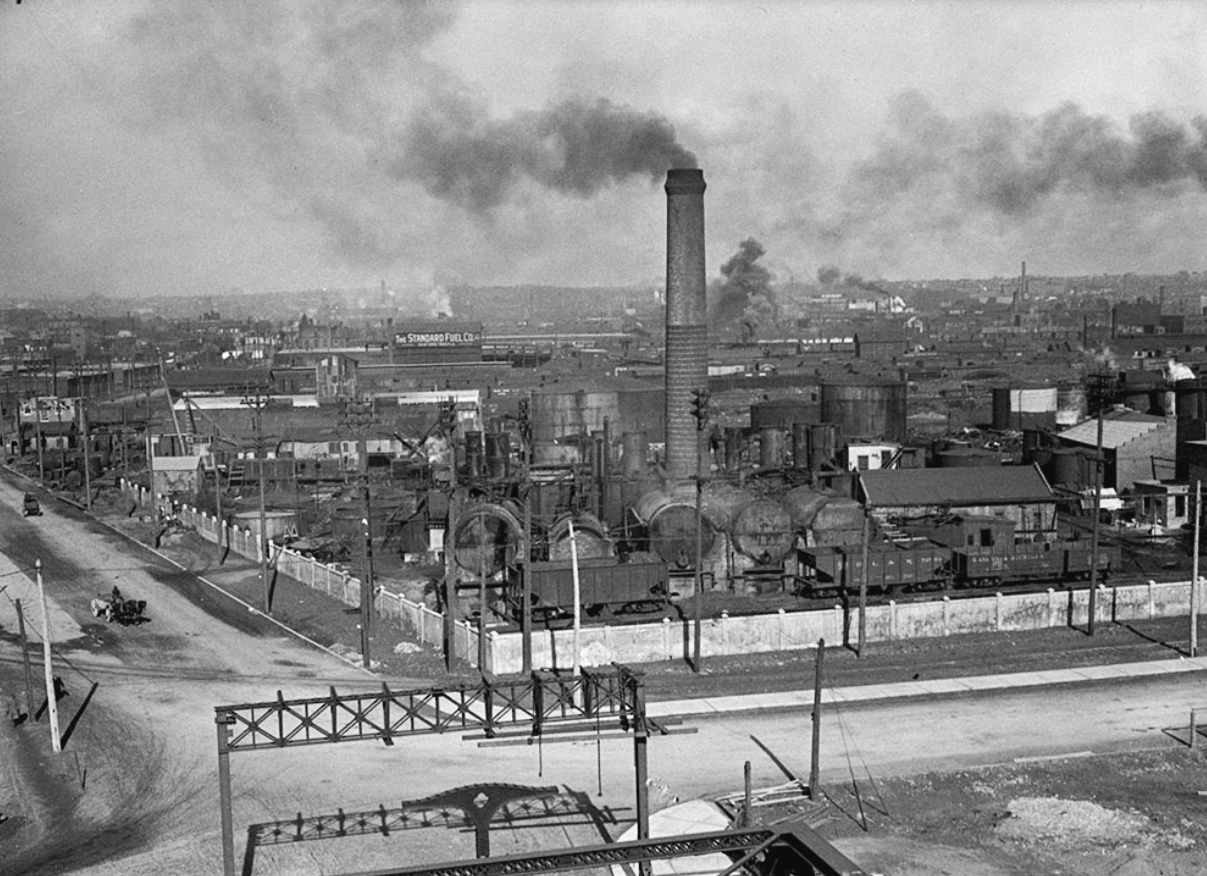
Toronto Harbour Commissioners collection, Library and Archives Canada, a097783-v8
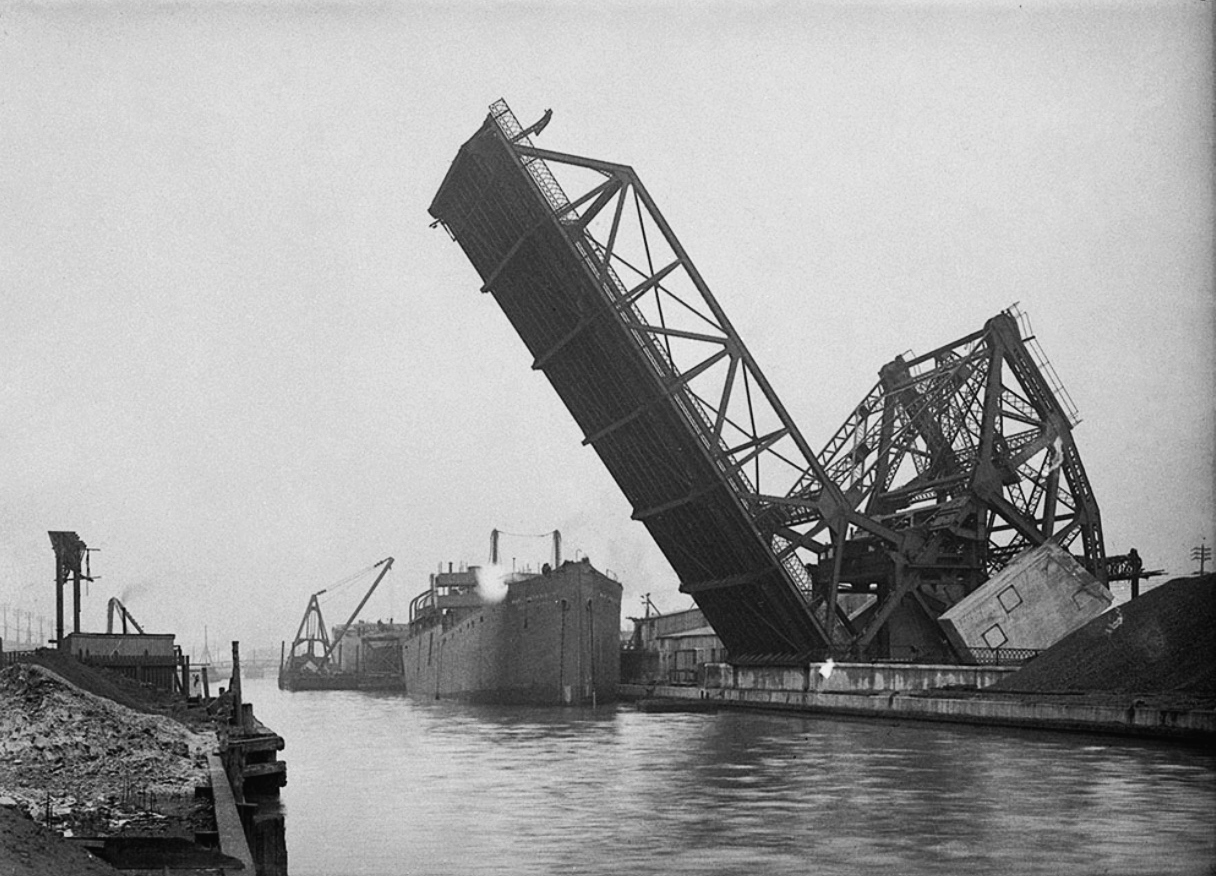
Toronto Harbour Commissioners collection, Library and Archives Canada, a097792-v8
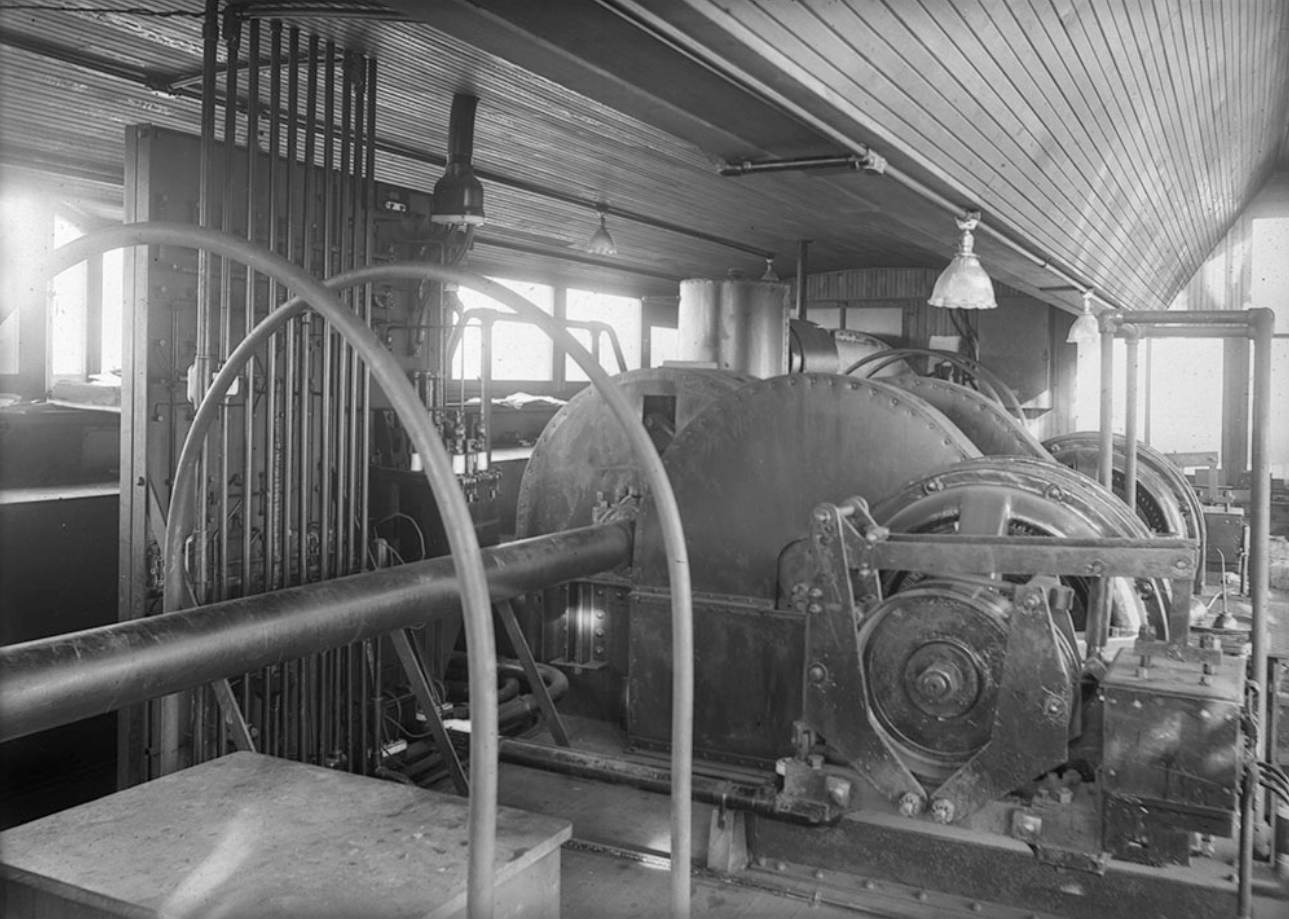
Toronto Harbour Commissioners collection, Library and Archives Canada, a096857-v8
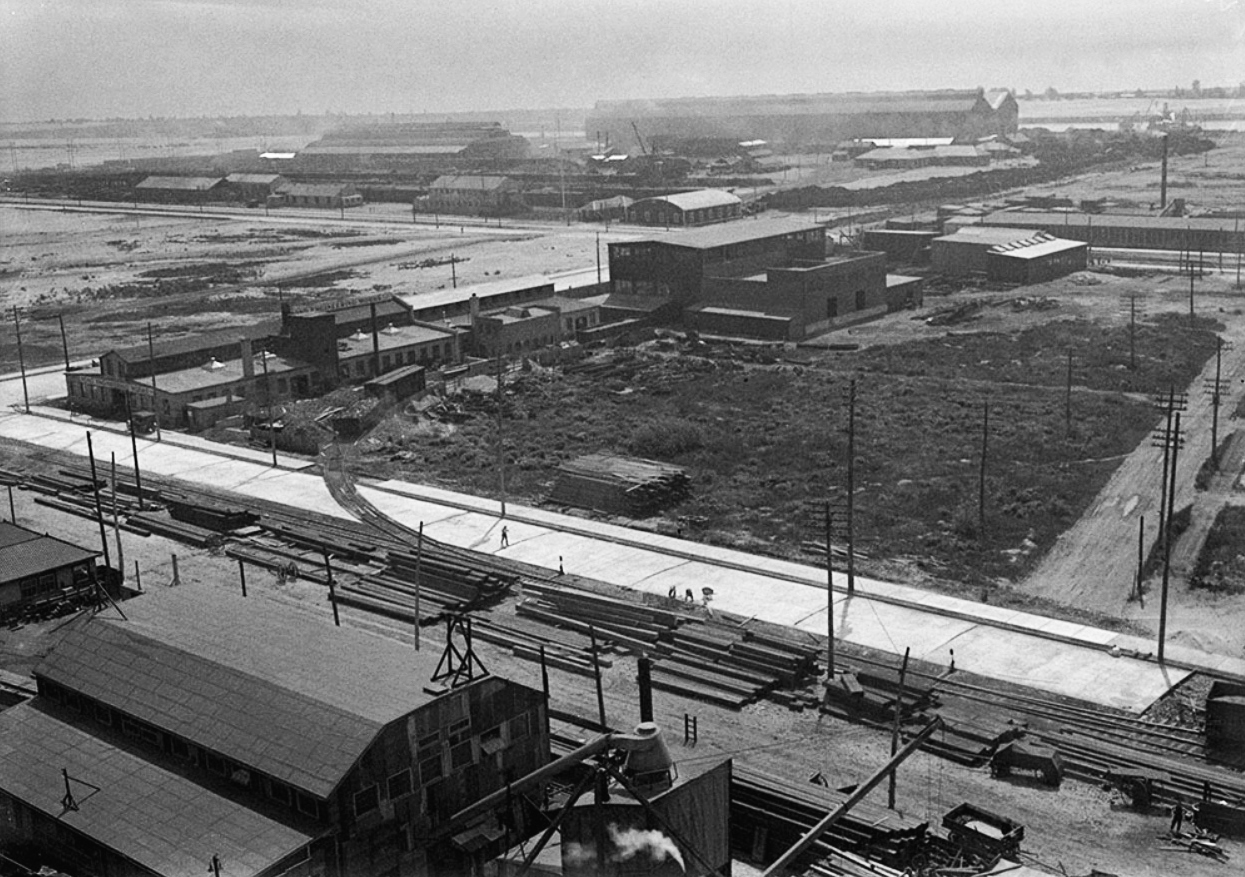
Toronto Harbour Commissioners collection, Library and Archives Canada, a097728-v8
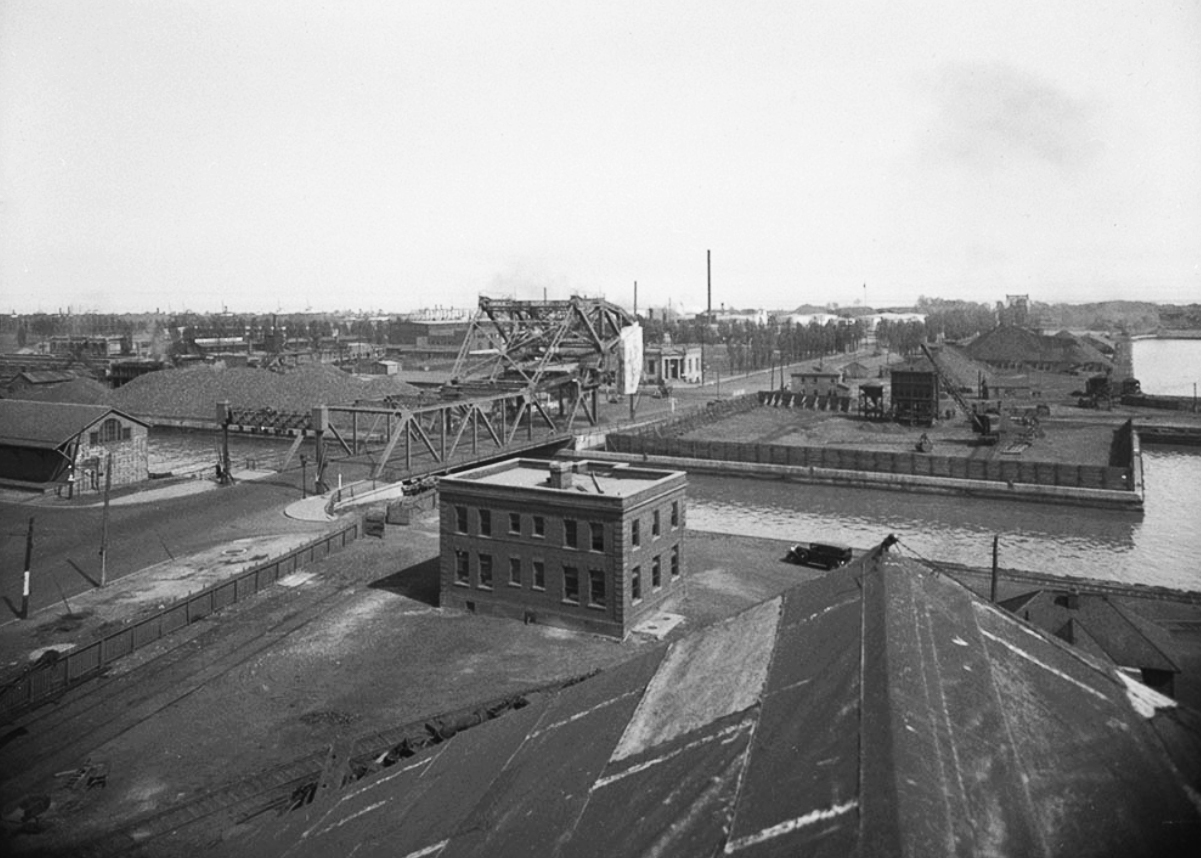
Toronto Harbour Commissioners collection, Library and Archives Canada, a098430v8
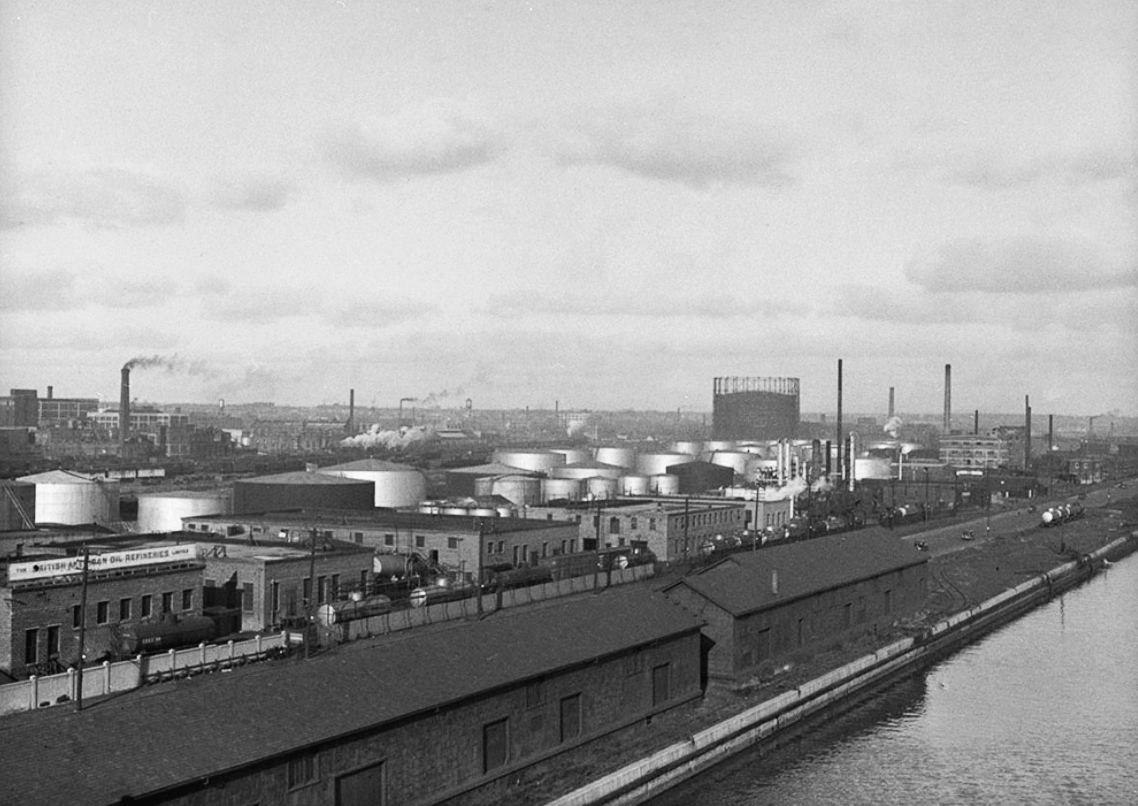
Toronto Harbour Commissioners collection, Library and Archives Canada, a098443-v8
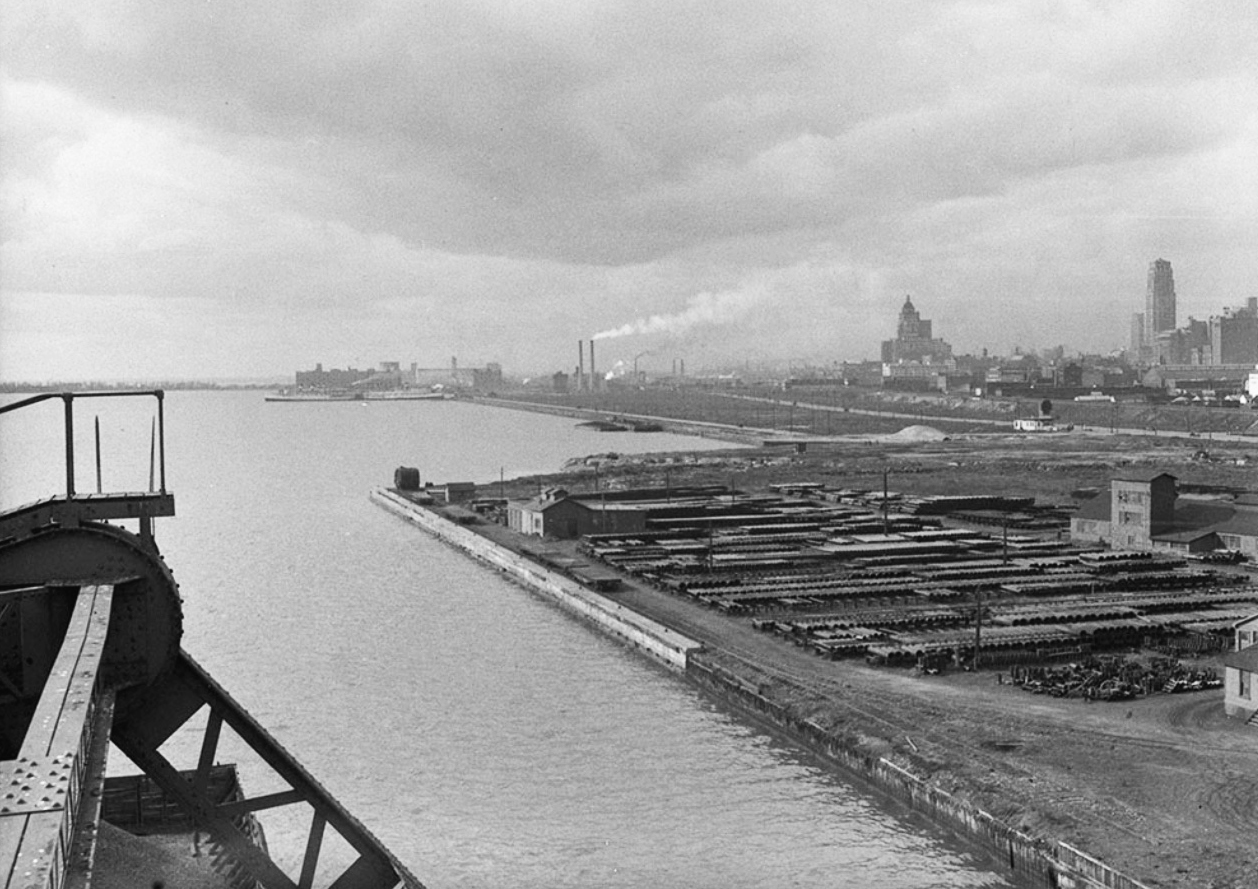
Toronto Harbour Commissioners collection, Library and Archives Canada, a098442-v8
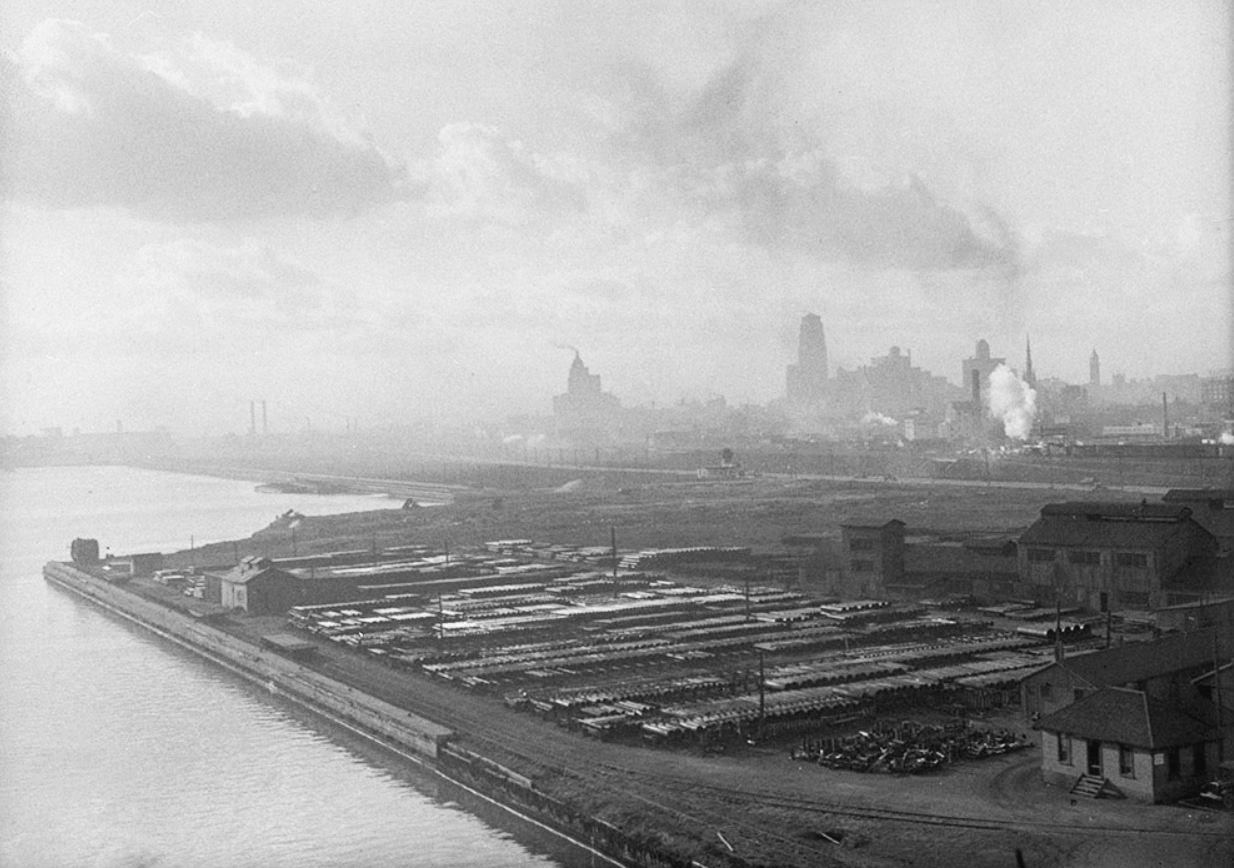
Toronto Harbour Commissioners collection, Library and Archives Canada, a098446-v8
Toronto Harbour Commissioners collection, Library and Archives Canada, a098445-v8
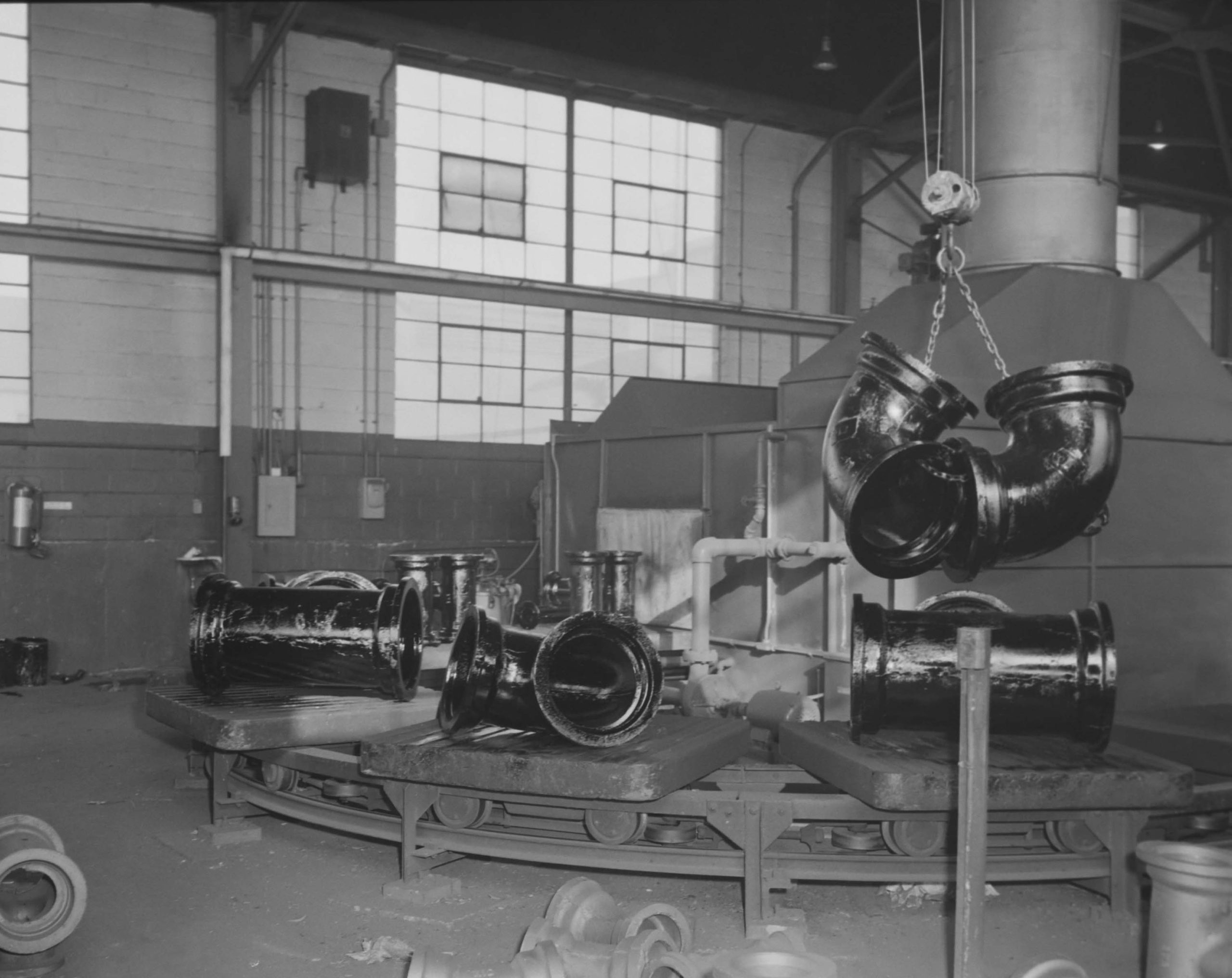
Fonds 1653, City of Toronto Archives
Fonds 1653, City of Toronto Archives