A few of weeks ago, while searching the Toronto Telegram online archive for aerial photos of the historic industrial waterfront, I came across a remarkable series of about 40 images from 1965 by Telegram photojournalist Dick Leok on another subject entirely: Yonge Street.
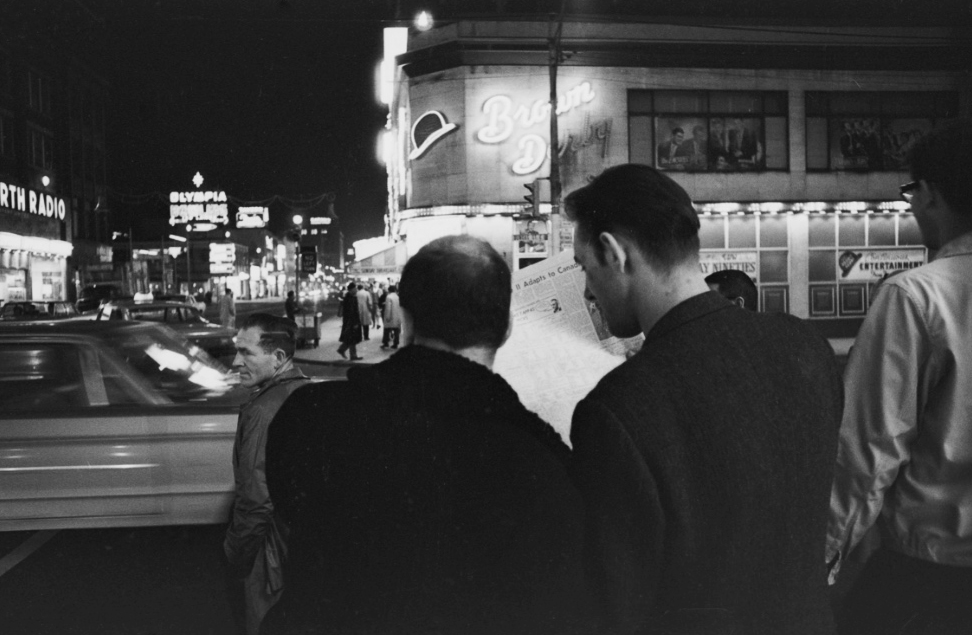
The Telegram, popularly known as the Tely, was a broadsheet newspaper published between 1876 and 1971. Its photo archive, comprising 18,335 images, is housed in the Clara Thomas Archives & Special Collections at York University. Dick Leok was born in Amsterdam in 1940 and came to Canada in 1962. He had a long career as a news photographer based in Toronto, first for the Telegram and, after its demise, for the Star.
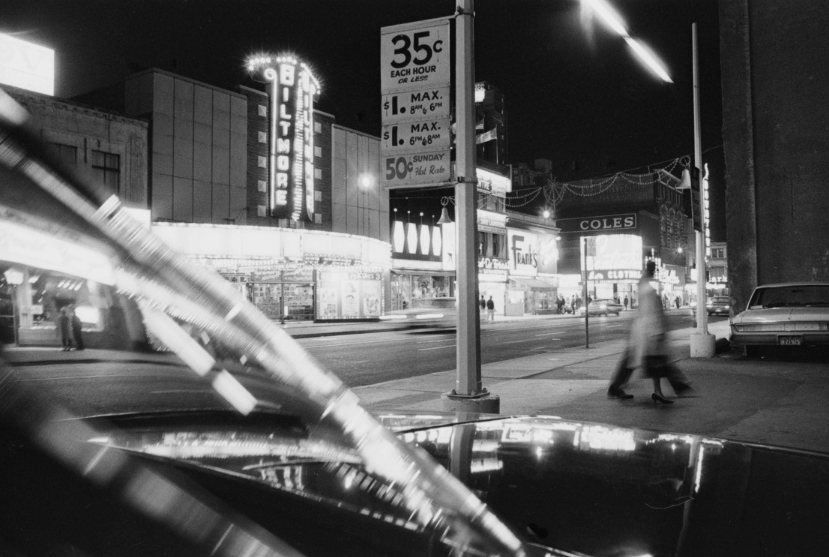
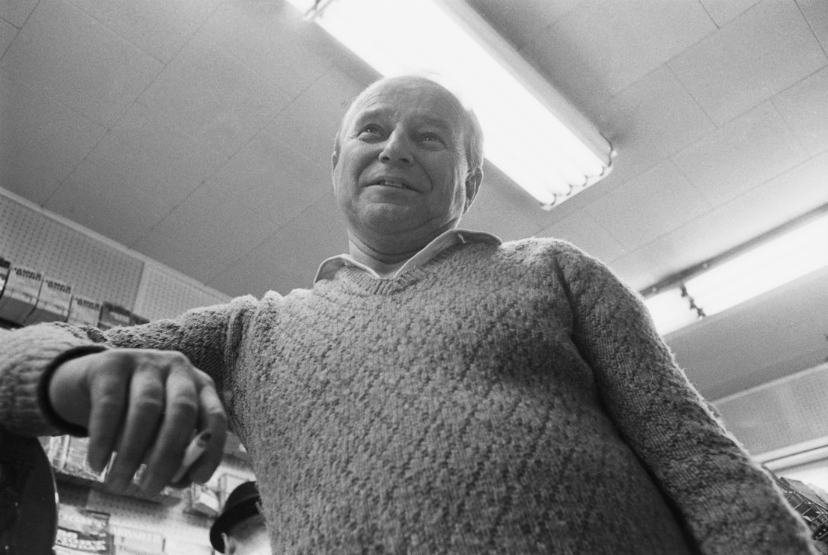
This series depicts commercial activity along the east side of Yonge from the Dundas intersection to just north of Gould Street. Dick Loek shot all the photos at night on Saturday, November 6, 1965 using a hand-held 35 mm camera. (A more conventional view taken three weeks later by Telegram photographer Madison Sale shows the same scene with Christmas lights added.)
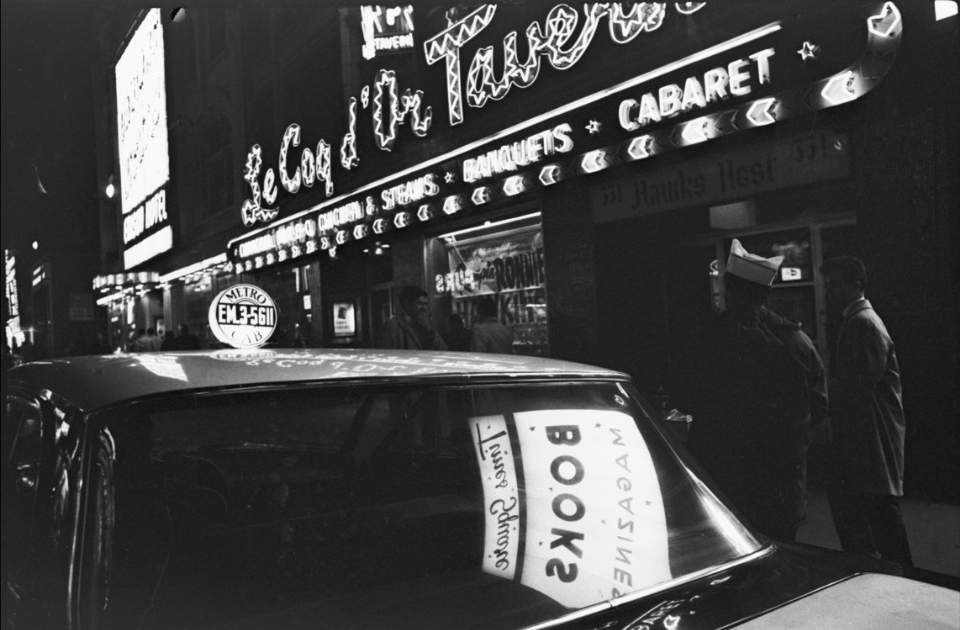
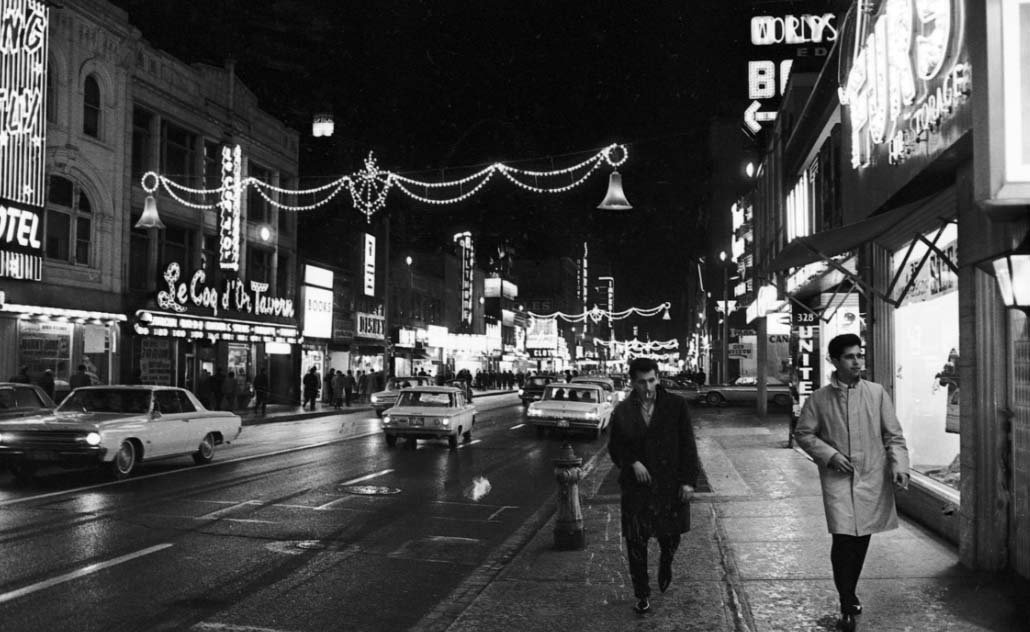
The archival citations for these photos don’t include captions or any information about the story they were meant to illustrate. One can speculate that it had to do with the reputation of the neighbourhood in general, and in particular that of a certain “adult” book store. If the story made it into print in the Telegram, it’s unlikely that many photos were included. Only in an archival context can they be recognized as a coherent body of work.
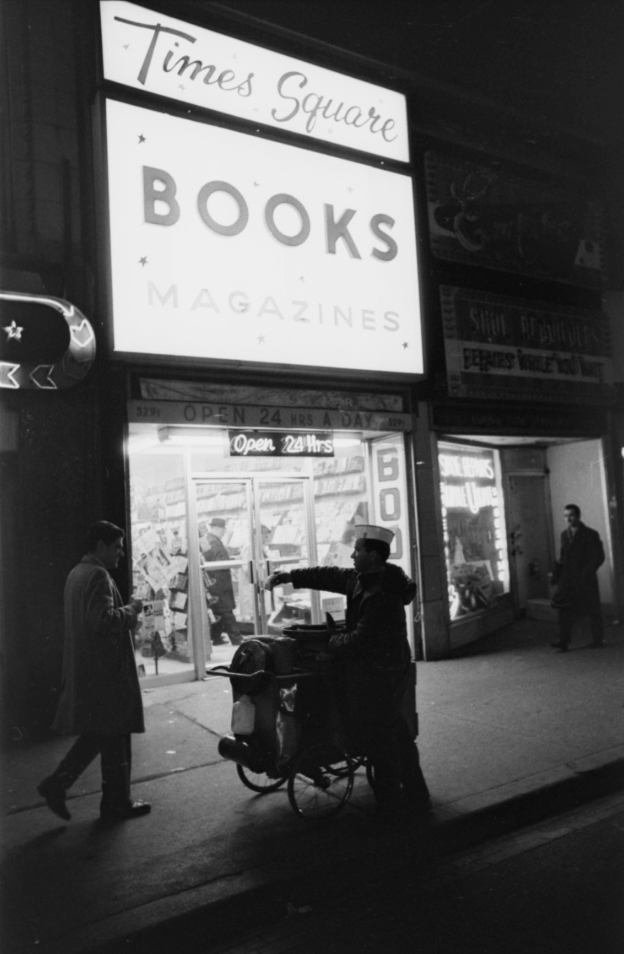
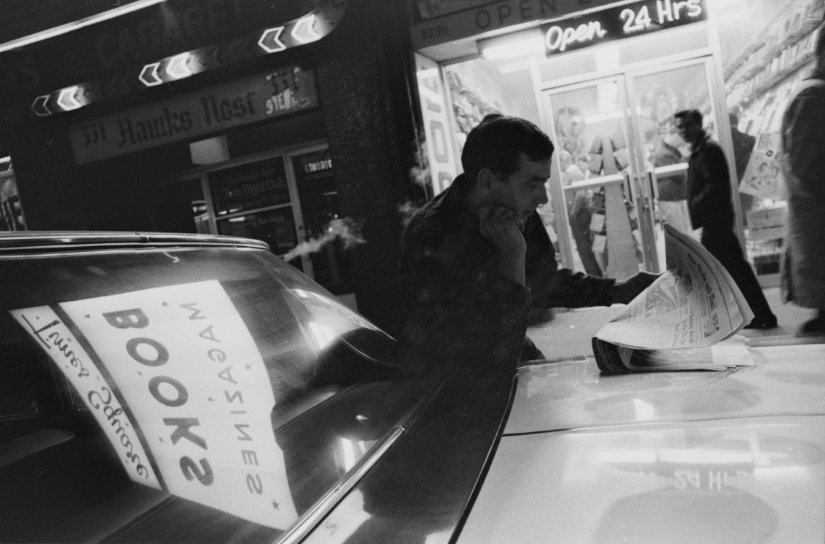
Under these lighting conditions, a news photographer would normally have resorted to a professional flash unit, which had the advantage yielding flatly lit images suitable for low-quality newspaper reproduction. By shooting under available light, Loek was taking expressive liberties with image quality. He may have been asserting his identity as an artist and challenging his editors to accept the new form of small-camera photojournalism exemplified by contemporary coverage of the war in Vietnam. It’s also possible that his editors were looking for this kind of edgy reportage on a controversial subject.
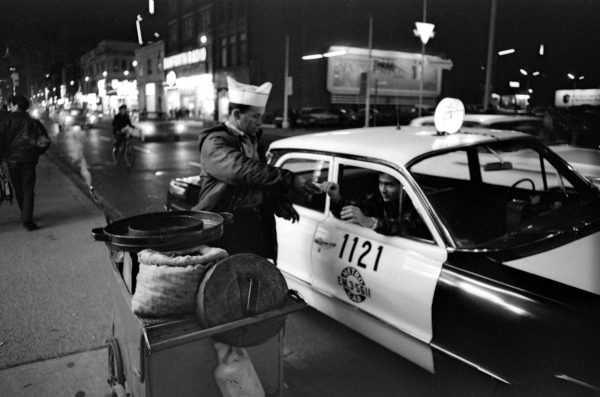
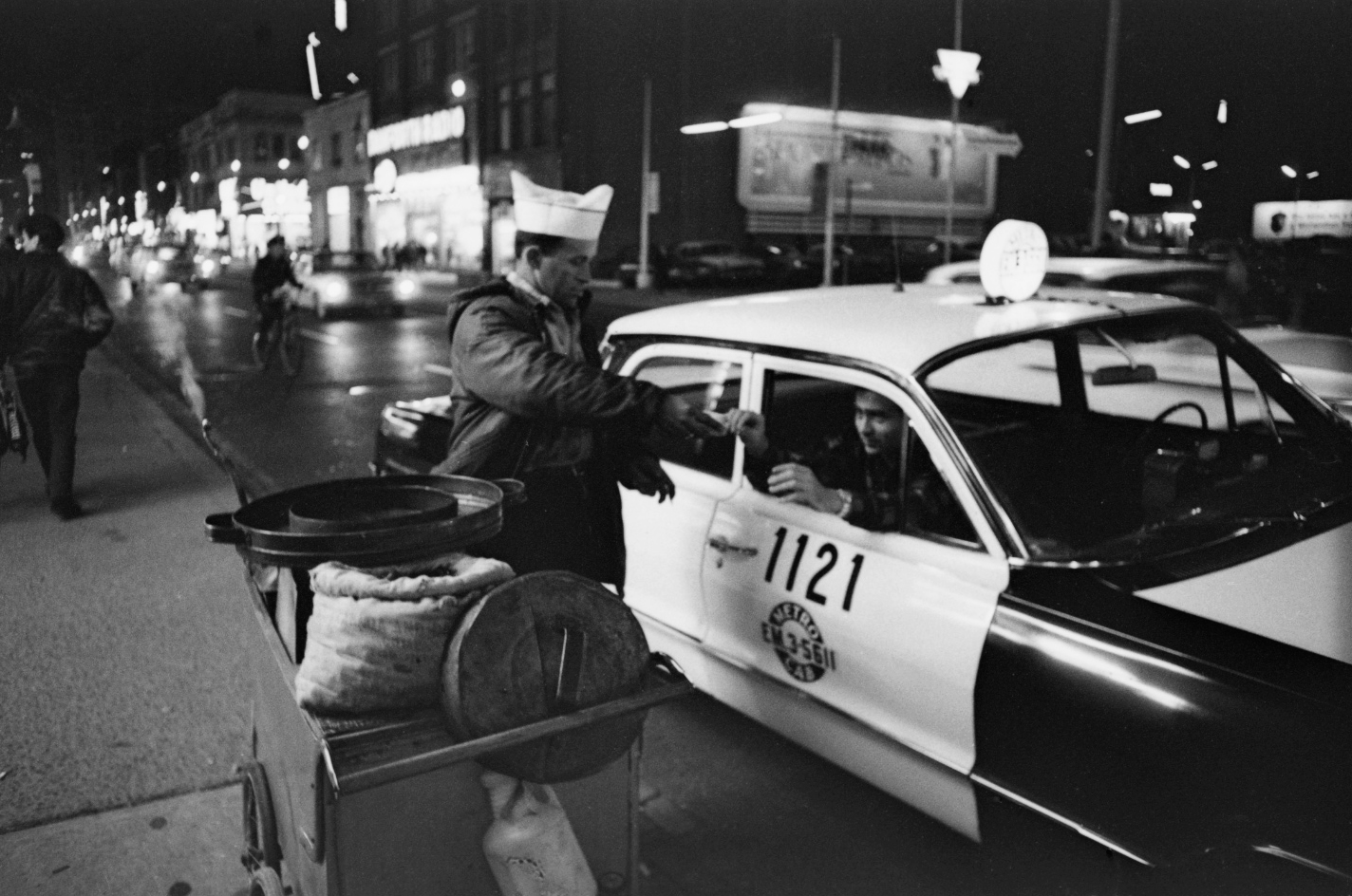
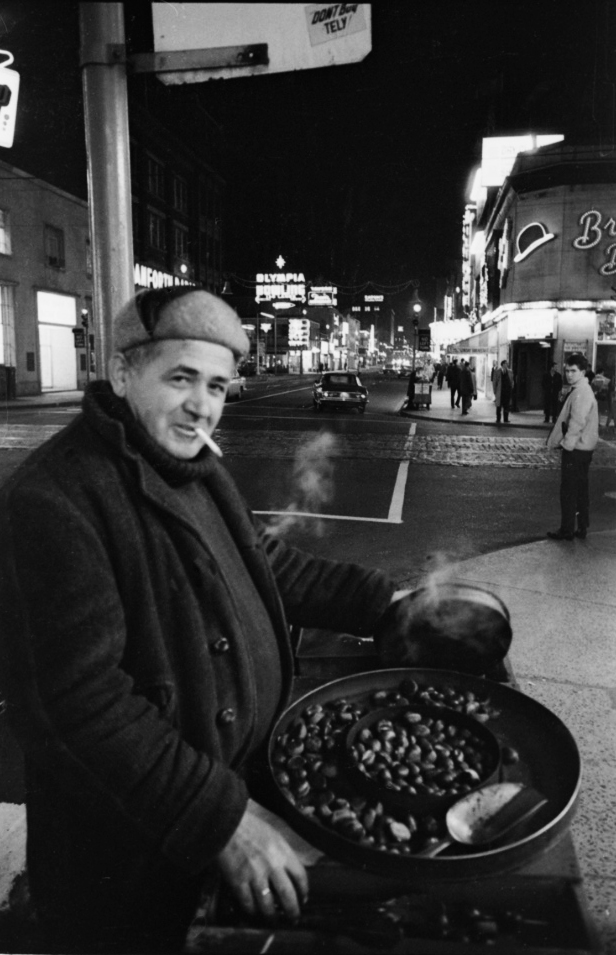
Working with available light allowed Loek to remain in the background when it was convenient, but he also engaged directly with some of his subjects. HIs view of a street vendor selling a bag of roasted chestnuts to a cab driver exists in several versions. The same vendor appears in photos he took in front of the Biltmore Theatre, Times Square Books and the Coq D’or Tavern.
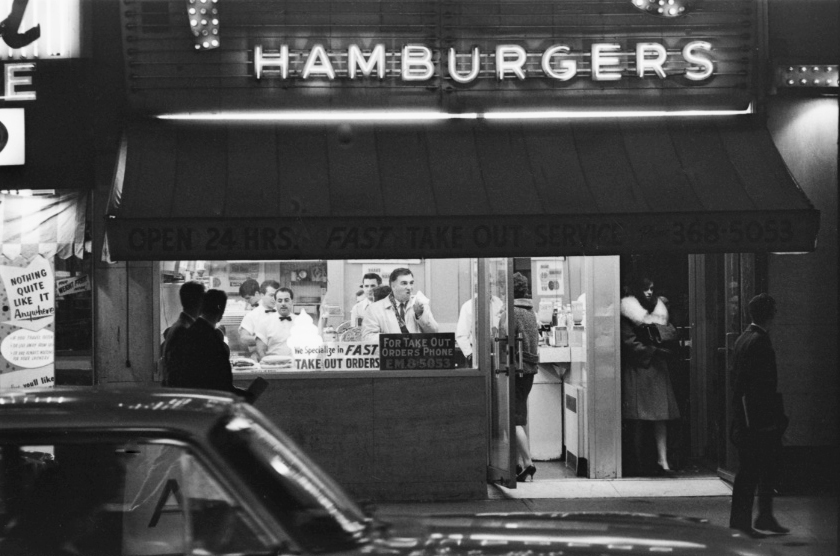
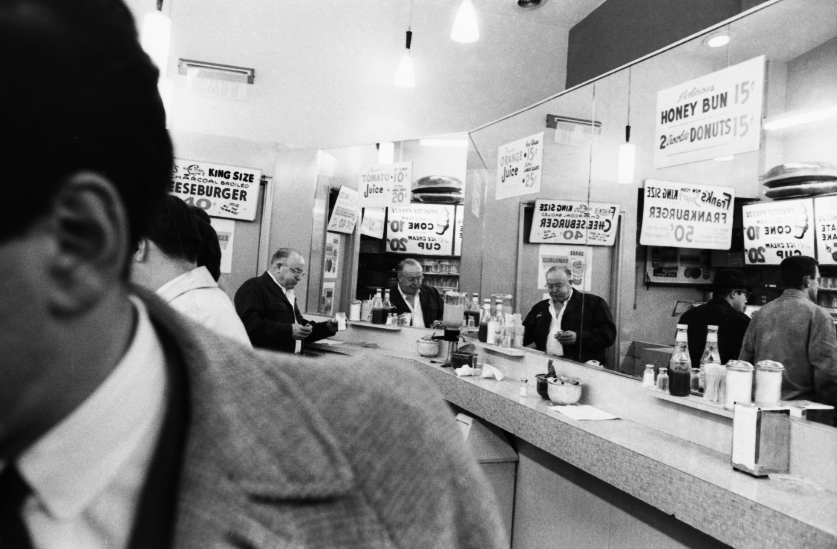
The hamburger joint shown in the series was probably the short-lived Stop & Go Standburger at 353 Yonge, one door north of the legendary A&A Books and Records. The interior photo Loek took of customers reflected in the restaurant’s large mirrors brings to mind the work of Robert Frank, whose monograph, “The Americans” had appeared in 1958.
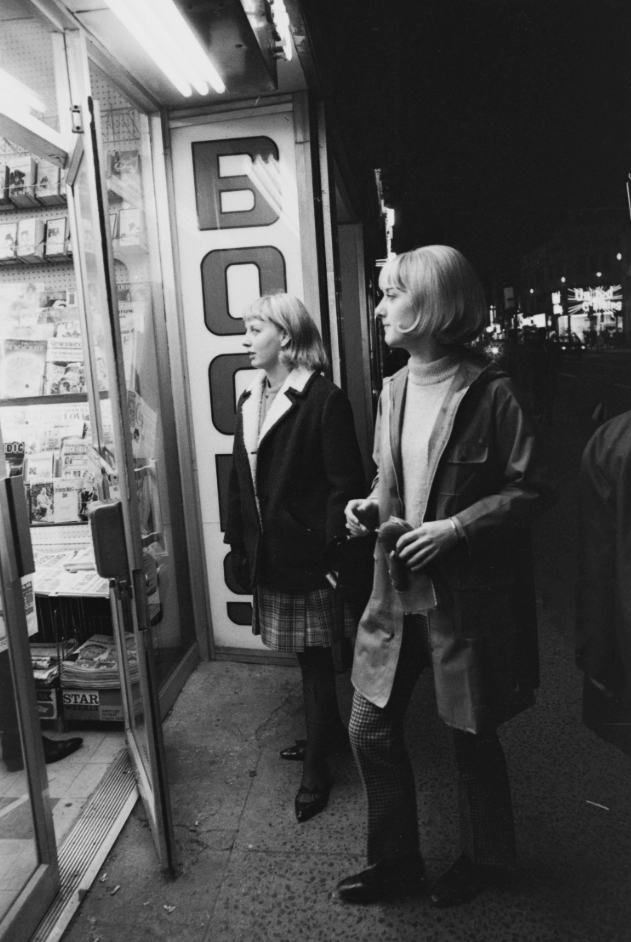
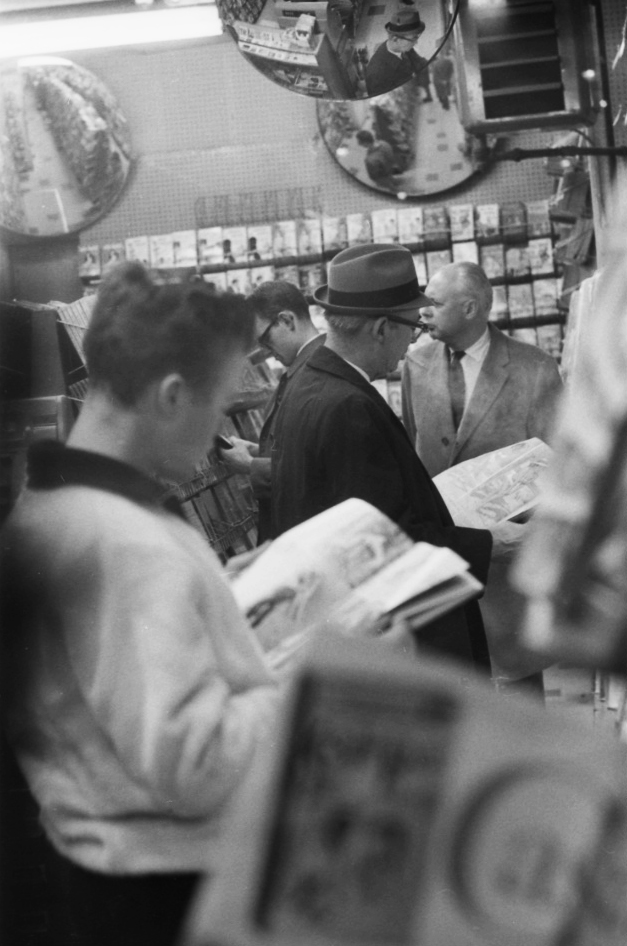
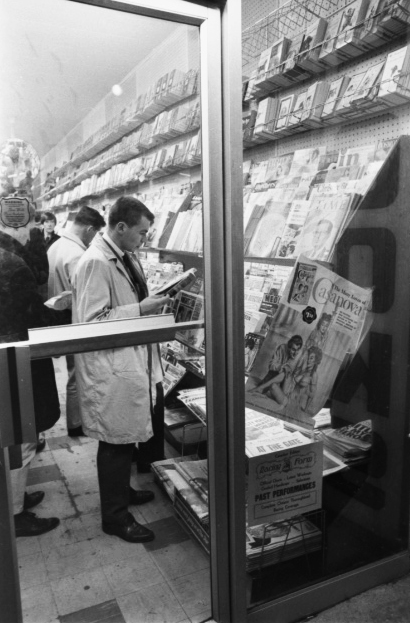
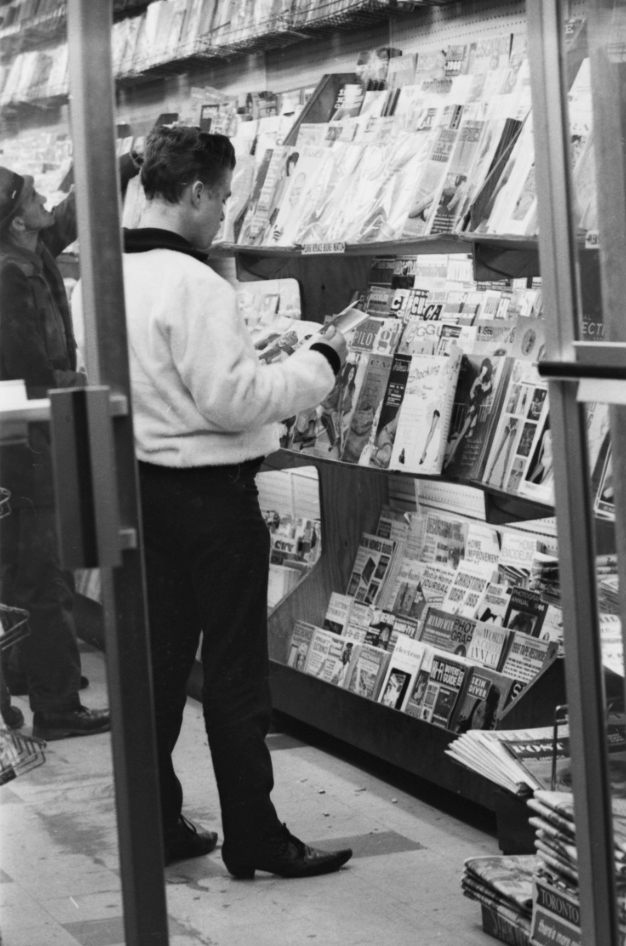
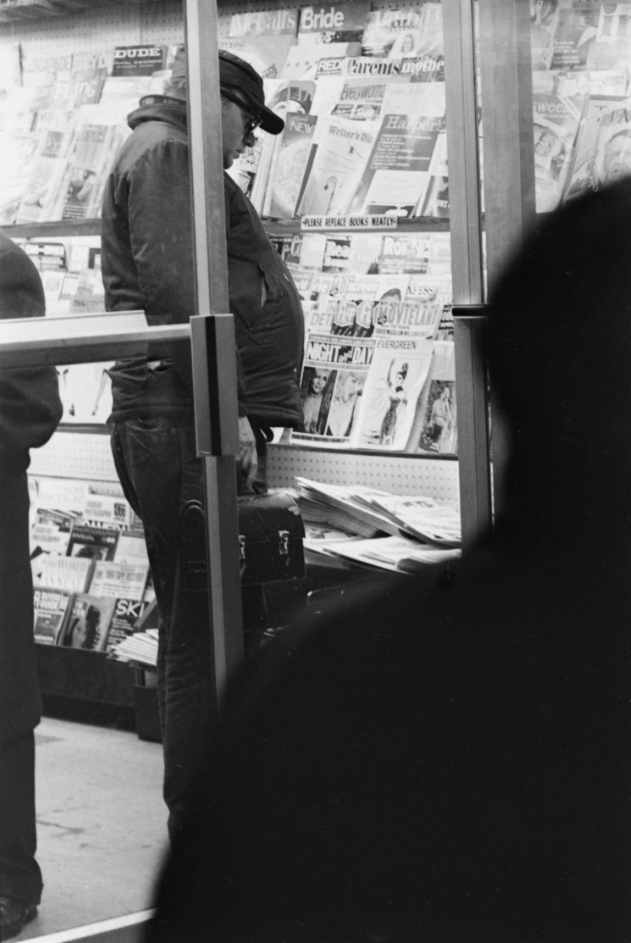
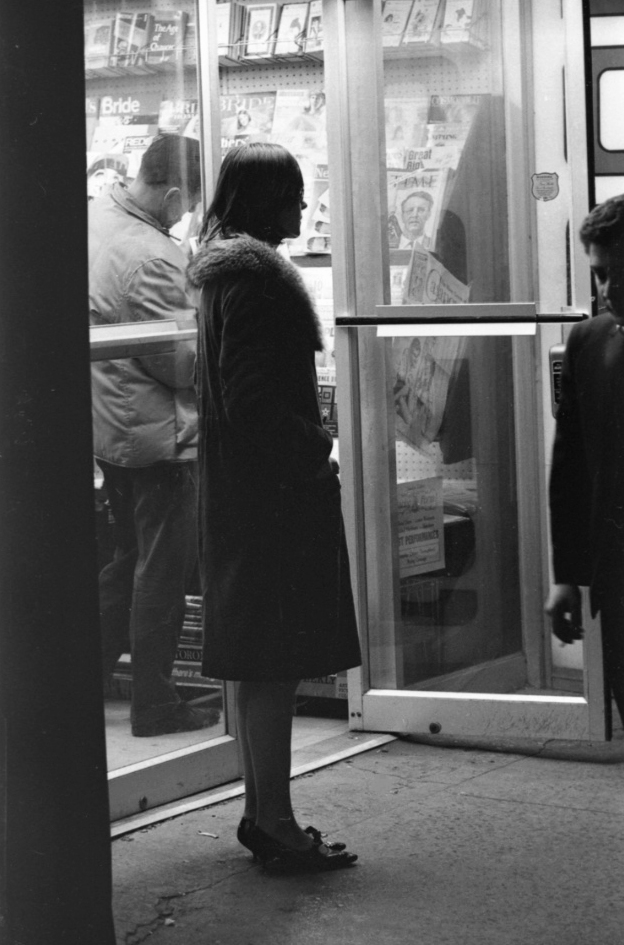
Loek also managed to photograph two young women hesitating outside the door of Times Square Books at 3291/2, Yonge. According to Toronto historian Jamie Bradburn, Times Square “serviced patrons looking for thrills in the pages of titles like French Spice, Mr. Cool, and Sizzle.” It was open 24 hours, and was known for flouting the City’s Sunday closing bylaw. The customers Loek photographed standing at the long magazine racks were, unsurprisingly, all male.
Dick Loek was know for having an engaging personality, but perhaps more important to the success of this series was his point of view as an immigrant who had only arrived in Canada three years earlier, at age 22. He portrays the Yonge Street strip of 1965 as a scene of enchantment, and the individuals he encounters there as fascinating in their ordinariness.
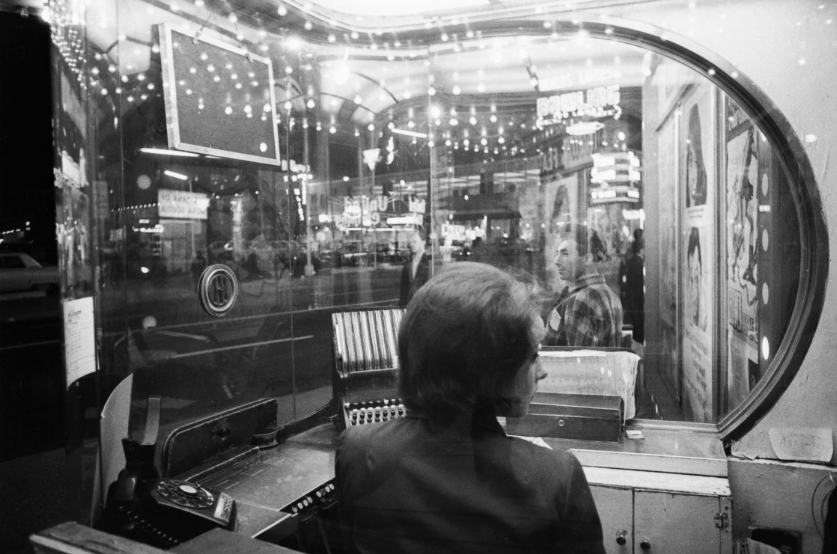
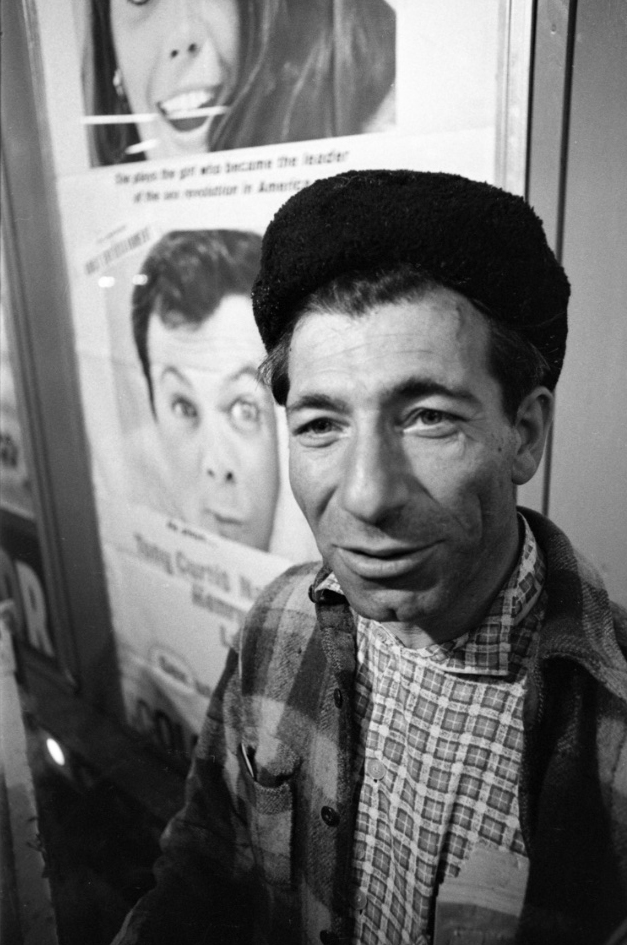
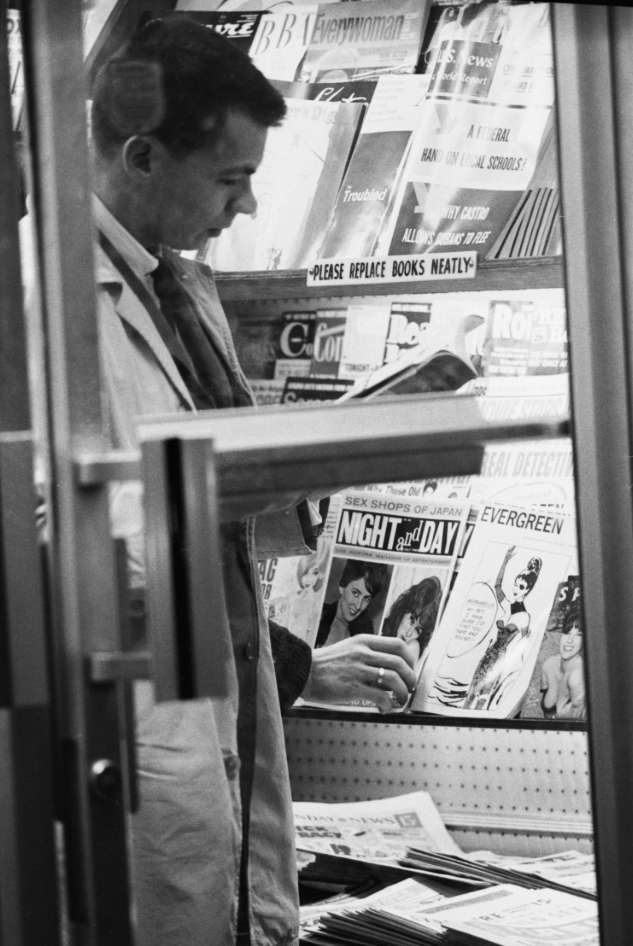
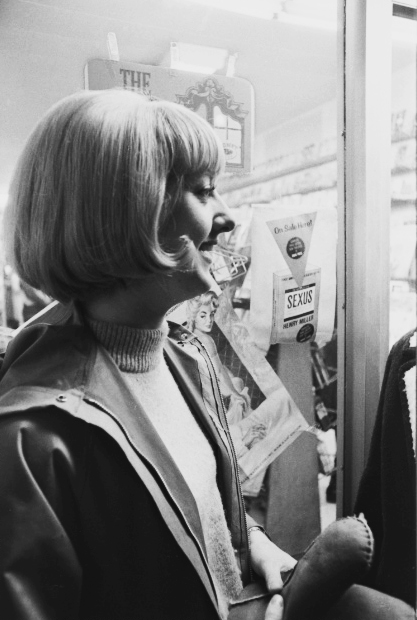
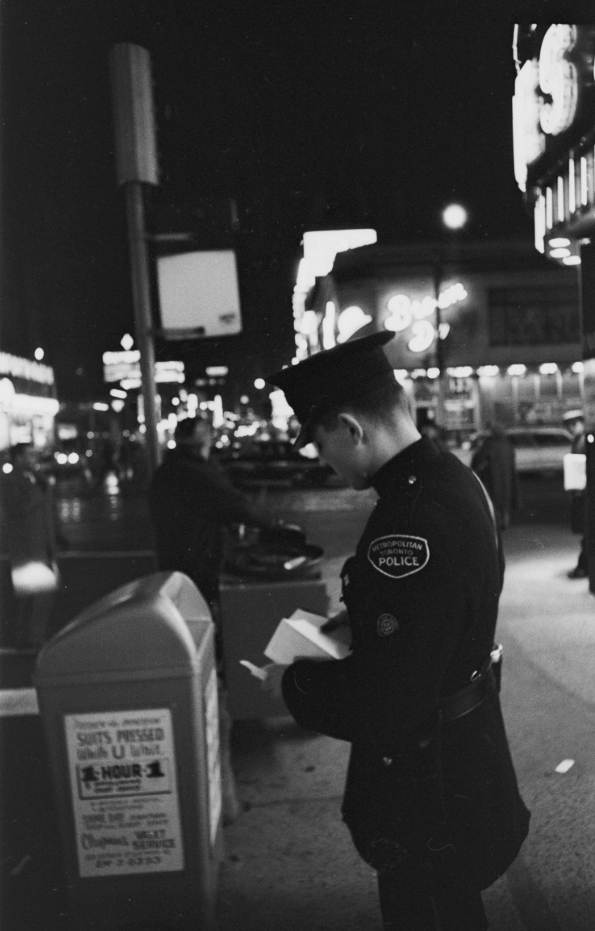
All images unless otherwise specified: Yonge Street, November 6, 1965, photographed by Dick Loek (York University Libraries, Clare Thomas Archives and Special Collections, Toronto Telegram Fonds, ASC57524).
Thank you to the York University Archives for their assistance with this project.