
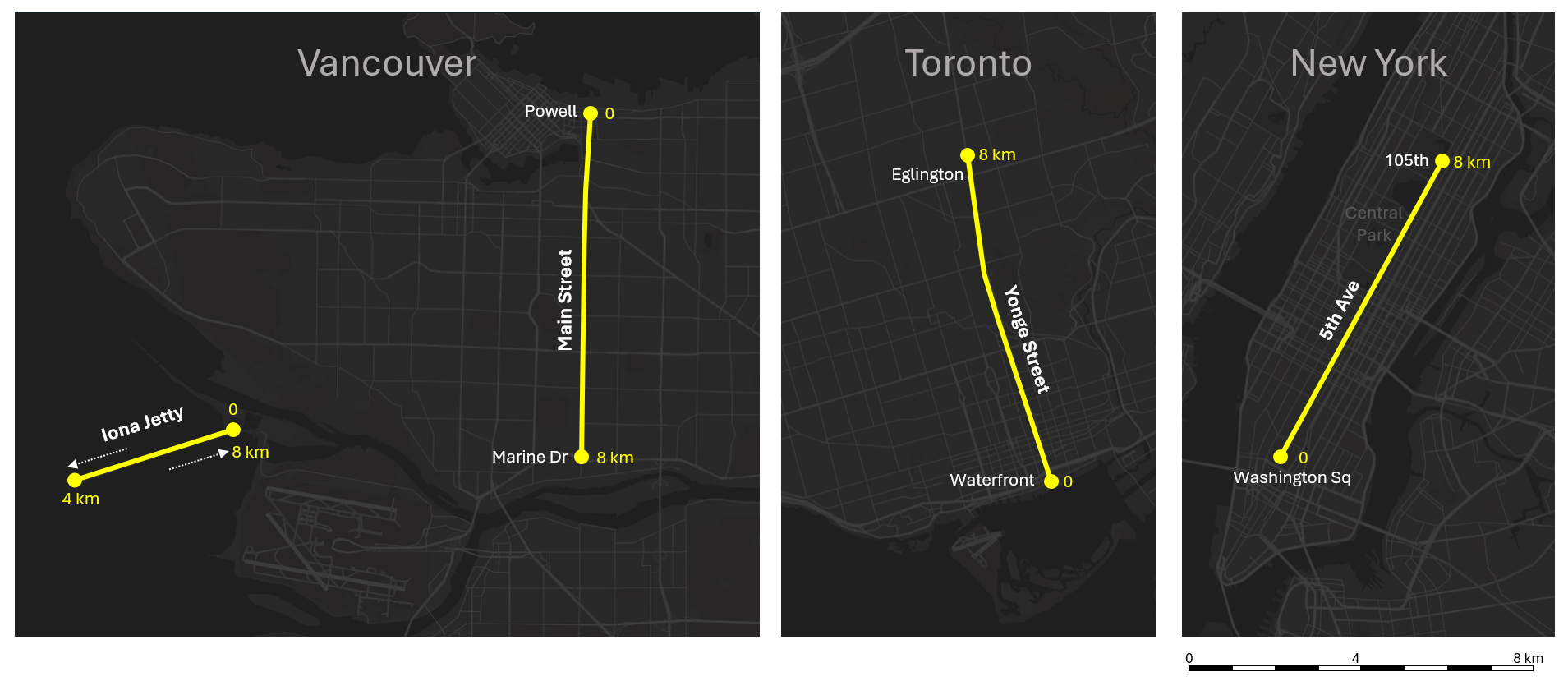
Imagine walking a hundred blocks up Fifth Avenue in Manhattan, New York, or Yonge Street from the Toronto waterfront up past Eglinton, or Main Street from Gastown to Marine Drive in Vancouver. Eight kilometres, five miles. Have you ever walked that far and not noticed the time passing?
Iona Jetty
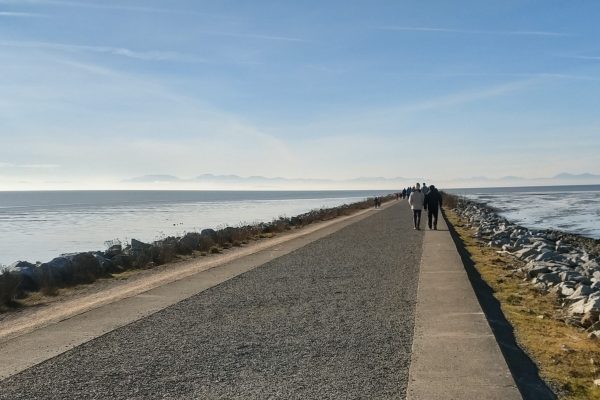
The Iona Jetty in Richmond juts 4 kilometres into the Salish Sea. A pipeline runs underneath; the path on top exists almost by accident. Walk out and back, and you have covered those eight kilometres without feeling it.
That same distance in the city means crossing arterials, traffic lights, endless micro-decisions, largely on autopilot. On the jetty, it is just water on both sides, Vancouver Island’s silhouette on the horizon straight ahead, planes descending into YVR. The terrain doesn’t change the way it does on a hike. Everything is far away and moving slowly, but constantly moving, the way it does from a ferry, and it feels like heading right into the sea. Then you reach the end, and the only option is to turn around and walk the whole way back, which somehow feels like a different walk entirely, heading towards land.
The Long Thought
Something happens when the path just keeps going. With no deviations and no navigational decisions to make, the mind shifts gear, thoughts stretch to the length of the path; an idea can run for kilometres, or as long as it needs, without breaking stride. Attention is consumed by the walk itself. The walk does the pacing; you do the thinking. The long thought needs distance and direction, and in a city, that combination is harder to find than it sounds, in contrast to nature, where trails are abundant but ask something different of you: watch your step, mind the rock, walk single file behind whoever’s ahead. The ground itself demands your attention.
Worldwide, urban stretches that offer non-stop walking can be found in different typologies: the classic shoreline walk, the converted rail line to a cycling and walking trail, the reimagined rail viaduct to a linear garden, the riverside walk below the streets of a megacity. Each one reclaimed or repurposed, spaces with a different past, made possible through vision.
What follows is a small tour of these typologies, starting in Vancouver, then Victoria, New York, Paris, and finishing in Seoul.
Seawall
Vancouver has its own well-known version of a continuous path. The Seawall runs from Coal Harbour around Stanley Park to Sunset Beach, continues around False Creek, and carries on to Kitsilano Beach, roughly 20 kilometres of walking. It gives access to the entire water’s edge of the city for everyone to enjoy.
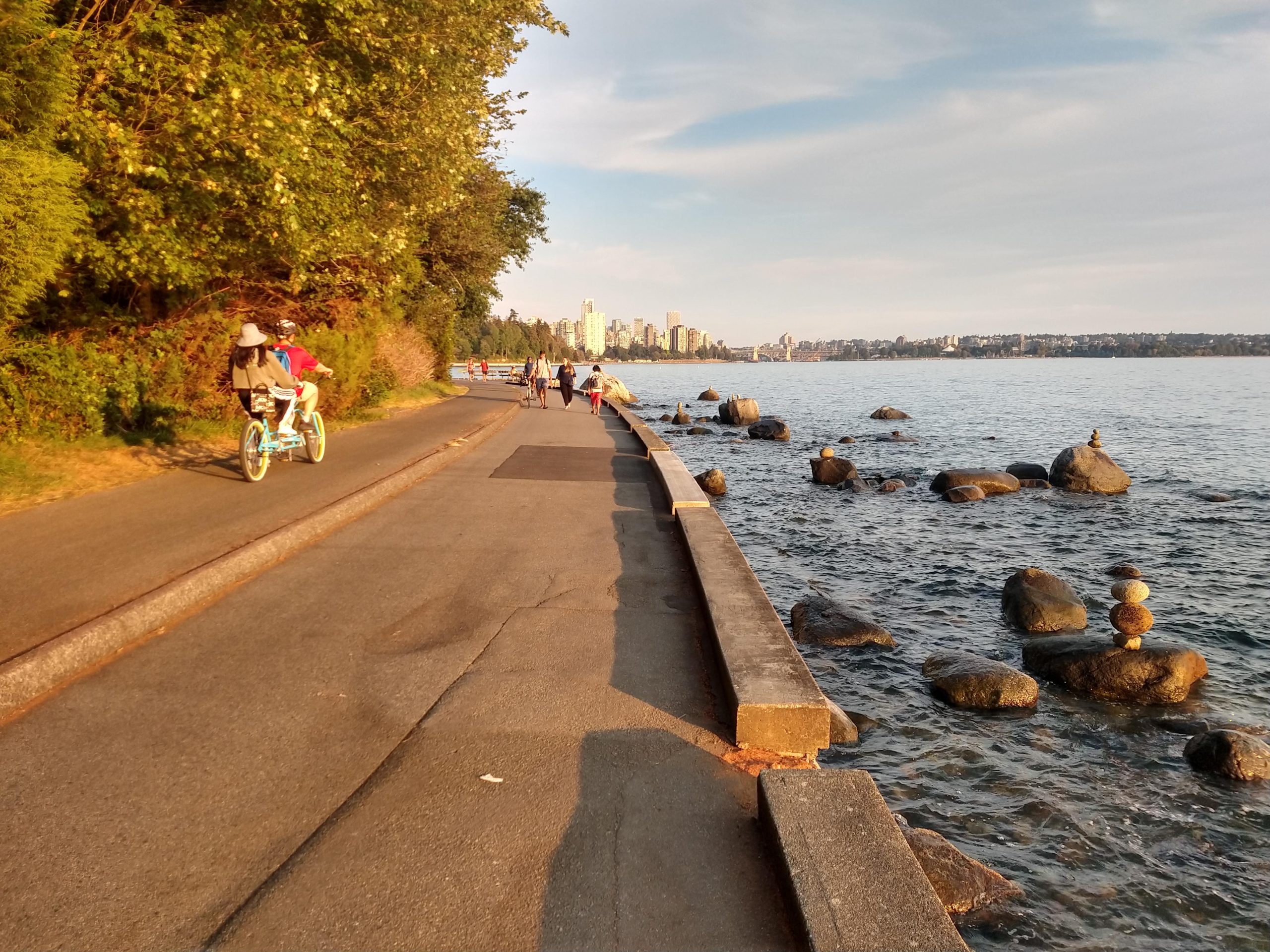
The segment holds a lesson. A pandemic-era test became permanent: bikes moved up to Beach Avenue, running along Sunset Beach and the shore of English Bay to Stanley Park, a straight, wide lane built for speed and overtaking, while the meandering path along the water was left to walkers. Bikes got the straight line; walkers kept the water.
Songhees and the Galloping Goose
In Victoria, the walk begins at the West Bay Walkway, also called the Songhees Walkway. On the Esquimalt side, where the walk begins, the boardwalk rises and drops, often by stairs, which is why there are no bikes, only walkers.
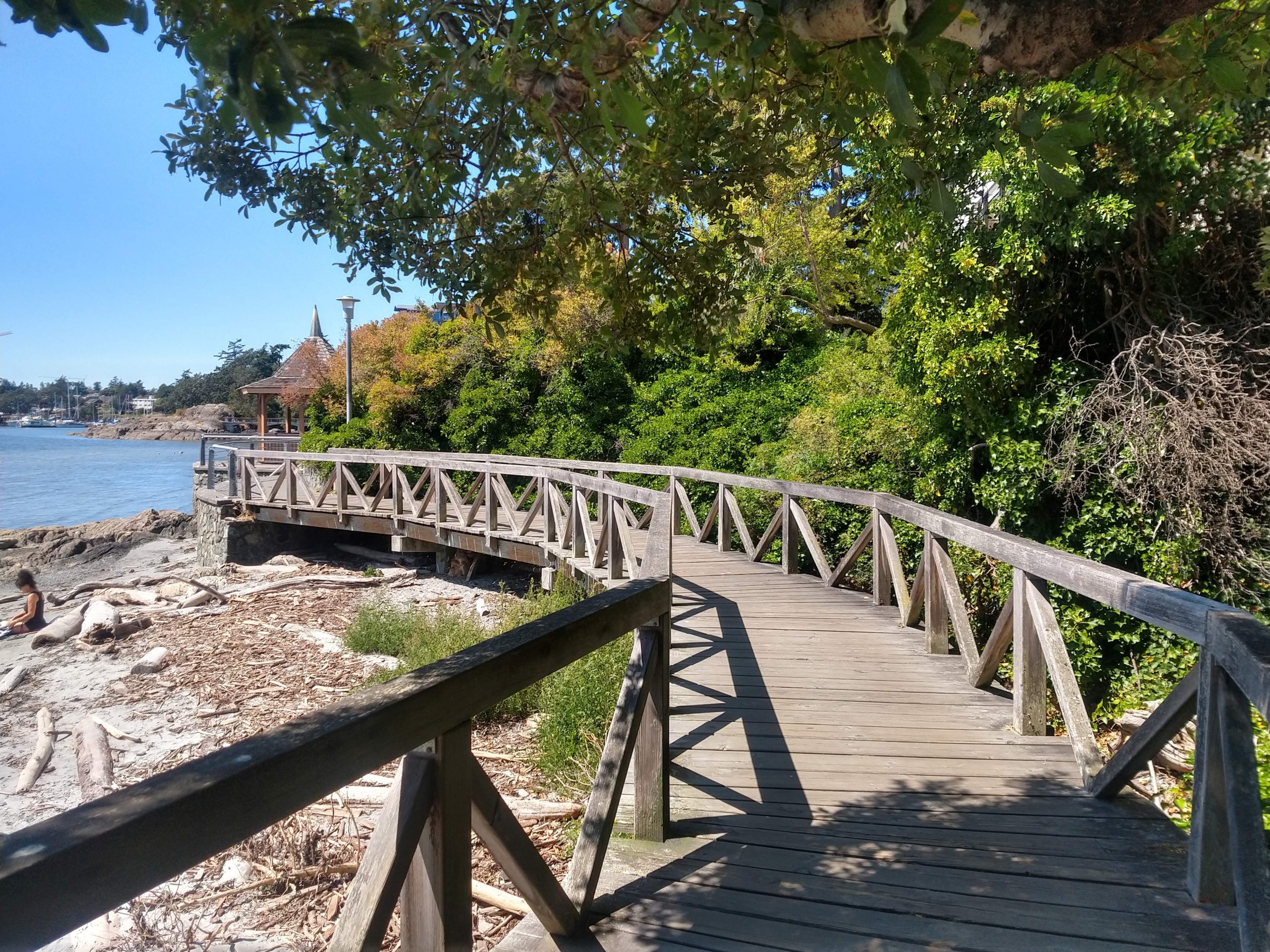
It follows the shoreline of West Bay, tracing every indentation in and out, and that is its trick: rounding each point reveals a little more, until downtown Victoria and the parliament buildings assemble themselves across the water. Floating houses sit moored to one side, harbour seaplanes lifting off and setting down beyond them. The path pulls you in the way a good film does, tension and reveal, and nothing breaks the spell.
At the harbour, the walk reaches a bridge and a choice: cross into downtown Victoria and follow the waterfront toward the parliament buildings, or stay on this side, a pedestrian bridge carrying you over the road to Harbour Road, its walkway running free of any crossing. This is what makes it uninterrupted: the one road you would have to cross, lifted over. Stay on this side, and it delivers you to the Galloping Goose Trail, a former rail line running out of the city. Two typologies, the water’s edge and the rail corridor, joined without ever stopping.
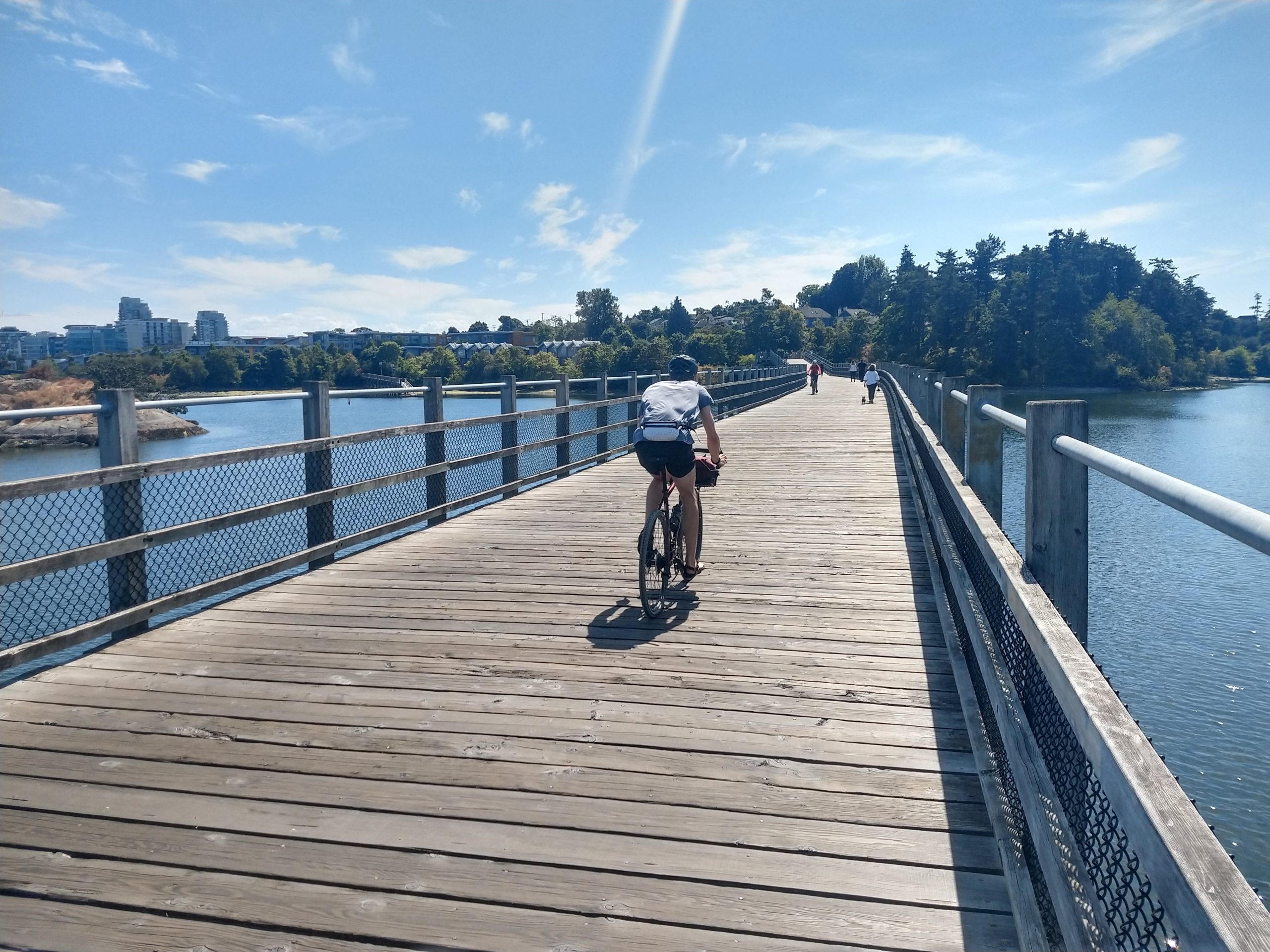
Past the Selkirk Trestle, an old wooden rail bridge across the Gorge, the path straightens and grows monotonous. A line of trees, the backs of industrial buildings, little to catch the eye. With nothing outside to hold it, attention now turns inward.
One personal memory stands out. The last time I walked it, deep in a long conversation, I tried to explain what made the day feel the way it did: variety of experiences along a path, no crossings, no decisions. The best insights landed at the stops, over a snack, on a bench facing the water. Walking side by side, wide path, unbroken stride, the conversation ran as long as the trail did.
High Line
The High Line should be the perfect case: a freight viaduct turned into a walkway through Manhattan, celebrated worldwide. It is also famously full. Millions of visitors a year on an inherently narrow rail deck, moving at the crowd’s speed. At that height and that pace, the city unfolds differently, with distractions from fellow walkers, the path itself, and the surroundings all competing for attention.
The infrastructure is uninterrupted; the walk is not.
Locals have learned the workaround, walking it early in the morning or on a cold February weekday, when the path can truly be walked non-stop start to finish, as its infrastructure allows.
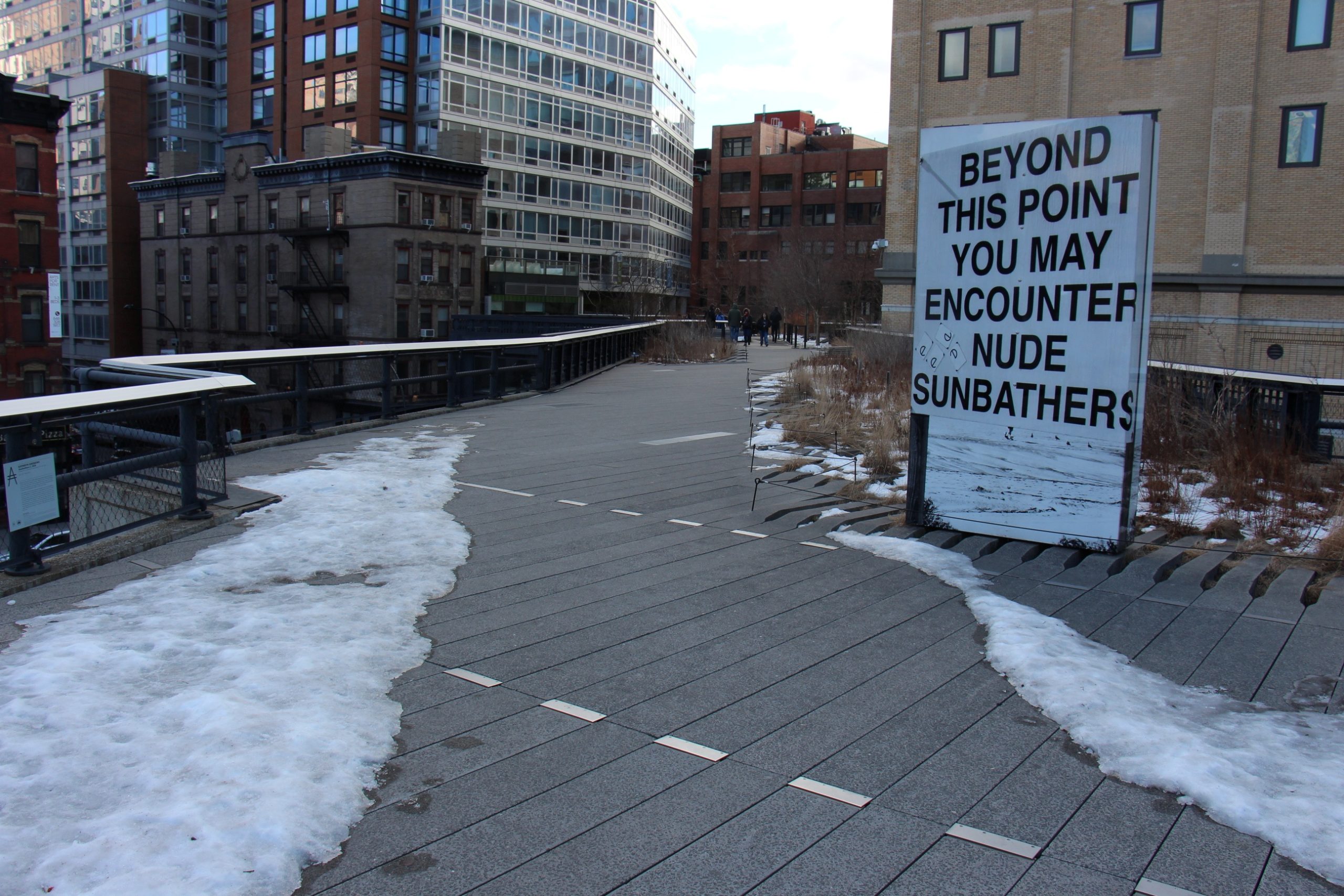
The High Line has grown since: at its northern end, the walk now passes in the shadow of Hudson Yards’ towers, a different scale of city entirely, and a new connector carries it on to Moynihan Train Hall.
Promenade Plantée
The Promenade Plantée is another rail infrastructure repurposed. Opened in Paris in 1993 on the old Vincennes line, it runs from near Bastille toward the Bois de Vincennes, a walk of shifting registers. First come elevated stretches above the 12th arrondissement, with the restored artisan arches of the Viaduc des Arts beneath, a second life the walker above never sees.
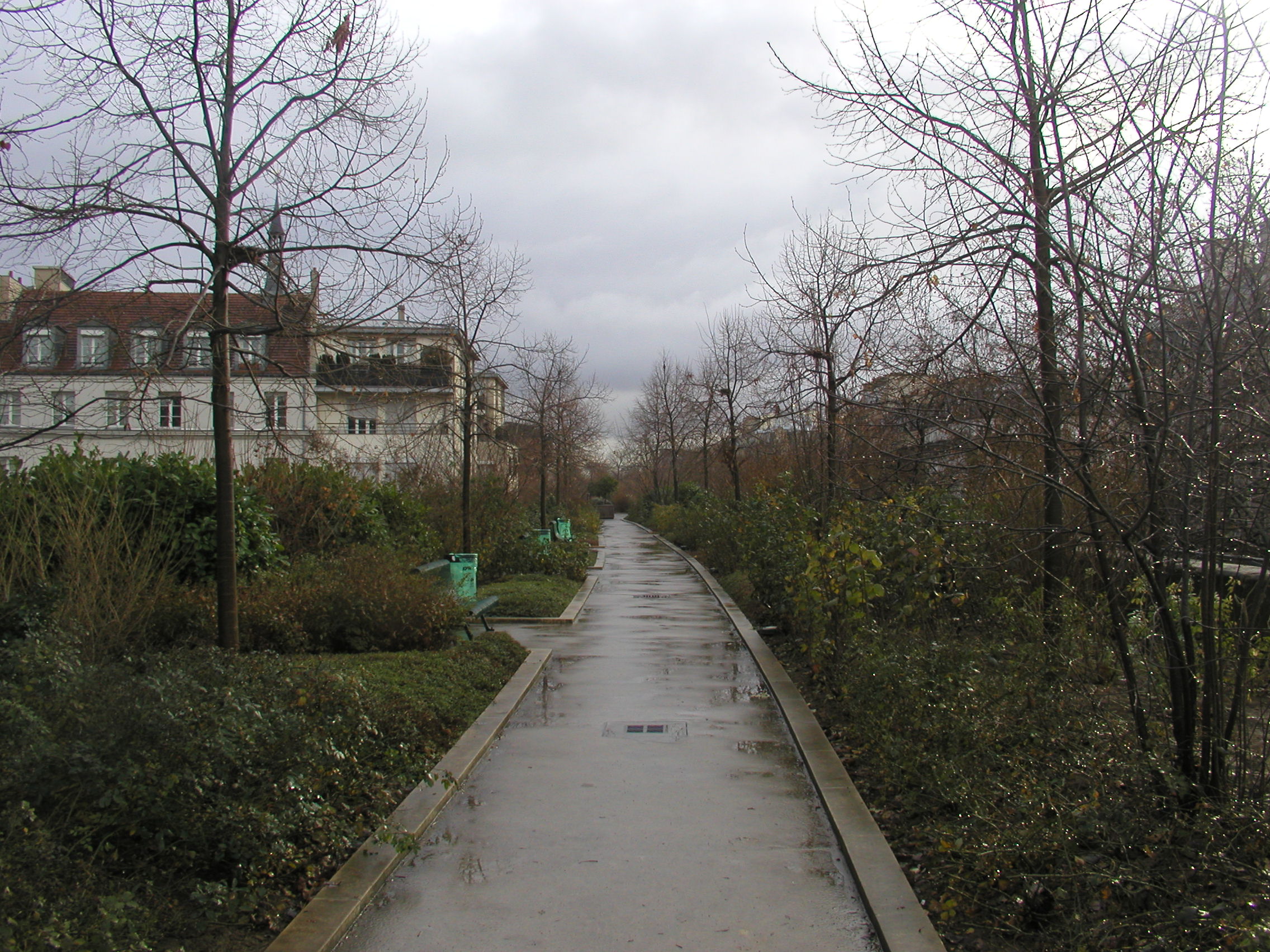
Then, a passage straight through a modern building at the fourth floor, the path cutting across the residential façade and out onto a bridge.
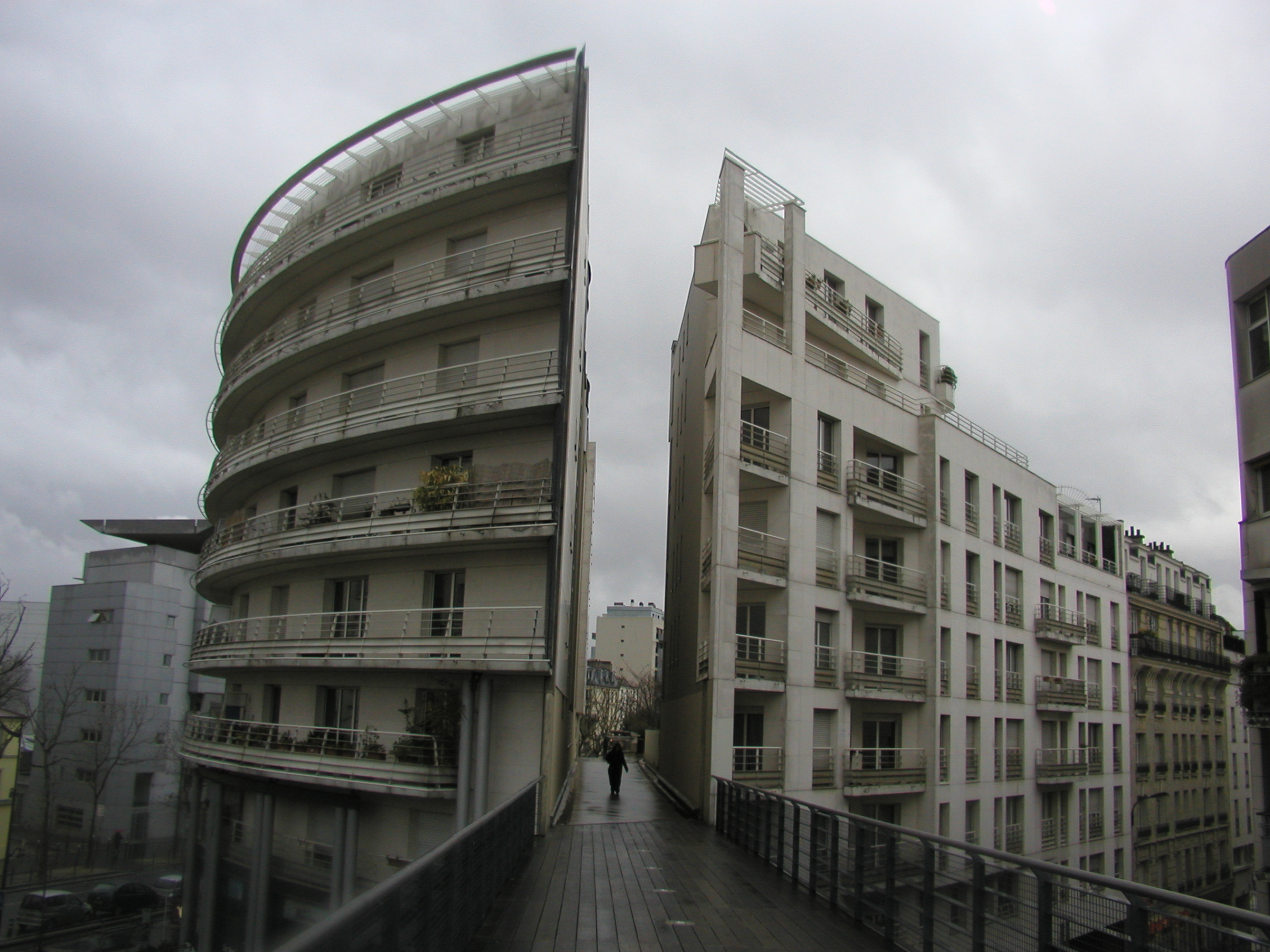
Finally, sunken trenches and tunnels where the walk feels more inward-facing. Parisians jog it before work, take lunch on it, read on its benches, push strollers along it. When Before Sunset needed a conversation to run uninterrupted through Paris, this is the path it chose. Two people walking and talking, not a glimpse of the Eiffel Tower.
The Long Thought (Reprise)
In Wanderlust, Rebecca Solnit explores how walking lets the mind connect to the body and wander into long thought. Frédéric Gros explores the philosophy of walking and the philosophers who were tireless walkers, as part of their routine. Walking is the antidote to a mind that finds it hard to finish a thought.
Carving out a stretch of distraction-free time is one of modern life’s hardest tasks. Cal Newport tells you to intentionally schedule it, deep work walled off from distraction. Uninterrupted walking offers the same idea, but only on the right route. In this case, the antidote has a spatial precondition.
Uninterrupted infrastructure comes in two forms: along the water’s edge, where the land simply ends and nothing crosses, or grade-separated, on corridors built for trains and highways that could not stop, and now carry walkers instead.
On uninterrupted paths, the body never breaks stride, no light to wait for, no scanning both directions, no stepping aside. The mind does not pause because the body does not. A thought, or a conversation, can run for kilometres, whichever one you brought with you.
Far ahead, a bench sits angled at the edge of the path, and something about its placement says it was put there for a reason, even if the reason is not visible yet. The thought has the length of the approach to finish itself, and it does. Sitting down, the reason appears. For a moment you are one with the water and the sun, immersed in the present, and the bench is just the front row seat. Moments later, this is also where a break naturally occurs, stationary, when the snack comes out, or heck, the phone.
Seoul
In Seoul, individual paths form a whole network. Along the Han River, bordered by highways on both banks, runs an endless expanse of pathways. It is possible to walk from the Han, splitting into the Jungnangcheon, bending into the Cheonggyecheon, all the way to its endpoint at Cheonggye Plaza, some 15 kilometres, hours without end.
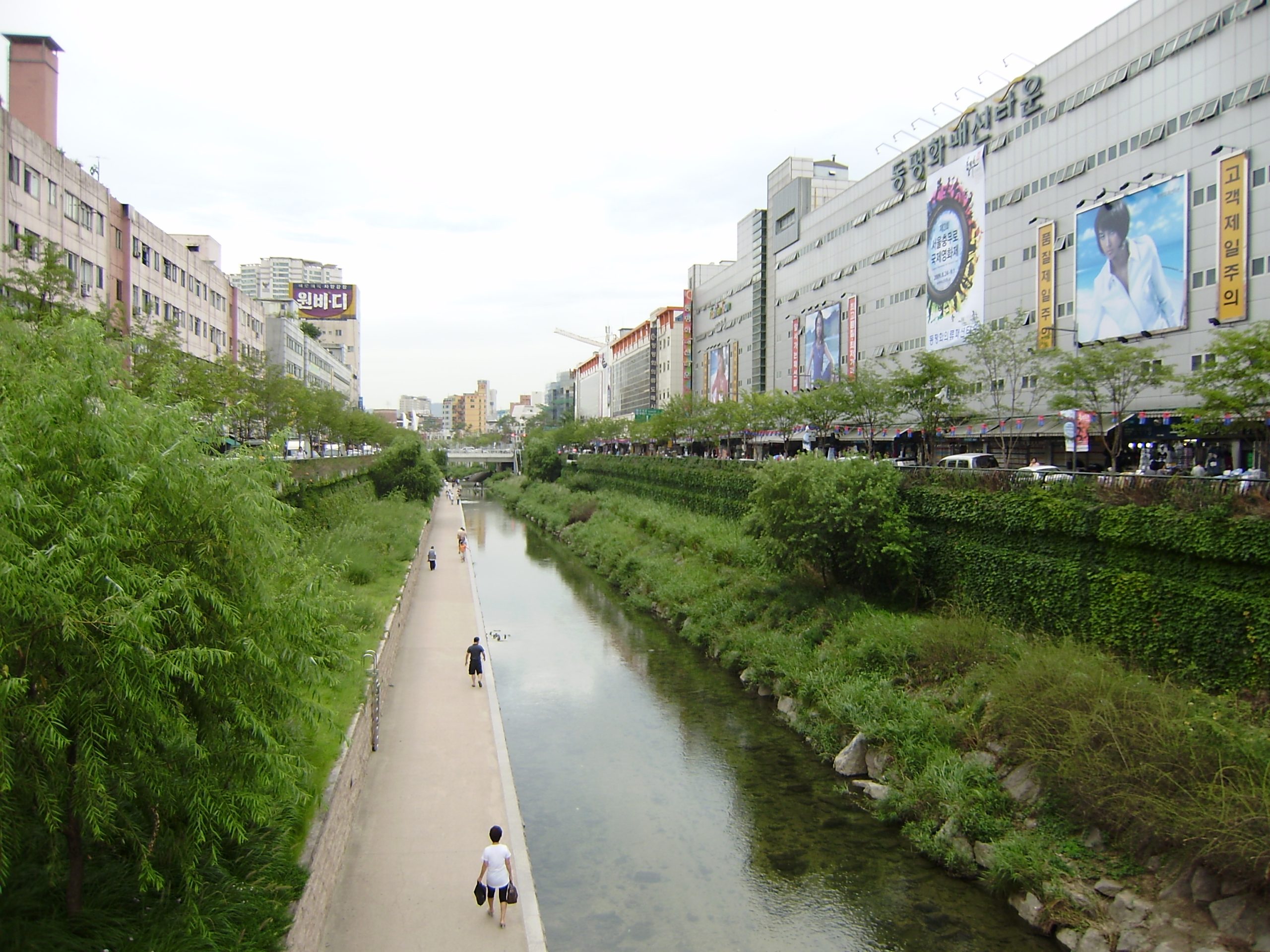
The entire route runs at water level, below the streets, including a stretch beneath an elevated highway, alongside the water. Bridges pass overhead constantly, and that is the point: every one of them would be an intersection up there. Down here they are just ceiling. Well-designed bikeways and wayfinding run alongside, and people everywhere are using the outdoor gym, or just being outside.
Seen together, the paths in this story show that in a city, an uninterrupted stretch is not a given. In nature, a trail simply continues; here, it had to be designed that way, inserted, converted, or stitched together from separate stretches into one continuous route. Cities learn from cities. Every stream uncovered, every rail line converted, hands more people the same rare thing: a stretch long enough for a thought, or a conversation, to run its course.
***
Yuval Fogelson is an urban designer, educator, and artist who loves to explore and understand cities. Based in Vancouver, his work spans the built environment, from public space transformations and tactical urbanism to mobility hub networks and digital twins. He is the founder of YF City Urbanism and paints maps as part of Yellow Future City.