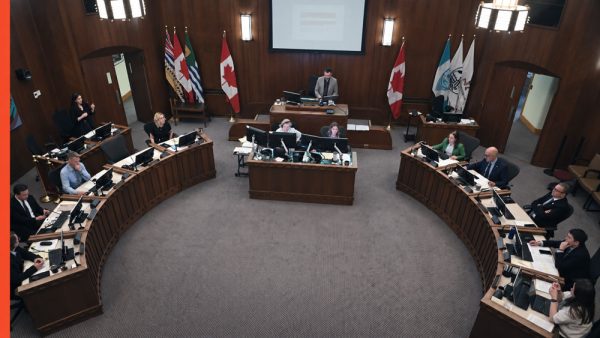

A public hearing runs late into the evening. Dozens of residents take turns speaking. Some support the proposal. Others oppose it. City staff present reports and technical analysis. Councillors ask questions. Eventually, after hours of discussion, a vote is taken.
The next morning, participants often leave with very different impressions of what happened. Some feel democracy worked exactly as intended. Others believe the outcome was predetermined. Some feel heard. Others feel ignored. Many are left wondering whether their participation mattered at all.
Increasingly, this experience captures something broader than any single hearing. Many residents care deeply about what happens in their neighbourhoods yet feel disconnected from the institutions making those decisions. Municipal politics can feel important and strangely difficult to understand.
Why?
Part of the answer lies in the growing complexity of the issues cities are being asked to address.
Historically, municipal governments emerged to manage local services: roads, water systems, sanitation, parks, and fire protection. These responsibilities were never simple, but they were generally local in scale and relatively well-defined.
Today, cities find themselves at the centre of far larger challenges. Housing affordability, homelessness, climate adaptation, transportation networks, public safety, infrastructure renewal, economic inequality, population growth, and public health all intersect within the urban environment. Municipal governments are often expected to respond to these problems even when many of their causes lie well beyond municipal authority.
Local governments are increasingly managing problems that are not local in origin. This complexity affects how decisions get made.
The Tension Between Expertise and Democracy
Modern cities rely on planners, engineers, transportation specialists, economists, lawyers, and environmental scientists whose expertise informs public policy. Large infrastructure projects, housing strategies, transportation plans, and climate initiatives require technical knowledge that few residents would be expected to possess.
But municipal government is also democratic.
Residents reasonably expect a voice in decisions that affect their neighbourhoods, public spaces, and daily lives. That expectation is legitimate—and it creates a tension that has become increasingly visible in contemporary urban politics.
Most people do not want bridges designed by public opinion polls. Nor do they want cities governed entirely by technical specialists insulated from public input. Municipal politics therefore involves a continual balancing act between expertise and democracy, efficiency and deliberation, professional judgment and public accountability.
Neither principle can simply replace the other. And finding the right balance—in any given decision, let alone across an entire city—is genuinely difficult.
This tension is often most visible during public consultation.
Participation Without Power
Over the past several decades, opportunities for public participation have expanded considerably. Open houses, workshops, surveys, advisory committees, online engagement platforms, stakeholder meetings, and public hearings accompany many major civic decisions. By almost any measure, there are more formal opportunities to participate than there were a generation ago.
Yet despite those expanded opportunities, many residents can still feel that their participation has little influence over the eventual outcome.
How can that be?
One explanation is that participation and power are not the same thing. Being informed about a decision is not the same as shaping it. Attending a public meeting does not guarantee a preferred outcome. Offering feedback does not mean decision-makers will agree.
Municipal governments routinely gather public input while also balancing legal requirements, financial constraints, technical analysis, provincial legislation, and broader policy objectives. The process can be sincere and still produce outcomes that differ significantly from what participants hoped for.
When Consultation Happens—and Why Timing Matters
Part of what generates that frustration is structural. It has to do with when public participation occurs in the process.
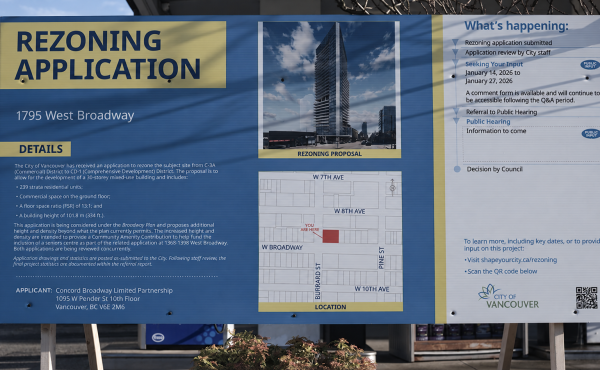
By the time many residents encounter a proposal—through a development sign, a public notice, an open house, or a news article—it may already have been shaped by months of work. The site is established. A development concept has emerged. Questions of massing, unit count, height, street relationship, and mix of uses may already have been explored through pre-application work and discussions between applicants and city staff, largely outside public view.
What remains open to influence at the consultation stage varies considerably from project to project. In some cases, public input can contribute to meaningful changes. In others, the range of realistic changes may already be narrower. Details such as landscaping, ground-floor uses, public-realm treatment, or access may remain in play even when the project’s larger parameters are more established.
This does not make those details trivial. But it helps explain why residents and municipal institutions can enter the same consultation process with very different expectations about what participation is supposed to accomplish.
Formal decision-making can compound this frustration.
By the time a project reaches council, staff may already have completed extensive analysis and issued a recommendation. Councillors have access to staff reports and other information before making their decision. A hearing or other public input may still influence the outcome, but it occurs within a process in which substantial analytical and policy work has already taken place.
This is not necessarily a sign of bad faith. Staff recommendations reflect technical analysis and policy considerations. Councillors are expected to weigh that expertise alongside public input, provincial law, financial realities, and broader policy objectives.
But from a resident’s perspective, participation that arrives after a proposal has already taken substantial shape can feel less like influence and more like notification dressed up as engagement.
The gap between those two things—influence and notification—is where much of the frustration in municipal politics originates. Participation inevitably raises expectations. When outcomes diverge from what people hoped for, disappointment can follow—sometimes shading into deeper distrust of the process itself.
This dynamic has become particularly pronounced in debates over housing and growth.
The problem is compounded by changing provincial rules. In recent years, provincial intervention in housing policy has altered approval processes, changed when public hearings can be held, established housing targets, and expanded provincial influence over local land-use decisions. In some cases, decisions or processes that residents once associated primarily with city council are now more directly constrained by provincial rules.
Supporters argue these interventions are necessary to address housing shortages and overcome barriers to new construction. Critics worry about what such changes mean for local autonomy and democratic participation. Regardless of one’s position, they have made it more difficult for many residents to understand where decisions are actually being made—and who is ultimately responsible for them.
Responsibility has become distributed across multiple layers of government. That distribution is not always visible. And when responsibility is difficult to see, accountability can become difficult to trace.
How the Story Gets Told
At the same time, the way municipal politics is discussed has changed.
Most local government issues are complex. A housing proposal may involve planning policy, infrastructure capacity, transportation systems, financial feasibility, environmental objectives, provincial legislation, and neighbourhood concerns—simultaneously. Balancing those considerations is slow, often technical work.
Public debate tends to favour simpler narratives. News coverage often emphasizes conflict because conflict is easier to communicate than process. Social media encourages rapid reactions rather than careful deliberation. Complex policy discussions can be reduced to slogans, personalities, or binary choices.
As a result, residents frequently encounter municipal politics through moments of controversy rather than through the slower, less visible processes that shape most decisions. The hearing, the confrontation, the vote—these become the story, while the months of technical review, negotiation, and policy interpretation that preceded them receive far less attention.
This can produce a growing sense of opacity.
When systems are difficult to follow, responsibility becomes hard to trace. When outcomes are disappointing, it can be genuinely unclear whether the cause lies with city council, provincial legislation, financial constraints, technical realities, or broader economic forces.
In that environment, frustration can easily redirect itself toward institutions as a whole.
What This Means for Participation
Low voter turnout may be one consequence. Municipal elections typically attract fewer voters than provincial or federal elections, despite the fact that local governments make decisions that directly shape neighbourhoods, public spaces, transportation systems, and housing.
But turnout alone can’t tell us why people do or do not participate. What it does underscore is the broader challenge this series has been exploring: municipal government can be consequential in everyday life while remaining difficult for many residents to understand and navigate.
Despite these frustrations, municipal government remains one of the most important arenas of democratic life. Cities are where abstract policy becomes physical reality—where housing is built, streets are redesigned, parks are created, infrastructure is maintained, and competing visions of urban life are negotiated.
The tensions people experience are not necessarily signs that municipal government is failing. In many cases, they reflect the fact that cities are being asked to reconcile goals that are difficult to reconcile: growth and stability, affordability and neighbourhood change, expertise and participation, efficiency and deliberation, regional needs and local priorities.
Municipal politics often feels broken because these tensions rarely have permanent solutions. They must be managed continuously as cities evolve and circumstances change.
Understanding those tensions does not eliminate disagreement. But it can help explain why municipal politics sometimes feels simultaneously frustrating, essential, and deeply consequential.
Next in the Series: Part 6 considers what civic literacy means in practice—and why understanding how the city works may be one of the most important forms of democratic participation available to us.
All the articles in the City Primer series:
- City Primer — Part 1: What Is Municipal Government?
- City Primer — Part 2: How Cities Actually Make Decisions
- City Primer — Part 3: Why Housing Dominates Municipal Politics
- City Primer — Part 4: Why Cities Are Always Short of Money
- City Primer — Part 5: Why Municipal Politics Feels So Broken
- City Primer — Part 6: Why Civic Literacy Matters
***
Erick Villagomez is the Editor-in-Chief at Spacing Vancouver and teaches at UBC’s School of Community and Regional Planning. He is also the author of The Laws of Settlements: 54 Laws Underlying Settlements Across Scale and Culture. This series is part of an ongoing effort to make urban governance and city-building more accessible to a broader public audience.