At the beginning of September, as Toronto’s municipal election began ramping up, the city was hit with another 100-year storm. It was the fourth such storm in the past 15 years.
In parts of the city, golf ball-sized hail damaged roofs and dented cars. Heavy rain flooded streets and basements. Extreme winds toppled mature trees, smashing homes, cars, and hydro wires. One out of every twelve Toronto Hydro customers lost power. Rogers Stadium in Downsview was severely damaged and will be closed until next year.
After a summer of heatwaves, wildfire smoke, and torrential storms, you would think that the candidates running for mayor would be climbing over one another, trying to outflank each other on environment and climate. In council races, we are seeing local candidates in open wards battling over who has the strongest environmental record. But the words ‘environment’ and ‘climate’ have been largely absent in the race for mayor.
What’s behind this strange paralysis? Environment and climate action has been widely supported across Toronto’s political spectrum — despite some online rage-baiting. Under Mayor John Tory, council unanimously declared a climate emergency and passed a climate plan that would bring the city’s 2040 emissions down to net zero.
But in this election, the Toronto Environmental Alliance’s environmental survey results are more polarized than ever. One candidate (Mayor Olivia Chow) committed to every key priority. The other, Councillor Brad Bradford, was completely unresponsive. In past years, most candidates have responded to our surveys, even if it was to say ‘no thank you.’ Cycle Toronto, TTCriders, and the tenant advocacy organization Toronto ACORN received similar outcomes to their mayoral survey requests.
The radio silence on our city’s biggest environmental priorities from half the major candidates for mayor is not normal, and should be ringing alarm bells. Whoever is elected will be leading our city through countless extreme weather events, and we need to know how they plan to protect us. Council will also be facing big decisions on AI data centres, a maximum temperature bylaw, incineration and handling Toronto’s waste, and moving forward key planks in our climate plan. Voters deserve to know where these candidates stand.
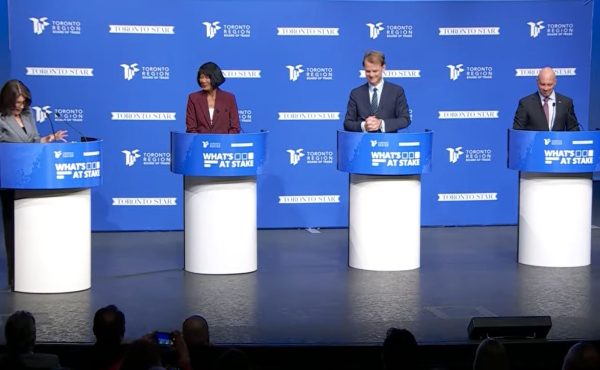
The good news is that many environmental issues are hidden in plain sight. During the mayoral debate at the Toronto Region Board of Trade, there was no apparent mention of the word “climate.” But the candidates faced questions about AI data centres, transit, and their favourite tree. These issues all have a huge impact on making our city greener, even if some of them get labelled as debates about the economy, development, or traffic congestion.
Perhaps we’ve entered an era when environmental issues aren’t identified as environmental, even though they clearly are. With Torontonians trying their best to get through an affordability crisis, the trade war, and rampent political polarization, many view traditional environmental priorities as being far away. All the while, they still start conversations with “wow, what about this crazy weather we’re having?”
That’s why TEA’s candidate survey focused on a few key areas that will show up directly in people’s lives next term. Let’s break these down.
Extreme heat protection
With climate change bringing more extreme heatwaves and floods, this next council will need to protect Torontonians from these dangers. Europe’s heatwaves this summer killed an estimated 35,000 people. And experience from BC’s 2021 heat dome shows that the majority of fatalities occur indoors — too often in victims’ own homes.
Some tenants in high-rise buildings are particularly vulnerable, and have been calling for a bylaw to set a maximum temperature in rental units of 26 degrees to help them stay safe. Council has requested a draft bylaw before summer 2027, so we asked candidates whether they will vote for it if elected.
Funding trees and shade
Trees are some of the most cost-effective tools we have to cool our streets and homes, especially in dense cities where large patches of pavement can cause temperatures to soar. But local data shows that many low-income neighbourhoods are measurably hotter with less access to shade.
Toronto is aiming to increase its tree canopy from 28% now to 40% by 2050. But every year we have to fight for funding to make sure trees are planted and cared for – and that these trees don’t just end up crammed into neighbourhoods that already have more access to shade and green spaces. That’s why we asked candidates to commit to voting at budget time to fund planting more trees in hot neighbourhoods.
Reducing waste from single-use disposables
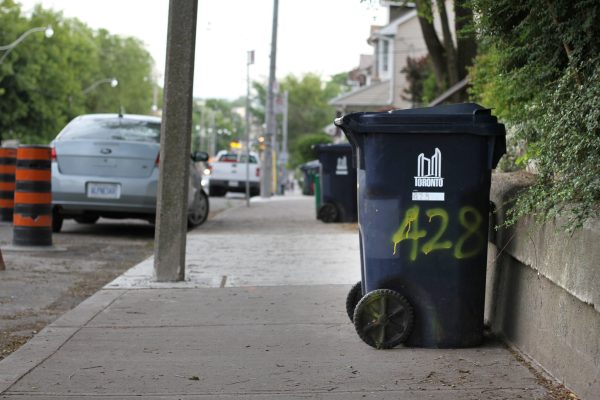
We’ve all noticed more single-use coffee cups and takeout containers spilling out of garbage bins along Toronto’s streets. It turns out fixing this problem could also significantly cut down the amount of waste getting sent to landfills or burned in toxic incinerators.
TEA has advocated for many years to get the City to adopt a Single-Use Reduction bylaw to cut growing waste from plastics and other disposables, which happened in 2021. But the second stage of this plan, with impactful measures to cut single-use waste from large events and support reusables in restaurants, has been delayed and needs strong champions at City Hall. We asked candidates to commit to moving this strategy forward.
Pausing and assessing AI data centres
AI data centres are already being proposed and built in Toronto. However, the environmental impacts of large AI data centres remain unclear, including electricity use, water consumption, fossil fuel emissions, rising local temperatures, and air and noise pollution. City Council requested that staff develop a framework to assess the impacts of these facilities on communities, the environment, and jobs, but this isn’t expected until 2027.
We asked candidates to commit to following Oakville and Mississauga’s approach and pause new approvals for large AI data centres while the City develops and adopts a policy that guarantees strong environmental protections and community benefits, including good local jobs and community investment.
Greening buildings
More than half of Toronto’s carbon footprint comes from existing buildings. City staff have spent years developing new standards and programs to gradually cut emissions from large buildings and make them more energy efficient and climate resilient. These programs will be even more critical now that Ontario premier Doug Ford has cancelled the award-winning Toronto Green Standard and Toronto’s Green Roof bylaw as the impacts of climate change are escalating. That’s why we asked candidates to commit to supporting new policies and programs to cut emissions from buildings and make them more energy efficient.
Moving forward
Municipal governments play some of the most important roles in protecting the environment. They the most control over buildings, transportation, trees, and waste. And while candidates haven’t been using the phrase ‘environment’ much in this campaign, it doesn’t change the fact that these environmental realities have a significant impact on Torontonians.
How-Sen Chong is the climate campaigner at Toronto Environmental Alliance. Born and raised in Etobicoke, he’s been a climate justice advocate for over two decades.