“What hasn’t changed in the last 50 years? The CN Tower” – Steve Nash
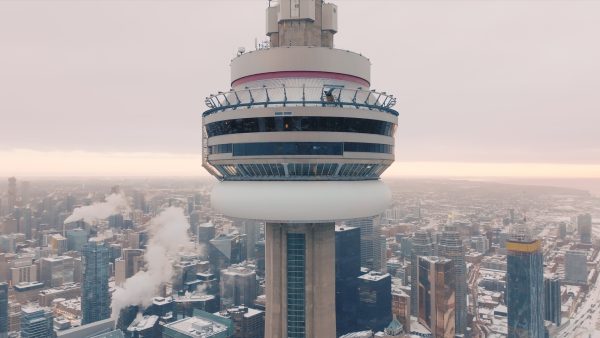
The CN Tower has sat on Toronto’s skyline for as long as I can remember. Although I’ve only lived in Toronto for about four years, my image of Toronto cannot exist without the CN Tower looming above the city.
Yet, there was a time when the CN Tower itself didn’t exist.
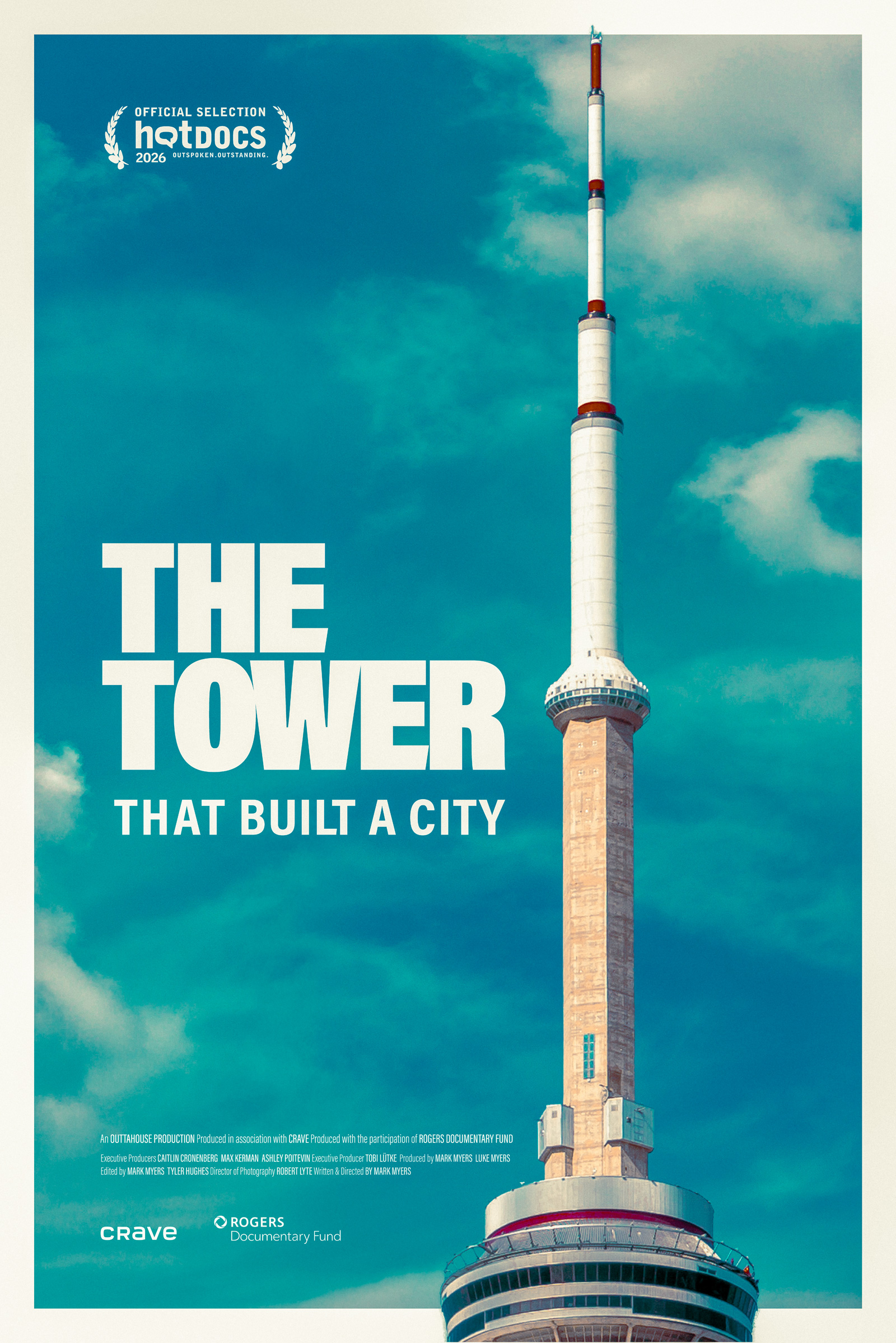
For the CN Tower’s 50th anniversary, Director Mark Myers released his documentary film The Tower That Built a City to commemorate this iconic Toronto monument. I attended one of the film’s screenings during the Architecture and Design Film Festival (ADFF) at the TIFF Lightbox, and interviewed him afterwards.
“I looked at the tower like a character, and I felt like it went through its own journey …. As a kid, I was fascinated by the CN Tower … but then for whatever reason, I leaned away from it,” Myers said. “So when I feel like it lost that title of the [tallest tower, there] was a bit of a rebirth to it. To me, the tower had this overarching character journey that I was interested in explaining.”
In the late sixties, the Metro Centre plan was proposed to develop over 200 acres of waterfront property. Included in that plan was the construction of the CN Tower — whose primary purpose would be to serve as a telecommunications tower that could transmit UHF and FM signals for radio and television broadcast. In the end, the CN Tower would be the only building completed out of the entire project, following the cancellation of the Metro Centre.
The film’s first act explains the process of construction of what was for many years (up to 2007) the world’s tallest tower. Slipforms were engineered frameworks that allowed for a constant pouring of concrete throughout the week, but construction took a break over the weekends. If you view the tower today you are able to notice the “Friday Lines” segmented across the tower’s concrete frame. These marks on the tower are accidental visual indicators for the periods of which concrete dried, and work came to a halt over the weekend.
To tell this origin story, Myers needed to find footage of the tower’s earliest days, a task which brought him to WZMH Architects, one of the original firms behind the project. Granted access to open up the firm’s archives, Myers uncovered the rare footage that makes up much of the film’s first half. Included in that footage is the dangerous removal of the tower’s construction crane, where the Sikorsky Skycrane helicopter “Olga” just barely brought the crane back to the ground before running out of fuel.
While the archival material mapped out the physical construction, Myers needed firsthand voices to bring the tower to life. Starting with Ned Baldwin, the head architect of the CN Tower, Myers reached out to a wide range of people for the documentary. Figures such as David Crombie, Joe Carter, and Steve Nash help give insight into the historical context. Crombie explains that in the midst of the Vietnam war, “while the rest of American cities were being burned and hollowed out, [Toronto] was the opposite. We were touted as a city that works.”
Yet, one sorrowful interview shows that the construction of the CN Tower did not come without cost. During a windy day at the CN Tower construction site, a rogue piece of plywood struck construction inspector Jack Ashton in the head, killing him. Ashton was a father of five when he passed. “When we go down there, it’s like we’re visiting him,” says the man’s daughter, Holly Ashton as she holds back tears. “A tombstone,” adds his son Freeman, “that’s how I feel about [the CN Tower].”
Gathering these varied interviews was a process that took years. “There’s a false sense that I can interview whomever I want. The reality is that’s not the case. I wanted Vince Carter in the doc, so I tried for two or three years. I wanted Drake in the doc.” explained Myers. “The request happens in year one while making the doc, and then you request again.” Even without every celebrity on his wishlist, the interviews that Myers did secure give the documentary its emotional core.
Walking out of the screening at night, I could easily see the CN Tower from the intersection of King and John, lit up by an array of lights. For the longest time, the CN Tower was just an impressive piece of architecture that I never really felt a personal connection to. However, the film made me realize that the tower is much more than concrete. The film traces how an iconic piece of broadcast infrastructure helped propel Toronto from a city searching for its identity into a spotlight on the world stage, with the CN Tower providing a symbolic backdrop for Toronto’s defining cultural moments, from the Blue Jays’ 1992 World Series and Raptors 2019 Championship to the global rise of Canadian films and artists like Drake. The Tower that Built a City made me feel a sense of pride to be able to call Toronto home.
For more information on the the history and construction of the CN Tower, be sure to read Jamie Bradburn’s article “Birth of a Landmark” in issue #76 of Spacing magazine, on store shelves now.
The film The Tower that Built a City will be available on Crave in January, date to be announced. The film will also be presented at the remaining ADFFs in Delhi, Chicago, and Detroit.
Images courtesy of the Architecture and Design Film Festival