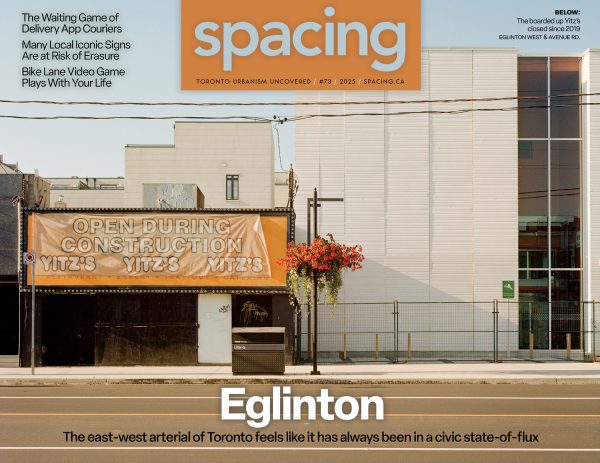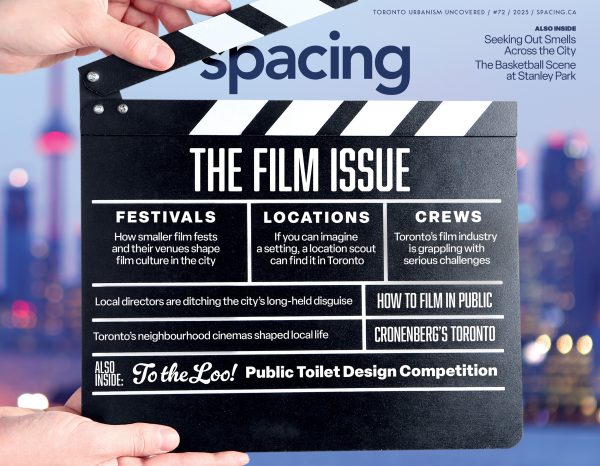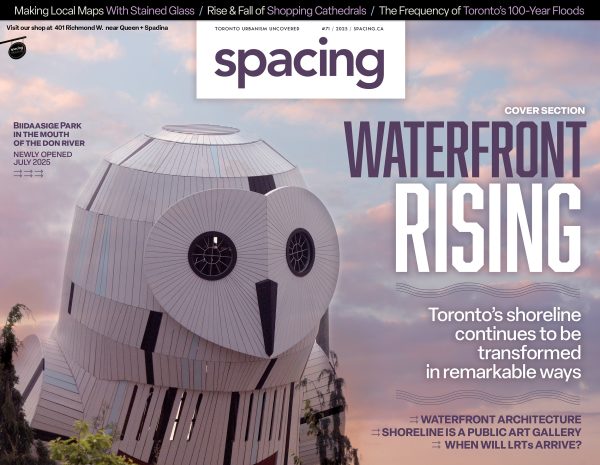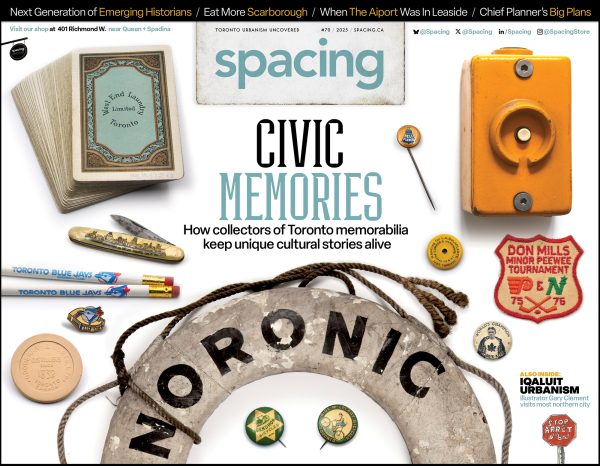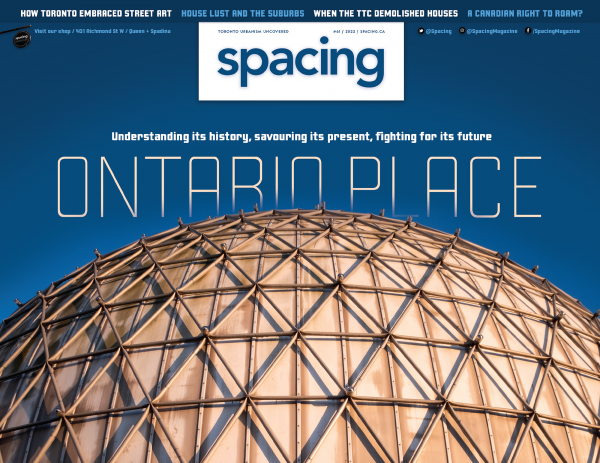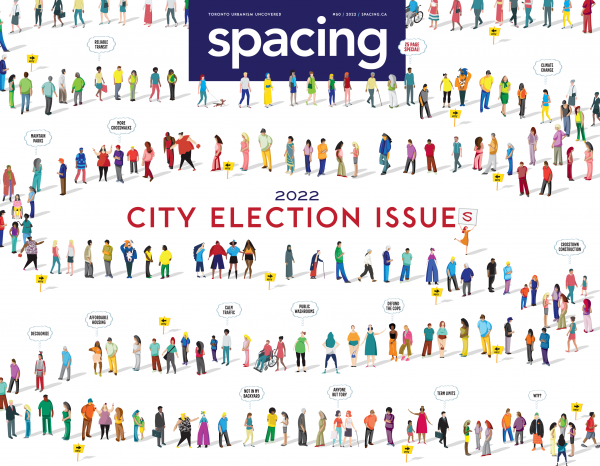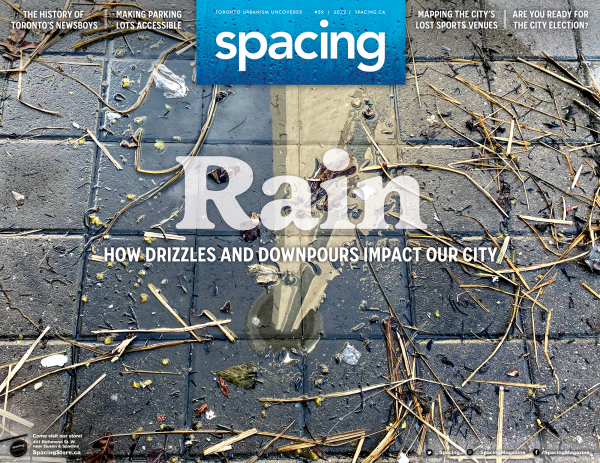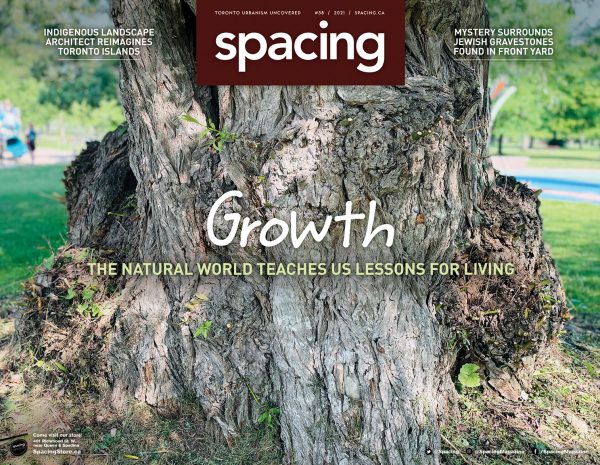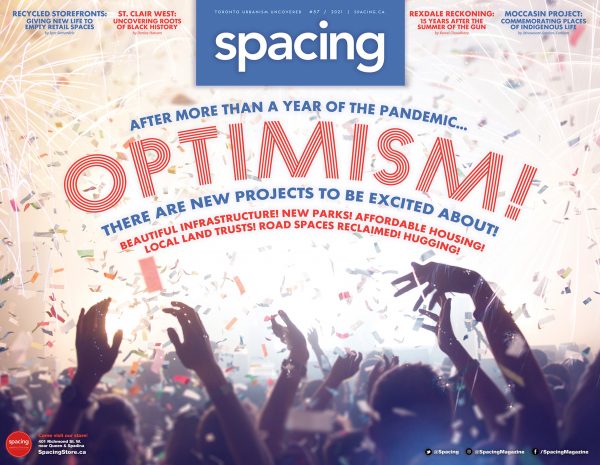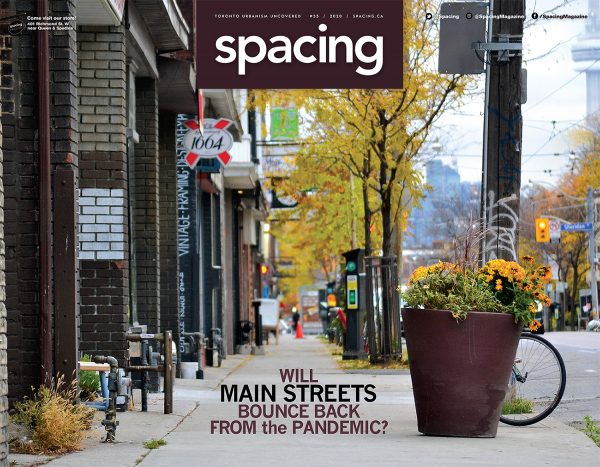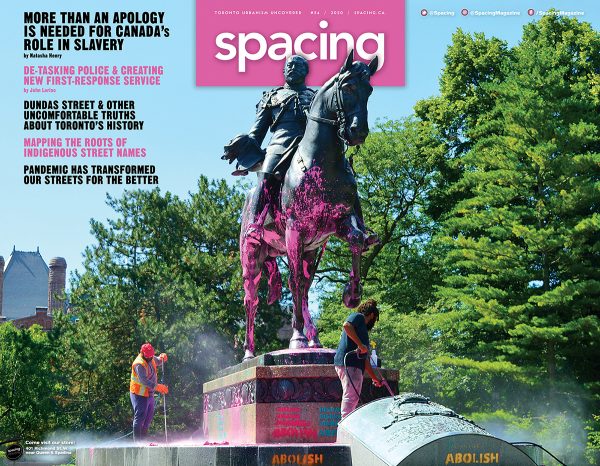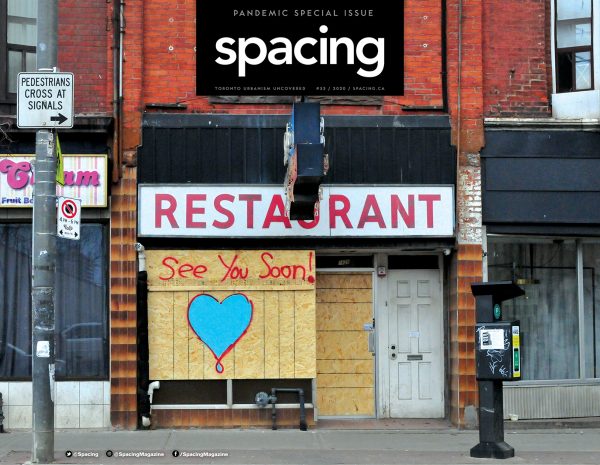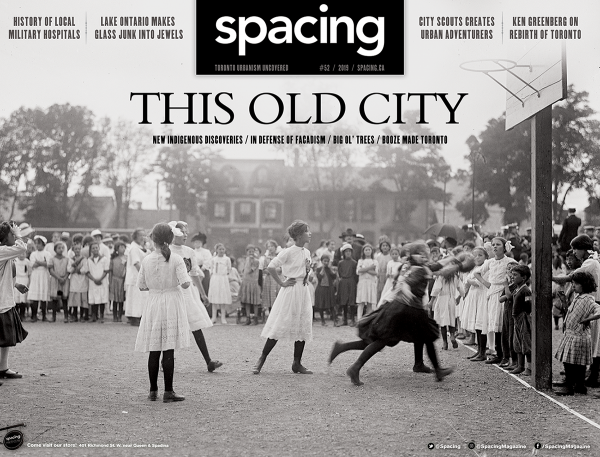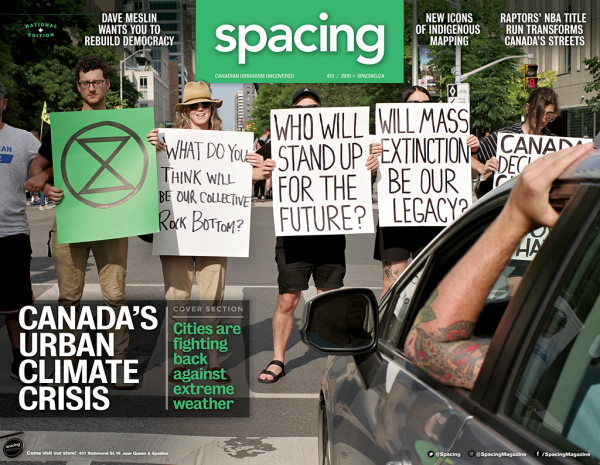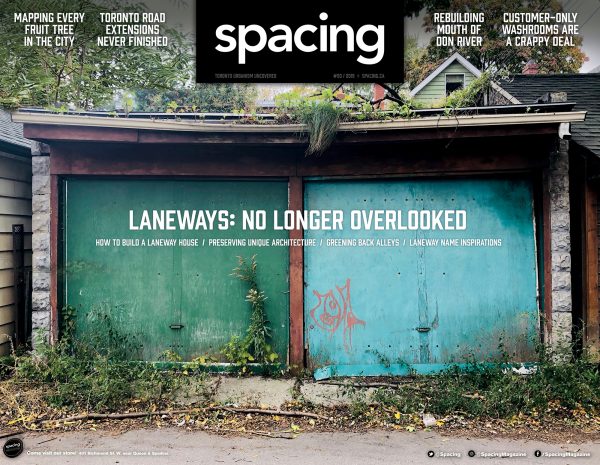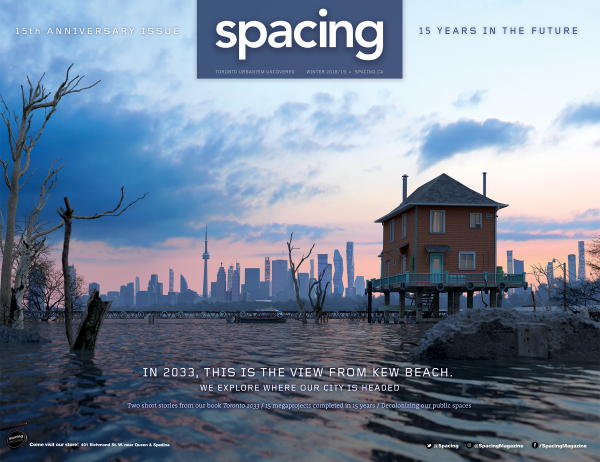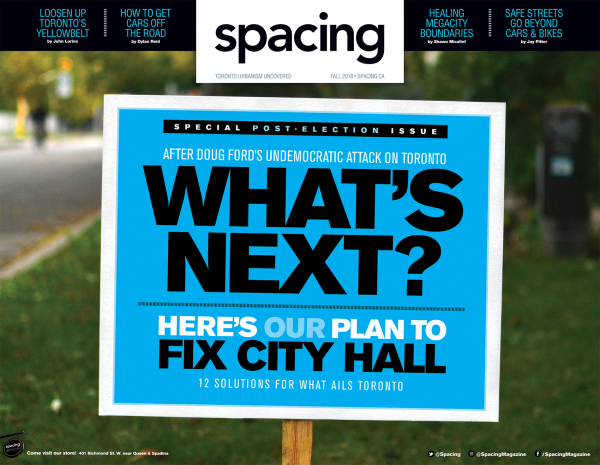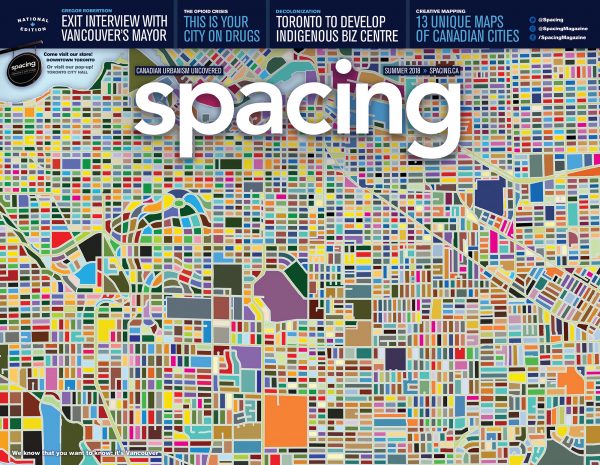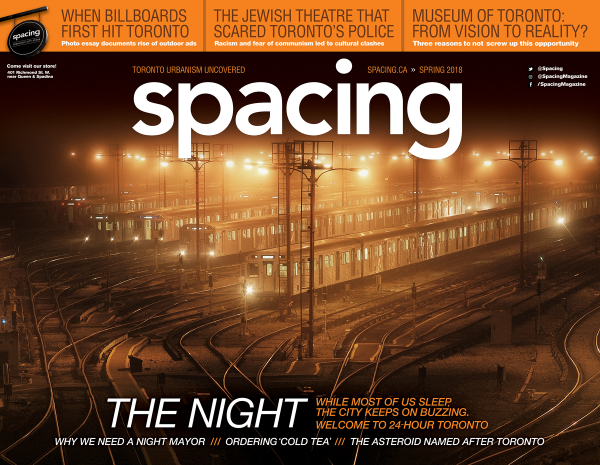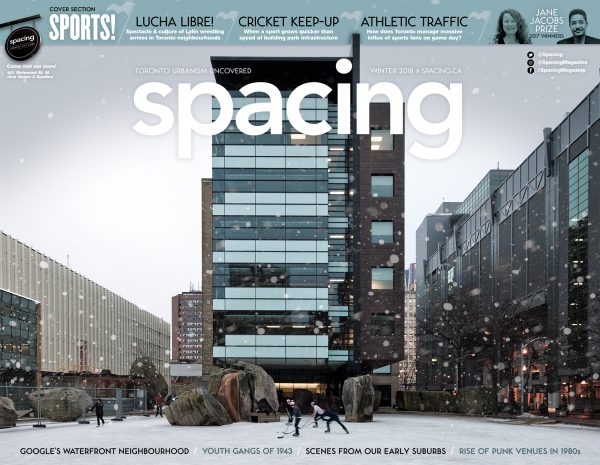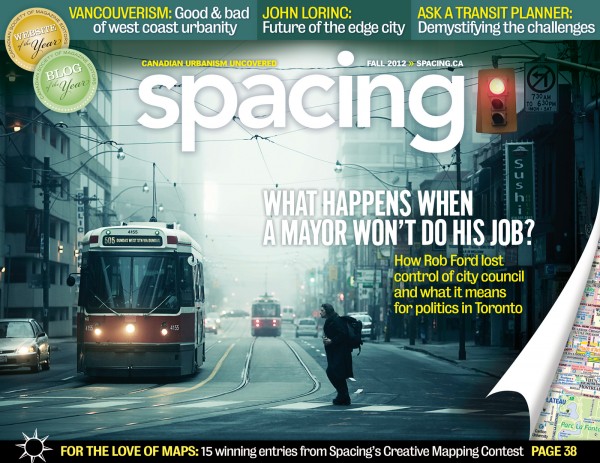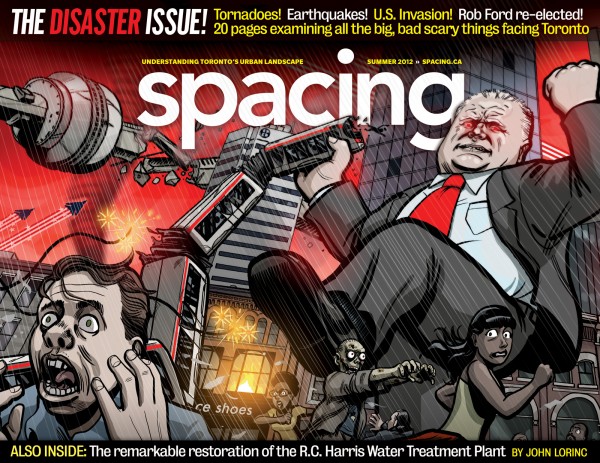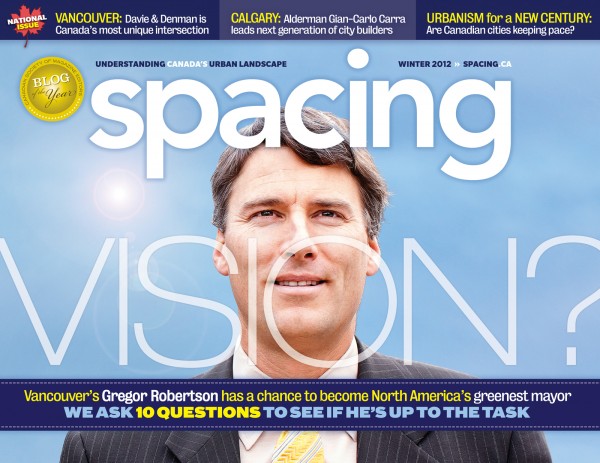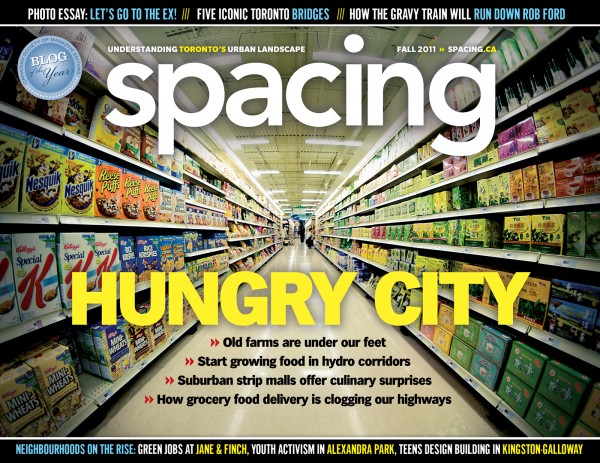
• Issue 22 : Fall 2011The Hungry City
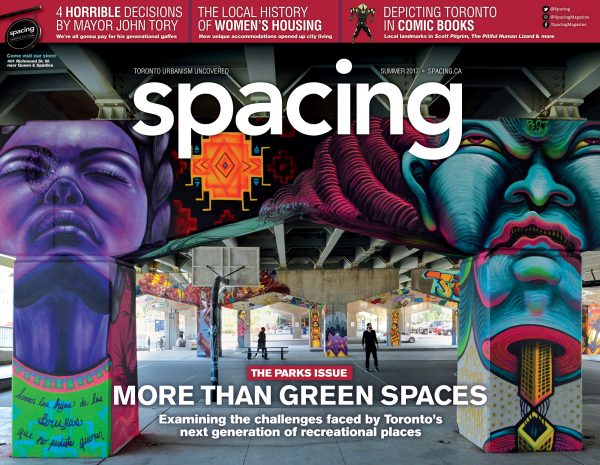
    The harvest season is the perfect time to release an issue about food. The 22nd edition of Spacing looks at the impact food has on how we live in the city and how it continues to shape of our public realm. Spacing senior editor Shawn Micallef writes about his experiences at the Riverdale Farmers Market and wonders if such markets are just a feel-good thing; Thomas Wicks digs into the history of local farms and discovers that the land of almost every home in Toronto is where a farm once operated; and Drew Adams explores whether the vast and expansive hydro corridors could be home to urban agriculture farms. This issue also presents a special seven-page report on Toronto neighbourhoods at risk: our contributors uncover youth activism in Alexandra Park, green job training at Jane and Finch, and teenagers designing a building in the Kingston-Galloway community. And photoblogger extraordinaire Miles Storey takes readers on a trip through the tacky and beauty of the annual CNE.
    BROWSE THIS ISSUE

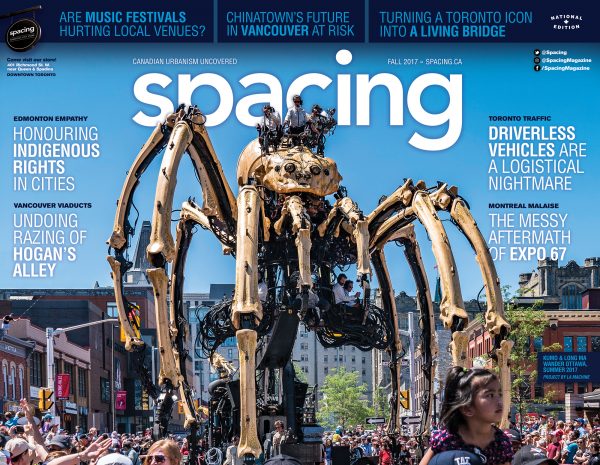
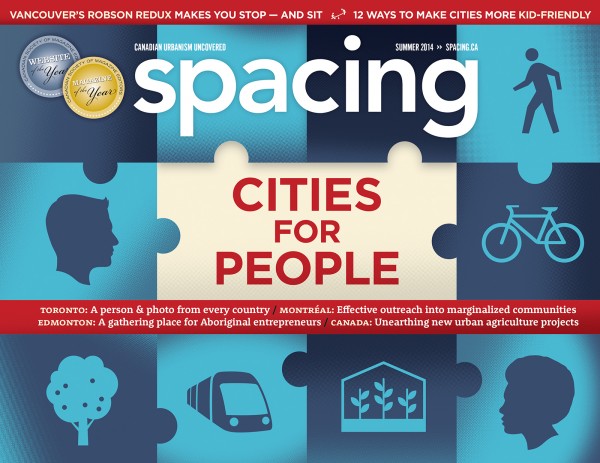
  • Issue 21 : Summer 2011Canada's Best Public Spaces
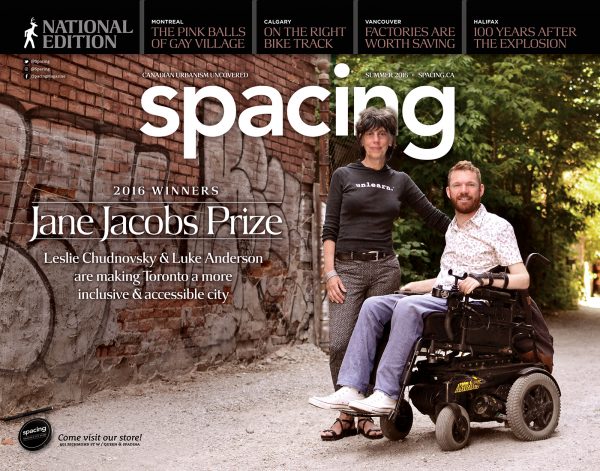
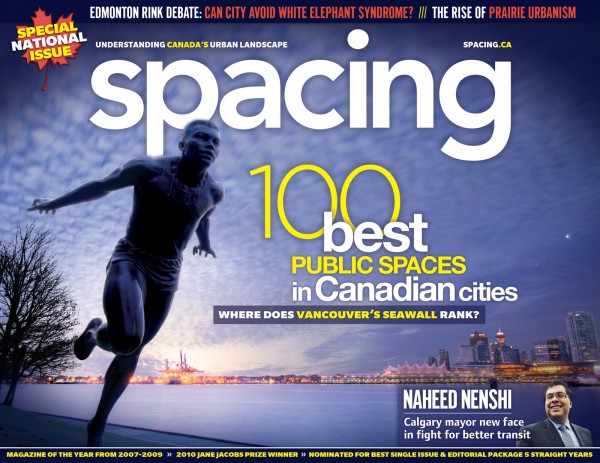
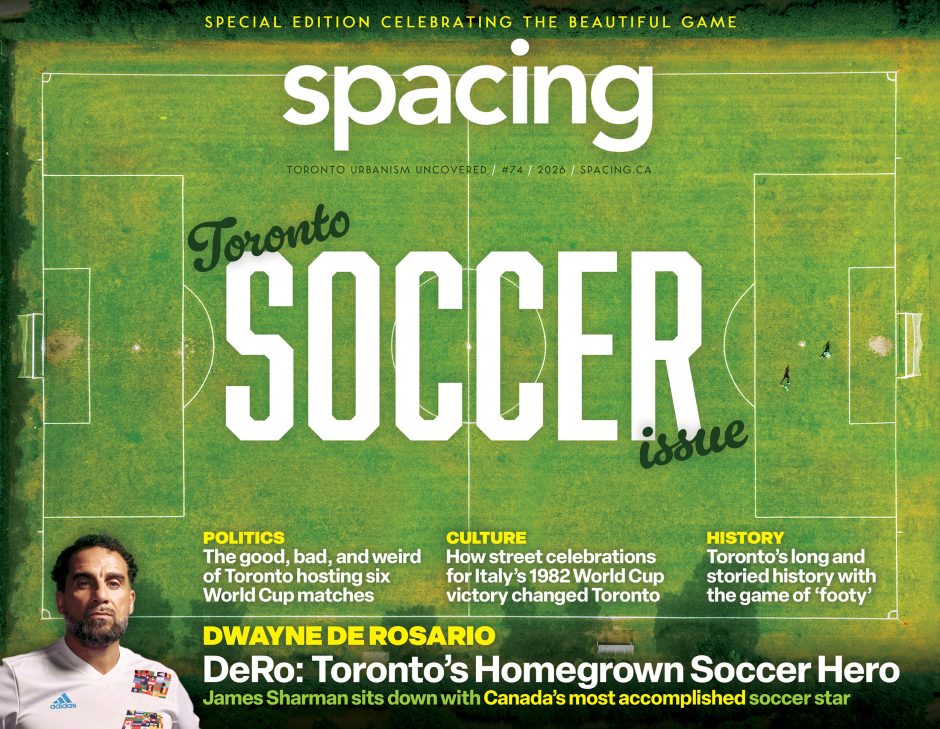
    Spacing is finally going national! And what better place than the Design Exchange — the exhibition hall that showcases the best in Canadian design — to host the launch of the magazine’s first national issue. Come out and celebrate with the editors and contributors. There will be drinks and activities to be had, plus you’ll get a chance to see the amazing photo exhibit by Guy Tillim on the rise and fall of Modernism in post-colonial African cities. While the look and feel of the magazine is no different than the local Toronto edition, the content focuses on the joys, obstacles, and politics affecting Canada’s large urban centres. Articles touch on topics like street performing in Victoria, Calgary’s plans to build its arts community, how Ottawa’s marathon is becoming more urban, and how the seasonal pedestrian mall on rue Ste.-Catherines has been a boon for local businesses.
    BROWSE THIS ISSUE

  • Issue 20 : Winter 2011Winter

    BROWSE THIS ISSUE

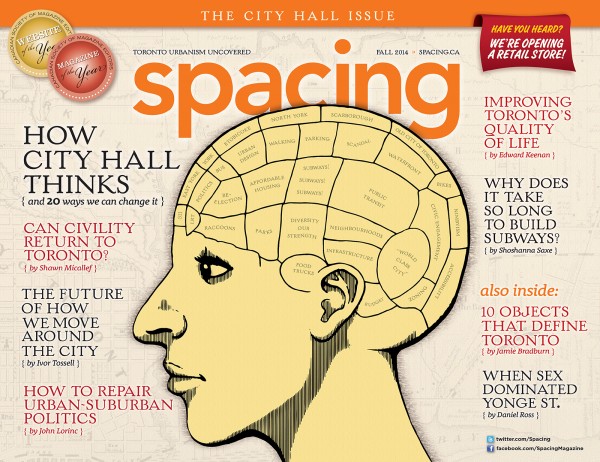
  • Issue 19 : Fall 2010City Hall issue
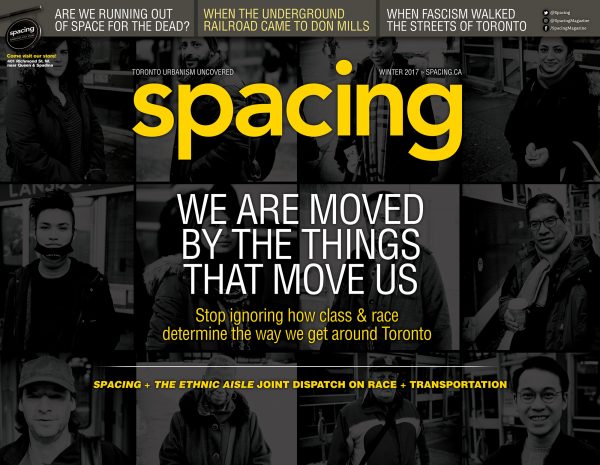
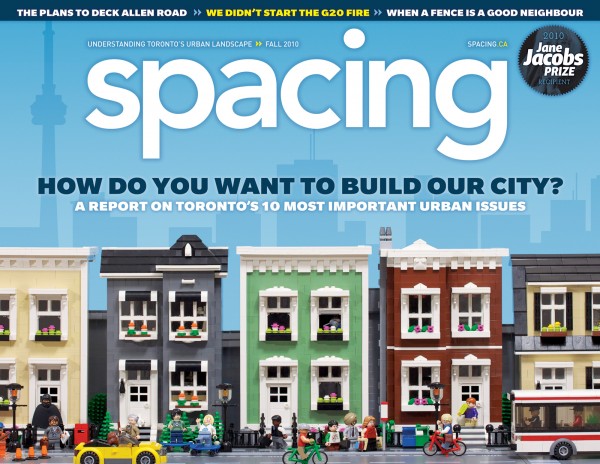
    With the Fall 2010 issue of Spacing, our contributors take a look back on the last four years at City Hall to see where we’ve come as a city and where we’re heading. Spacing identifies the 10 most important urban issues facing the city — traffic and congestion, public transit, urban planning and development, parks, environment, the waterfront, bikes, walking, police and safety, and city growth. This jam-packed cover section is 40 pages and provides readers with an honest assessment of the successes and failures of our public spaces. You can also find some great content in the from and back sections of the magazine: how a fence can be a good neighbour, the rise in police cameras after the G20 Summit, when the first big box stores arrived in the inner suburbs, and the history of putting a deck (or park) over top of the Allen Road.
    BROWSE THIS ISSUE

  • Issue 18 : Summer 2010Oh, The Spectacle
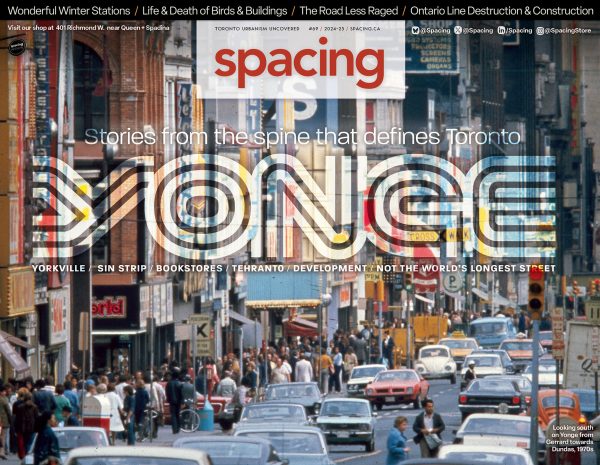
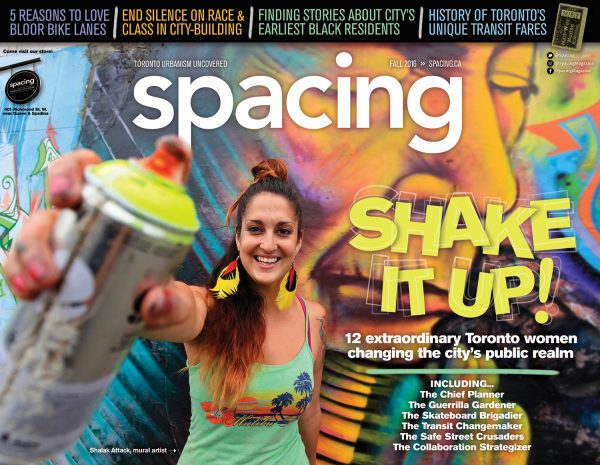
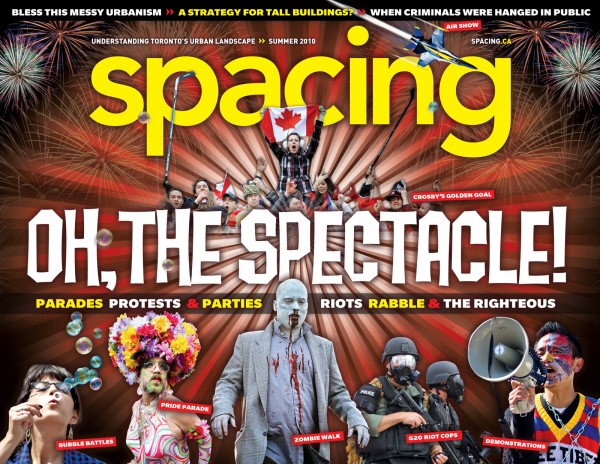
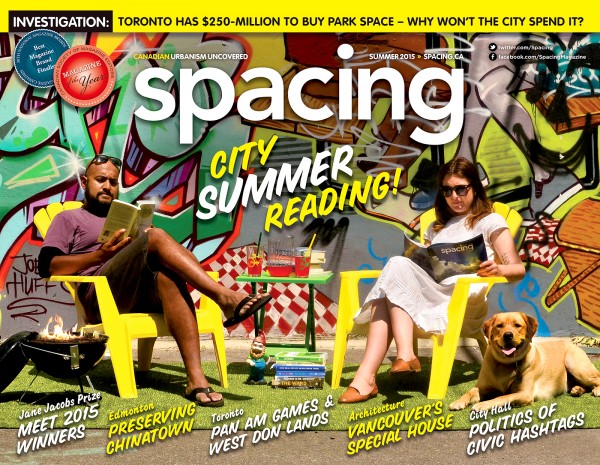
    The summer 2010 issue is packed full of great articles. Our cover section explores the spectacles we find in Toronto. Our contributors explore the history of riots in the city (how timely, eh?), Pride, Caribana, and how criminals used to be hanged in public. Senior editor Dylan Reid proposes that a dynamic public realm is not necessarily clean and beautiful — it’s full of messy urbanism. The work of photographer Peter MacCallum highlights the layers of architectural history on Yonge Street. Readers will also learn about the City’s attempt to deal with tall buildings in the downtown core, why some streets don’t line up, how many people flow in and out of every subway station, and much more. Our articles are accompanied by the fantastic work of photographers Sam Javanrouh, Miles Storey, and many others.
    BROWSE THIS ISSUE

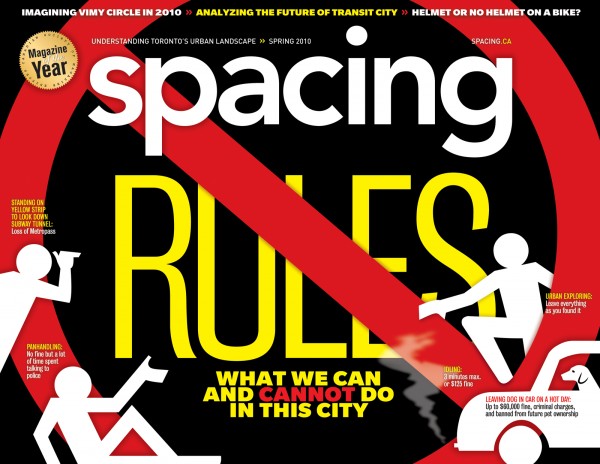
  • Issue 17 : Spring 2010The Rules Issue
    The Spring 2010 issue of Spacing uncovers the variety of rules that govern our city. Inside our 22-page cover section, our contributors examine the life of a speeding ticket, how buildings obtain permission for great heights, why the city is so uptight about liquor laws, and how we’re supposed to obey the unwritten social rules while walking, taking an escalator, or riding the TTC. Other highlights from this issue include an illustrative feature on what Vimy Circle would look like in 2010 had it been built (as was planned) in 1929, a photo essay by Surendra Lawoti on the transitory life of the inhabitants of the Don River, and what the future holds for Transit City.
    BROWSE THIS ISSUE

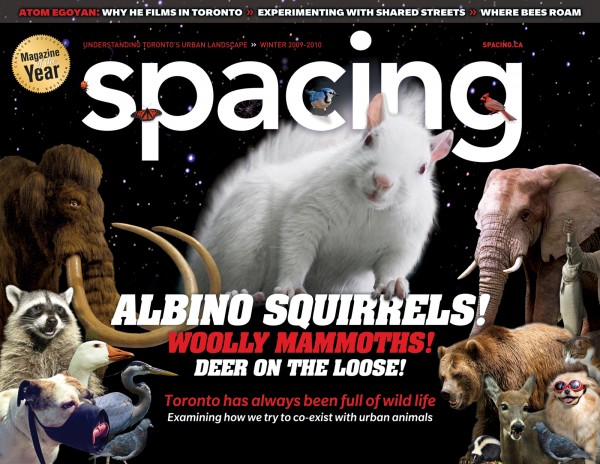
  • Issue 16 : Winter 2009 2010Toronto's Urban Wildlife
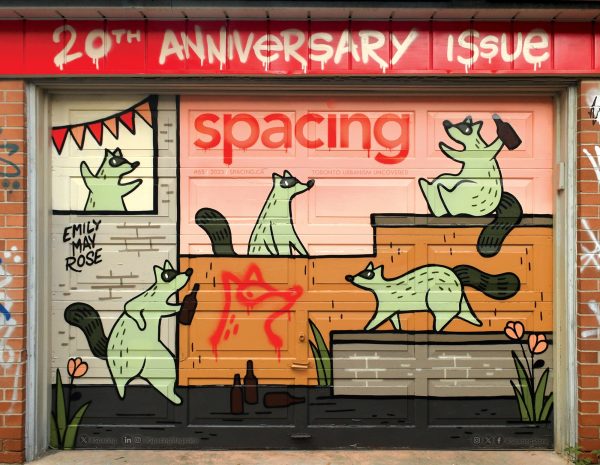
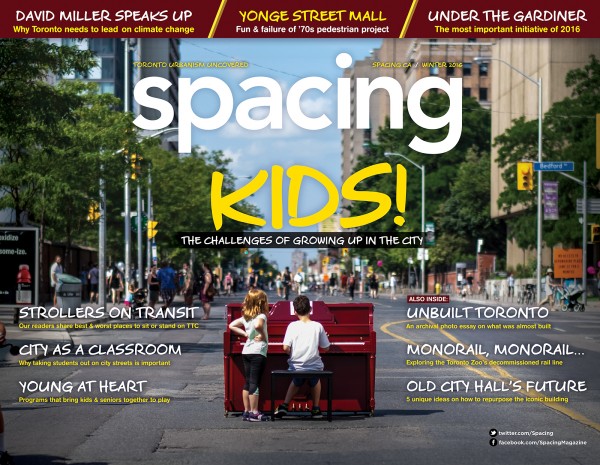
    The Winter 2009-2010 issue of Spacing jumps into the world of urban wildlife. Spacing’s cast of writers examines local animals that are at risk of extinction, why Toronto is called Hogtown, how the city’s original public transit was truly horse-powered, what the city does with all of the roadkill, and why Toronto should adopt the raccoon as its official mascot. We explore the challenges of integrating the mentally ill (and the new CAMH facility) as a normal part of everyday life. We also sit down with film director Atom Egoyan to quiz him about his fascination with filming in Toronto. This issue marked the third time that — for the third consecutive year —Spacing was named Small Magazine of the Year by the Canadian Society of Magazine Editors.
    BROWSE THIS ISSUE

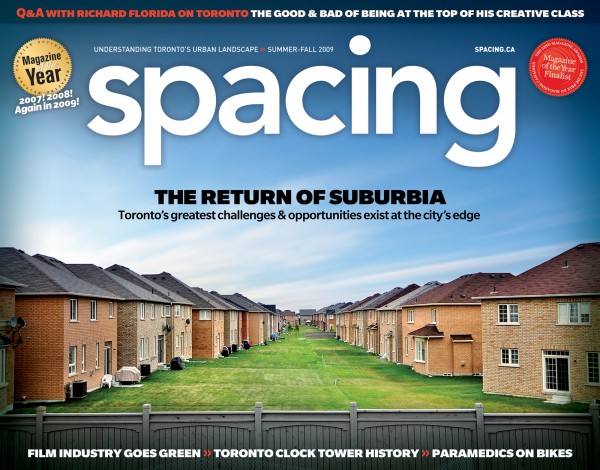
  • Issue 15 : Summer/Fall 2009Return of the Suburbs
    The Summer-Fall 2009 issue of Spacing focuses on Toronto’s suburbs; the city faces its greatest challenges and opportunities in these areas. Spacing senior editor Dylan Reid presents compelling examples of how the suburbs can evolve instead of being reinvented.  Spacing’s other senior editor, Shawn Micallef, examines the walkable community of Dorset Park in Scarborough. Our writers explore plans for a pedestrian-oriented downtown Mississauga, environmentalists in Markham, small-plot farming in subdivisions, the 20-year makeover of downtown North York, Burlington’s successful waterfront design, and how youth are being engaged to shape the future of their suburban communities. Spacing contributing editor Ed Keenan sits down with renowned urbanist Richard Florida to ask him about the good and bad sides of Toronto being at the top of his creative city list.
    BROWSE THIS ISSUE

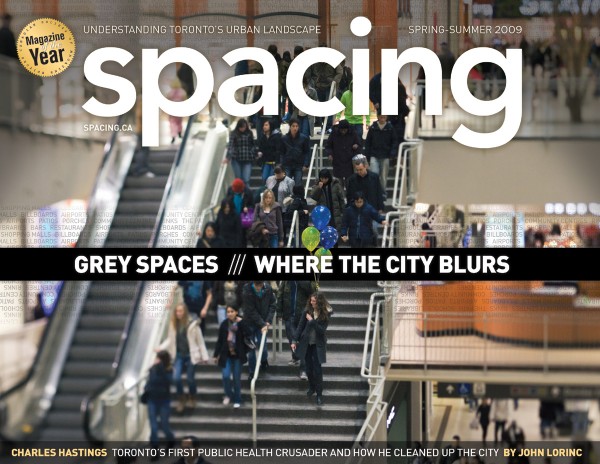
  • Issue 14 : Spring Summer 2009Grey Spaces
    The Spring-Summer 2009 issue of Spacing focuses on the grey spaces of the city — not the physical and literal grey spaces —but places like libraries, airports, bars, community centres, and shopping malls that are generally accessible by the public, and have a variety of societal or even legal rules to follow once you enter. Our contributors examine these intricacies and reveal the multiple sides of public life in Toronto. Topics include untangling the PATH system, how the Flemingdon community lost control of the use of the nearby hydro field, why schools aren’t better utilized by residents, how book and music stores become cultural hubs, how the CNE avoided demolition in the 1970s, and the fuzzy ownership questions surrounding places of worship.
    BROWSE THIS ISSUE

  • Issue 13 : Winter 2009The Next City Builders
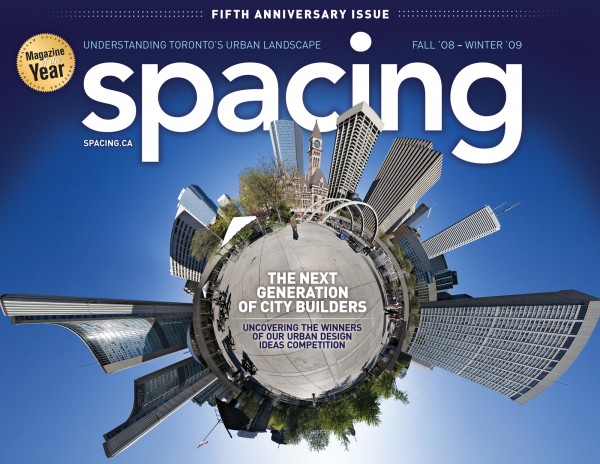
    The Fall 2008-Winter 2009 issue of Spacing marks the fifth anniversary of the magazine. Spacing’s editors decided to turn the cover section over to our young readers: we asked the next generation of city builders — those 35 years and younger — to submit their ideas on how to improve Toronto’s public spaces. The winners include proposals such as transit shelters that double as book exchanges, reflecting mirrors that allow people to what’s going on below or above a sidewalk, mobile apps that encourage TTC riders to interact with one another, and elevated gardens above the waterfront rail corridor. The cover section is packed with inventive ideas that demonstrate the ways tomorrow’s urban leaders are thinking outside of the box. This issue was also nominated for Magazine of the Year and Best Single Issue at the 2009 National Magazine Awards.
    BROWSE THIS ISSUE

  • Issue 12 : Fall 2008The People Issue
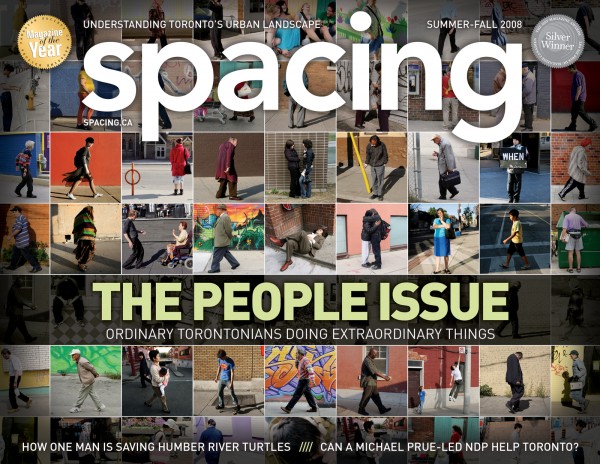
    The Summer-Fall 2008 issue of Spacing uncovers ordinary residents of Toronto doing extraordinary things in the public realm. Our writers encounter a man who incubates turtle eggs to increase the likelihood of survival of Humber River turtles, and a homeless man who is using a writer to blog about his life on the streets. We explore how to integrate newcomers to Canada into residents’ groups, and why raising chickens in your backyard shouldn’t be illegal. This issue saw Spacing take home its second <b>Small Magazine of the Year</b> award from the Canadian Society of Magazine Editors. Spacing photographer Miles Storey was nominated for a 2009 National Magazine Award< in the Portrait Photography category.
    BROWSE THIS ISSUE

  • Issue 11 : Spring 2008The Car & The City
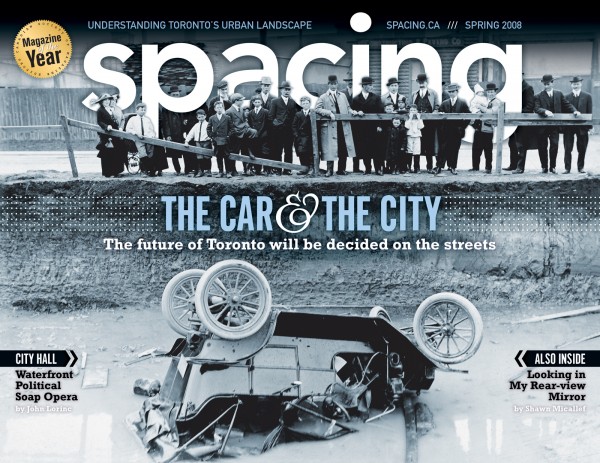
    The Spring 2008 issue of Spacing tackles the plethora of challenges of accommodating the automobile in the city. Senior editor Shawn Micallef looks at the madness of the annual Toronto Auto Show, which in 2008 seemed oblivious to the soaring price of crude oil. Spacing’s other senior editor Dylan Reid examines how Toronto’s roads are not used anywhere near capacity, and how cities can rebalance transportation needs. Our contributors also explore the future of hybrid taxis, the act of cruising, the rise of car sharing, and life without a driver’s license.

    BROWSE THIS ISSUE

  • Issue 10 : Fall 2007Can Toronto Be Green?
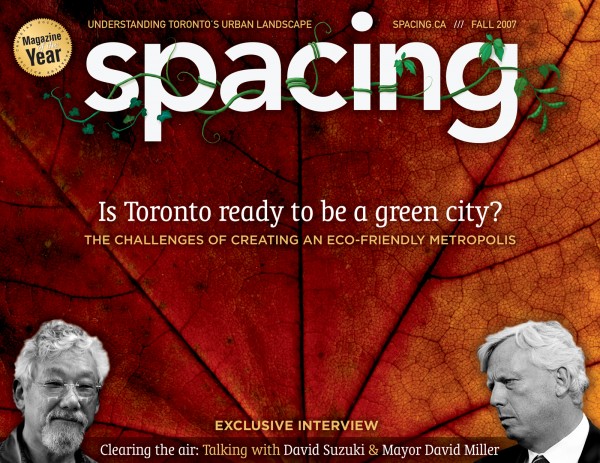
    The Fall 2007 issue of Spacing takes a look at the challenges of turning Toronto into an eco-friendly metropolis. The lead article is a roundtable interview between Spacing, Mayor David Miller, and Dr. David Suzuki. The discussion focuses on how Toronto can be a leader in the fight against climate change. The cover section of the tenth issue of Spacing includes articles on community gardens and urban agriculture, eating wild plants found in our parks and laneways, the need to green our driveways, the not so long arm of environmental bylaws, comparing Toronto’s green initiatives to other Canadian cities, and the perils of living near a brownfield under redevelopment. This issue also marks the first time Spacing was named Small Magazine of the Year by the Canadian Society of Magazine Editors.
    BROWSE THIS ISSUE

  • Issue 9 : Summer 2007The Water Issue
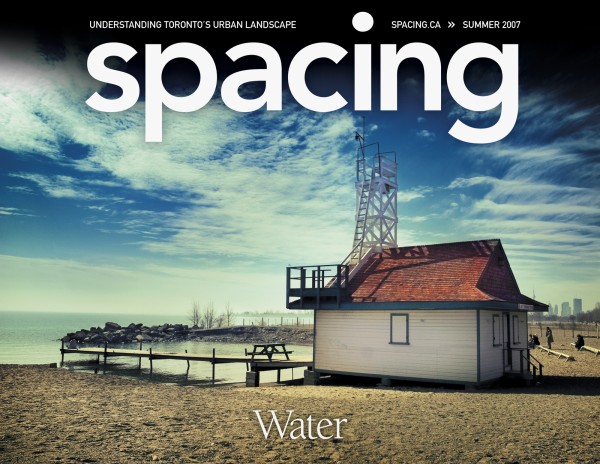
    The focus for Spacing’s Summer 2007 issue is on water: Toronto’s ravines, rivers, water towers, sewers, and waterfront. We’ve captured a snapshot of Toronto’s relationship with water and how it shapes our everyday lives. Our contributors look at how wading pools are used, where shipwrecks are located along Toronto’s shoreline, the intervention art of fountaineering, and the which residents are looking out for the health of our waterfronts and watersheds. Toronto Star urban affairs writer Christopher Hume examines whether Toronto’s waterfront is doomed for mediocrity. This issue garnered Spacing a Silver medal for Best Editorial Package at the 2008 National Magazine Awards.
    BROWSE THIS ISSUE

  • Issue 8 : Spring 2007At The Crossroads
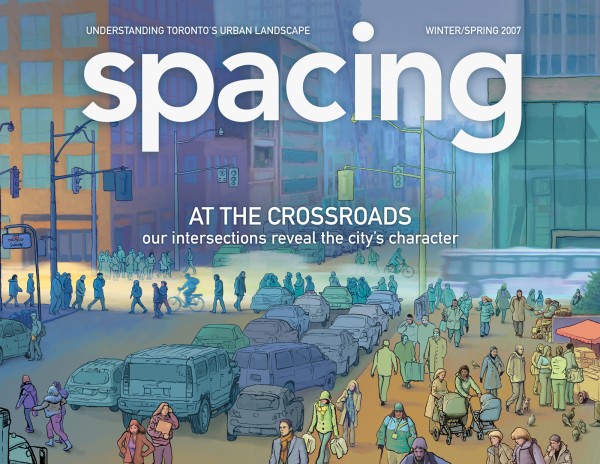
    The cover section of the Winter-Spring 2007 issue of Spacing takes a close-up look at our intersections and what our crossroads reveal about our city — Markham & Lawrence, Gerrard & Coxwell, The Allen & Eglinton, Albion & Finch, Richmond & Sherbourne, among others. Spacing contributors explore how some communities are experiencing gentrification and rehabilitation, and how other neighbourhoods were planning disasters from the start. Other topics covered include the organized chaos of our traffic lights, an explanation behind the colour-combinations of subway station platforms on the Bloor-Danforth line, what happens when you send a letter to a park, and the rankings of the best toboggan hills in the city. The issue launches John Lorinc’s City Hall column. The major feature of this issue, written by contributing editor Ed Keenan, received a Best Personal Essay nomination by the National Magazine Awards in 2008.
    BROWSE THIS ISSUE

  • Issue 7 : Fall 2006The City Hall Issue
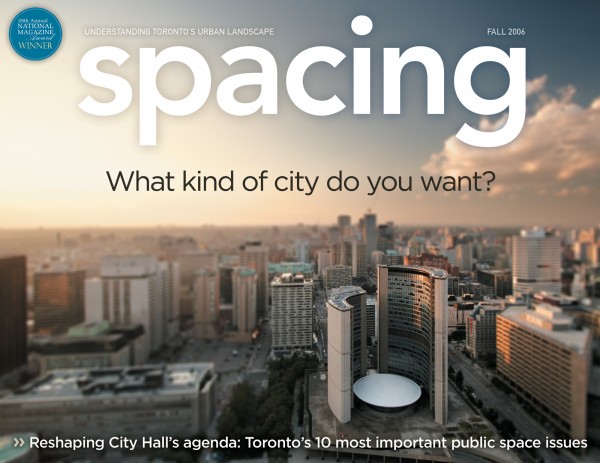
    The release of the Fall 2006 issue of Spacing is focused on the city election of 2006 — we outline the 10 most important public space issues Toronto faces so that our politicians will wake up to a number of urgent matters: our dwindling urban forest, the spectre of Peak Oil and how the city is dealing with smog, how Toronto is mismanaging development and putting unnecessary strains on our neighbourhoods, how the city is selling its infrastructure and getting very little in return, and also outlines a list of 45 Things To Do for the next city council. The magazine features articles on hanging out in cemeteries, riding your bike with headphones on, the inventor of Toronto’s ring-and-post bike rack, and a detailed map on how to get out of the Don Valley. This issue was nominated for Best Editorial Package by the National Magazine Awards.
    BROWSE THIS ISSUE

  • Issue 6 : Spring/Summer 2006Public Transit Issue
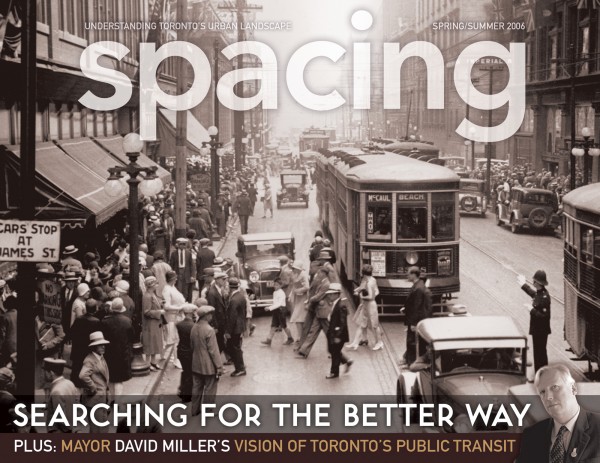
    The cover section of the sixth issue of Spacing focuses on Toronto’s sometimes confounding transit system. Spacing editors Matthew Blackett and Dylan Reid sit down for a Q&A with Mayor David Miller and challenge him to articulate a vision for the future of transit in this city. Toronto transit advocate Steve Munro lets loose on the failings of the TTC and its leadership, while supplying an economically-responsible plan that could reshape our transit system. Other articles include the plethora of subway construction plans from the early 1900s to the mid-1990s, the legend of Lower Bay subway station, how to turn Queen Street into a streetcar and pedestrian-only zone, a look back to 1968 and 1985 when bomb threats to the TTC caused public fear, and an essay in defense of our subway’s “public washroom aesthetic.”

    BROWSE THIS ISSUE

  • Issue 5 : Fall 2005/Winter 2006The New Beautiful City
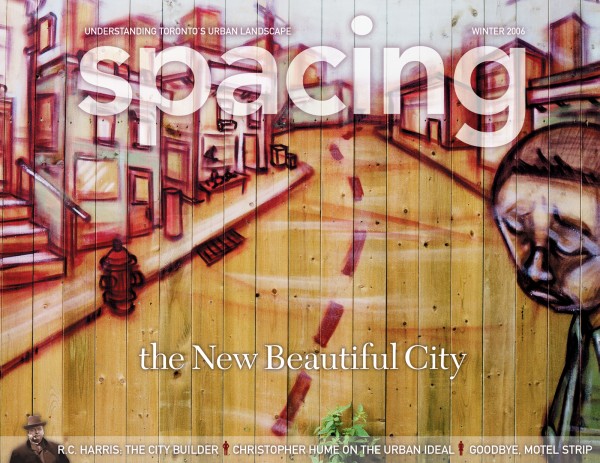
    The cover section of the Winter 2006 issue of Spacing has our contributors exploring the wide variety of public art in Toronto, examining how thousands of people use the public realm as a canvas. This issue marks our venture into the world of full colour — this new feature showcases the vibrant life of this city as captured by our talented staff of photographers and illustrators. Bert Archer ponders why a city needs public art, Ryan Bigge examines the skeletal (yet sculptural ) remains of the east Gardiner Expressway, Eye Weekly’s Ed Keenan analyzes the City of Toronto’s contradicting policies towards graffiti, illustrator Marc Ngui creates new wayfinding signs for Toronto’s streets, and Spacing’s Dale Duncan gives you the answer to the most confounding public art question: how did that get there?
    BROWSE THIS ISSUE

  • Issue 4 : Summer 2004History of our Future
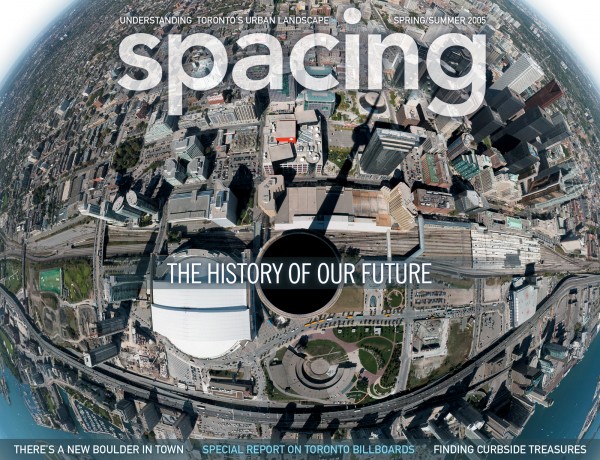
    Issue 4 of Spacing sees our writers contemplate the city Toronto could’ve been and the place it could become. Articles focus on such topics as: the highways planned throughout the downtown and midtown parts of Toronto but never built, hooking up a sound system to the CN Tower, turning the SkyDome into a sustainable housing community, the other proposals submitted in the 1950s for New City Hall, a city-wide network of enclosed and elevated bike paths, and waterfront urbanism at work in the Port Lands, 2043. This issue also sees the release of a report conducted with the Toronto Public Space Committee on how the city is being overrun by outdoor advertisers. In May 2006, this issue of Spacing won <b>Gold</b> at the National Magazine Awards in the Best Editorial Package category.
    BROWSE THIS ISSUE

  • Issue 3 : Fall 2004/Winter 2005Work and Play
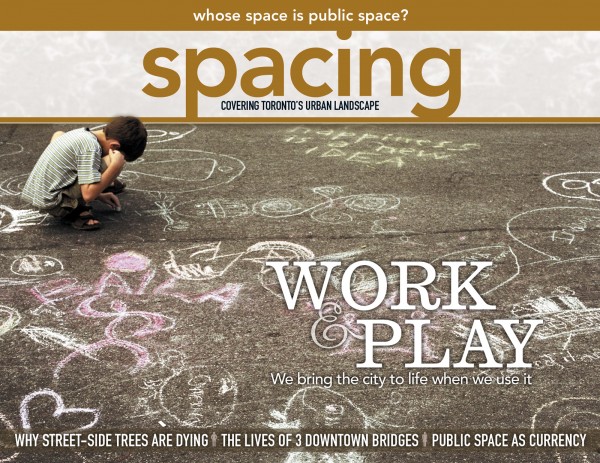
    Chances are, whatever you’re doing right now, it’s either work or play. In a city without either one of these activities, nothing would happen. But it’s up to us to bring it to life in these ways. There are those who use and exploit the space, those who embellish and improve it, those who enjoy and appreciate it, and those who, literally, create it. The value of public spaces devoted to work and play is so obvious it’s often almost invisible to us. Our contributors examine everything from buskers to street preachers to early morning bird rescuers to graffiti cops. Spacing uncovers the impact of work and play on our outdoor urban environment, and how people bring the city to life 24 hours a day.
    BROWSE THIS ISSUE

  • Issue 2 : Summer 2004Everyone is a Pedestrian
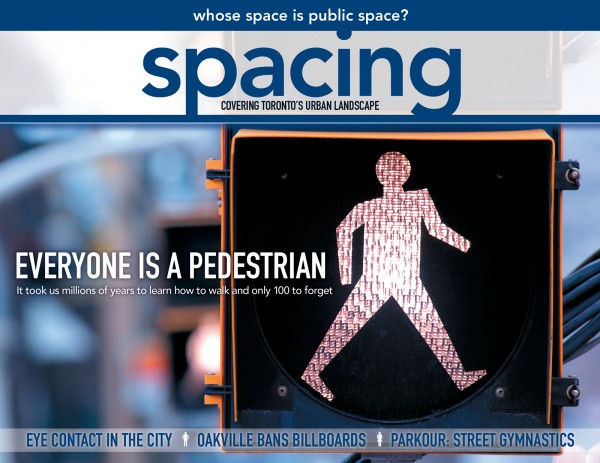
    Who was the first person to drive on the moon? No one celebrates this dubious achievement, but everyone remembers the images zapped back to Earth of a human footprint on the lunar surface. Oddly enough, the moon may be the closest place to home where a footstep is so revered. We’ve been walking upright for a few million years, but over the last century we’ve sat back and watched our species do everything it can to abandon this unique ability. Our culture minimizes travelling by foot in every possible way — cities are designed to accommodate cars, kids count down to their sixteenth birthdays so they can drive, and people look at us funny when we choose to walk home from work. Even our language takes a jab at walking: “pedestrian” is a synonym for something boring or common. But the very fact that walking is common is what makes it great. Spacing’s second issue focuses on the many joys and obstacles — and the politics — of walking in Toronto.
    BROWSE THIS ISSUE

  • Issue 1 : Winter 2004Fight to Save Postering
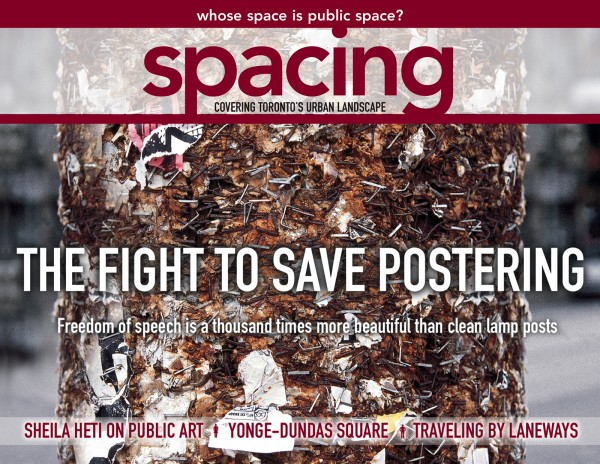
    The first issue of Spacing was launched on December 3rd, 2003 — it was 40 pages in length and the inside pages were all black and white. The cover section highlights residents’ fight to save postering in Toronto. At the time, the City of Toronto planned to ban posters on 99% of the utility poles and lampposts across the city. Spacing editors were part of a campaign to allow postering to continue, arguing that a Supreme Court of Canada ruling granted municipalities only a limited amount of power to restrict posters. In 2007, Toronto City Council voted to allow posters on poles and began to roll out street furniture specifically built for postering. This is not to say that posters can’t have a negative effect on the public realm: our writers explore the good and bad of posters, how postering has been used to communicate to the public throughout the ages, and how posters can be used for more than just promotional materials.
    BROWSE THIS ISSUE

Spacing Magazine
delivered right
to your door